Tag: Implant

  • A Speech-Restoring Brain Implant has Won FDA Approval for Human Trials

    A Speech-Restoring Brain Implant has Won FDA Approval for Human Trials

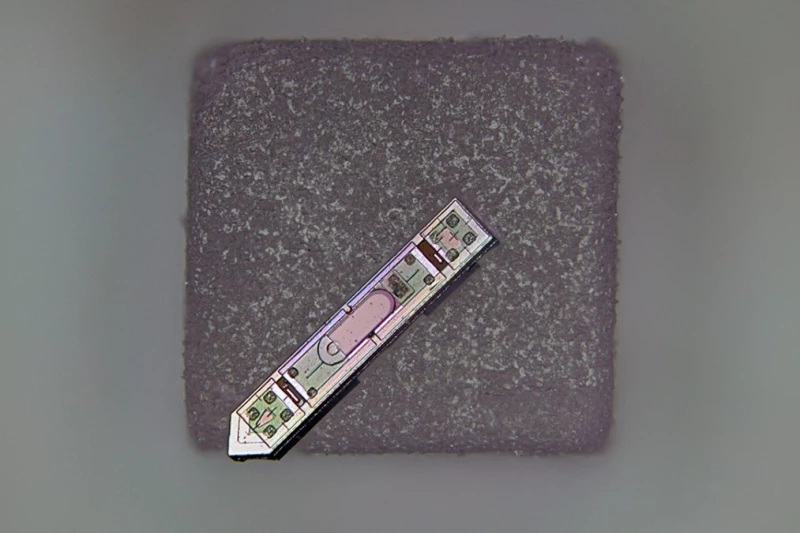
    Paradromics, a U.S. BCI startup, is emerging as a key neural tech contender after FDA approval for a human trial of its speech-restoration implant for people with paralysis.
    Image Credits: The trial will investigate the Paradromics BCI for speech restoration
    Paradromics

    Paradromics, a U.S. BCI startup, is emerging as a key neural tech contender after FDA approval for a human trial of its speech-restoration implant for people with paralysis.

    The Austin-based company, with multiple FDA Breakthrough Device designations, received IDE approval for its Connexus BCI Connect-One Early Feasibility Study. It is the first company to obtain IDE clearance for a fully implantable BCI intended for speech restoration.

    Assessing Connexus BCI’s Potential to Restore Communication Abilities

    The study will test Connexus BCI’s safety and performance, aiming to help people with paralysis communicate via text or voice.

    The company says Connexus is designed for long-term clinical use and is the first high–data-rate BCI built for top performance.

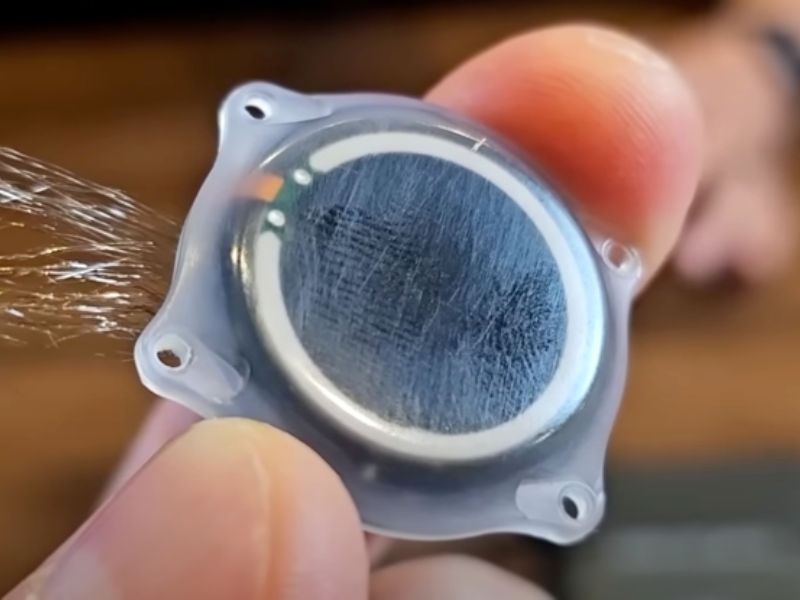
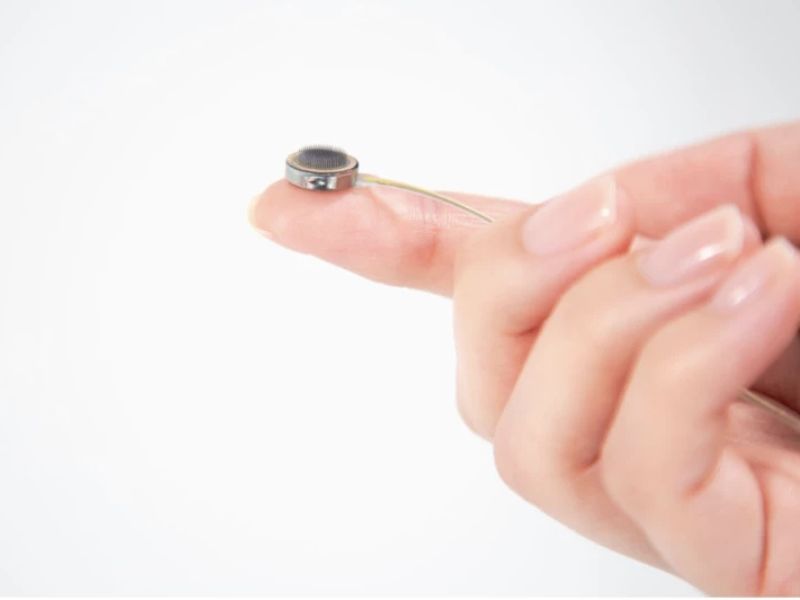
    The device has a titanium-alloy casing with 400+ electrodes and onboard processing to capture brain activity. Each electrode measures under 40 microns—thinner than a human hair.

    How the Fully Implantable BCI System Operates

    The full BCI system implants under the skin, captures motor signals, and wirelessly transmits them via a chest transceiver to an AI-powered computer that converts them into text, speech, or device controls.

    We’re thrilled to introduce this new hardware into a clinical study,” says Matt Angle, CEO of Paradromics.

    The initial trial will involve two participants receiving 7.5-mm-wide implants in the motor cortex to capture neuron activity. They will imagine speaking sentences, with signals sent to an external computer. Over time, the system will learn which neural patterns correspond to specific speech sounds, tailoring the interface to each user.

    First BCI Trial Aiming for Real-Time Personalized Synthetic Speech

    This marks the first BCI study focused on generating a synthesized voice in real time, using past recordings of the participants’ speech as a basis.

    Researchers will also test whether the implant can pick up neural signals linked to imagined hand movements, which could enable cursor control.

    If early results are promising, the trial may expand to include 10 participants, with two of them receiving dual implants for stronger signal acquisition.

    It’s an exciting step,” says Mariska Vansteensel, a BCI expert at the University Medical Center Utrecht. “A fully implantable system is essential for the technology to advance toward real-world clinical use.”


    Read the original article on: New Atlas

    Read more: Chinese Firm Unveils Highly Agile Life-sized Robotic Hand
  • A Grain-sized Wireless Brain Implant Fires Lasers

    A Grain-sized Wireless Brain Implant Fires Lasers

    If you have a brain—and know others who do—you’re aware of the countless ways our skull-bound electro-meat machines can fail us. From memory loss to migraines, depression to dementia, the brain is remarkably creative at breaking down, often turning lives into mental misery.
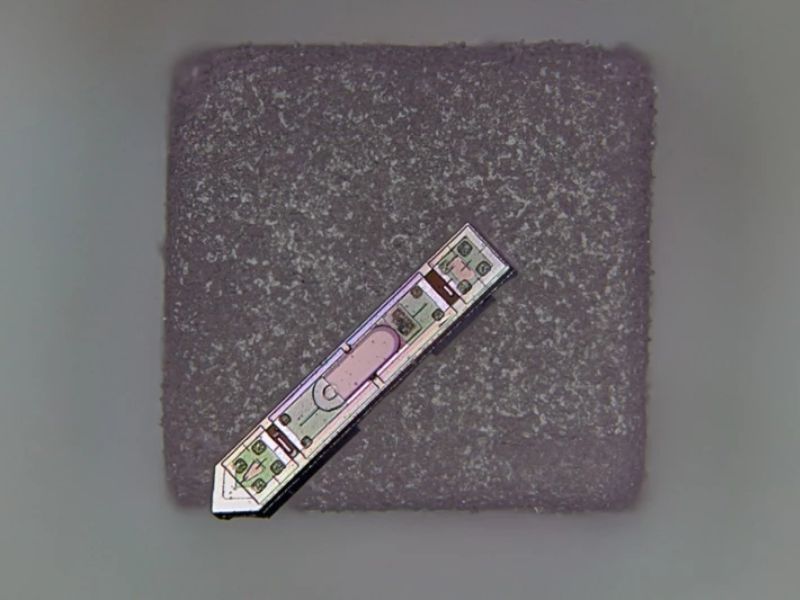
    Image Credits:Pictured here on a grain of salt, the MOTE implant measures just 300 x 70 microns – it could be used to develop treatments for a wide variety of neurological disorders
    Cornell University

    If you have a brain—and know others who do—you’re aware of the countless ways our skull-bound electro-meat machines can fail us. From memory loss to migraines, depression to dementia, the brain is remarkably creative at breaking down, often turning lives into mental misery.

    Good news, everyone!” Cornell and partners developed a pinhead-sized micro-neural implant that wirelessly records mouse brain activity for over a year.

    Introducing the MOTE Neurotech Breakthrough

    In Nature Electronics, Sunwoo Lee and Cornell colleagues introduced the MOTE—a tiny, superhero-like Microscale Optoelectronic Tetherless Electrode.

    This breakthrough represents the smallest neurotechnology module ever built, offering major medical potential for neural monitoring and bio-integrated sensing. The MOTE wirelessly transmits brain data, offering insights that could lead to new treatments and potential enhancements of brain function.

    This is the smallest neural implant that can wirelessly transmit brain activity,” said Alyosha Molnar. MOTE’s use of pulse position modulation—like in satellite communications—enables efficient, low-power data transmission.

    Challenges of Early Neurotechnology Implants

    Earlier generations of neurotechnology implants faced significant hurdles to reliable performance, such as tissue rejection, immune responses that damaged nearby nerve connections, and electrode drift that displaced recording sites within the brain.

    The MOTE, however, avoids these pitfalls largely due to its minuscule size. Measuring just 300 by 70 microns—smaller than a nanoliter, or one-millionth of a milliliter—it’s so tiny that over 4.7 million of them could fit into a single teaspoon.

    Powered by a photovoltaic diode, the MOTE wirelessly transmits neural data via red and infrared lasers with precise, low-noise circuits.

    Safe Brain Monitoring During MRI Scans

    Why are MOTEs even necessary? Don’t MRI scans already give us valuable insights into how the brain works? Yes—but not when used alongside most neurotech implants. The Journal of Neural Engineering warns that MR environments can pose serious health risks to implant patients. Picture Magneto attacking Wolverine’s adamantium skeleton—that’s roughly the kind of danger magnetic fields pose to metal implants.

    And it’s not just brain implants that face this problem. Over 300,000 cochlear implant patients can’t safely have MRIs, yet about 75,000 U.S. DBS patients undergo scans, often with hospitals exceeding safety limits they call “crucially impractical.”

    A key advantage of MOTEs is their MRI compatibility, enabling neural recording during scans. Future versions could work in tissues like the spinal cord or be embedded in artificial skull plates with advanced optoelectronics.

    A Potential Alternative to Lifelong Medication

    Many depend on Big Pharma’s short-term pills, but neurotech implants could offer lasting relief via minimally invasive procedures—if not subscription-based. (Remember Rashida Jones in the Black Mirror episode “Common People”?)

    Regardless of who controls it, the MOTE joins other neurotech breakthroughs: restoring speech to ALS patients, enabling thought-controlled drones and iPhones, and providing instant pain relief.

    As neurotechnologists refine these devices—ideally via open-source collaboration—the potential benefits for humanity are immense. The path toward cyborganic evolution may be virtually limitless. Now, if only someone could design an ethics chip for the billionaire “brain bros” of Neuro–Silicon Valley.


    Read the original article on: Newatlas

    Read more: ‘Brainless’ Robots That Move Together are Driven Entirely By Air

  • Brain Implant Lets Man Share Movement and Sensation

    Brain Implant Lets Man Share Movement and Sensation

    In 2020, Keith Thomas suffered a devastating accident when he dove into a pool and broke his spine. The injury left him paralyzed from the chest down, unable to move or feel his arms and legs. Confined to a hospital room during the pandemic, he volunteered for a groundbreaking clinical trial aimed at restoring sensation and movement through a cutting-edge brain implant.
    Image Credits:Feinstein Institute for Medical Research

    In 2020, Keith Thomas suffered a devastating accident when he dove into a pool and broke his spine. The injury left him paralyzed from the chest down, unable to move or feel his arms and legs. Confined to a hospital room during the pandemic, he volunteered for a groundbreaking clinical trial aimed at restoring sensation and movement through a cutting-edge brain implant.

    The researchers designed the device to reestablish communication between his brain, body, and spinal cord. Using AI, the system translates Thomas’s movement intentions into muscle-activating pulses, while fingertip sensors send touch back to his brain. Within a year, he could lift a cup, wipe his face, and feel his dog’s fur again.

    Encouraged by the results, researchers at the Feinstein Institutes and Zucker School of Medicine asked: if a brain implant can restore one person’s movement, could it also control another’s muscles?

    A recent preprint suggests that such “interhuman” links might indeed be possible. Using only his thoughts, Keith Thomas was able to move the hand of a healthy volunteer through carefully targeted electrical stimulation of her muscles.

    Sharing Movement and Sensation

    The team also tested the multi-person neural bypass with Kathy Denapoli, who has partial paralysis and difficulty moving her hand. By sending his brain signals through the system, Thomas helped her pour water—and, remarkably, he later sensed the texture of the objects she touched.

    Though it sounds like science fiction, this method could revolutionize rehab—letting patients guide each other. By sharing movement, Thomas helped Denapoli nearly double her hand strength.

    As the researchers noted, this technique “not only restores elements of sensorimotor function,” but also “fosters interpersonal connection—enabling individuals with paralysis to regain a sense of agency, touch, and shared action through another person.”

    How Your Brain and Body Work in Perfect Harmony

    We move through daily life effortlessly—pouring coffee half awake or catching a ball without thinking. Behind these simple actions lies a complex circuit: the brain sends commands through the spinal cord to activate muscles, while sensory nerves feed touch and temperature back to fine-tune every motion.

    For people with spinal cord injuries, this loop is broken. Now, brain and spinal implants are helping bridge the gap. Tiny electrodes record brain signals that AI algorithms decode to control muscles or robotic limbs, while sensors restore a sense of touch.

    Keith Thomas’s implant represents a leap forward. It connects his brain, spine, and muscles simultaneously, translating his thoughts into movement and sending sensory feedback to his brain.

    The Moment Touch Returned After Years of Silence

    Over time, Thomas regained control of his arms and felt his hand again for the first time in three years.

    There was a time I didn’t know if I even wanted to live,” he said. “Now, I can feel someone holding my hand. It’s overwhelming—and if this can help others even more than it’s helped me, it’s worth it.

    To help people recover from paralysis or speech loss, scientists are developing brain-computer systems that translate thoughts into movement or even emotion.

    In a new study, researchers connected Keith Thomas’s brain implant to a healthy volunteer acting as his “avatar.” The volunteer wore electrode patches on her arm linked to Thomas’s brain signals. When Thomas imagined movement, his neural activity triggered her muscles, allowing her to grasp and lift objects.

    Mastering Touch Through Neural Feedback

    During training, Thomas learned to distinguish between objects—like a baseball or foam ball—by touch feedback sent to his brain, achieving over 90% accuracy even while blindfolded.

    The system also helped Kathy Denapoli, a woman with partial paralysis. Guided by Thomas’s brain signals, she could pour water and lift a soda can nearly three times faster than on her own. Remarkably, Thomas began to feel the textures of the objects she touched.

    By linking brain, spinal cord, and muscles, the implant may promote natural recovery. Thomas regained movement and sensation, and Denapoli’s grip strength improved.

    Though still unreviewed, this “thought-driven therapy” could one day help people recovering from stroke or ALS. “I was more fulfilled helping someone in real life,” Thomas said.


    Read the original article on: Singularityhub

    Read more: Scientists Developed a New Refrigeration Method

  • Neuralink First: Patient Uses Brain Implant to Make YouTube Video

    Neuralink First: Patient Uses Brain Implant to Make YouTube Video

    The first nonverbal Neuralink patient to receive the implant is showing how he uses the technology—narrating and editing a YouTube video through brain signals.
    Credit: Science Alert

    The first nonverbal Neuralink patient to receive the implant is showing how he uses the technology—narrating and editing a YouTube video through brain signals.

    Brad Smith is the third person globally to receive a Neuralink brain chip implant and the first individual with ALS to undergo the procedure.

    Amyotrophic lateral sclerosis (ALS), or Lou Gehrig’s disease, is a progressive neurodegenerative condition that mainly targets motor neurons—nerve cells in the brain and spinal cord that control voluntary muscle movements.

    Impact of Disease Progression on Muscle Control and Daily Functions

    As the disease progresses, patients gradually lose voluntary muscle control, impacting their ability to speak, eat, move, and breathe on their own.

    Last week, Smith shared a YouTube video demonstrating how he uses his brain implant in everyday life.

    He explained that the brain-computer interface (BCI) lets him control the cursor on his MacBook Pro with brain signals and edit the video himself, which he claims is the first ever edited using Neuralink or any BCI.”

    “Surgeons implanted the device—about the size of five stacked quarters and containing over 1,000 electrodes—in his motor cortex.” According to Smith, Neuralink doesn’t continuously read his thoughts but instead deciphers brain signals that reflect his intended cursor movements.

    Finding the Most Effective Way to Control the Cursor

    At first, he attempted to control the cursor by imagining hand movements, but he found it more effective to think about moving his tongue and clenching his jaw to guide the cursor and simulate mouse clicks.

    Researchers used AI on recordings of Smith from before he lost the ability to speak to generate a synthetic version of his voice, allowing him to narrate the video in his own voice.”

    In another video with reporter and Musk biographer Ashlee Vance, Musk called Smith during a visit from Neuralink’s team to his home.

    I hope this is a game changer for you and your family,” Musk said.

    I’m excited to get this in my head and stop using eye-gaze,” Smith said through his computer. “In his video last week, Smith explained that he had been communicating using eye-gaze technology, but noted that it only worked in dark rooms.” Neuralink’s implant, he said, lets him communicate outdoors and in varying lighting.

    Neuralink Enables Smith to Play Video Games with His Kids

    The Neuralink implant also allows Smith to play video games with his kids, with footage showing him playing “Mario Kart.”

    It took years to get here, and I still break down and cry,” Smith told Vance for his Substack publication Core Memory. “It is really nice to have a purpose greater than me. I am really excited to serve others in the future with this work.”

    BI has contacted Smith for further comment.

    Neuralink, which had previously been tested on monkeys, implanted its device in a human for the first time in January 2024. Noland Arbaugh, a quadriplegic who became the company’s first human patient, shared with BI that the implant has allowed him to regain independence, take more control of his life, and form new social connections.


    Read the original article on: Science Alert

    Read more: Certain Drugs May Reduce Dementia Risk—A Neuroscientist Explains How