Tag: Japanese

  • Japanese Scientists Create Device that Records Dreams

    Japanese Scientists Create Device that Records Dreams

    Science fiction may be turning into reality! Japanese scientists have developed an astonishing device that uses AI and neuroscience to record dreams and convert them into 3D visual representations. Imagine waking up and being able to review every dream from the night, exploring your subconscious as if you were watching a movie—amazing, right?
    Image Credits:Imagem meramente ilustrativa gerada em IA de Imagen 3

    Science fiction may be turning into reality! Japanese scientists have developed an astonishing device that uses AI and neuroscience to record dreams and convert them into 3D visual representations. Imagine waking up and being able to review every dream from the night, exploring your subconscious as if you were watching a movie—amazing, right?

    It sounds almost surreal, like a plot straight out of Black Mirror. Yet, with technology advancing rapidly, this could soon become a real, everyday experience. Engenharia 360 dives deeper into this topic in the following article—worth a read!

    Unlocking the Secrets of the Brain During REM Sleep

    The human brain is a remarkable organ, functioning like a nonstop supercomputer—even during sleep. Scientists point out that the most fascinating activity occurs during REM (rapid eye movement) sleep, when dreams become vivid and imagination runs wild. This is exactly the phase that captured the focus of Japanese researchers.

    Asian researchers experimented with combining functional magnetic resonance imaging (fMRI) and artificial intelligence to map and interpret brain activity. During REM sleep, participants were gently awakened and asked to describe their dreams. Repeating this process multiple times produced a large dataset linking brain activity patterns with dream narratives.

    This data was then processed with computer software to develop machine learning algorithms. Scientists are now using these algorithms to enable the device to predict dreams with up to 70% accuracy. If successful, they say, this technology could represent a major breakthrough in understanding the human mind and open up new avenues for exploration.

    How the Dream-Recording Device Works

    Japanese scientists actively designed the new device to use electroencephalography (EEG) sensors to monitor brain activity during REM sleep. It also incorporates functional magnetic resonance imaging (fMRI) to create 3D maps of the brain, highlighting active synapses and converting them into visual representations. Artificial intelligence then analyzes these images with specialized algorithms, allowing the device to decode dreams and recreate them in 3D.

    While the idea of decoding dreams isn’t new, it was once considered impossible. The difference now lies in technological advancements. Japan, a leader in AI and neuroscience, actively applies this device to help healthcare professionals explore human emotions, memories, and psychological conditions more deeply.

    Advancing Mental Health Through Dream Analysis

    Much remains unknown about disorders like insomnia, anxiety, PTSD, phobias, and frequent nightmares. This technology brings us closer to understanding these issues. The key benefit? Gaining valuable insights that could lead to more personalized treatments, enhancing therapy effectiveness, and providing care tailored to each individual’s unique experiences.

    Image Credits:Imagem meramente ilustrativa gerada em IA de Imagen 3
    • For content creators and artists: Enables the visualization and recording of ideas from dreams, serving as inspiration for art, films, or books.
    • Mental health: Could transform psychological treatment by revealing traumas and emotions through dream analysis.
    • Self-discovery: Allows exploration of hidden desires, fears, and motivations, supporting personal growth and self-awareness.
    • Creativity: Sparks inspiration for writers, artists, and musicians by revisiting dreams to generate new creative expressions.
    • Scientific research: Provides neuroscientists with a novel tool to study the brain, shedding light on sleep, memory, and consciousness.

    Finally, the big question: when will the dream recorder become available? Unfortunately, there’s still no clear timeline for mass production or public release. Scientists are continuing to refine the technology, focusing on improving image resolution and enhancing the accuracy of dream decoding.

    Before it becomes widely available, ethical considerations need to be addressed. For instance, who would have access to the data captured from our dreams? How would privacy be protected? It’s also important to remember that interpreting dreams is inherently complex and subjective. Even if AI generates images from brain activity, understanding them will ultimately rely on the individual. Still, the prospect of being able to record dreams is undeniably intriguing.


    Read the original article on: Engenharia360

    Read more: Scientists Develop the Inaugural Model of Artificial Brain Tissue

  • Japanese Scientists Reveal the Exact Date of Earth’s End — and It’s Already Set

    Japanese Scientists Reveal the Exact Date of Earth’s End — and It’s Already Set

    Researchers from Tohoku University, in collaboration with NASA, conducted a study predicting the end of life on Earth in the year 1,000,002,021. Using supercomputers, they simulated the Sun's behavior over billions of years and concluded that the gradual increase in solar radiation will make the planet uninhabitable.
    Image Credit: Pixabay

    Researchers from Tohoku University, in collaboration with NASA, conducted a study predicting the end of life on Earth in the year 1,000,002,021. Using supercomputers, they simulated the Sun’s behavior over billions of years and concluded that the gradual increase in solar radiation will make the planet uninhabitable.

    As the Sun ages, it will expand, emitting more heat and compromising Earth’s atmosphere. This process will lead to the evaporation of the oceans and the elimination of oxygen, making complex life impossible. Only extremophile organisms, capable of surviving in extreme conditions, could endure for a while longer.

    Sun’s Aging to Transform Earth into a Lifeless Desert

    The study explains that the aging of the Sun will lead to significant expansion, increasing the emission of heat and radiation. This phenomenon will trigger a series of catastrophic events, beginning with the evaporation of the oceans. Without water, Earth will become a toxic desert, incapable of supporting any form of complex life.

    Furthermore, Earth’s atmosphere will gradually be destroyed, eliminating the oxygen necessary for human survival. The extreme temperatures will render the planet uninhabitable, and only extremely resilient microscopic organisms may survive for a limited time.

    Créditos: depositphotos.com / vampy1

    Studying Stellar Lifecycles Offers Insight into Earth’s Future and Present-Day Challenges

    Although the end of Earth is billions of years in the future, the research highlights the importance of understanding stellar cycles and the limits of planetary habitability. This knowledge can influence human actions in the present, especially regarding immediate challenges such as climate change and geopolitical conflicts.

    Today’s actions are crucial to ensuring the survival of future generations. The study serves as a reminder that, although our existence may seem eternal, Earth’s fate is sealed by cosmic forces. Therefore, it is essential for humanity to take steps to mitigate current risks and plan for a sustainable future.

    The prediction of Earth’s end highlights the need to reflect on our role in the universe and the responsibilities we have toward the planet. As the cosmic clock keeps ticking, it is vital for humanity to confront the environmental and social challenges that threaten our immediate future.

    The study reinforces that humanity’s fate is directly tied to the Sun’s cycle. Therefore, awareness and collective action are essential to ensure that future generations can thrive, even in the face of cosmic uncertainties.

    Although the prediction of the end of the Earth is still far off, it raises important questions about sustainability and environmental preservation. Science gives us a glimpse of the future, but it is up to humanity to decide how to deal with the challenges of the present.

    Ultimately, the study conducted by scientists from Tohoku University and NASA reminds us that, while the Earth’s final fate is sealed, there is still time to act and make a difference. The planet’s future depends on the choices we make today.


    Read the original article on: uai

    Read more: Cold War-Era Soviet Probe To Reenter Earth Next Week

  • Japanese Startup Attempts Moon Landing After First Failure

    Japanese Startup Attempts Moon Landing After First Failure

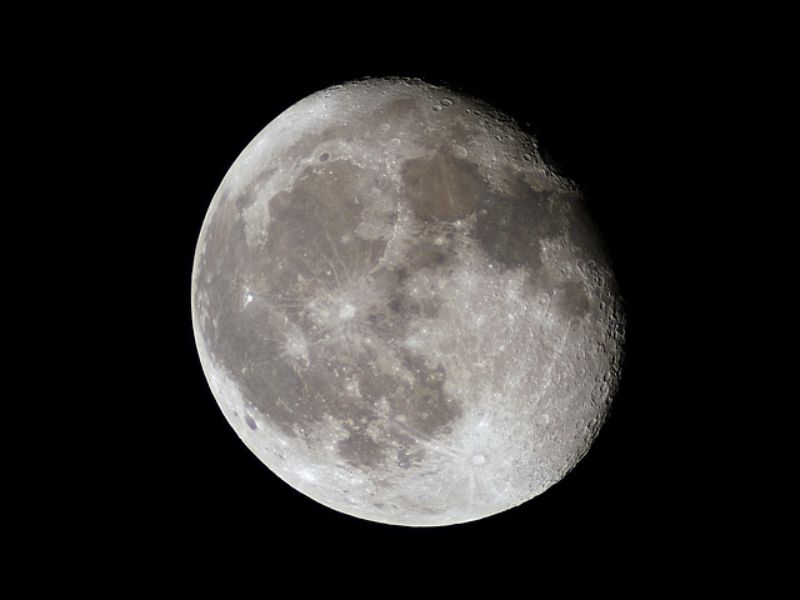
    The Resilience lander, developed by Japanese company ispace, has spent six months en route to the Moon and is targeting a landing in its far northern region. This marks ispace’s second attempt to reach the lunar surface.
    Image Credits: Pixabay

    The Resilience lander, developed by Japanese company ispace, has spent six months en route to the Moon and is targeting a landing in its far northern region. This marks ispace’s second attempt to reach the lunar surface.

    The touchdown is scheduled for June 5 at 3:24 p.m. ET, near the center of the Mare Frigoris (“Sea of Cold”). ispace will stream the landing live on its YouTube channel, starting about an hour before the scheduled time. You can also watch it via the feed below.

    Resilience Takes the Long Road to the Moon

    Tokyo-based ispace launched its second Moon mission on January 15, with the Resilience lander sharing a ride with another lunar-bound craft. While Firefly Aerospace’s Blue Ghost landed on March 2, Resilience took a longer route. It first entered an elliptical transfer orbit, then used a lunar flyby to switch to a low-energy path toward the Moon. After completing all necessary orbital maneuvers, Resilience is now in low lunar orbit, awaiting its landing attempt.

    For touchdown, the lander will automatically ignite its main engine to slow down and descend from orbit to the surface. On board is a small rover named Tenacious, bound for the Mare Frigoris region in the Moon’s far north, along with scientific instruments—mostly from Japanese commercial space companies—intended to study the lunar terrain.

    Lessons Learned from ispace’s First Failed Moon Landing

    This marks ispace’s second attempt to land on the Moon, following a failed effort in April 2023. During that first mission, the Hakuto-R M1 lander misjudged its altitude—believing it was nearly at the surface when it was still about 5 kilometers (3 miles) above. As a result, it slowed prematurely, ran out of fuel, and crash-landed. The mission carried both commercial and government payloads, including a small two-wheeled robot developed by Japan’s space agency.

    Despite that setback, ispace remains optimistic. “We’ve built on the lessons from Mission 1 and this current journey to the Moon, and we feel confident in our preparations for a successful landing,” said ispace founder and CEO Takeshi Hakamada.

    The Moon’s rugged surface has challenged many recent landers. Texas-based Intuitive Machines, for instance, saw both its Nova-C and Athena landers tip over after landing attempts.


    Read the original article on: Gizmodo

    Read more:Rare ‘Smiley Face’ Moon About to Hit The Sky With Venus And Saturn

  • Japanese Scientists Trial Groundbreaking Medication to Regenerate Teeth

    Japanese Scientists Trial Groundbreaking Medication to Regenerate Teeth

    Unlike reptiles and fish, which routinely replace their teeth, it’s long been believed that humans and most mammals only develop two sets over a lifetime.
    image Credit: Pixabay

    Unlike reptiles and fish, which routinely replace their teeth, it’s long been believed that humans and most mammals only develop two sets over a lifetime.

    However, Katsu Takahashi, head of oral surgery at the Medical Research Institute Kitano Hospital in Osaka, explains that a third set of tooth buds lies dormant beneath the gums.

    Takahashi’s team began clinical trials at Kyoto University Hospital in October, giving an experimental drug to adult volunteers in hopes of activating the growth of these hidden teeth.

    This is a completely new technology,” Takahashi told AFP.

    Natural Tooth Regeneration Could Offer a Less Invasive, More Affordable Alternative to Prosthetics

    Traditional prosthetic solutions for tooth loss due to decay, injury, or disease are often expensive and invasive. “Restoring natural teeth clearly offers significant benefits,” he added.

    Animal studies on mice and ferrets showed that inhibiting a protein called USAG-1 could trigger the growth of a third set of teeth. The researchers even published lab images showing regenerated teeth in these animals.

    In a study released last year, the team reported that their antibody-based treatment successfully promoted tooth regrowth in mice, marking what could be a major breakthrough in addressing human dental abnormalities.

    For now, the research team is focusing on patients with the most urgent needs—specifically those born missing six or more permanent teeth, a condition known as congenital tooth agenesis.

    A Rare Condition Causes Tooth Gaps and Social Struggles for Affected Youth in Japan

    This rare genetic disorder affects about 0.1% of the population and can cause significant difficulties with eating. In Japan, many young people with the condition wear face masks throughout adolescence to conceal the large gaps in their teeth, explained Takahashi.

    This drug could be life-changing for them,” he said.

    The treatment is primarily intended for children, and the researchers aim to make it available by 2030.

    Angray Kang, a professor of dentistry at Queen Mary University of London, noted that only one other group is working on a similar approach—using antibodies to regenerate or repair teeth.

    In my view, Takahashi’s team is leading the field,” said Kang, who specializes in immunotechnology and is not involved in the study.

    Kang described the research as “promising and worth further exploration,” especially since a drug targeting a protein closely related to USAG-1 is already being used to treat osteoporosis.

    He compared the long path ahead to “a series of ultra-marathons,” emphasizing that this is just the beginning of the journey toward human tooth regeneration.

    Chengfei Zhang, a clinical professor in endodontics at the University of Hong Kong, also praised the approach as “innovative with significant promise.”

    Experts Caution That Human Tooth Regrowth Remains Unproven Despite Promising Animal Studies

    Still, Zhang called the idea that humans have hidden tooth buds capable of generating a third set “both groundbreaking and controversial.” He warned that positive results in animal models don’t always guarantee success in humans.

    He added that while the animal experiments are encouraging, key questions remain—particularly whether the regenerated teeth would be functional and visually suitable as replacements for missing teeth.

    Takahashi remains optimistic, stating that the position of a newly grown tooth can be influenced—if not precisely controlled—by the location of the drug injection.

    If a tooth grows in an unintended spot, he explained, it can be realigned through orthodontic treatment or even relocated via transplantation.

    The initial clinical trial does not include young patients with congenital tooth loss, as the main goal at this stage is to assess the drug’s safety rather than its effectiveness.

    For now, the participants are healthy adults who have lost at least one natural tooth.

    Tooth Regrowth in Trial Participants Could Offer Early Evidence of the Drug’s Potential

    Although tooth regeneration isn’t the primary aim of this trial, Takahashi noted there’s a small chance it could occur—an outcome that would provide early proof the drug works for people who have lost teeth over time.

    If that happens, I’d be absolutely thrilled,” he said.

    Such a breakthrough would be especially meaningful in Japan, where the population is rapidly aging. The country has the world’s second-highest proportion of elderly citizens.

    According to Japan’s health ministry, over 90% of people aged 75 and older are missing at least one tooth.

    There’s strong hope that our technology can directly help extend healthy life expectancy,” Takahashi added.


    Read the original article on: France

    Read more: Lab-Grown Teeth Are Closer to Reality, Scientists Say