
Inria / G. Destombes
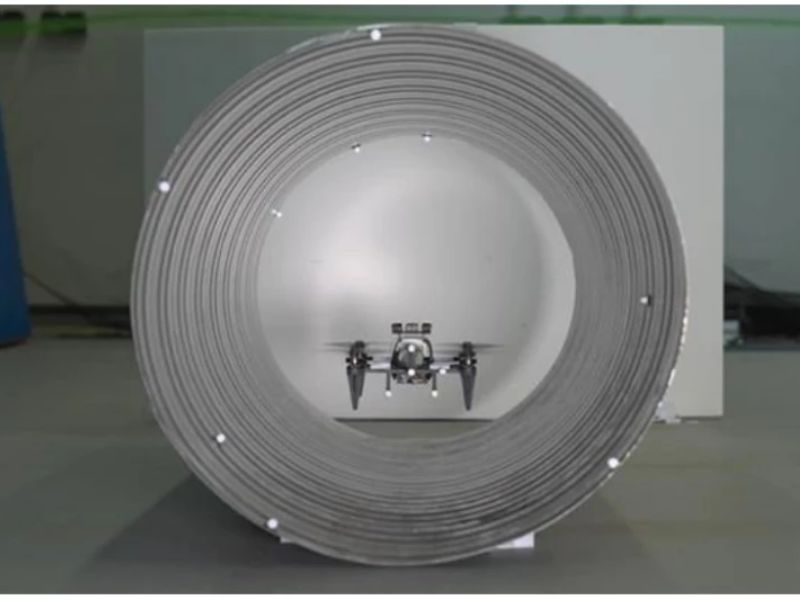
Researchers from Inria, CNRS, the University of Lorraine, and Aix-Marseille University are developing ways to help drones maneuver through ventilation shafts with the finesse of an action hero—minus the bruises. Their goal: teach quadcopters to traverse narrow ducts without crashing into the walls like a pinball.
From Hollywood to HVAC Challenges
Anyone who’s watched Die Hard knows that crawling through air vents is no walk in the park, but whether you’re evading terrorists or inspecting HVAC systems, the challenge remains the same. For drones used in reconnaissance or emergency response, navigating confined, uniform-looking, dimly lit ducts poses serious technical hurdles.
One major issue is airflow. These enclosed spaces create turbulent currents, and when a drone’s own rotors stir the air further, the result can be a chaotic flight path and plenty of unwanted collisions.
Inria / G. Destombes
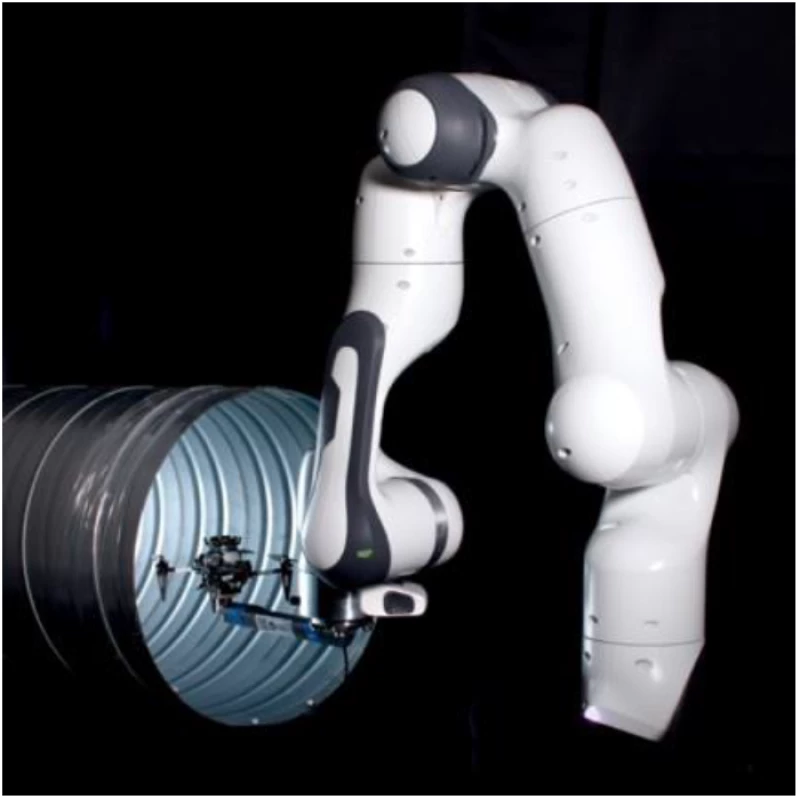
To counter this, Jean-Baptiste Mouret and his team at Inria conducted detailed airflow studies inside a scaled-down, circular duct with a 14-inch (35 cm) diameter. Using a robotic arm equipped with force and torque sensors, they recorded airflow data at hundreds of points to generate a map of stable and unstable zones—identifying where drones are likely to encounter turbulence versus calmer air pockets.
AI and Lasers in the Darkness
They also experimented with AI and laser-based systems to help drones orient themselves in near-total darkness with almost no visual cues. This enhanced sensory input allowed the drones to fly more steadily and avoid crashing into duct walls.
Looking ahead, the researchers plan to build a working prototype equipped with cameras, thermal imaging, or gas sensors to carry out real-world inspection tasks in tight, hazardous spaces.
All that’s missing now is a dramatic one-liner—then these drones would really be channeling their inner McClane.
Read the original article on: New Atlas
Read more: New Algorithm Trains Drones to Fly Around Obstacles at High Speeds