Tag: Kidney

  • Scientists Develop a Universal Kidney Compatible With Every Blood Type

    Scientists Develop a Universal Kidney Compatible With Every Blood Type

    The presence of different blood types is one of the more troublesome aspects of human biology—providing little benefit while complicating many medical procedures. Blood type compatibility already limits simple blood donations, and the challenge becomes even greater when it comes to organ transplants.
    Image Credits:UBC/Nature Biomedical Engineering

    The presence of different blood types is one of the more troublesome aspects of human biology—providing little benefit while complicating many medical procedures. Blood type compatibility already limits simple blood donations, and the challenge becomes even greater when it comes to organ transplants.

    Scientists Convert Type-A Kidney into Universal Type-O Organ

    In a groundbreaking study, scientists have reported success in converting a Type-A donor kidney into a universal Type-O organ. The procedure, performed on a clinically brain-dead patient, produced highly promising results. While there’s still progress to be made, this marks a remarkable milestone for the first transplant of its kind.

    The method employs an enzyme known for its ability to “cut away” antigen groups from the surface of red blood cells. When applied thoroughly, this enzyme can effectively transform any blood type into O-negative blood.

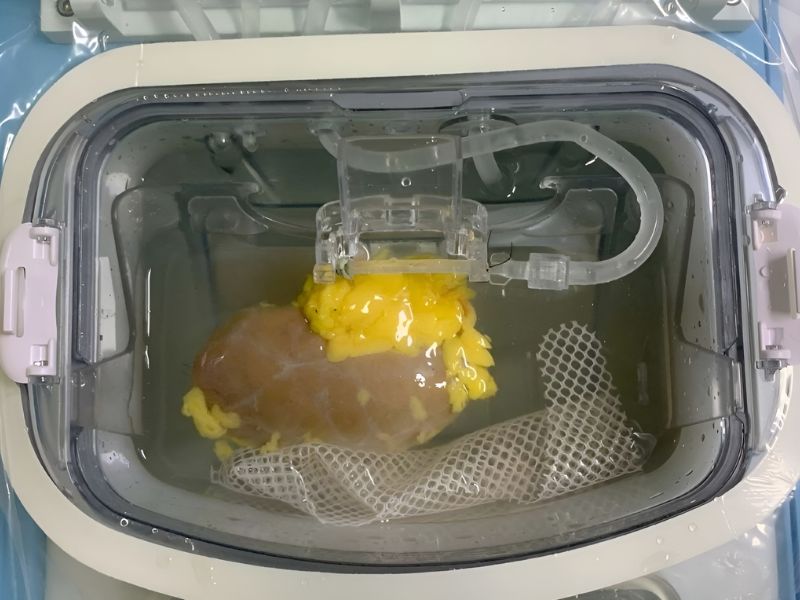
    Image Credits:UBC/Nature Biomedical Engineering

    Researchers used hypothermic perfusion to circulate an enzyme solution through the donor kidney, converting it to Type O-negative before transplanting it into the test patient, who also received the enzyme.

    The procedure resulted in the kidney functioning successfully for several days without the use of the immunosuppressive treatments normally required for transplants. This approach could greatly reduce strain on the patient’s health and significantly lower the risk of secondary infections.

    Potential for Gene Therapy to Enhance Kidney Adaptation

    By the third day, the kidney showed minor Type-A activity as the body adapted, suggesting future versions of the technique could use gene therapy to let the kidney produce its own blood type–altering enzymes.

    The demand for such innovations is immense. About 11 people die each day waiting for a kidney among 90,000 on transplant lists. Making any kidney compatible wouldn’t end the shortage but could greatly ease it.

    Ultimately, the true long-term solution may lie in growing entirely new kidneys, but that remains many years away. In the meantime, advances like this could save countless lives.


    Read the original article on: Extremetech

    Read more: Moth-like Drone Flies Autonomously without AI

  • Kidney Disease is a Global Threat—Let’s Start Treating it Like One

    Kidney Disease is a Global Threat—Let’s Start Treating it Like One

    The 78th World Health Assembly on May 19 will be one of the toughest yet for global health ministers. With the U.S. exiting the WHO, conflicts ongoing, and economic instability rising, the organization's financial crisis has deepened. Even before the U.S. withdrawal, the WHO was struggling with limited funds and seeking to diversify its income. Now, delegates must urgently allocate scarce resources where they’re needed most.
    Credit: Pixabay

    The 78th World Health Assembly on May 19 will be one of the toughest yet for global health ministers. With the U.S. exiting the WHO, conflicts ongoing, and economic instability rising, the organization’s financial crisis has deepened. Even before the U.S. withdrawal, the WHO was struggling with limited funds and seeking to diversify its income. Now, delegates must urgently allocate scarce resources where they’re needed most.

    Despite current challenges, delegates must focus on long-term goals. This meeting offers a key opportunity to reduce the global impact of non-communicable diseases (NCDs), aligning with UN Goal 3.4. The Assembly should support a resolution urging the WHO to recognize kidney disease as a major cause of death and disability, adding it to its priority NCD list alongside cancer, cardiovascular disease, diabetes, and respiratory illness.

    Global Impact of Kidney Disease

    Kidney disease affects 674 million people worldwide (8.5% of the population) and is a leading cause of premature death. BBy 2040, projections indicate that it will become the fifth leading cause of years of life lost. Kidney dysfunction raises the risk of cardiovascular disease, worsens diabetes and hypertension, and contributes to other conditions like cancer and dementia. It also leads to poor quality of life and mental health issues. Chronic kidney disease is particularly rising in regions like Mesoamerica, India, and Sri Lanka, increasing mortality and disability.

    Kidney disease often goes underreported, especially in low- and middle-income countries, where many individuals are unaware of their condition.” This leads to delayed diagnoses, poorer health outcomes, and higher mortality rates.

    Financial Considerations and the Call for Global Support in Tackling Kidney Disease

    Few high-income countries support the resolution, citing the WHO’s financial crisis and the estimated US$16 million needed for implementation over seven years. However, this modest investment could unlock more funding for kidney disease research and treatment. Given the economic burden, such as the £7 billion (US$9.3 billion) cost in the UK, it is a small price for the potential benefits.

    The WHO already supports efforts for diabetes, heart disease, and hypertension, and kidney disease should be treated similarly, with affordable therapies integrated into existing NCD strategies. Global nephrology societies emphasize that failing to prioritize kidney disease misses the chance to reduce preventable deaths.

    Despite current challenges, addressing kidney disease is crucial for any strategy tackling the global NCD burden. Adopting the WHO resolution is a vital first step.


    Read the original article on: Nature

    Read more: https://scitke.com/measles-causes-long-term-harm-in-kids-but-vaccines-fully-prevent-it/