
Stanford University has introduced a ureteroscopy-friendly device that uses a wire to magnetically capture and remove kidney stone fragments, demonstrating superior results compared to conventional methods in a pig model.
Kidney stone disease impacts roughly 11% of people in the U.S. and frequently necessitates ureteroscopic laser lithotripsy. Removing fragments after lithotripsy is often inefficient, leaving residual pieces that can cause pain, infection, repeat procedures, and higher healthcare costs.
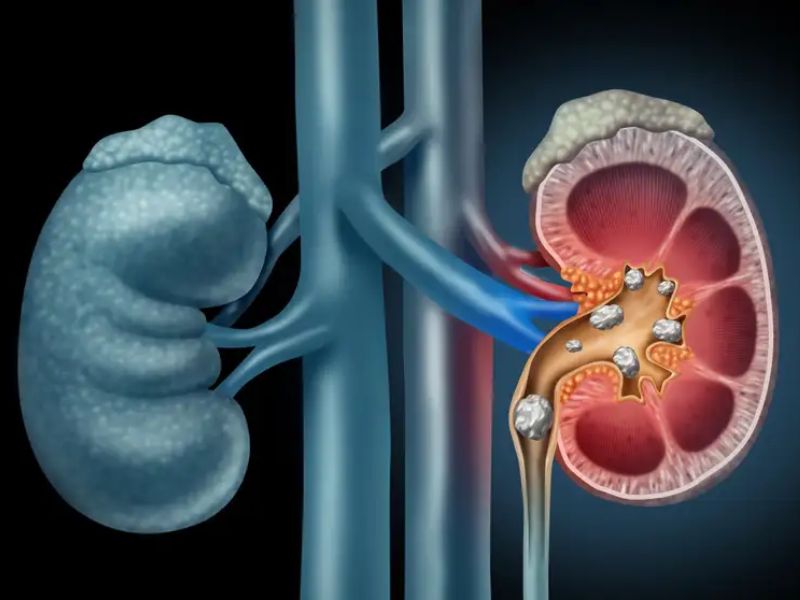
Stones develop from crystallized salts, which can block the narrow tubes that transport urine from the kidneys to the bladder, leading to pain, infection, and potential kidney damage.
Ureteroscopic laser lithotripsy is the most commonly performed treatment. During the procedure, an endoscope is inserted through the urethra into the upper urinary tract. A laser fiber breaks stones under saline, and surgeons remove or let fragments pass naturally.
Up to 40% of patients retain stone fragments after ureteroscopy, causing complications from ER visits to repeat procedures. Over five years, 30% of patients with residual fragments required another surgery, versus 4% with none.
The burden of care is significant, with over 1.3 million emergency visits and more than $4 billion in annual U.S. healthcare costs. Rising rates of obesity and diabetes—key risk factors for kidney stone formation—are driving an expected increase in costs, which could add $1.2 billion annually by 2030.
In the study titled “Magnetic retrieval of kidney stones via ureteroscopy in a porcine model,” published in Device, researchers developed a ureteroscopy-compatible system that coats stone fragments with a hydrogel and removes them using a magnetic wire under direct endoscopic guidance in pigs.
Study Configuration
The instruments used were similar to those in clinical ureteroscopy, with some deliberate optimizations. Researchers placed a 3D-printed kidney model in 0.9% saline and inserted human kidney stone fragments inside.
Researchers co-delivered ferumoxytol and chitosan via a dual-lumen injector, forming a magnetic hydrogel on the fragment surface. After the gel formed, they used a magnetic wire to attempt fragment retrieval.
Researchers retrogradely introduced human-derived calcium oxalate fragments smaller than 3 mm into pig kidneys. Researchers applied magnetic hydrogel to these fragments and attempted to retrieve them using the magnetic wire. Control kidneys underwent fragment placement and standard basket retrieval only.
For survival studies, three pigs were used. In each animal, one kidney received the magnetic hydrogel with endoscopic confirmation, while the other served as a control.
Outcomes of 3D-Printed Kidneys
Benchtop optimization revealed an initial density mismatch between ferumoxytol and chitosan in saline. Adding glycerol to chitosan balanced densities and quadrupled magnetic labeling of 1–2 mm calcium oxalate fragments.
Ureteroscopy experiments showed that multiple fragments could be removed with a single hydrogel application. A total of 28 fragments (1–2 mm) were extracted over six passes after delivering ~100 μL ferumoxytol and 200 μL chitosan.
Pig Productivity
One-week survival studies showed smooth, stone-free recovery with normal urination. Both urinalysis and blood tests stayed within normal limits.
Irrigation removed ~70% of the gel, while magnetic retrieval plus irrigation cleared 99.8% in 10 minutes. Magnetic particle imaging showed undetectable hydrogel in urine, blood, kidneys, ureters, bladder, and organs after one week, indicating complete elimination.
Plans for Forthcoming Studies
The authors show that magnetize-and-retrieve is feasible with clinical ureteroscopes in pigs, with good short-term safety and clear extraction and clearance methods.
Next steps include comparing in a ureteroscopy model, optimizing hydrogel dosing, improving catheter design, and exploring alternative magnetic setups.
If successfully adapted for clinical use, this method could improve stone-free rates, reduce patient complications, and decrease healthcare costs.
Read the original article on: Medical Xpress
Read more: New Blood Type Discovered After 50 Years