Tag: lab

  • The World’s Longest-Running Lab Experiment Nears 100 Years

    The World’s Longest-Running Lab Experiment Nears 100 Years

    Science can sometimes move at a glacial pace. Data trickles in slowly, truth emerges gradually, and certainty is often hard-won.
    Image Credits:(University of Queensland)

    Science can sometimes move at a glacial pace. Data trickles in slowly, truth emerges gradually, and certainty is often hard-won.

    The world’s longest-running lab experiment embodies this kind of extreme patience. It has been ongoing for nearly a century, overseen by successive custodians and observed by countless onlookers, as the experiment proceeds at an almost imperceptible pace.

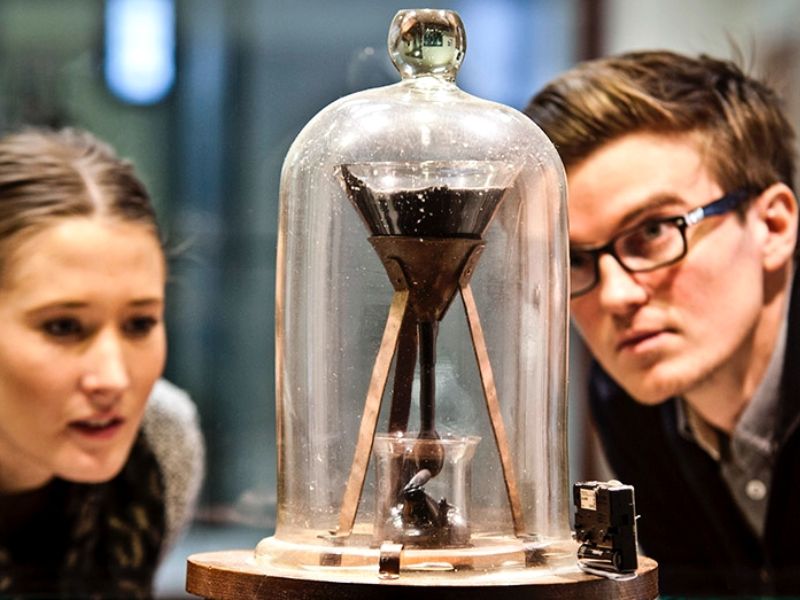
    It began in 1927 when physicist Thomas Parnell at the University of Queensland in Australia filled a sealed funnel with pitch, a tar-like substance once used to waterproof ships.

    A Ribbon-Cutting Moment in 1930

    Three years later, in 1930, Parnell cut the funnel’s stem—like cutting a ceremonial ribbon—initiating the Pitch Drop Experiment. The pitch began to flow.

    Well, “flow” is relative. At room temperature, pitch appears solid, but it is actually an incredibly viscous fluid, some 100 billion times thicker than water.

    It took eight years for the first droplet to finally fall into the beaker below. After that, drops appeared roughly every eight years, slowing only when air conditioning was added in the 1980s.

    Nearly a century after the funnel was first cut, just nine drops have fallen in total, the most recent in 2014.

    Scientists anticipate the next drop sometime in the 2020s, but it has yet to happen.

    Never Seen in Real Time Despite Live Streaming

    Remarkably, no one has ever witnessed a droplet fall in real time. The experiment is now live-streamed, yet past technical glitches have ensured each crucial moment has gone unseen.

    Image Credits:The pitch drop experiment before a new beaker replaced the full one. (UQ/Wikimedia Commons/CC BY-SA 3.0)

    After Parnell, physicist John Mainstone became the experiment’s caretaker in 1961. Sadly, neither he nor Parnell ever witnessed a droplet fall in person.

    Mainstone oversaw the experiment for 52 years. In 2000, he missed a drop due to a thunderstorm interrupting the live feed, and he passed away just months before the next droplet fell in April 2014.

    Today, physics professor Andrew White serves as the third custodian, patiently awaiting the long-anticipated 10th drop.


    Read the original article on:Sciencealert

    Read more:10,000 Brain Scans Explain How Aging Impairs Memory
  • Scientists Have Grown Human Skin in The Lab and may be Close to Stopping Aging

    Scientists Have Grown Human Skin in The Lab and may be Close to Stopping Aging

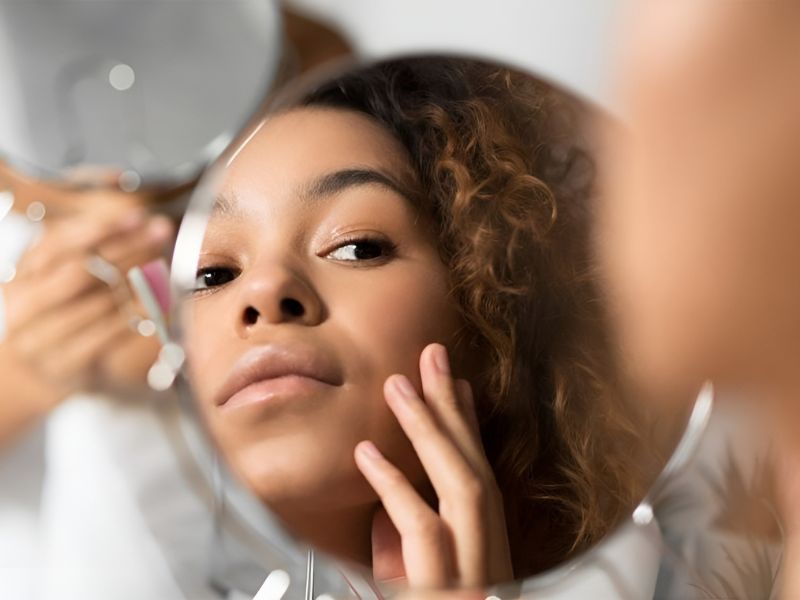
    This advancement could pave the way for techniques to reduce visible aging and produce synthetic skin for transplantation. It is tied to the ambitious Human Cell Atlas initiative, which aims to map the formation of every part of the human body.
    Image Credits: ccb.med.br

    This advancement could pave the way for techniques to reduce visible aging and produce synthetic skin for transplantation. It is tied to the ambitious Human Cell Atlas initiative, which aims to map the formation of every part of the human body.

    Spearheaded by researchers at the Wellcome Sanger Institute in the UK, the project explores how cells evolve from the embryonic phase to adulthood. Gaining control over skin development could not only slow aging but also support disease treatment and tissue repair.

    How Stem Cells Transform Into Skin

    Following fertilization, all human cells start out identical. Around three weeks later, certain genes within stem cells begin to activate, guiding them to specialize into different tissues. For skin development, researchers pinpointed the specific genes responsible for creating the outer layer, pigmentation, and other key components.

    Their findings, published in Nature, revealed that small sections of skin could be generated in the lab. By precisely switching genes on and off using chemical signals, the team successfully grew artificial skin from stem cells.

    The creation of lab-grown skin unlocks numerous possibilities. One major application could be its use in treating burn victims through advanced skin transplants.

    The research may also enable the regeneration of hair follicles, offering hope for reversing baldness.

    Toward Scar-Free Healing and Better Skin Treatments

    Additionally, this technology provides a valuable platform for studying genetic skin disorders and testing potential therapies. Scientists are also interested in replicating the scar-free healing seen in fetal skin, which could revolutionize surgical recovery.

    The Human Cell Atlas initiative has examined millions of cells across various organs, creating preliminary maps for systems like the brain and lungs. The upcoming stage aims to merge these separate atlases, providing deeper insight into how the human body functions.

    Sarah Teichmann, one of the project’s leaders, notes that these findings could transform our understanding of tissues and organs. Genetic blueprints for the development of additional body structures are set to be released soon, further revealing how humans are built.

    While much work remains, the findings so far are encouraging. Controlling cell development has the potential to transform disease therapies and tissue regeneration. The Human Cell Atlas project is steadily broadening our understanding of the human body, opening new avenues for regenerative medicine and anti-aging research.


    Read the original article on: Ccb Med Br

    Read more: Harvard Reverses Aging in Monkeys; Human Trials Coming soon

  • Lab-Made Artificial Life Can Grow and Divide Similarly to Natural Bacteria

    Lab-Made Artificial Life Can Grow and Divide Similarly to Natural Bacteria

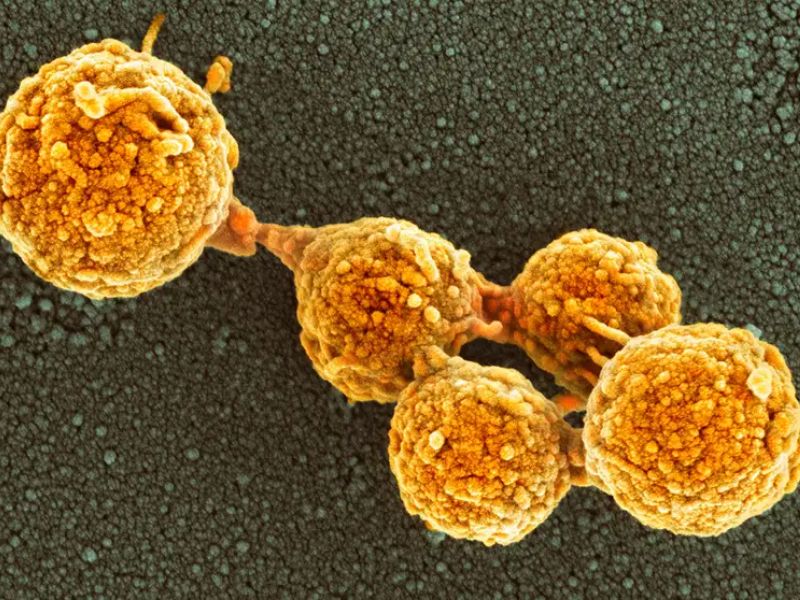
    Synthetic cells, created by merging elements of Mycoplasma bacteria with a chemically synthesized genome, can grow and divide into uniformly shaped and sized cells—much like natural bacteria.
    Image Credits: THOMAS DEERINCK, NCMIR/SCIENCE PHOTO LIBRARY

    Synthetic cells, created by merging elements of Mycoplasma bacteria with a chemically synthesized genome, can grow and divide into uniformly shaped and sized cells—much like natural bacteria.

    Craig Venter’s Team Creates Synthetic Minimal Cells with 473 Essential Genes

    In 2016, a team led by Craig Venter at the J. Craig Venter Institute in San Diego unveiled synthetic “minimal” cells, each containing only 473 essential genes believed to support basic life functions.

    Named JCVI-syn3.0 after the institute, the cells were capable of growing and dividing on agar, forming clusters known as colonies.

    However, when Venter and his team took a closer look at the dividing cells, they found that the cells weren’t splitting evenly to produce identical daughter cells, as natural bacteria typically do. Instead, the divisions resulted in oddly shaped and sized offspring.

    “They had removed all genome parts they believed weren’t essential for growth,” says Elizabeth Strychalski of the US National Institute of Standards and Technology. But their idea of “essential” turned out to mean what was needed to grow visible colonies on an agar plate—not what was required for realistic, uniform cell division.

    Discovery of Five Unexpected Genes Essential for Cell Division by Strychalski’s Team

    Strychalski and her team discovered that, while two of the seven genes were already known to play a role in cell division, the other five had no previously identified function. “It was surprising,” she says.

    “These five genes fell outside what we previously understood,” adds study co-author James Pelletier of the Massachusetts Institute of Technology.

    He notes, “The minimal cell contains many genes with unknown functions that are still essential for survival—making them a fascinating focus for future research.”

    “This research is hugely valuable for understanding how life functions and which genes are essential for reliably running cells,” says Drew Endy of Stanford University in California.

    Minimal Cells Illuminate Life’s Origins and Advance Synthetic Biology, Says Kate Adamala

    Kate Adamala from the University of Minnesota in Minneapolis adds, “Studying minimal cells helps reveal the fundamental principles of life and its evolutionary origins,” noting that these cells closely resemble the last universal common ancestor of all life on Earth.

    The discovery also “moves us closer to creating fully defined, understood, and controllable living cells,” says Adamala. “Because they lack the complexity of natural systems, synthetic cells serve as powerful tools for both fundamental research and biotech applications.”

    “The possibilities are enormous—in agriculture, nutrition, medicine, and environmental cleanup,” adds Jef Boeke of New York University. “Being able to fine-tune and correct biological code is a key milestone toward realizing those applications.”


    Read the original article on: New Scientist

    Read more: A High-Tech Capsule for Stomach Diagnostics

  • Lab-Grown Teeth Are Closer to Reality, Scientists Say

    Lab-Grown Teeth Are Closer to Reality, Scientists Say

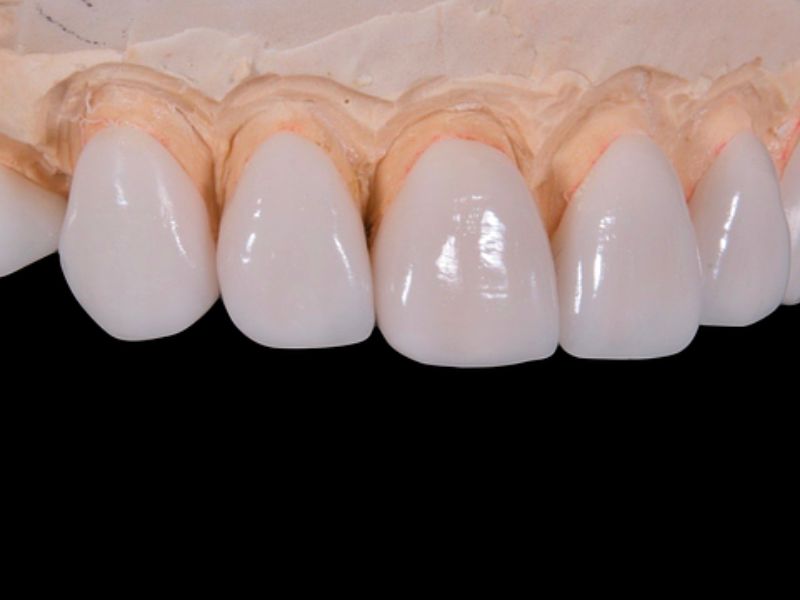
    The concept of growing teeth in a lab might sound like something out of a horror movie, but it could actually have a practical, non-terrifying use—replacing cavities and damaged teeth. New research brings us one step closer to making this a reality.
    Credit: Pixabay

    The concept of growing teeth in a lab might sound like something out of a horror movie, but it could actually have a practical, non-terrifying use—replacing cavities and damaged teeth. New research brings us one step closer to making this a reality.

    Researchers from King’s College London and Imperial College London have developed a hydrogel that enhances cell communication, aiding the growth of new tooth structures using dental cells from mouse embryos.

    Lab-Grown Teeth: Seamless Jaw Integration, Says Xuechen Zhang

    Lab-grown teeth would regenerate naturally and seamlessly integrate into the jaw like real teeth,” explains Xuechen Zhang, a PhD candidate in Regenerative Dentistry at KCL.

    They would be stronger, more durable, and less likely to be rejected, providing a more long-lasting and biologically compatible option than fillings or implants.”

    The goal is for tooth injuries to heal on their own, much like how a cut on the skin repairs naturally. Researchers are currently exploring various methods to see if we can adapt our own teeth to function this way.

    Crucially, the hydrogel functions without disrupting other biological processes, more accurately replicating what occurs naturally in the human body. This is reassuring for a material designed to enhance our own self-repair abilities.

    Lab-Grown Teeth: Gradual Signal Release Mimics Nature, Says Zhang

    Earlier efforts were unsuccessful because all the signals were delivered at once,” explains Zhang. “This new material, however, releases signals gradually over time, mimicking the body’s natural processes.”

    The next challenge is recreating the conditions for healthy tooth growth in our mouths, not just in the lab. Several possibilities are being explored, such as transplanting cells or implanting fully grown lab-created teeth.

    Interestingly, there are several species in nature that can regenerate their own teeth. Though we’re still far from achieving this, we’re steadily advancing with discoveries that bring us closer to the goal.

    Antibody Treatments for Anodontia: Solution Expected by Decade’s End

    Another avenue being researched to address anodontia (the condition that prevents tooth growth) is antibody-based treatments. This approach is expected to be available by the end of the decade.

    As seen in the research on anodontia, this goes beyond just advanced dentistry for people who neglect their oral hygiene. Issues like missing teeth are increasingly understood to be connected to broader health concerns.

    As the field progresses, these innovative techniques could revolutionize dental care, providing sustainable solutions for tooth repair and regeneration,” says Ana Angelova Volponi, a regenerative dentistry expert at KCL.


    Read the original article on: Science Alert

    Read more: Regenerative Dentistry Discovery: Biological Therapy for Damaged Teeth