Tag: Launches

  • Japan Launches Trials of Artificial Blood that Works with all Blood Types

    Japan Launches Trials of Artificial Blood that Works with all Blood Types

    Japan is preparing to take a major step forward in medicine, as clinical trials of artificial blood that works with all blood types are set to begin this year at Nara Medical University. The research could reshape healthcare by changing how hospitals manage transfusions worldwide.
    Image Credits::cff

    Japan is preparing to take a major step forward in medicine, as clinical trials of artificial blood that works with all blood types are set to begin this year at Nara Medical University. The research could reshape healthcare by changing how hospitals manage transfusions worldwide.

    The goal is to create a universal synthetic blood that eliminates compatibility testing and expands supply. It builds on 2022 experiments with “hemoglobin vesicles,” tiny particles that carry oxygen like red blood cells. Trials in rabbits showed results comparable to real blood, without serious side effects.

    Longer Shelf Life and Greater Accessibility

    In addition to working for all blood types, artificial blood stores at room temperature for over a year, while donated human blood requires refrigeration and expires quickly. This could make the technology especially valuable in remote areas, disaster zones, and regions affected by conflict.

    The next phase will involve human volunteers, who will receive between 100 and 400 milliliters of the artificial blood as researchers assess its safety. The long-term goal is to make the product widely available in hospitals by 2030.

    This technology could help address one of the greatest challenges facing healthcare systems globally: blood shortages. Many countries struggle to maintain adequate supplies through voluntary donations alone, particularly in lower-income regions. Even in wealthier nations, patients with rare blood types often face difficulties finding compatible donors.

    Addressing Blood Shortages in an Aging Society

    Japan, which has an aging population and a declining birth rate, already faces growing pressure on its blood supply. Researchers are developing artificial blood from hemoglobin taken from expired donations, sealed to prevent immune reactions.

    Another promising method uses hemoglobin wrapped in proteins known as albumins. Animal studies have shown that this approach can help maintain blood pressure and may prove useful in treating conditions such as severe bleeding and stroke.

    According to the World Health Organization, more than 100 countries rely on imported blood products, which can limit care for patients with serious medical needs. A stable, universal synthetic blood could provide a lasting solution to this global issue.

    Project leader Professor Hiromi Sakai says the advances could secure a stable, long-lasting blood supply with less reliance on donations. If successful, Japan could lead one of the century’s biggest medical breakthroughs.


    Read the original article on:cff

    Read more:Brain-Inspired AI Supports Stable Task Switching for Soft Robotic Arms

  • China Launches World-First Quantum Computer Into Space

    China Launches World-First Quantum Computer Into Space

    The competition for quantum supremacy has reached a new stage—this time extending into space. China unveiled its fastest quantum computer as another milestone marked the first launched into orbit on a SpaceX rocket.
    Image Credits: Um computador quântico projetado para funcionar no espaço (mostrado durante a montagem em laboratório) está orbitando a Terra em um satélite. © Walther Group/Cortesia de DLR RSC3

    The competition for quantum supremacy has reached a new stage—this time extending into space. China unveiled its fastest quantum computer as another milestone marked the first launched into orbit on a SpaceX rocket.

    China’s newly unveiled model outperforms several of the world’s most powerful supercomputers. Using a photon-based architecture, the system performs complex computations exponentially faster than classical machines. This breakthrough strengthens China’s position in the global tech race and moves quantum computing closer to practical, real-world use.

    Debating Supremacy, Advancing Reality

    Though debated, quantum supremacy is a milestone that recent progress shows is getting closer.

    Meanwhile, University of Vienna researchers launched the first operational quantum computer into orbit, now circling Earth at about 530 km.

    Remarkably, the device was built in only 11 days. Compact and efficient, the device is under 4 liters, 9 kg, and runs on 10–30 watts—ideal for energy-limited space missions.

    Project lead Philip Walther said the mission tests whether quantum principles endure space’s extreme conditions.

    As pioneers, we also bear the responsibility of ensuring that these systems perform as expected beyond Earth’s atmosphere,” Walther told ScienceNews.

    Its main advantage is enabling edge computing, letting satellites process data locally instead of sending it back to Earth, saving time, energy, and bandwidth.

    Photons as the Building Blocks of Quantum Power

    The system uses photonic quantum computing, with photons as qubits able to exist in 0 and 1 states simultaneously. This method offers not only faster processing but also higher energy efficiency, a critical factor for space operations.

    Though still experimental, the mission proved the hardware works in space. The next step is to assess how well it withstands long-term exposure to orbital conditions.

    Once the mission concludes, the satellite will be directed into a controlled atmospheric reentry, ensuring its safe destruction and marking the close of its groundbreaking journey.

    From Earth to space, China’s breakthrough and the orbital experiment show quantum computing is moving from promise to reality.


    Read the original article on: Think Move Make

    Read more: Pregnancy-Simulating Robot Debuts in China

  • Amazon Deploys 1Mth Robot, Launches AI Model

    Amazon Deploys 1Mth Robot, Launches AI Model

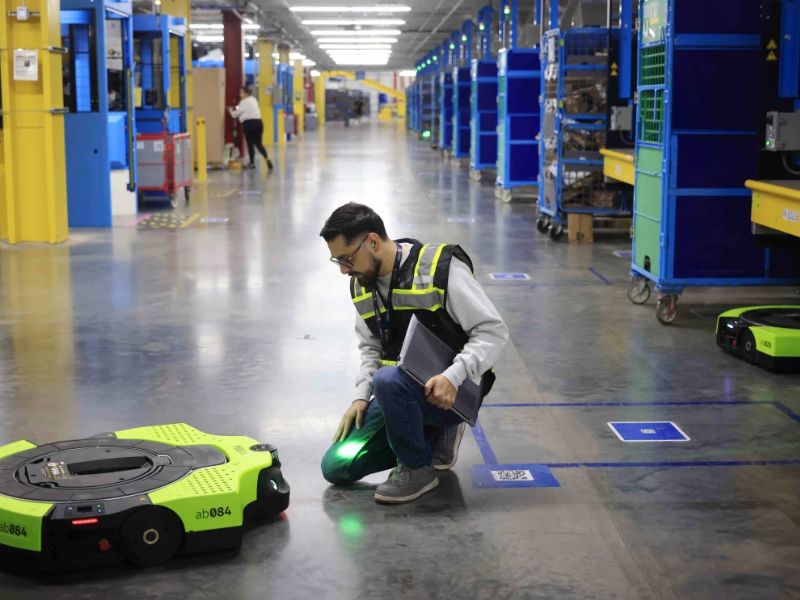
    After 13 years of integrating robots into its warehouses, Amazon has hit a major milestone: it now operates 1 million robots across its facilities, the company announced Monday. The one millionth unit was recently deployed at a fulfillment center in Japan.
    Image Credits:Techcrunch

    After 13 years of integrating robots into its warehouses, Amazon has hit a major milestone: it now operates 1 million robots across its facilities, the company announced Monday. The one millionth unit was recently deployed at a fulfillment center in Japan.

    Robots Now Support 75% of Amazon Deliveries

    This achievement moves Amazon closer to another key benchmark — reaching parity between the number of robots and human workers in its warehouse network, according to The Wall Street Journal. The WSJ also noted that robots now assist with 75% of Amazon’s global deliveries.

    TechCrunch has contacted Amazon for additional details.

    Amazon also revealed a new generative AI model called DeepFleet, designed to optimize the movements of its warehouse robots. According to the company, DeepFleet will boost the fleet’s operational speed by 10% by streamlining route coordination.

    SageMaker Powers Development of Amazon’s Warehouse AI

    The model was developed using Amazon SageMaker, the company’s cloud-based AI development platform, and was trained on internal warehouse and inventory data.

    Reaching the one million robot milestone reflects more than just scale — Amazon has been steadily advancing its robotic systems, introducing enhanced features and newer models over time.

    In May, Amazon introduced its newest robot, Vulcan, featuring two specialized arms — one for moving inventory and another equipped with a camera and suction cup to pick up items. Amazon says Vulcan stands out for its ability to “feel” the objects it handles, thanks to a built-in sense of touch.

    Amazon Launches Robot-Heavy Fulfillment Centers

    Back in October 2024, Amazon announced plans for next-generation fulfillment centers designed to house ten times more robots than current facilities, while still employing human workers. The first of these advanced centers opened soon after in Shreveport, Louisiana, near the Texas border.

    Amazon began expanding its robotics operations in 2012, following its acquisition of Kiva Systems.


    Read the original article on:Techcrunch

    Read more:Only Certain Uranium Can Fuel Weapons. Here’s What Enrichment Involves

  • Watch Live: NASA Launches a Space Telescope That May Redefine the Universe’s Origins

    Watch Live: NASA Launches a Space Telescope That May Redefine the Universe’s Origins

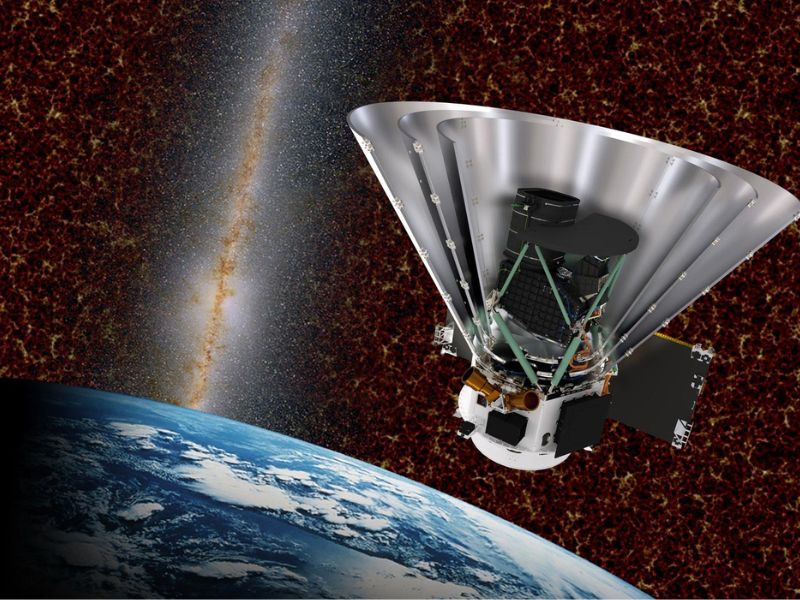
    The Spectro-Photometer for the History of the Universe, Epoch of Reionization and Ices Explorer (SPHEREx) mission will provide the first all-sky spectral survey. Over a two-year planned mission, the SPHEREx Observatory will collect data on more than 450 million galaxies along with more than 100 million stars in the Milky Way in order to explore the origins of the universe. Credit: NASA

    NASA is preparing for an exciting dual-mission launch featuring SPHEREx, a space telescope designed to uncover the universe’s history and search for life’s building blocks, and PUNCH, a mission that will study the Sun’s outer layers and solar wind.

    A SpaceX Falcon 9 rocket will carry both missions into space from Space Launch Complex 4 East at Vandenberg Space Force Base in California. The launch window opens on Friday, February 28, at 10:09 p.m. EST (7:09 p.m. PST). NASA will provide live coverage on NASA+.

    Mission Objectives

    • SPHEREx will investigate how the universe evolved and identify key molecules linked to life in our galaxy.
    • PUNCH consists of four small spacecraft that will track how the Sun’s corona transitions into solar wind, shaping space weather.
    NASA’s SPHEREx is situated on a work stand ahead of prelaunch operations at the Astrotech Processing Facility at Vandenberg Space Force Base in California. The SPHEREx space telescope will share its ride to space on a SpaceX Falcon 9 rocket with NASA’s PUNCH mission. Credit: USSF 30th Space Wing/Christopher

    Prelaunch Events & Coverage

    NASA will host live-streamed briefings leading up to launch:

    Tuesday, February 25 – Science Overview (2 p.m. EST)

    Experts will discuss the science goals of SPHEREx and PUNCH, featuring NASA astrophysics and heliophysics leaders.

    Thursday, February 27 – Prelaunch News Conference (3:30 p.m. EST)

    NASA officials, project managers, and SpaceX representatives will provide mission updates and discuss launch preparations.

    Launch Day Coverage – Friday, February 28

    • 12 p.m. – SPHEREx & PUNCH Launch Preview (NASA+)
    • 9:15 p.m. – Live launch coverage begins
    • 10:09 p.m. – Launch window opens

    How to Watch & Participate

    NASA’s website will feature live updates, streaming links, and behind-the-scenes coverage. The public can also register for NASA’s virtual guest program, which includes curated launch resources, real-time notifications, and a digital stamp for the NASA virtual guest passport.


    Read Original Article: Sci Tech Daily

    Read More: SpaceX Says Starship Self-Destructed Due to Propellant Leaks, Fires, and a Comms Blackout