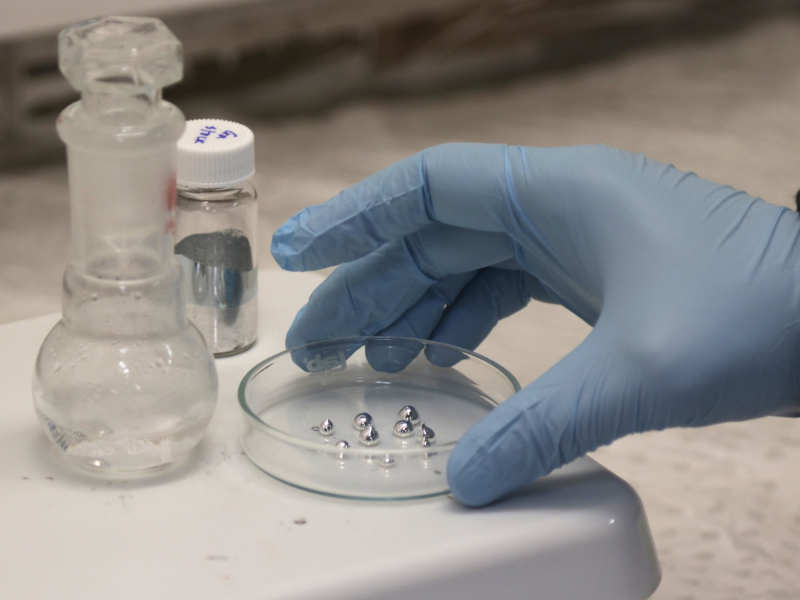

Researchers have unveiled a groundbreaking approach that leverages liquid metals to transform and “green” the chemical industry. This innovative technique could replace the energy-intensive methods rooted in the early 20th century, offering a much-needed shift away from solid catalysts.
Reducing Greenhouse Gas Emissions
Chemical production contributes to global greenhouse gas emissions, accounting for roughly 10–15% of the total. Moreover, over 10% of the world’s energy is consumed by chemical factories. Researchers have explored liquid metals as a sustainable alternative to address this environmental challenge.
A Paradigm Shift in Catalysis
The study, led by Professor Kourosh Kalantar-Zadeh, Head of the University of Sydney’s School of Chemical and Biomolecular Engineering, and Dr. Junma Tang, who works jointly at the University of Sydney and UNSW, introduces a novel approach to catalysis.
It challenges the conventional use of solid catalysts made from solid materials in chemical processes for producing plastics, fertilizers, fuels, and feedstock.
Liquid Metals: A Game-Changer
Solid processes in chemical production are notorious for their energy intensity, often requiring temperatures soaring to a thousand degrees centigrade. In contrast, the new method harnesses the unique mobility of liquid metals, specifically tin and nickel.
These liquid metals can migrate to the surface of other liquid metals, facilitating reactions with input molecules like canola oil. This results in the transformation of canola oil molecules into smaller organic chains, including propylene, a high-energy fuel essential for various industries.
The Energy-Efficiency Promise
Professor Kalantar-Zadeh highlights the energy-saving potential of this approach, emphasizing that the chemical industry could reduce energy consumption and make chemical reactions more eco-friendly.
Given the projection that the chemical sector may contribute to over 20% of emissions by 2050, this innovation is a significant step toward mitigating the industry’s environmental impact.
Liquid Metals’ Advantage
Liquid metals offer distinct advantages due to their more randomly arranged atoms and increased freedom of movement compared to solids. They can catalyze chemical reactions at significantly lower temperatures, reducing the energy required.
In their research, high melting point nickel and tin were dissolved in a gallium-based liquid metal with a melting point as low as 30° centigrade.
The Promise of Single Atom Catalysts
This research provides access to single-atom catalysts, which offer a remarkable advantage to the chemical industry. These catalysts have the highest surface area accessibility for catalysis.
The formula developed in this study can be used in various other chemical reactions by employing low-temperature processes. This approach could revolutionize the industry’s energy efficiency and environmental impact, marking a paradigm shift toward greener chemical manufacturing.
Read the original article on Nature Nanotechnology.
Read more: Using Liquid Metals to Synthesize High-Entropy Alloy Nanoparticles.