Tag: Mercedes

  • A Mercedes Powered by BMW Engines Could Soon Hit Showrooms

    A Mercedes Powered by BMW Engines Could Soon Hit Showrooms

    Mercedes-Benz is in advanced talks about adopting BMW’s four-cylinder petrol engine in a variety of its future cars
    Mercedes-Benz

    Mercedes-Benz and BMW have long stood as fierce rivals in the automotive world. Yet, the two iconic German brands may soon be linked in an unexpected way—by sharing engines.

    Talks of Engine Sharing

    According to Autocar UK, an insider at Mercedes disclosed that the company is in advanced discussions to use BMW’s four-cylinder petrol engines across several upcoming models. An official confirmation on whether this partnership will move forward is expected by the end of the year.

    So, what pushed Mercedes to consider such an unusual step? The Stuttgart-based manufacturer, once adamant about eliminating combustion engines by the decade’s end, has been forced to reconsider. With electric vehicle adoption—particularly in the premium market—growing more slowly than anticipated, the company has scaled back its all-electric ambitions.
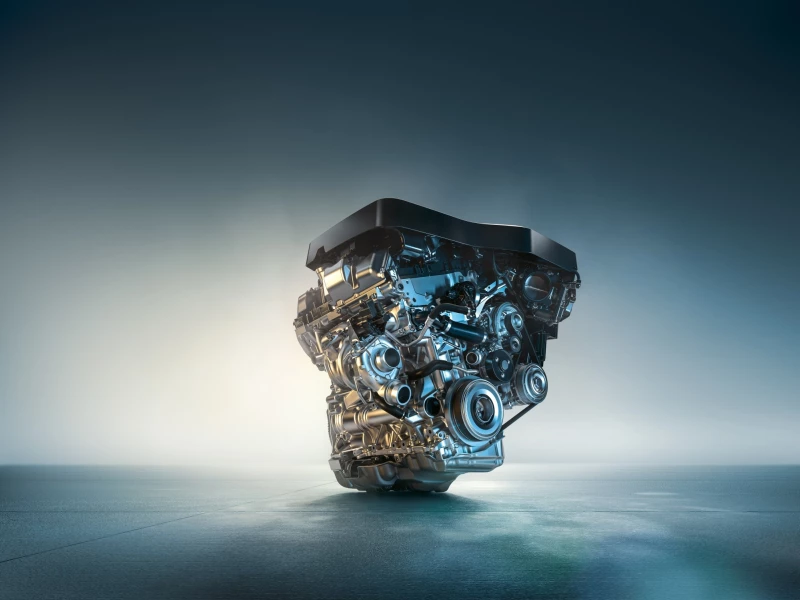
    BMW’s B48 turbocharged 2.0-liter inline-four is likely the one engine that Merc is after
    BMW

    As Mercedes prepares to keep internal combustion engines in its lineup for at least another decade, it now faces gaps in its ability to produce enough ICE powertrains, especially for high-volume models such as the CLA-Class. This shortage may have led the automaker to turn to its historic competitor, BMW, for help.

    Reports of a BMW Supply Deal

    Reports first surfaced in Manager Magazin, which revealed that BMW could supply Mercedes with a new generation of petrol engines. These would potentially power a wide range of vehicles—from the CLA, GLA, and GLB to the C-Class, E-Class, GLC, and even the upcoming “Little G.”

    The most likely candidate is BMW’s B48 turbocharged 2.0-liter inline-four engine. Sources suggest that Mercedes-Benz CEO Ola Källenius initiated talks with BMW more than a year ago, with both companies working since then to iron out technical details.
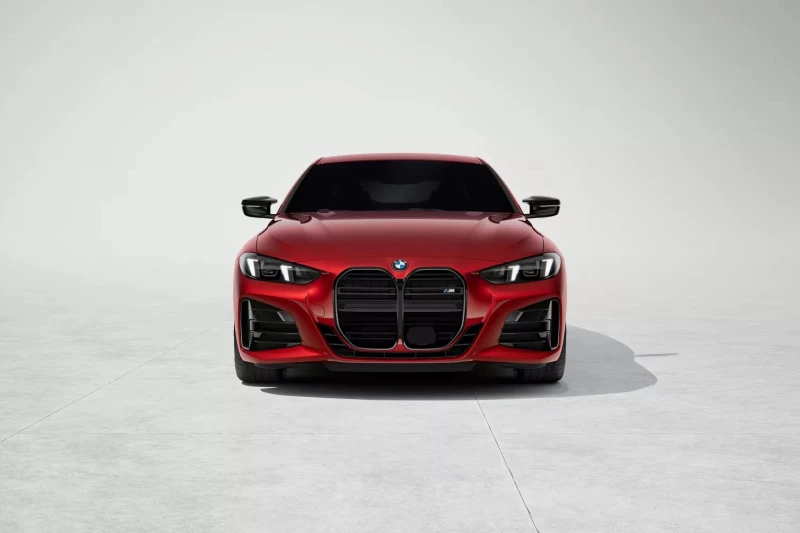
    This won’t be the first deal of its kind for BMW
    BMW

    This wouldn’t be new territory for BMW, which already provides engines to brands such as Jaguar Land Rover, Ineos, Toyota, and Range Rover. Adding Mercedes to the list would simply extend its reach.

    Mercedes’ History of Outsourcing Powertrains

    Likewise, Mercedes has sourced engines externally before. In the past, it has relied on Nissan and Renault powertrains, and more recently entered a deal with Geely and Renault’s joint venture Horse Powertrain to supply turbocharged 2.0-liter inline-four engines for hybrid versions of the next-generation CLA-Class.

    For Mercedes, a partnership with BMW could significantly cut research and development costs for future four-cylinder models, allowing it to focus resources on six- and eight-cylinder engines. For BMW, the deal could generate additional revenue by utilizing extra capacity at its Steyr plant in Austria.
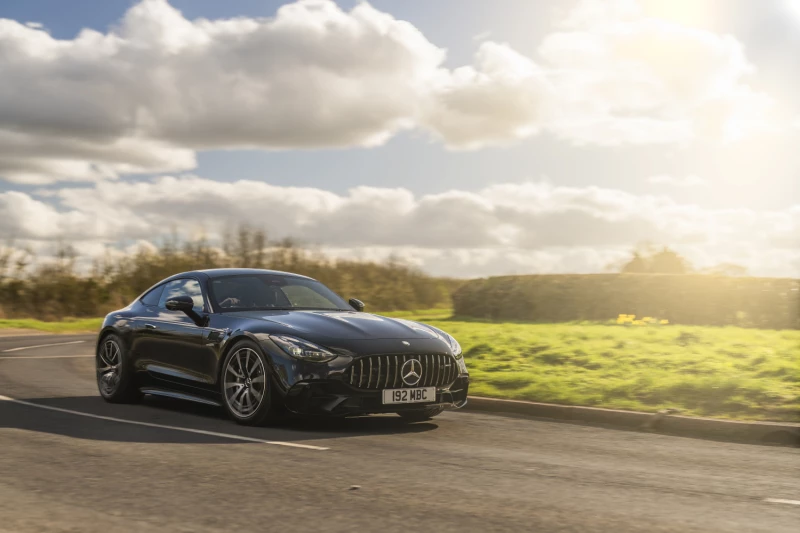
    The BMW motor would likely be employed in the upcoming CLA, the GLA, GLB, C-Class, E-Class, and GLC, as well as the future “Little G”
    Mercedes-Benz

    Should the collaboration move forward, the companies might even consider expanding joint production outside Europe. With U.S. tariffs adding pressure, American-based manufacturing could become a strategic necessity. For now, though, it’s a matter of waiting to see whether this unlikely alliance becomes reality.


    Read the original article on: New Atlas

    Read more: Mercedes-AMG’s Axial-Flux System Packs 1,340 hp in a Lightweight Build
  • Mercedes CLA EV Boasts a 500-Mile Range and Rapid 10-Minute Charging

    Mercedes CLA EV Boasts a 500-Mile Range and Rapid 10-Minute Charging

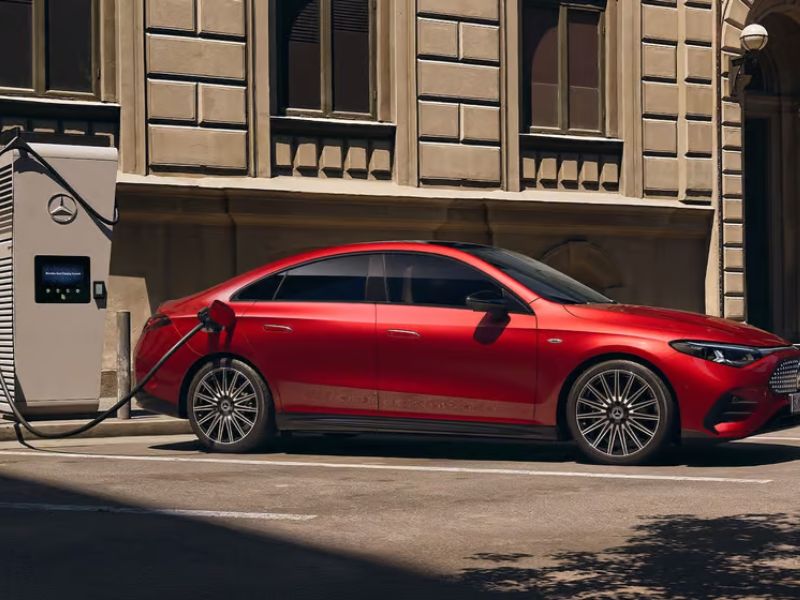
    The Mercedes CLA EV boasts a WLTP driving range of up to 492 miles
    Mercedes Benz

    Mercedes’ “compact sedan for the electric era” has arrived, packed with advanced EV features. It marks the first model in an entirely new generation of Mercedes electric vehicles.

    The new CLA offers more space, luxury, technology, and style, surpassing its predecessor in every aspect. Built on the brand’s MMA platform, it also lays the groundwork for the upcoming GLA and GLB models.

    Mercedes to Follow Up CLA EV Launch with Hybrid Variant, Potentially Its Most Advanced Model Yet

    Interestingly, Mercedes will also introduce a hybrid version a few months after the EV’s debut. While it may be considered an entry-level model on paper, it could be the brand’s most advanced EV yet. The 2026 CLA EV is set to launch this fall in the Northern Hemisphere, with the hybrid variant arriving early next year.

    The CLA EV is built on 800V technology 
    Mercedes Benz

    The base CLA offers an impressive WLTP-rated range of up to 492 miles (792 km), made possible by its advanced EQ technology. Built on an 800V architecture, it can gain approximately 200 miles (321 km) of range in just 10 minutes using 320-kW DC fast charging, according to Mercedes.

    Powering the vehicle is an 85-kWh nickel-manganese-cobalt (NMC) battery, which boasts up to 20% higher energy density than previous models. In the U.S., this battery exclusively pairs with a 268-hp rear motor, driving the back wheels through a two-speed transmission—a first for Mercedes.

    Enhanced Performance

    For added performance, an optional 107-hp front motor engages when extra traction or acceleration is needed but remains decoupled otherwise to reduce energy loss. Mercedes states that the single-motor version accelerates from 0 to 60 mph (97 km/h) in 6.6 seconds, while the dual-motor variant achieves it in just 4.8 seconds.

    The new CLA EV looks more substantial while maintaining the four-door coupe silhouette and the slanted roof of the previous model
    Mercedes Benz

    Brake-by-Wire System Optimizes Friction and Energy Recovery in CLA EV

    Mercedes has taken regenerative braking to a new level in the CLA EV, integrating it more deeply than in its previous electric models. The system is entirely brake-by-wire, meaning the brake pedal and braking mechanism are physically separate. Instead of direct braking, the pedal sends signals to the system, which determines the optimal combination of friction and regenerative braking.

    The latest CLA retains its signature four-door coupe profile and sloping roofline while adopting a more substantial stance. To accommodate the underfloor battery, the EV has grown slightly—its overall length is 1.3 inches (33 mm) longer, the wheelbase has expanded by 2.4 inches (61 mm), and the height has increased by 1.1 inches (28 mm).

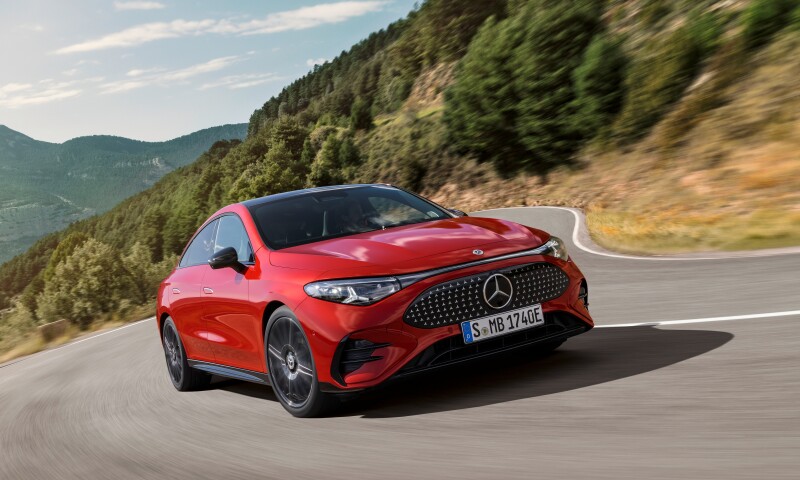
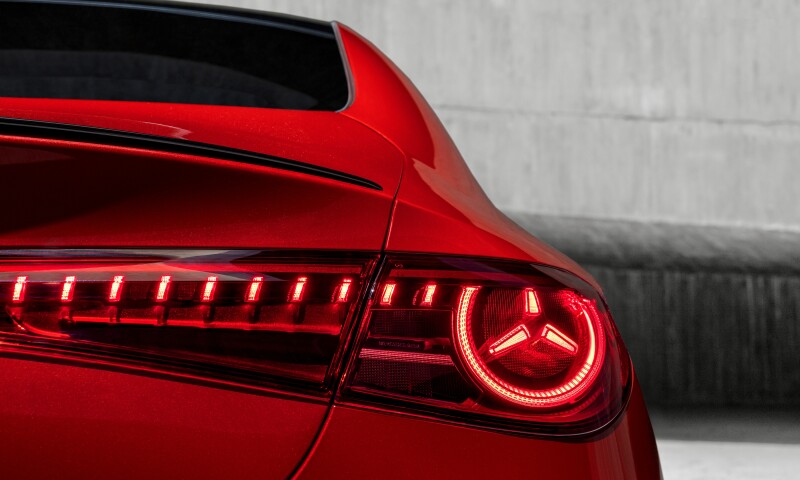
    Design updates include a reimagined grille and, for the first time on a production Mercedes, a fully illuminated three-point star emblem. The optional multibeam LED headlights also incorporate a new Mercedes-Benz star logo, reinforcing what the brand describes as an “unmistakable statement of iconic luxury.”

    Inside, the CLA features a trio of displays spanning the dashboard. This setup includes a 10.3-inch (261.6-mm) instrument cluster, a 14.0-inch (355.6-mm) central touchscreen, and an optional passenger screen of the same size.

    A 10.3-inch instrument display, a 14.0-inch center touchscreen, and an optional passenger screen of the same size make up the trio of screens inside
    Mercedes Benz

    The CLA EV’s infotainment system features an updated version of MBUX, integrating Google Maps for navigation and Google’s Gemini AI-powered search functions. Rear passengers can enjoy a spacious cabin, enhanced by a panoramic glass roof that filters UV rays—though it lacks a sunshade.

    Dual Trim Options: CLA 250+ and CLA 350 4MATIC Deliver Power and Impressive Range

    Mercedes will offer two electric trims: the CLA 250+, producing 268 horsepower and 247 lb-ft (334.8 Nm) of torque, and the CLA 350 4MATIC, which delivers 349 horsepower and 380 lb-ft (515.2 Nm) of torque. The CLA 250+ boasts a WLTP-estimated range of 492 miles (792 km), while the 350 4MATIC achieves a slightly lower but still impressive 480 miles (771 km).

    However, since these figures are based on WLTP testing, the real-world EPA range is expected to be closer to 400 miles (643.7 km).

    As for the upcoming hybrid model, it will feature a new 1.5-liter Miller-cycle turbocharged four-cylinder engine, mounted transversely at the front and sourced from Geely.

    The hybrid trim will come with a new 1.5-liter Miller-cycle four-cylinder turbocharged engine
    Mercedes Benz

    The hybrid model will feature a 27-hp electric motor, an inverter, and an eight-speed dual-clutch transmission. In urban settings, the electric motor can operate the vehicle independently, drawing power from a 1.3-kWh 48-volt battery. Buyers will have the option to choose between front-wheel drive and all-wheel drive.

    Meanwhile, the all-electric CLA is set to arrive in U.S. showrooms this fall. While Mercedes has yet to announce official pricing, it is expected to fall under $60,000, positioning it as a competitor to the Tesla Model 3 and BMW i4 in the premium EV market.


    Read the original article on: New Atlas

    Read more: GAC’s Groundbreaking Ammonia-Powered Engine: A Glimpse into the Future of Automotive Propulsion