Tag: Molecule

  • Scientists Discover Natural Molecule that Reduces Cavities and Plaque by Up To 90%

    Scientists Discover Natural Molecule that Reduces Cavities and Plaque by Up To 90%

    The bisindole molecule breaks down the biofilm structure created by the bacteria that cause cavities. Scientists anticipate that future toothpastes will already include DIM.
    Image Credits: Pixabay

    The bisindole molecule breaks down the biofilm structure created by the bacteria that cause cavities. Scientists anticipate that future toothpastes will already include DIM.

    In a groundbreaking study, researchers discovered that the molecule 3,3′-Diindolylmethane (DIM), also known as bisindole, can significantly improve dental health by reducing the biofilms responsible for plaque and cavities by up to 90%.

    Molecule Shows Cavity-Fighting and Anti-Cancer Potential

    This scientific breakthrough, published in Antibiotics, also highlighted the molecule’s anti-cancer properties, opening up revolutionary possibilities in dental hygiene.

    A collaborative research team from Ben-Gurion University of the Negev, Sichuan University, and the National University of Singapore has achieved this milestone, outlining the promising role of DIM in addressing persistent problems linked to plaque and cavities that affect a significant fraction of the global population.

    DIM’s potent effect stems from its ability to disrupt biofilms generated by the bacterium Streptococcus mutans, the main culprit behind tooth decay. This bacterium thrives in the sugary, moist environment of the mouth after food consumption, forming a biofilm that not only creates plaque but also erodes enamel, paving the way for cavities.

    DIM effectively intervened by breaking down this biofilm structure by 90%, significantly preventing the growth of S. mutans, writes SciTech Daily.

    Researcher Touts DIM’s Safety and Dental Care Potential

    Study leader Ariel Kushmaro emphasized DIM’s low toxicity, which makes it a viable component to incorporate into toothpastes and mouthwashes to significantly improve dental hygiene.

    The incorporation of DIM into dental hygiene products is expected to not only revolutionize dental health maintenance routines but also significantly reduce the incidence of cavities and plaque.

    In light of this discovery, the oral health industry is awaiting a paradigm shift, hoping that products utilizing the power of DIM will soon grace the shelves.


    Read the original article on: Zap.aeiou

    Read more: Japanese Scientists Trial Groundbreaking Medication to Regenerate Teeth

  • Discovery of a Resilience-Boosting Molecule May Help Slow the Progression of Parkinson’s Disease

    Discovery of a Resilience-Boosting Molecule May Help Slow the Progression of Parkinson’s Disease

    A new study has uncovered a method to prevent cell death, potentially paving the way for treatments that could slow the progression of neurodegenerative diseases such as Parkinson’s.
    A molecule that blocks cell death could mean treatments for Parkinson’s and other degenerative diseases
    Depositphotos

    A new study has uncovered a method to prevent cell death, potentially paving the way for treatments that could slow the progression of neurodegenerative diseases such as Parkinson’s.

    Apoptosis, the body’s ancient “cell suicide” mechanism, is controlled by interactions within the BCL-2 protein family. While some of these proteins support cell survival, others initiate cell death. Researchers have leveraged the death-triggering functions of certain BCL-2 proteins to develop treatments for specific blood cancers.

    Australian Researchers Discover Method to Halt Cell Death, Offering Hope for Parkinson’s Treatment

    However, in a new study led by the Walter and Eliza Hall Institute of Medical Research (WEHI) in Melbourne, Australia, researchers have found a way to prevent cell death by targeting a specific protein—potentially paving the way for treatments that could halt the progression of neurodegenerative diseases like Parkinson’s.

    There are currently no therapies that stop neuron loss to slow Parkinson’s progression,” said Professor Grant Dewson, co-lead author of the study and director of WEHI’s Parkinson’s Disease Research Center. “A drug that could achieve this would be truly transformative.”

    Key BCL-2 Proteins BAK and BAX Linked to Cell Death and Degenerative Disease When Dysfunctional

    However, the proteins BAK (B cell lymphoma 2 antagonist/killer) and BAX (B cell lymphoma 2-associated X protein), both part of the BCL-2 family, are known to trigger cell death by breaching the mitochondrial membrane, the energy center of the cell. Malfunctioning of BAK and BAX can disrupt apoptosis, potentially contributing to autoimmune and neurodegenerative diseases.

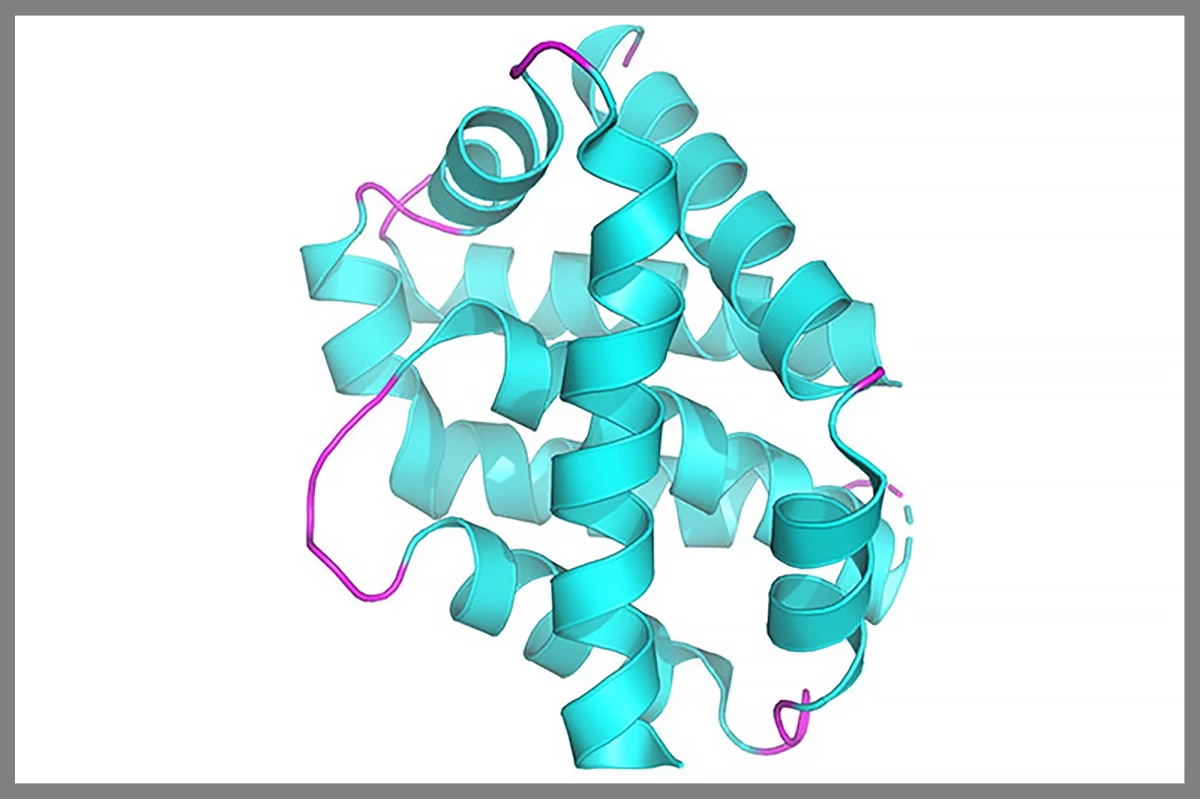
    The structure of the BAX protein, which is involved in the process of cell death
    WEHI

    Researchers Screen Over 100,000 Compounds to Identify Molecule That Blocks Key Cell-Death Protein

    To pursue this breakthrough, the researchers utilized the ultra-high throughput screening capabilities of the WEHI-based National Drug Discovery Center, analyzing 106,572 compounds to find one that could block the cell-death protein BAX.

    We were excited to discover a small molecule that binds to and inhibits BAX, a protein responsible for triggering cell death,” said Professor Guillaume Lessene, co-corresponding author and Head of WEHI’s New Medicine and Diagnostics division. “While BAX isn’t the only player in most cells, in neurons, blocking it alone might be enough to reduce cell loss.”

    Small molecules—low molecular weight organic compounds—are commonly used in drug development because they can easily enter cells and interact with internal proteins. The molecule identified by the team, dubbed WEHI-3773, was found to prevent BAX from damaging the mitochondria, thereby stopping the cell from dying.

    To conclude, “This is the first time we’ve successfully used a molecule to keep BAX away from mitochondria and preserve cell survival,” said Kaiming Li, PhD student and lead author of the study in Dewson’s lab. “It opens the door to developing next-generation inhibitors of cell death to fight neurodegenerative diseases.”


    Read the original article on: New Atlas

    Read more: A Recently Discovered Molecule Boosts White Blood Cell Levels to Combat Infections

  • New Molecule Boosts Efficiency and Stability of Perovskite Solar Cells

    New Molecule Boosts Efficiency and Stability of Perovskite Solar Cells

    A recent study published in Science highlights that incorporating a synthetic molecule can greatly enhance the energy efficiency and lifespan of perovskite solar cells. The molecule, named CPMAC, was developed through an international collaboration that involved researchers from King Abdullah University of Science and Technology (KAUST).
    Credit: Depositphotos

    A recent Science study shows that the synthetic molecule CPMAC, developed through an international collaboration with KAUST, significantly boosts the energy efficiency and lifespan of perovskite solar cells.

    CPMAC is an ionic salt derived from buckminsterfullerene (C60), a carbon-based material with 60 atoms. While C60 has helped achieve record energy efficiencies in perovskite solar cells, it also limits performance and long-term stability.. To address these issues, scientists explored alternative materials, leading to the creation of CPMAC.

    For over a decade, C60 has played a key role in the development of perovskite solar cells. However, weak interactions at the perovskite/C60 interface result in mechanical degradation, which compromises the long-term stability of the cells. “To address this, we created CPMAC, a C60-derived ionic salt, to greatly enhance the stability of perovskite solar cells,” said Professor Osman Bakr, Executive Faculty at KAUST CREST, who led the research.

    Enhanced Electronic Properties of Solar Cells with CPMAC

    The chemistry of CPMAC enhanced the electronic properties of the solar cells. Solar cells incorporating CPMAC exhibited a power conversion efficiency— a key measure of solar cell energy efficiency— that was 0.6% higher than those made with C60.

    To put this into perspective, if a typical power plant generates 1 gigawatt of power, a less than 1% increase could still provide electricity to 5,000 additional homes.

    As we consider the scale of a typical power plant, even a small increase in efficiency, such as a fraction of a percentage point, can lead to a significant amount of additional electricity generated,” said Hongwei Zhu, a research scientist at KAUST and a contributor to the study.

    Moreover, CPMAC-based solar cells showed a reduction in power conversion efficiency that was only one-third of that seen in C60 solar cells when exposed to high temperatures and varying humidity for over 2,000 hours, a standard test for solar cell stability.

    Increased Performance Differences in Solar Cell Modules

    The distinction between the two types became more noticeable when assembled into modules of four solar cells— a simplified version of a solar panel, which typically contains 50 to 100 cells.

    CPMAC reduces defects in the electron transfer layer of the solar cell by forming stronger ionic bonds with the perovskite, unlike C60, which forms weaker van der Waals bonds.”


    Read the original article on: Scitech Daily

    Read more: Quantum Dot Solar Cells Break Efficiency Record Target Silicon Technology Surpass

  • A Recently Discovered Molecule Boosts White Blood Cell Levels to Combat Infections

    A Recently Discovered Molecule Boosts White Blood Cell Levels to Combat Infections

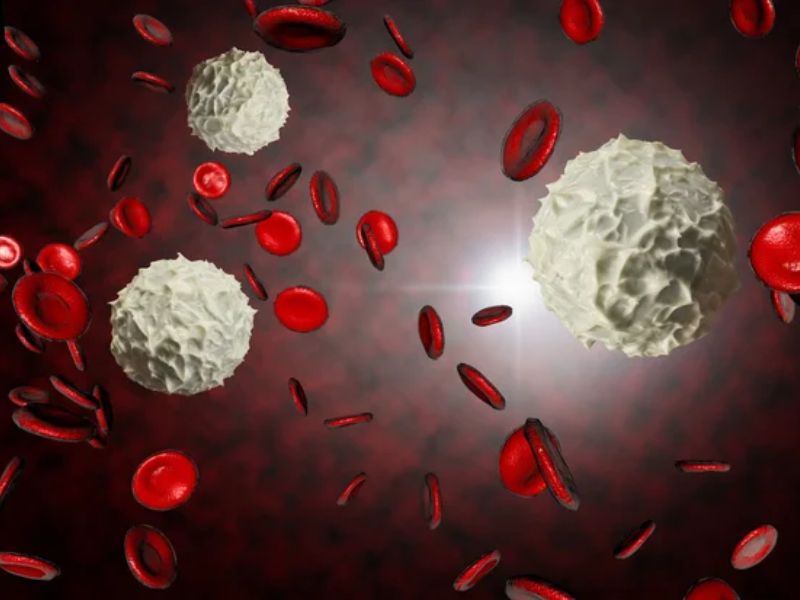
    White blood cells play a crucial role as immune system defenders, but their levels can be diminished by health conditions or treatments such as chemotherapy. Researchers at Yale have identified a molecule that, when administered, rapidly elevates their numbers. This approach aims to strengthen the immune response against infections without relying on antibiotics.
    A new molecule called A485 has been found to boost levels of white blood cells, which can help clear out infections
    Depositphotos

    White blood cells play a crucial role as immune system defenders, but their levels can be diminished by health conditions or treatments such as chemotherapy. Researchers at Yale have identified a molecule that, when administered, rapidly elevates their numbers. This approach aims to strengthen the immune response against infections without relying on antibiotics.

    Neutrophils, a subset of white blood cells, act as early responders to foreign threats such as bacteria, viruses, or fungi. However, their quantities can decrease in a condition known as neutropenia, which may arise from specific genetic conditions or as a side effect of treatments like chemotherapy. In either scenario, reduced neutrophil counts can escalate the severity of infections, and there are limited options available for increasing their levels.

    Unearthing a Promising Molecule

    In the recent research, Yale researchers have pinpointed a potentially beneficial molecule. Formally named A485 and informally referred to as “prohiberin,” this molecule inhibits specific proteins that control gene expression, prompting the release of neutrophils and other white blood cells from the bone marrow.

    During tests conducted on mice, A485 demonstrated rapid and transient effectiveness, with white blood cell counts returning to normal levels within 12 hours. While this might initially seem like a drawback, the team asserts that it is, in fact, advantageous.

    Nikolai Jaschke, the lead author of the study, explained, “Currently, the primary treatment for low white blood cell counts is G-CSF, or granulocyte colony-stimulating factor, a naturally produced substance that can be administered as a drug. However, its prolonged effects can be detrimental in certain situations, limiting its broader clinical applicability. A485, while equally potent as G-CSF, has a shorter duration of impact.”

    Boosting Immune Response

    Subsequently, the team examined whether the increased white blood cell count could be beneficial in clearing infections. Mice were subjected to chemotherapy to impair their bone marrow, which typically diminishes their immune response to infection. After infecting the mice with the bacteria listeria, A485 was administered. As anticipated, those receiving the molecule demonstrated more effective infection clearance and higher survival rates compared to the control group. These findings suggest that molecules like A485 could potentially decrease reliance on antibiotics.

    Jaschke added, “In cases where patients develop low white blood cell counts, such as neutropenic fever following chemotherapy, antibiotics currently represent the only approved therapy. A485 could present an alternative option.”

    Despite the progress made, there is still significant work ahead. The precise mechanism of action for A485 needs further exploration, according to the team, and its efficacy must be evaluated against other, more prevalent infections.


    Read the original article on: New Atlas

    Read more: Scientists Clarify Role of Blood Cell Mutations in Illness