Repetitive movements, awkward positioning, and ongoing strain can build up over time, often leading to expensive musculoskeletal injuries that may take weeks to recover from.
To address this, engineers at The University of Texas at Arlington have created a soft robotic exoskeleton designed not only to support movement but to physically reduce the burden on the body.
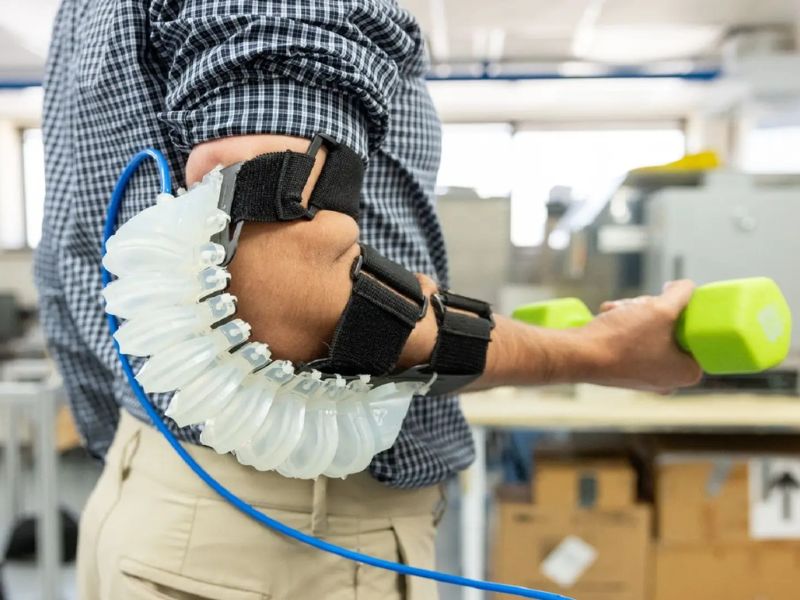
Known as the Pneumatically Actuated Soft Elbow Exoskeleton (PASE), the system relies on a silicone pneumatic actuator — a soft, air-powered mechanism — to assist arm movement during common industrial activities such as lifting, assembly, and drilling.
Lightweight Design Reduces Injury Risk
Its lightweight, flexible build is intended to lower the risk of musculoskeletal disorders, which make up nearly 30% of workplace injuries in the U.S. and lead to annual costs of $45–54 billion.
“Our goal was to create a device that prevents muscle strain,” said Eshwara Prasad Sridhar, noting it can easily integrate with existing factory pneumatic systems.
Funded by UTA’s Interdisciplinary Research Program, the project involved Rahman, Wijesundara, Erel, Sridhar, and support from the UTA Research Institute.
Single-Piece Design Maximizes Comfort and Natural Movement
PASE’s single-piece silicone design on a carbon-fiber base offers lightweight, comfortable support that moves naturally with the elbow.
In testing, 19 participants aged 18 to 45 used the device while performing three tasks: manual lifting, basic assembly work, and power drilling.
When activated, the exoskeleton lowered biceps and triceps muscle activity by as much as 22% during lifting tasks. Participants also reported an 8–10 point drop in both physical and mental effort on the NASA Task Load Index.
Engineering Solutions That Prevent Injuries and Improve Workplace Safety
“Even preventing or postponing a single workplace injury can make a significant difference,” said Veysel Erel, who heads the soft robotics program at the UTA Research Institute. “Work like this shows how engineering can directly enhance quality of life by easing fatigue, reducing strain, and making workplaces safer.”
Building on these results, researchers at The University of Texas at Arlington have submitted a proposal to the National Science Foundation to expand the design into a full upper-limb exoskeleton that supports not only the elbow but also the wrist and fingers.
“This kind of interdisciplinary work is central to UTA’s mission,” Erel added. “By bringing together expertise in robotics, mechanical engineering, and human factors, we’re developing solutions that benefit both industry and everyday life.”
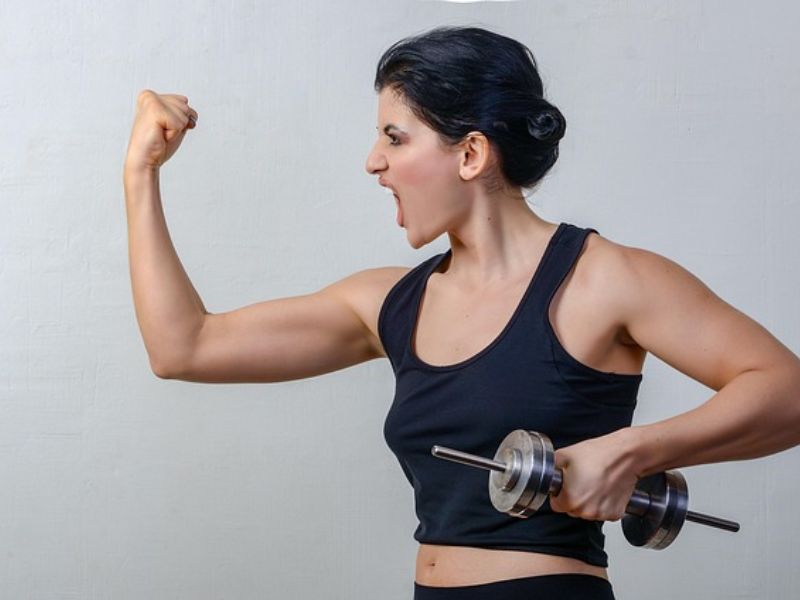
A new study suggests that high-intensity interval training may substantially improve fitness and muscle endurance in people recently diagnosed with inflammatory muscle disease, without worsening disease activity. Image Credits: Stock
High-intensity interval training is more effective than standard home exercise at improving fitness in patients with inflammatory muscle disease.
A new eBioMedicine study from Karolinska Institutet reports that high-intensity interval training leads to greater gains in physical fitness and muscle endurance than standard home-based exercise in people recently diagnosed with inflammatory muscle disease.
Idiopathic inflammatory myopathies (IIM) are rare autoimmune diseases that cause muscle weakness and fatigue. Standard treatment combines medication with light to moderate home-based exercise, but this strategy offers limited improvements in aerobic capacity. To explore a more effective option, researchers at Karolinska Institutet investigated whether high-intensity interval training (HIIT) could deliver greater benefits.
The study involved 23 patients recently diagnosed with IIM, recruited from Karolinska University Hospital in Stockholm and Uppsala University Hospital. Participants were randomly assigned to one of two groups: one performed HIIT on a stationary bike three times a week for 12 weeks, while the other followed a moderate-intensity exercise program at home. Researchers assessed aerobic fitness, muscle endurance, and markers of disease activity before and after the training period.
Noticeable Benefits from HIIT
The findings showed that the HIIT group improved aerobic capacity by an average of 16 percent, while the home exercise group saw only a 1.8 percent increase. Improvements in muscle endurance were also larger with HIIT, and muscle biopsies revealed enhanced mitochondrial function, a key factor in energy production. Disease activity did not change in either group, indicating that the higher-intensity training was safe. Researchers found no signs that exercise increased inflammation or led to muscle damage.
“People with IIM often experience muscle weakness and limited endurance. Our findings demonstrate that high-intensity interval training is safe and significantly enhances muscle performance and aerobic fitness. Improved fitness may reduce cardiovascular risk, while patients benefit from greater stamina and independence. This approach could serve as a valuable addition to medication in boosting physical capacity and quality of life,” says Kristofer Andreasson, researcher at the Department of Medicine, Solna, Karolinska Institutet.
The researchers note that the study involved a small number of participants and that additional research is required to validate the results and evaluate long-term outcomes.
People with higher muscle mass appear to exhibit reduced indicators of brain aging, according to newly released research. The study, which is still awaiting peer review, appears at the yearly conference of the Radiological Society of North America (RSNA).
The study raises concerns that GLP-1 drugs like Ozempic, Wegovy, and Mounjaro may reduce both fat and muscle mass.
The study examined MRI scans from 1,164 healthy adults with an average age of 55. Researchers compared brain structure measurements with full-body imaging and noted that…
Muscle Mass Linked to More Youthful Brain Aging
The researchers discovered that people with higher muscle mass had “younger”-looking brains, and that having less visceral fat relative to muscle was likewise linked to reduced brain aging.
Initially developed for managing type 2 diabetes, GLP-1 drugs have since gained widespread use for quick weight loss.
However, earlier research has shown that roughly 15% to 40% of the weight shed while using these drugs can be lean mass, including muscle.
Scientists track how growth hormone reinforces our muscles and bones while we’re asleep Image Credits: Depositphotos
Sleep is often viewed as a passive break from wakefulness, but new research reveals it’s an active and essential biological function. A recent study has demonstrated that during sleep—particularly at night—the brain plays a key role in releasing growth hormone, which helps repair muscles, strengthen bones, and regulate metabolism. Scientists have now identified the brain circuits responsible for the nighttime surge of this hormone, revealing why insufficient sleep can negatively affect physical health.
Breakthrough Study Reveals How Deep Sleep Triggers Growth Hormone Release
In a breakthrough animal study, researchers at the University of California, Berkeley, have, for the first time, uncovered the mechanism behind the rise of growth hormone during deep sleep. Although researchers have known that GH levels rise at night, they hadn’t identified the exact cause until now. The team discovered a unique feedback system that regulates hormone levels to support essential functions like muscle growth.
Scientists have long known that sleep closely influences growth hormone release, but until now, they’ve primarily observed this by directly measuring hormone levels in blood samples taken during sleep,” explained Xinlu Ding, the study’s lead author and a postdoctoral researcher in UC Berkeley’s Department of Neuroscience. “What we’re doing differently is directly monitoring brain activity in mice to understand what’s happening. Our findings lay the groundwork for future research aimed at developing new treatments.”
New Insights Reveal How Skipping Sleep Can Accelerate Aging and Undermine Muscle Health
Using a combination of genetic techniques, calcium imaging, and optogenetics, the researchers mapped how the “gas pedal” (GHRH) and “brake” (somatostatin) hormones behave differently during REM and non-REM sleep. They found that during REM sleep, both somatostatin and GHRH activity increases, working together to elevate growth hormone levels. In contrast, during non-REM sleep, somatostatin activity drops while GHRH rises slightly—still resulting in a GH boost, but through a different balance of signals.
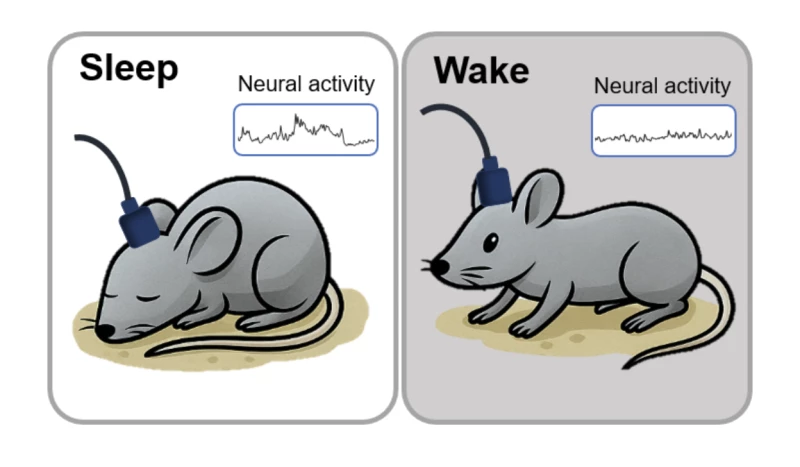
Researchers recorded brain activity in sleeping and awake mice while stimulating neurons in the brain’s hypothalamus Yang Dan lab/UC Berkeley
If this all seems a bit complex, you’re not alone. The researchers discovered that somatostatin (SST), typically known for suppressing growth hormone, also helps regulate its timing. During REM sleep, brief bursts of both SST and GHRH trigger sharp spikes in growth hormone release. In non-REM sleep, SST activity drops, allowing for a steadier flow of GH. This interplay actively regulates GH release, aligning it precisely with different sleep phases.
Growth Hormone and the Brain’s Wakefulness Center Work in a Delicate Sleep-Wake Balance
The study also uncovered a feedback loop between growth hormone and a brainstem region called the locus coeruleus, which helps regulate alertness. As GH accumulates during sleep, it subtly activates this brain hub to begin preparing the body to wake up. However, when the locus coeruleus becomes overly stimulated, it shifts gears and actively promotes drowsiness. This creates a delicate yin-yang dynamic, where sleep boosts GH production, and GH in turn helps regulate the cycle of sleep and wakefulness.
In simple terms, the key takeaway is that the nighttime pulses of growth hormone (GH) released into the bloodstream play a crucial role in preparing the body’s tissues for repair and regeneration.
“This points to a finely tuned relationship between sleep and growth hormone,” explained co-author Daniel Silverman, a postdoctoral researcher at UC Berkeley. “Not getting enough sleep reduces GH release, while excess GH can actually nudge the brain toward wakefulness. Sleep triggers GH production, and GH, in turn, helps regulate when we wake up. This balance is vital for physical growth, tissue repair, and maintaining a healthy metabolism.”
Sleep Loss Disrupts the Body’s Prime Time for Repair, Growth, and Healthy Aging
Missing sleep doesn’t just make you tired the next day—it causes you to skip a critical window when your body performs repair and recovery. This period, driven by growth hormone (GH), is essential for anyone looking to build muscle, maintain bone density with age, or manage weight and blood sugar. Since GH levels naturally decline as we get older, prioritizing good sleep may be one of the most effective ways to support healthier aging.
“Growth hormone doesn’t just support muscle and bone development or fat reduction—it may also enhance brain function by boosting alertness upon waking,” added Ding.
Although the researchers conducted the study in mice, humans share the same neural circuits, and their hormone release patterns closely mirror those findings. By uncovering how different sleep stages regulate growth hormone (GH), scientists can now target and fine-tune the rhythm vital for physical restoration.
New Insights Reveal How Skipping Sleep Can Accelerate Aging and Undermine Muscle Health
Past studies have already linked poor sleep to accelerated biologicalaging, and this new research adds further depth to our understanding of the complex processes happening between sleep and wakefulness. The key message: if you’re aiming to build or maintain muscle, missing sleep can negatively affect your body in both the short and long term.
“By identifying the brain circuit responsible for GH release, we may eventually develop new hormone-based treatments to improve sleep quality or restore proper GH balance,” said Daniel Silverman, a postdoctoral fellow at UC Berkeley and study co-author. “There are emerging gene therapies that can target specific cell types, and this circuit may offer a new way to reduce overactivity in the locus coeruleus—something that hasn’t been explored before.”
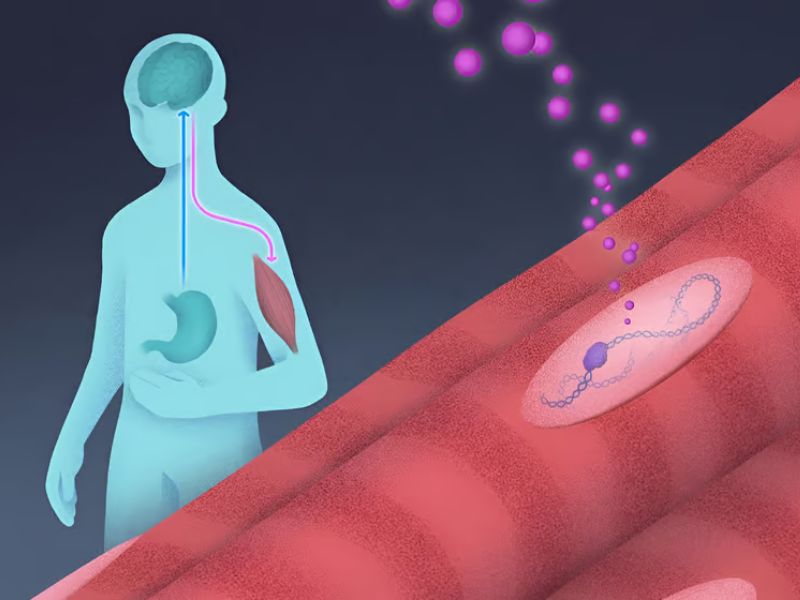
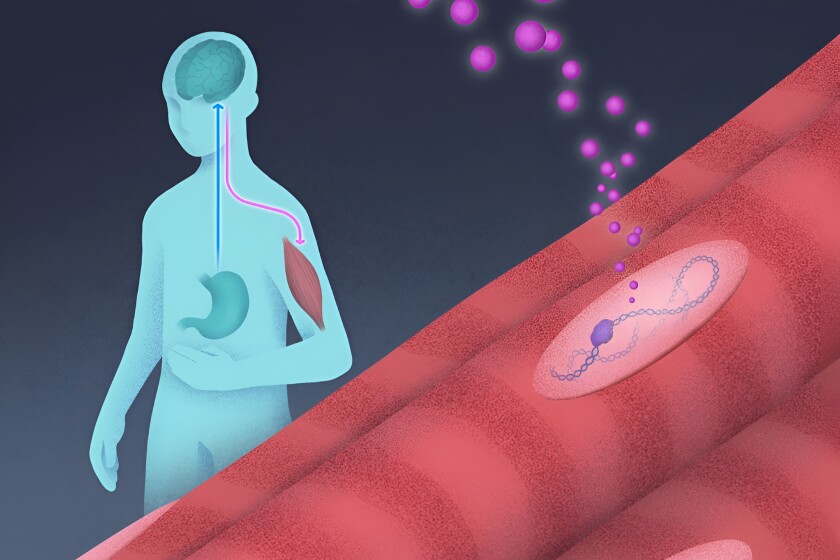
The stomach sends hunger signals to the brain in the form of ghrelin (blue arrow), prompting the brain to send a growth hormone to muscle tissue (pink line). In the foreground, a closer look at the muscle reveals the growth hormone (pink orbs) influencing BCL6 (purple blob) to attach to the cell’s DNA (purple chain) Salk Institute
If you’re among the 13% of American adults who have used GLP-1 drugs for weight loss, you likely know that along with fat loss comes muscle loss.And if you don’t engage in weightlifting or have conditions that prevent you from starting an exercise regimen, you have limited options to combat this.
A Potential Game-Changer: The Role of BCL6
However, researchers at the Salk Institute have identified a molecule that could be a game-changer. They discovered that a protein called BCL6 is responsible for maintaining muscle structure, and increasing its levels could prevent muscle tissue from breaking down without hindering weight loss.
Muscle is the most abundant tissue in the human body, so its maintenance is crucial for our health and quality of life, said Ronald Evans, professor and director of the Gene Expression Laboratory at the Salk Institute.Our study reveals how the body coordinates muscle preservation with energy and nutrition levels. With this new understanding, we can develop treatments for patients losing muscle due to weight loss, aging, or disease.
This discovery extends beyond those taking GLP-1 drugs. Although scientists conducted the research on mice, they are confident they can apply the findings to human physiology.
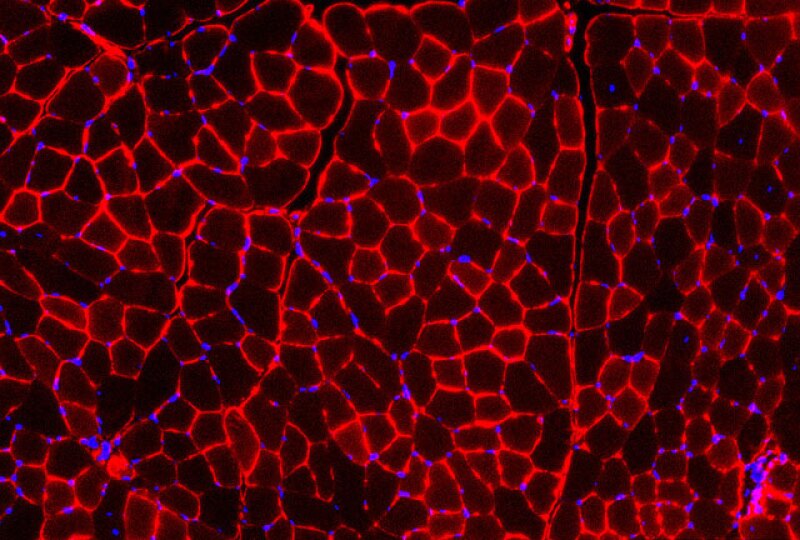
Cross-section of muscle tissue, showing muscle cells (red) and their nuclei (blue) Salk Institute
Fasting and Its Impact on BCL6
While studying the mechanisms of fasting, researchers noted that the stomach and brain communicate to stimulate the secretion of a growth hormone targeting muscle tissue. This process reduces BCL6 levels, which weakens and shrinks the muscle’s structure.
When researchers boosted BCL6 levels, muscle tissue became resistant to this process, meaning weight loss would come solely from fat. In mouse experiments, those without the BCL6 boost had 40% less muscle mass compared to the control group and structurally weaker muscles. Conversely, when BCL6 levels were restored, muscle loss and strength depletion were reversed.
Interestingly, in fasting mice, BCL6 levels dropped significantly in as little as one night.
The Path Forward: Promising Therapeutic Potential
We’re excited to highlight BCL6’s critical role in maintaining muscle mass, said Hunter Wang, lead author of the study and postdoctoral researcher in Evans’ lab. These findings are both surprising and promising, paving the way for new discoveries and therapeutic innovations.
The team believes this discovery could lead to the development of a BCL6 booster to be used alongside GLP-1 drugs, preventing muscle loss. For now, the researchers plan to study the effects of longer fasting periods and their impact on muscle tissue. This type of BCL6 therapy could also benefit broader populations, including older adults and individuals with muscle-impacting conditions such as cancer.
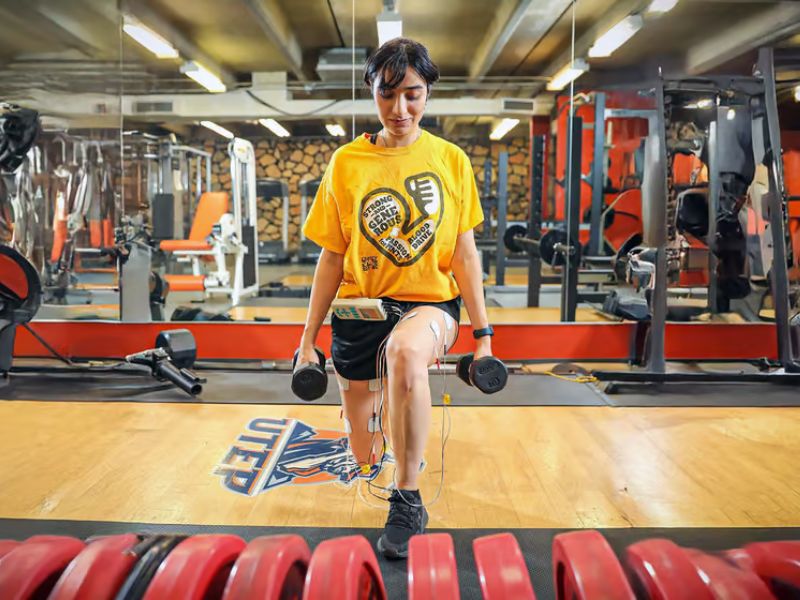
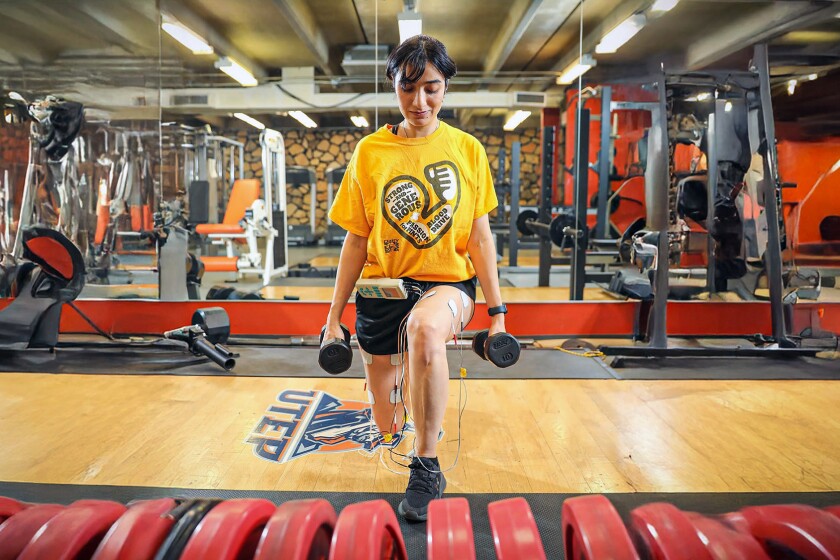
Combining a resistance workout and electrical muscle stimulation leads to greater muscle mass and strength than resistance training alone The University of Texas at El Paso (note: original image extended using generative tools)
New research suggests that using a standard, portable, non-invasive electrical muscle stimulator during resistance training can lead to greater improvements in both muscle strength and mass compared to resistance training alone.
Traditional resistance training, which involves exercises that make muscles contract against external resistance, enhances skeletal muscle mass, strength, and power. Similarly, using a commonly available, non-invasive neuromuscular electrical stimulation (NMES) device to trigger involuntary muscle contractions can also boost strength and mass in both upper and lower body muscles.
Researchers from the University of Texas at El Paso (UTEP) recently conducted a study to explore the combined effects of resistance training (RT) and neuromuscular electrical stimulation (NMES) on muscle mass and strength.
“To our knowledge, no systematic reviews or meta-analyses have yet evaluated the effectiveness of combining NMES with RT,” the researchers noted. “To fill this gap, our systematic review and meta-analysis aimed to assess how superimposed NMES influences the muscle strength and mass gains from resistance training, compared to conventional RT alone.”
Review of Studies on NMES and Resistance Training
The researchers reviewed 13 randomized controlled trials and intervention studies involving 374 participants who used an NMES device while performing traditional resistance exercises, such as bench presses and squats. These studies were conducted on healthy individuals without neurological or muscular impairments.
“A meta-analysis provides a more comprehensive view of studies addressing the same research question,” explained Sudip Bajpeyi, PhD, director of the Metabolic, Nutrition, and Exercise Research (MiNER) Laboratory at UTEP and the study’s lead author. “This approach allows us to overcome the limitations of individual studies and draw more informed, evidence-based conclusions.”
In their meta-analysis of 12 studies comparing muscular strength improvements between NMES-plus-RT groups and those doing conventional RT, the researchers found a standardized mean difference (SMD) of 0.31 across all studies. However, understanding the significance of this figure and the use of SMD requires further explanation.
A standardized mean difference (SMD) is used in meta-analyses when different studies assess the same outcome but measure it in various ways. To enable comparisons across studies, the results must first be standardized to a common measurement. Once standardized, the results are combined in the meta-analysis to generate a single value, the SMD.
Understanding the Standardized Mean Difference (SMD)
However, the SMD is not tied to a specific unit of measurement. If the SMD is zero, it suggests that the intervention had no effect compared to the control. A positive or negative SMD indicates a favorable or unfavorable result, depending on the outcome being measured. For a more detailed explanation of SMDs, the video below offers additional insight.
NCCMT – URE – Making Sense of a Standardized Mean Difference
NMES and RT Combination Improves Muscle Strength and Mass
The study found that combining NMES with RT led to greater muscle strength (SMD of 0.31) and muscle mass (SMD of 0.26) compared to conventional RT. Muscle mass gains were higher with 8–16 weeks of combined training versus 2–8 weeks. The researchers suggest that at least eight weeks of training may be needed for significant muscle mass improvements.
A sensitivity analysis revealed that RT variables, such as sets and repetitions, and NMES frequencies of 85 Hz or higher were linked to increased muscle strength. Overall, factors like session frequency and duration positively influenced strength but not muscle mass.
“This is the first meta-analysis to examine if adding NMES to RT boosts muscle strength more than RT alone,” the researchers concluded, noting a significant increase in strength with the NMES-RT combination.
None of the studies controlled participants’ diets, which are crucial for muscle growth. Protein intake is key for muscle strength and size, promoting protein synthesis and preventing breakdown. Without diet control, its impact remains uncertain, and further research with a larger sample size is needed.
Despite these limitations, the researchers highlight the relevance of their findings, especially for those aiming to improve muscle function and strength after surgery or illness.
“RT is recommended for boosting muscle strength and mass,” they said. “NMES is commonly used in therapy to prevent muscle loss during inactivity and is practical due to its cost-effectiveness and ease of use.”
Skeletal muscle fibers (multinucleated cells) with their nerve connections. (Ed Reschke/Stone/Getty Images)
We all wish for a longer life—at least, I know I do—but what about ensuring that we enjoy good health during the time we have?
Over the past century, human life expectancy has significantly increased for several reasons, particularly advances in sanitation, public health, nutrition, and medicine. These improvements have reduced mortality, especially among younger people, allowing more individuals to live longer.
For instance, in 2021, Canadians had an average life expectancy of 81.6 years, marking an impressive 24.5-year increase since 1921. Projections indicate that by 2050, the population aged 85 and older will triple.
While the rise in life expectancy is a remarkable achievement, it is essential to distinguish between lifespan—the total years of life—and healthspan—the years spent in good health. Today, older adults often experience prolonged periods of poor health, placing a significant strain on both individuals and public health systems.
At an advanced age, the ability to maintain independence is critical to quality of life. Thus, it’s not enough to merely extend life; we must also extend the healthspan to match, reducing the gap between the two as much as possible.
The idea of extending healthspan challenges the belief that age-related diseases are inevitable and untreatable.
A major challenge for the aging population is the decline in muscle mass, strength, and function, known as sarcopenia. This condition can lead to reduced independence, metabolic disorders, and an increased risk of falls and fractures.
Muscle plays a crucial role in posture, movement, and metabolism. It serves as a storage for glucose and lipids and helps regulate blood sugar. It also acts as a “buffer” of amino acids during times of stress, such as illness.
Research shows that muscle health at the time of hospital admission can predict outcomes like ventilator-free days and mortality. Unfortunately, muscle loss begins around the age of 50, with a decline of about 1% in muscle mass and 3% in strength annually. Periods of inactivity, such as during illness or hospitalization, accelerate this decline.
Even short-term reductions in physical activity—such as a few weeks of decreased walking—can lead to muscle loss, decreased strength, and worsened blood glucose control in older adults.
(Nastasic/Canva)
Maintaining Muscle Health with Age
The good news is that muscle tissue is highly adaptable, responding to physical activity by growing stronger and shrinking when not used. This adaptability offers an opportunity to counteract muscle loss with regular exercise and proper nutrition.
At McMaster University, my research team investigates how exercise and nutrition impact muscle health, with a focus on aging. Our findings show that even light resistance training can be effective in combating muscle loss, particularly when combined with a higher intake of protein.
Older adults, in particular, require more protein than current guidelines suggest. Research from our lab recommends consuming 1.2 to 1.6 grams of protein per kilogram of body weight daily—up to 100% more than the current recommendation—derived from a mix of animal and plant-based sources.
By engaging in consistent physical exercise and consuming adequate high-quality protein, you can enhance muscle health and close the gap between healthspan and lifespan. In doing so, you can maintain your independence and improve your quality of life as you age.
Cell Sheets Guided to Form Scaffold-Free Constructs Through Pillar-Based Anchoring for In Vitro Modeling. Credit: Advanced Functional Materials (2023), DOI: 10.1002/adfm.202308552.
In the realm of regenerative medicine, Evolved.Bio, a startup, is paving the way with groundbreaking technology that offers hope to individuals who have experienced significant muscle damage. This innovative approach promises effective muscle tissue regeneration, marking a significant advancement in the field.
Overcoming Challenges in Tissue Replacement
Other biotech companies’ traditional approaches involve using natural or synthetic materials combined with cells to create in vitro-grown tissue replacements.
However, the patient’s body may perceive these implanted building blocks as foreign objects, potentially leading to medical complications or interference with the natural healing process.
Evolved.Bio’s Unique Solution
Evolved.Bio has introduced a method for crafting in-vitro tissue that addresses the challenges associated with traditional approaches. This method significantly enhances positive outcomes for patients by allowing cells to recreate all components and structures of healthy tissue outside the body.
When implanted, these building blocks possess characteristics the body recognizes, guiding the patient’s cells to restore the tissue effectively.
Advancing Scientific Frontiers
The groundbreaking technique, “Anchored Cell Sheet Engineering,” provides a scaffold-free platform for in vitro modeling. The research paper detailing this innovation, titled “Anchored Cell Sheet Engineering: A Novel Scaffold-Free Platform for in vitro Modeling,” has been published in Advanced Functional Materials.
Focus on Muscle Tissue Regeneration
While the technology applies to various cell types and tissues, Evolved.Bio is concentrating on muscle tissue regeneration, particularly for volumetric muscle loss. Skeletal muscle tissue, responsible for movement in the human body, is the initial target for this regenerative technology.
Volumetric muscle loss affects many individuals annually and has limited treatment options. Evolved.Bio aims to fill this gap by offering a solution to restore muscle function in patients who have suffered significant muscle loss.
Multifaceted Applications
Although Evolved.Bio’s technology has applications beyond muscle regeneration, including the potential for “cultivated meat” production, the company is primarily committed to advancing its muscle tissue method for regenerative medicine purposes.
The founders, Alireza Shahin and John Cappuccitti, express their commitment to ending the suffering caused by inadequate solutions in regenerative medicine. Evolved.Bio envisions a future where its technology provides a permanent remedy for individuals seeking effective muscle function restoration.
Velocity Incubator’s Impact
Established at Velocity, the University of Waterloo’s startup incubator, Evolved.Bio acknowledges the crucial role the incubator has played in its development. Beyond providing essential facilities, Velocity has facilitated invaluable connections, fostering the growth of this emerging technology.
“Being at Velocity has made an enormous difference in developing our tech, not just from a facility standpoint but also from a people standpoint by having staff and other founders around to help,” says John Cappuccitti, co-founder of Evolved.Bio.
We use cookies on our website to give you the most relevant experience by remembering your preferences and repeat visits. By clicking “Accept All”, you consent to the use of ALL the cookies. However, you may visit "Cookie Settings" to provide a controlled consent.
This website uses cookies to improve your experience while you navigate through the website. Out of these, the cookies that are categorized as necessary are stored on your browser as they are essential for the working of basic functionalities of the website. We also use third-party cookies that help us analyze and understand how you use this website. These cookies will be stored in your browser only with your consent. You also have the option to opt-out of these cookies. But opting out of some of these cookies may affect your browsing experience.
Necessary cookies are absolutely essential for the website to function properly. These cookies ensure basic functionalities and security features of the website, anonymously.
Cookie
Duration
Description
cookielawinfo-checkbox-analytics
11 months
This cookie is set by GDPR Cookie Consent plugin. The cookie is used to store the user consent for the cookies in the category "Analytics".
cookielawinfo-checkbox-functional
11 months
The cookie is set by GDPR cookie consent to record the user consent for the cookies in the category "Functional".
cookielawinfo-checkbox-necessary
11 months
This cookie is set by GDPR Cookie Consent plugin. The cookies is used to store the user consent for the cookies in the category "Necessary".
cookielawinfo-checkbox-others
11 months
This cookie is set by GDPR Cookie Consent plugin. The cookie is used to store the user consent for the cookies in the category "Other.
cookielawinfo-checkbox-performance
11 months
This cookie is set by GDPR Cookie Consent plugin. The cookie is used to store the user consent for the cookies in the category "Performance".
viewed_cookie_policy
11 months
The cookie is set by the GDPR Cookie Consent plugin and is used to store whether or not user has consented to the use of cookies. It does not store any personal data.
Functional cookies help to perform certain functionalities like sharing the content of the website on social media platforms, collect feedbacks, and other third-party features.
Performance cookies are used to understand and analyze the key performance indexes of the website which helps in delivering a better user experience for the visitors.
Analytical cookies are used to understand how visitors interact with the website. These cookies help provide information on metrics the number of visitors, bounce rate, traffic source, etc.
Advertisement cookies are used to provide visitors with relevant ads and marketing campaigns. These cookies track visitors across websites and collect information to provide customized ads.