Tag: Navigate

  • NASA Enables Mars Rover to Navigate on Its Own

    NASA Enables Mars Rover to Navigate on Its Own

    Think self-driving cars are impressive? Imagine a rover navigating a planet more than 100 million miles away.
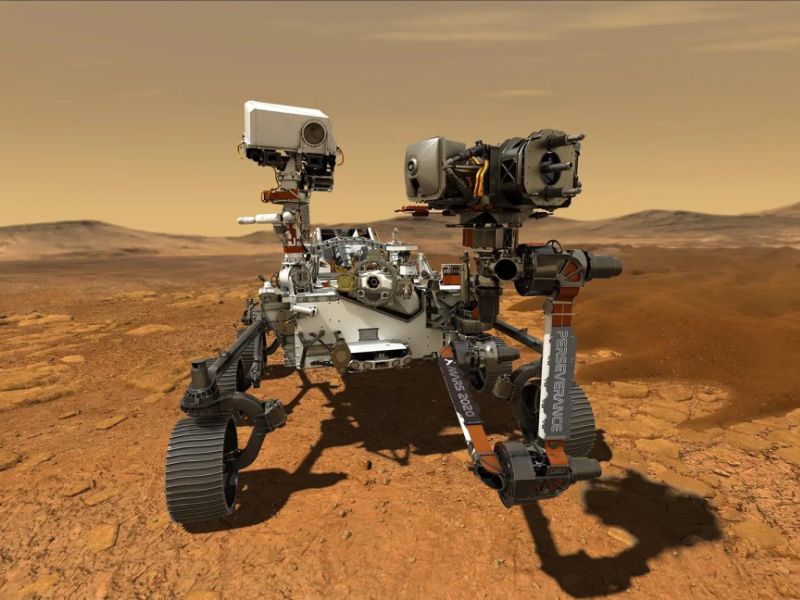
    Image Credits:NASA

    Think self-driving cars are impressive? Imagine a rover navigating a planet more than 100 million miles away.

    On Wednesday, NASA revealed that its Mars Perseverance rover had achieved an extraordinary display of endurance and autonomy. Over the span of four hours and 24 minutes, the rover traveled 1,350.7 feet—roughly a quarter mile—the longest distance any Mars explorer has covered in a single Martian day, or “sol.” Remarkably, it accomplished this largely on its own.

    Navigation Software Determines the Rover’s Route

    The rover operates mostly on its own. While human scientists select its destinations, the rover’s navigation software determines the exact route.

    Engineers at [Jet Propulsion Laboratory] carefully plan each day of the rover’s tasks on Mars,” NASA said in a statement. “However, once it begins moving, the rover navigates independently and must occasionally respond to unexpected obstacles in the terrain.”

    One key navigation system, called Enhanced Autonomous Navigation (ENav), can detect obstacles and hazards up to 50 feet ahead—farther than previous Mars rovers—and automatically plot a safe path around them.

    Over 90 percent of Perseverance’s travels have depended on autonomous driving, enabling it to efficiently gather a wide variety of samples,” said Hiro Ono, a JPL autonomy researcher and lead author of a new IEEE paper on ENav, according to NASA.

    Navigation Cameras Capture the Rover’s Record-Breaking Drive

    A video from the rover’s navigation cameras showcases its remarkable journey on June 19, 2025. NASA’s Jet Propulsion Laboratory explained that images were captured every 16 feet during the first third of the trek and every 3.3 feet for the remaining two-thirds. These were then combined with virtual frames generated from the rover’s detailed data in a computer simulation.

    This achievement comes as Perseverance reaches another milestone: after nearly five years on Mars, it has traveled nearly 25 miles. Thanks to its autonomous software, JPL scientists anticipate the rover could cover at least 37 more miles.

    As humans explore the Moon and eventually Mars, long-range autonomous driving will become increasingly essential,” said Hiro Ono.


    Read the original article on: Futurism

    Read more:Battery Charging Fuels Lithium Recycling Breakthrough
  • AI Glasses Help the Visually Impaired Navigate Safely

    AI Glasses Help the Visually Impaired Navigate Safely

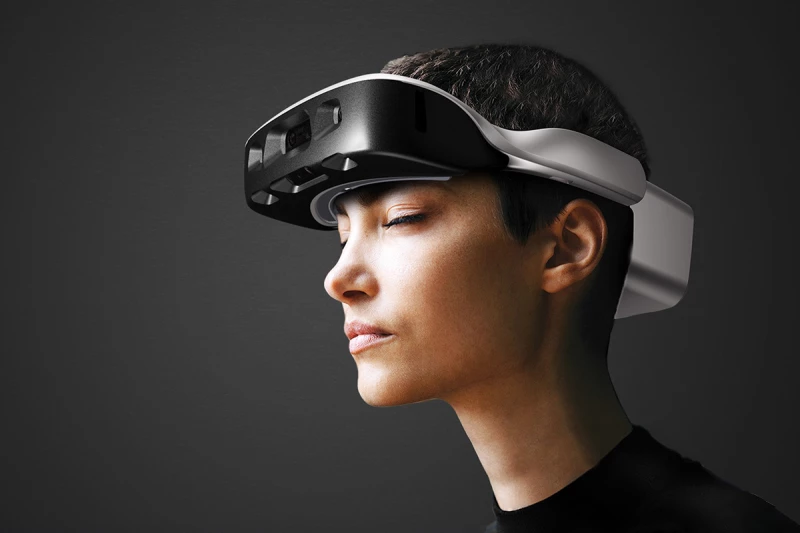
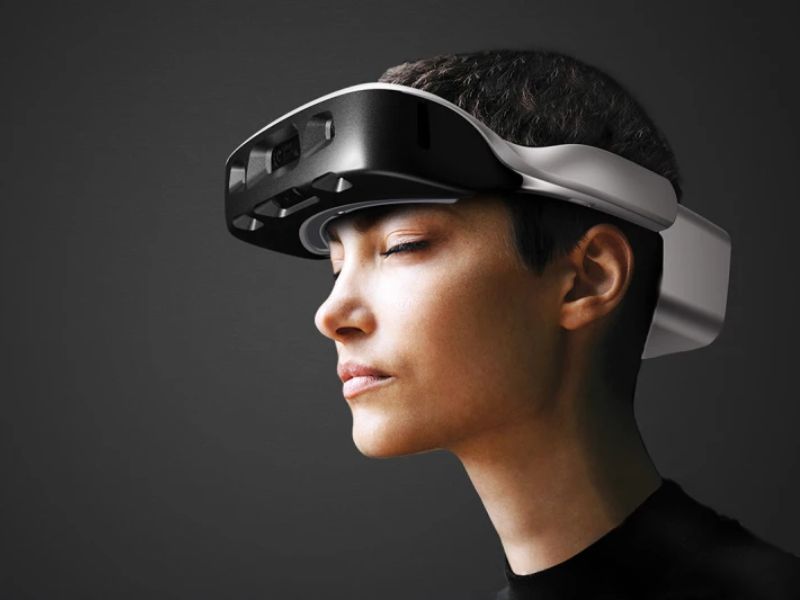
    The .Lumen glasses work like a VR headset, using AI and sensors to guide users with forehead vibrations and directional audio instead of visuals.
    Image Credits:The .Lumen glasses are more of a headset than spectacles, and this device delivers haptic feedback to your forehead to guide you around your surroundings
    .Lumen

    The .Lumen glasses work like a VR headset, using AI and sensors to guide users with forehead vibrations and directional audio instead of visuals.

    The device can direct you to a chosen destination, describe nearby objects, and assist you while moving through public spaces. Its AI processes sensor data over 100 times per second to track movement and prevent collisions. It also relies on an AI model that recognizes road layouts to spot crosswalks and safely guide users through traffic.

    Hands-Free, Voice-Guided Navigation

    Users can request directions via voice, from saved spots like “home” to detailed guidance like “take me to my office” or nearby locations such as a Starbucks counter.

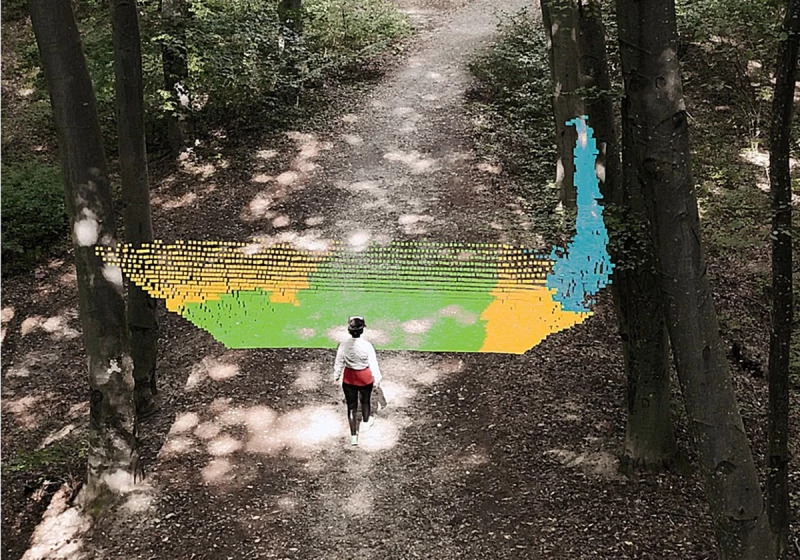
    Image Credits:The headset can help you avoid obstacles as you walk, and also guide you to specific destinations
    .Lumen

    The system uses cameras, infrared lasers, inertial sensors, and GPS to detect obstacles beyond a white cane’s reach. According to .Lumen, the glasses can also recognize stairs, doors, bus stops, and hazards like puddles or slippery snow.

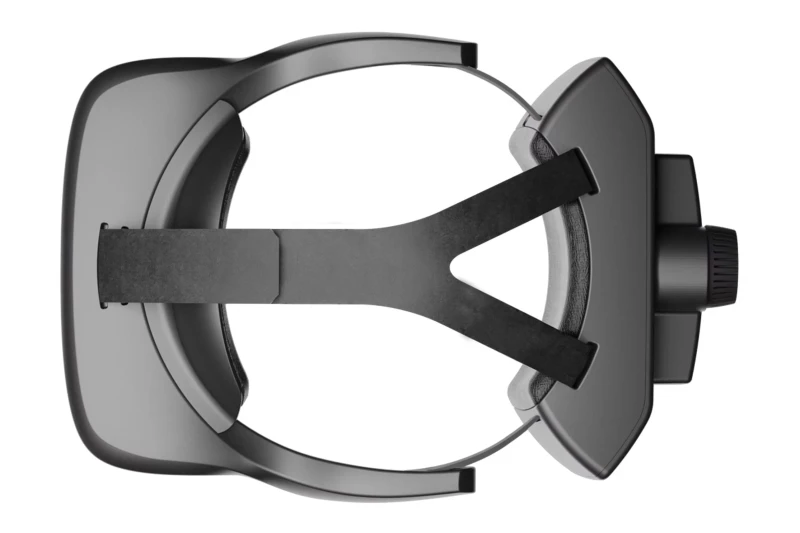
    The device has a prominent forehead sensor and rear battery, runs two hours per charge, and weighs 2.2 lbs (1 kg), like a half-face motorcycle helmet.

    Image Credits:The wearable is by no means compact, as it’s packing six cameras, three IMUs, two laser projectors, and precise vibration motors to allow blind people to get around independently
    .Lumen

    Founded in 2020 by Cornel Amariei, the company has funding, CE certification, and 1,500 pre-orders.

    A High-Tech Alternative to Guide Dogs

    The .Lumen wearable offers functionality similar to a guide dog, a top mobility aid for the blind. However, guide dogs can involve long waiting lists and come with the significant long-term responsibility of daily care.

    Image Credits:.Lumen says the headset manages practically 70% of a self-driving car’s sensing performance using hardware that’s a tenth of the size
    .Lumen

    After five years of development, .Lumen will debut the glasses with live demos at CES 2026 in Los Angeles.

    Proven in Real-World Testing Worldwide

    The .Lumen wearable offers functionality similar to a guide dog, a top mobility aid for the blind.

    Reservations are now open for the headset, which is priced at €9,999 (about US$11,800). Approval for sales in the United States may take longer, as .Lumen is prioritizing expansion within Europe first. If the glasses perform as intended, they could offer people who are blind a powerful new sense of independence.


    Read the original article on:Newatlas

    Read more: Chinese Robotics Firm Develops Robot with a Lifelike Human Face