
Tag: Nutrition

  • Which is Better for Reducing Food Waste: Nutrition or Sustainability?

    Which is Better for Reducing Food Waste: Nutrition or Sustainability?

    Recent research has examined whether food waste is more effectively reduced by consumers motivated by sustainability or those focused on nutrition and health. The study's surprising results emphasize the importance of reevaluating our strategies for tackling food waste.
    Credit: Pixabay

    Recent research has examined whether food waste is more effectively reduced by consumers motivated by sustainability or those focused on nutrition and health. The study’s surprising results emphasize the importance of reevaluating our strategies for tackling food waste.

    Dr. Trang Thi Thu Nguyen, lead author of the study, said, “Consumers aware of sustainability tend to waste less food as they seek eco-friendly products. However, those focused on sustainability often prioritize product selection over reducing food waste.”

    Survey on Food Consumption Behavior and Waste

    The researchers surveyed 1,030 adults online about household food consumption, asking, “It is important to me that the food I consume:”, followed by eight items on nutrition or sustainability. They rated these statements on a seven-point scale ranging from strongly disagree to strongly agree. For example, a nutrition-related statement was, “The food I consume keeps me healthy,” and a sustainability-related statement was, “The food I consume is packaged in an environmentally friendly way.” After defining food waste and listing its categories, participants estimated their total food waste.

    Upon analyzing the data, the researchers found that a focus on nutrition was significantly and negatively associated with food waste. “Additionally, individuals who prioritized nutrition showed a positive link to meal planning behaviors and a negative association with over-purchasing.”

    Nguyen noted, “Individuals who focus on healthy eating tend to plan meals and avoid over-purchasing, which helps reduce food waste significantly.”

    The researchers stated that their findings suggest a shift in perspective is necessary for effectively addressing food waste on a societal scale.

    Nguyen suggested, “Future food waste campaigns should link nutrition and waste reduction, as people are more motivated by health benefits than abstract environmental concerns, making it a more convincing part of a healthy lifestyle.”

    However, the researchers also pointed out that their study highlights actions households can take to reduce food waste.”

    Nguyen said, “This will help households save money on food waste, especially during a cost-of-living crisis, while promoting healthier eating habits. A sustainable food system is about how we manage, prepare, and consume food, not just choosing the right products.”


    Read the original article on: New atlas

    Read more: Is There Enough Land to Fight Climate Change and Feed the World?
  • The Healthiest Rice! White or Brown? From a Nutrition Scientist Perspective.

    The Healthiest Rice! White or Brown? From a Nutrition Scientist Perspective.

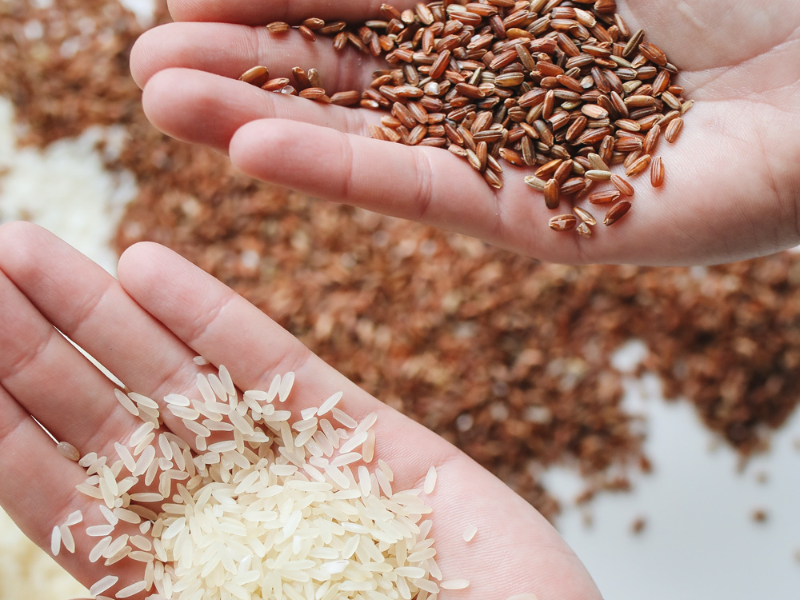
    White and Brown Rice.
    White and Brown Rice. Credit: Pexels

    Rice is the number three most produced agricultural crop in the world. Only losing for sugarcane and corn. The major producers of rice are placed in Asia, having China producing 28% of the world’s rice before 2020.Rice is demanded globally since 8,000 BC. It is a huge part of everyday meals. The consumption of rice is facing many controversies these days. Now, what could be a nutrition scientist’s perspective on the question of the “healthiest” rice option? White or Brown Rice?

    What is the healthiest rice?

    The issue of identifying the “most nutritious rice” often involves comparing white rice and brown rice. Although one is typically preferred over the other, determining the best option ultimately hinges on your dietary needs and preferences.

    Indeed, brown rice contains more fiber, fat, and slightly higher protein content than white rice due to its processing method. Whole grains consist of three components: the germ, bran, and endosperm. Brown rice comprises all of these parts, whereas manufacturers remove the germ and bran from white rice. If you desire to increase your fiber intake, brown rice is a fantastic option to consider. In real life, all rice is good for us. According to Kera Nyemb-Diop, a nutrition expert, the query about the “most beneficial rice” stems from a culture of exclusion and unhealthy dietary practices.

    “If rice was the only food we were eating, it would make sense (to ask that) because we’re interested in having a balance of nutrients and fiber, so, of course, I would say brown rice is more complete,” says Nyemb-Diop .“But when you look at the reality, people eat meals.”

    Rice is commonly consumed along with a source of protein and vegetables, rather than on its own, thus forming part of a wholesome and well-balanced meal. If you prefer not to eat brown rice due to its taste, you can still create a high-fiber meal by pairing white rice with a variety of vegetables that are rich in fiber. According to Nyemb-Diop, it’s recommended to incorporate various types of rice into your diet, including white or brown rice, basmati rice, arborio rice, jasmine rice, or any other varieties.

    The conventional wisdom is that brown rice is much healthier than white rice. But is it really true? White rice is more popular, but brown rice contains more nutrients and fiber because it is a whole grain. However, there are also a few problems with brown rice.

    Is white rice healthy?

    Certainly, white grain is beneficial for health. The cereal is a rich source of several essential minerals such as magnesium, phosphorus, manganese, selenium, and iron. Additionally, it also contains folic acid, thiamin, and niacin. Nyemb-Diop argues that the perception of white grain as the “less healthy” option is indicative of a more significant issue with how we define and understand health. White grain is a staple food in many cultures, and it is consumed more frequently than brown grain . Moreover, more than 50% of the global population regards rice as a primary food source.

    How to incorporate rice into your life in a healthy way

    Eat what you enjoy. Nyemb-Diop recommends that if you enjoy eating brown grain , go ahead and consume it, but if you don’t, don’t feel obliged to eat it. Introducing any type of rice into your diet is beneficial in terms of nutrition. Additionally, prioritizing the enjoyment of food is a great approach to fostering a positive connection with food and your body.

    In recent years, cauliflower and broccoli rice, which are vegetables chopped into cereal-like pieces, have gained popularity as low-carb alternatives to rice. Incorporating cauliflower or broccoli rice into your meals is an excellent way to increase your vegetable intake, especially since only one in 10 adults consume the recommended daily serving of vegetables. However, this does not imply that you must substitute rice with cauliflower or broccoli rice.


    Original Article on USA TODAY

    Reference: USA TODAY