Tag: Overlooked

  • The Atmosphere’s Growing Thirst: A Key but Overlooked Factor in Intensifying Droughts

    The Atmosphere’s Growing Thirst: A Key but Overlooked Factor in Intensifying Droughts

    (Sarote Pruksachat/Moment/Getty Images)

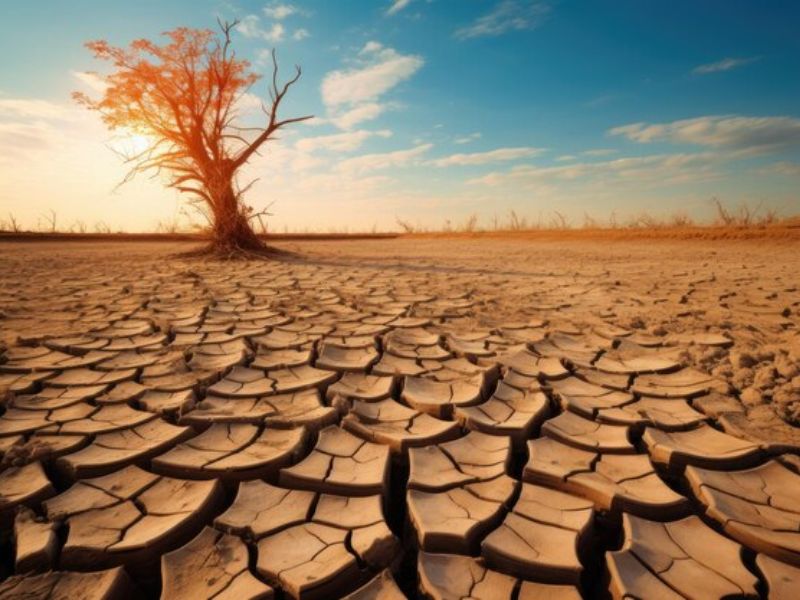
    Droughts are becoming increasingly intense and widespread around the world—but declining rainfall isn’t the only reason. A lesser-known culprit is the atmosphere’s growing demand for water.

    In a recent Nature study, my colleagues and I found that this increased “atmospheric thirst”—technically known as atmospheric evaporative demand (AED)—has driven around 40% of the worsening drought conditions observed between 1981 and 2022.

    Think of it this way: if rainfall is your income and AED is your spending, even a steady income can’t prevent a deficit if your expenses keep rising. That’s the current reality—more water is being drawn from the land than it can sustainably give.

    As global temperatures rise, the atmosphere pulls more moisture from soils, rivers, lakes, and vegetation. As a result, even in regions where precipitation hasn’t decreased significantly, drought severity is still increasing.

    AED reflects how much moisture the air seeks from the Earth’s surface. The hotter, sunnier, windier, and drier the atmosphere, the higher its demand—regardless of how much rain falls.

    That means many places experiencing similar rainfall to past years are now drying out faster and more completely. The increased atmospheric demand adds pressure in water-scarce moments, exacerbating stress on ecosystems and communities.

    Our research shows that AED not only worsens current droughts but also increases their geographical reach. Between 2018 and 2022, the total global land area affected by drought expanded by 74%, and over half of that expansion—58%—can be attributed to increased AED.

    The year 2022 stood out as the most drought-affected year in over 40 years. More than 30% of Earth’s land surface faced moderate to extreme drought. Europe and East Africa, in particular, saw severe impacts—mainly driven by a dramatic rise in AED, not necessarily by reduced rainfall.

    Crop yields are severely affected by water stress. (Camrocker/Canva)

    In Europe, for instance, widespread drying led to falling river levels that disrupted hydropower production, agricultural losses from stressed crops, and water shortages in cities—putting immense pressure on infrastructure, farming, and energy systems.

    To better understand these patterns, our team used high-resolution climate data, factoring in temperature, wind, humidity, and solar radiation—all variables that influence how much water the atmosphere pulls from land and plants. This allowed us to measure AED effectively—essentially quantifying how “thirsty” the air is.

    With this information, we applied a globally accepted drought index that combines rainfall and AED. This helped us identify the timing, location, and causes of droughts. Most importantly, we could isolate the role of atmospheric demand in making droughts worse.

    Looking ahead, the implications of rising AED are particularly concerning for drought-prone regions like western and eastern Africa, southern and western Australia, and the southwestern United States—where AED has contributed to over 60% of drought severity in the past 20 years.

    If we ignore AED in drought planning and monitoring, we risk underestimating the challenges ahead. With global temperatures expected to continue rising, so will the frequency and severity of droughts. Preparing for this means acknowledging and planning around the atmosphere’s increasing thirst.

    Understanding What Drives Droughts

    Pinpointing the causes of drought in specific regions is crucial for effective climate resilience. AED needs to be a core part of drought monitoring, forecasting, and response.

    Tailored strategies depend on whether rainfall decline or AED is the main driver. If rainfall is the issue, then the focus should be on water conservation and storage. But when AED is the dominant factor, solutions should tackle evaporative losses and plant water stress—through drought-resistant crops, efficient irrigation, soil improvement, and ecosystem restoration.

    Our findings confirm that global warming is fueling a rise in AED, which in turn makes droughts more intense—even when rainfall hasn’t dropped. Failing to account for this growing atmospheric thirst puts communities, ecosystems, and economies at greater risk.


    Read the original article on: Science Alert

    Read more: Famous ‘Gateway to Hell’ Fire May Be Coming to an End After 50 Years
  • Odysseus Broke his Leg Landing from an Overlooked Laser Switch

    Odysseus Broke his Leg Landing from an Overlooked Laser Switch

    As the Odysseus Moon lander approaches its final hours, an unexpected development adds a twist to its narrative: during landing, one of its legs broke due to a series of errors stemming from a missed safety procedure on Earth prior to launch.
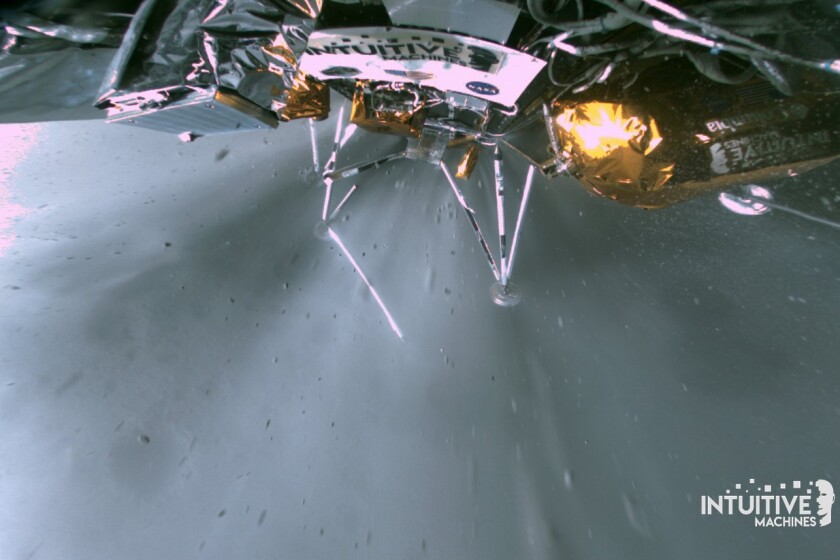
    Image from Odysseus showing the broken leg and the plume from the throttling engine
    Intuitive Machines

    As the Odysseus Moon lander approaches its final hours, an unexpected development adds a twist to its narrative: during landing, one of its legs broke due to a series of errors stemming from a missed safety procedure on Earth prior to launch.

    The IM-1 mission has witnessed a combination of accomplishments and challenges. Merely a week after seemingly flawless liftoff on February 14, it earned acclaim as the first successful American Moon landing in over fifty years. Moreover, it represented the maiden voyage of a privately owned and operated spacecraft to the Moon, and the first lander to utilize cryogenic fuels.

    The Lander Topples Over Upon Landing

    Regrettably, the lander also toppled over upon landing, ending up in a sideways position. This situation would have been problematic on its own, but it transpired that the fall stemmed from a series of events triggered by a single, minor error.

    IM conference

    Intuitive Machines, the company that built and owns the Nova-C class Odysseus lander, reported that they inadvertently left a critical safety switch, responsible for activating the spacecraft’s laser landing navigation system, in the ‘off’ position.

    Troubleshooting After Launch

    Upon discovering this oversight post-launch, flight engineers devised a workaround by implementing a software patch. This patch enabled NASA’s Navigation Doppler Lidar experiment aboard the lander to take over the inactive system. However, a crucial data flag was overlooked, which would have allowed the software to assess the validity of the data.

    Consequently, Odysseus was forced to rely primarily on its inertial guidance system and optical navigation algorithms. This meant that the lander lacked an altimeter to gauge its altitude as it descended toward the lunar surface.

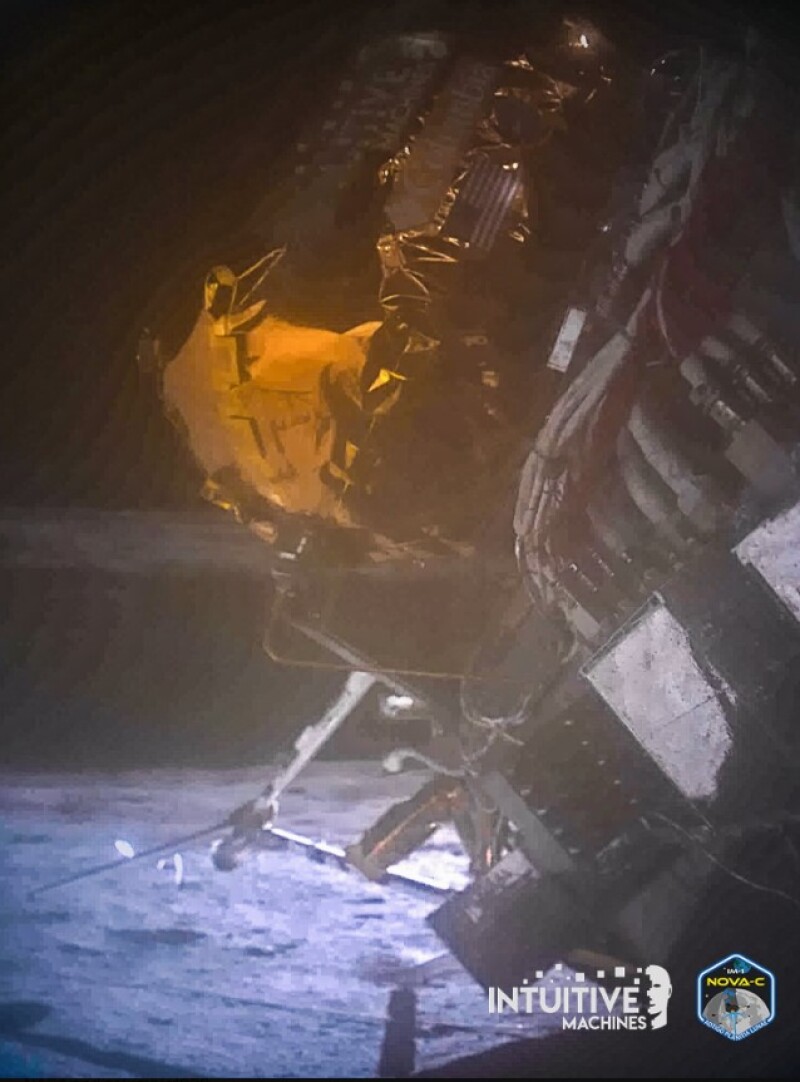
    The broken leg seen from another camera
    Intuitive Machines

    It has been determined that Odysseus landed short of its intended landing site on higher terrain than planned by the mission team. Instead of executing a controlled descent, Odysseus descended at a faster rate than anticipated and also had lateral movement. As a result, the spacecraft impacted the lunar surface forcefully, causing one of its landing legs to snap.

    Mission-Saving Impact

    This incident could have prematurely ended the mission, but the broken leg absorbed some of the impact, and the engine continued to throttle, allowing Odysseus to tilt gently and come to rest on its helium tank at a 30-degree angle.

    Despite the setback, Odysseus was able to charge its batteries via its solar panels, and all payloads, except for one camera experiment, remained operational and were transmitting data. However, the fall rendered the high-gain radio antenna inoperable, necessitating Mission Control to rely on the low-gain antenna and high-powered Earth-based receivers for data and image transmission, albeit at a significantly reduced rate.

    Despite the challenges, Intuitive Machines has acknowledged that Odysseus is now in its final hours of operation. The lander’s solar panels will soon be in shadow, and even if they were not, the Sun would soon set at the landing site, subjecting the lander to the 14-day freezing lunar night, which it is unlikely to survive.


    Read the original article on: new atlas

    Read more: NASA Delays Human Moon Landings To 2026 and Lunar Orbit Plans To 2025