Tag: Parasite

  • Parasite Hides by Stealing Human Cell Proteins

    Parasite Hides by Stealing Human Cell Proteins

    Credit: Depositphotos

    Parasites are infamous for their resourceful ways of infecting human cells, often developing complex tactics to slip past immune defenses unnoticed. One particularly crafty organism, Entamoeba histolytica, has evolved a remarkable method to stay hidden: it tears off fragments of human cells and uses their proteins to disguise itself.

    Life Cycle of a Deadly Parasite

    E. histolytica is a unicellular parasite responsible for amoebiasis—a serious disease that spreads via contaminated food and water. Its resilient cyst form can survive the acidic environment of the stomach, eventually releasing active amoebic trophozoites in the small intestine. These trophozoites then move to the large intestine, where they reproduce and form new cysts, continuing the infectious cycle when expelled in feces.

    This pathogen infects around 50 million people globally each year and is linked to approximately 70,000 deaths. In many cases, it only causes mild symptoms like diarrhea, but in severe instances, it can destroy liver tissue and spread to the brain or lungs. Despite its widespread impact, E. histolytica remains largely understudied, with many aspects of its biology still not fully understood.

    “All parasites are understudied, but E. histolytica is especially mysterious,” notes Katherine Ralston, an associate professor in microbiology and molecular genetics. “It has the ability to kill virtually any human cell.”

    A New Understanding of Immune Evasion

    While it was previously known that this amoeba could eliminate immune cells to avoid detection, the exact mechanism had remained elusive. Earlier theories suggested the parasite released toxins to kill its targets.

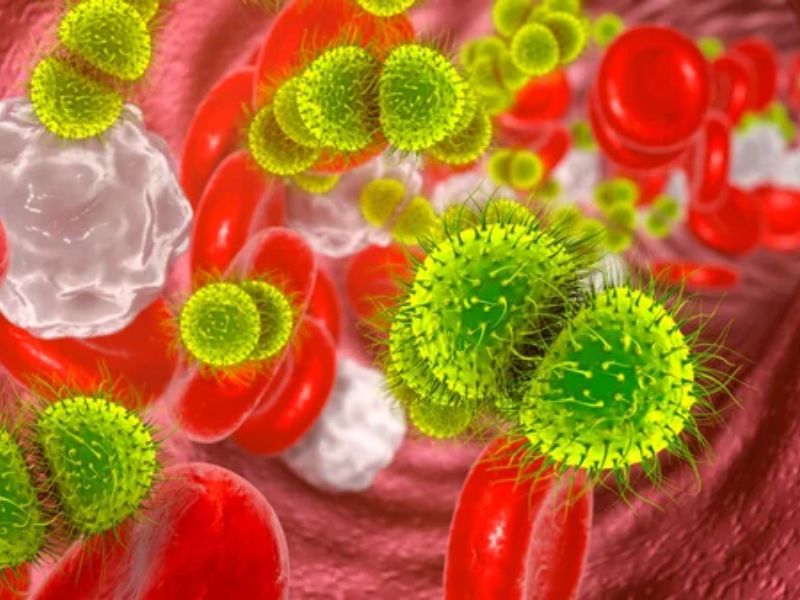
    But Ralston’s research uncovered something far more unusual. Instead of killing cells outright, the parasite nibbles off small portions, leaving the host cell damaged but not entirely destroyed. It doesn’t consume these bits for nourishment—instead, it hijacks surface proteins such as CD46 and CD55, incorporating them into its own outer layer. These proteins normally help human cells avoid immune attacks, so when the parasite wears them, it becomes effectively invisible to the immune system.

    Scientists call this method of stealing and using host proteins for camouflage trogocytosis.

    Trogocytosis of Host Cell

    New Hope for Treatment

    Researchers initially reported the breakthrough in a preprint at the end of 2024. Now, they are actively exploring the parasite’s already-sequenced RNAi library to identify the genes responsible for its protein-stealing behavior. When paired with CRISPR gene-editing tools, it could open the door to treatments that specifically target these molecular interactions and neutralize the parasite.

    We’re finally seeing a promising path forward,” says graduate student Wesley Huang. “And it feels like a real possibility.


    Read the original article on: New Atlas

    Read more: Parasites Unearthed in 500-Year-Old Toilet Expose Surprising Medieval Disease Networks
  • Ancient Parasite Used a Trap-like Appendage To Lay Eggs in Hosts

    Ancient Parasite Used a Trap-like Appendage To Lay Eggs in Hosts

    A specimen of the parasitic wasp, Sirenobethylus charybdis, preserved in amber. Credit: Pixabay

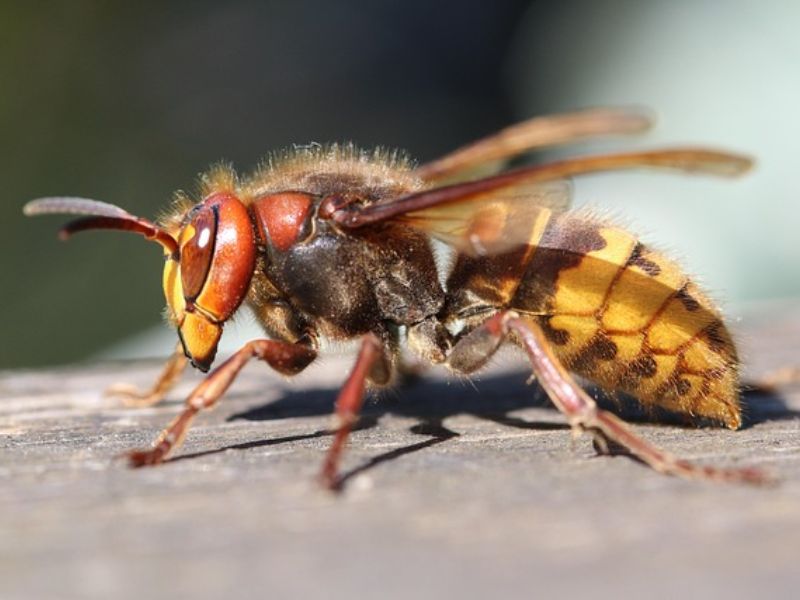
    If you ever find yourself in the time of dinosaurs, avoid touching flowers—they might be parasitic wasps in disguise. A study of wasps trapped in amber reveals that these insects ensnared hosts for their larvae using a Venus flytrap-like appendage.

    Named Sirenobethylus charybdis, this wasp lived around 99 million years ago, and at first glance, it resembles modern wasps. However, a closer look at its abdomen reveals a bizarre, flower-shaped trap. Researchers from Capital Normal University in China and the Natural History Museum of Denmark analyzed 16 amber-preserved specimens using micro-CT scans. They discovered that the wasp’s abdomen consisted of three flaps capable of opening and closing like petals.

    The lower flap featured spines and a dozen hair-like bristles at its tip, likely functioning as sensory triggers—similar to those on a Venus flytrap—that signaled when prey was near. However, the soft spines in the center suggest the trap wasn’t meant to crush victims. Instead, the wasp had a far more sinister purpose.

    A Deadly Trap: Parasitic Wasp Uses Venus Flytrap-Like Mechanism to Inject Eggs into Hosts

    A close-up of the Venus flytrap-like abdomen of Sirenobethylus charybdis
    Qiong Wu

    Once a host insect entered the trap, the wasp could quickly snap it shut and deliver a paralyzing sting. This allowed the ovipositor, a specialized egg-laying appendage, to inject eggs into the immobilized host. Afterward, the wasp released its victim, but the real horror had just begun. Once the eggs hatched, the larvae consumed the host from within—a fate similar to that inflicted by modern parasitic wasps.

    Researchers believe S. charybdis targeted small flying or hopping insects but lacked the speed to chase them down. Instead, it evolved this ambush strategy, unlike any parasite known today. This discovery highlights that eerie insect horror stories have played out since the age of dinosaurs.

    The study was published in BMC Biology, and a micro-CT scan of the wasp can be seen in the video below.


    Read Original Article: New Atlas

    Read More: Mouse Created Using Gene Older Than Animal Life

  • Cat Parasite Linked to Age-Related Frailty

    Cat Parasite Linked to Age-Related Frailty

    The widely recognized single-cell parasite Toxoplasma gondii, which induces hazardous behavior in its hosts to enhance its transmission and can lead to severe mental and physical health issues, is now linked to the acceleration of age-related frailty. This microscopic organism that prospers in felines (via rats and birds) is now associated with hastening the onset of age-related weakness.
    The danger zone: Take extra care around your cat’s litter . Credit: Pixaobay

    The widely recognized single-cell parasite Toxoplasma gondii, which induces hazardous behavior in its hosts to enhance its transmission and can lead to severe mental and physical health issues, is now linked to the acceleration of age-related frailty. This microscopic organism that prospers in felines (via rats and birds) is now associated with hastening the onset of age-related weakness.

    Approximately 11-15% of individuals in the United States have been exposed to T. gondii at some point in their lives, whether they were aware of it or not. This parasite has the capability to reside within a human host for an extended duration, possibly even a lifetime. However, a well-functioning immune system in a healthy individual should result in minimal, if any, noticeable symptoms.

    A First-Time Discovery by Researchers

    As per data from the Centers for Disease Control and Prevention, over 40 million Americans harbor the parasite widely recognized as toxoplasmosis. However, even when it remains inactive and mostly symptomless, scientists suspect that it could be a contributing factor in the acceleration of age-related frailty. This influence is not attributed to the infection itself but rather to the response of the body’s immune system to this tiny intruder. For the first time, researchers from the University of Colorado Boulder, University of Maryland School of Medicine, and the University of A Coruña in Spain have established a connection between this parasite and frailty in older adults.

    “We often consider T. gondii infection to be relatively symptom-free, but this study underscores that, for certain individuals, it could lead to significant health repercussions in the future,” stated Christopher Lowry, a professor in the Department of Integrative Physiology at CU Boulder and co-author of the study.

    A Complex Geriatric Condition

    Frailty represents a geriatric condition characterized by a combination of physical and cognitive decline. It is a multifaceted state that can manifest as weight loss, exhaustion, reduced physical activity, slowness, weakness, an increased risk of falls and hospitalization, as well as lengthier recovery from illnesses. While it is not an inevitable outcome, approximately 10% of individuals aged 65 and above are diagnosed with frailty, a number that escalates to between a quarter and half of those aged 85 and older.

    When investigating the prevalence of T. gondii infections among older adults with frailty, the researchers theorized that the mere acquisition of this parasite might potentially accelerate age-related physical and cognitive deterioration.

    In a study of 601 older adults in Spain and Portugal with frailty symptoms, researchers found that 67% had evidence of previous T. gondii infection (seropositivity). Although a direct link to infection wasn’t confirmed, those with higher levels of parasite-specific antibodies (serointensity) were more likely to exhibit frailty traits. Co-author Blanca Laffon, a professor at the University of A Coruña, emphasized the paper’s significance as the first evidence of a connection between the intensity of the immune response to T. gondii infection and frailty in older adults.

    Inflammation and Sarcopenia in Individuals with High Seropositivity and Frailty

    Moreover, individuals with both high seropositivity and frailty displayed increased inflammation markers, indicating that the parasite’s immune response may exacerbate age-related inflammation, potentially contributing to sarcopenia, which is age-related muscle wasting.

    T. gondii is typically contracted when handling cat litter, although it also utilizes birds and rodents as intermediate hosts. It primarily resides in cats, where it reproduces in their intestines, leading to the presence of its eggs in the litter box. (Eggs can also be found in contaminated water, unwashed vegetables, and undercooked meats.)

    Research has shown that the parasite can induce unusual and risky behaviors in its hosts to enhance its transmission. For instance, infected rats and mice lose their fear of cats, making them easier prey, and infected chimpanzees even display an attraction to the urine scent of their feline predator, the leopard.

    The Impact of T. gondii on Human Behavior and Mental Health

    Research in humans has shown that T. gondii encourages risk-taking behavior, potentially boosting entrepreneurial tendencies and increasing the likelihood of car accidents. It is also linked to a higher occurrence of schizophrenia and mood disorders, largely because the parasite prefers to form cysts in the brain’s cortex, a vital region responsible for processing sensory information.

    An unconventional study even hinted that the parasite might make infected individuals appear more sexually attractive, possibly to enhance its chances of close contact with other potential hosts.

    The researchers hope this study will stimulate further exploration into the relationship between T. gondii and frailty, seeking ways to prevent the parasite from worsening age-related decline. They stress the importance of maintaining hygiene and understanding the risks associated with cleaning cat litter, especially for individuals with compromised immune systems and those aged 65 and older when the immune system undergoes more significant declines.

    The paper underlined, “Our study, conducted in an older adult population from the Iberian region with a high prevalence of T. gondii seropositivity, is, to the best of our knowledge, the first to establish a link between serological markers of chronic T. gondii infection and frailty.”


    Read the original article on: New Atlas

    Read more: The Emergence of JN.1: A New COVID-19 Variant and its Implications