Image Credits: Depositphotos
Detecting Parkinson’s Disease early is crucial for slowing its progression and enhancing a patient’s quality of life. A new test, using only a small earwax sample, aims to do just that.
Parkinson’s affects around 10 million people worldwide, yet doctors still lack a definitive method to diagnose it in its early stages. Current approaches rely on assessments of cognitive and motor functions, which can be imprecise and subject to bias. Other methods involve imaging to exclude other conditions or observing how patients respond to Parkinson’s medications—sometimes prescribed even when the diagnosis is uncertain.
New Biomarker Breakthroughs Offer Hope for Early Parkinson’s Detection
Progress in diagnosing Parkinson’s is steadily advancing. Earlier this year, we highlighted research suggesting that a simple eye exam could help detect the disease in its early stages.
Another promising method focuses on how Parkinson’s affects sebum—the oily substance produced by our skin. In 2021, researchers identified 10 biomarkers that showed significant differences in people with the disease by analyzing sebum collected through non-invasive skin swabs. With this data, they were able to differentiate between individuals with and without Parkinson’s with 85% accuracy.
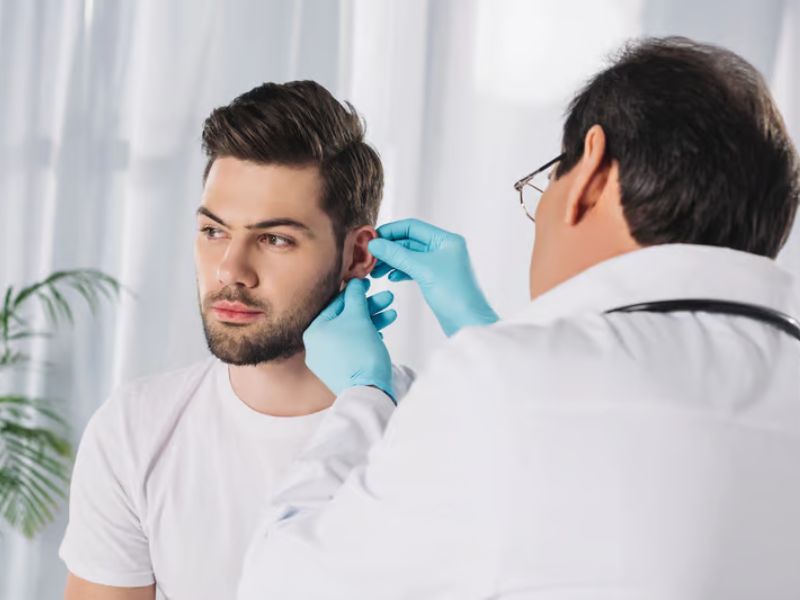
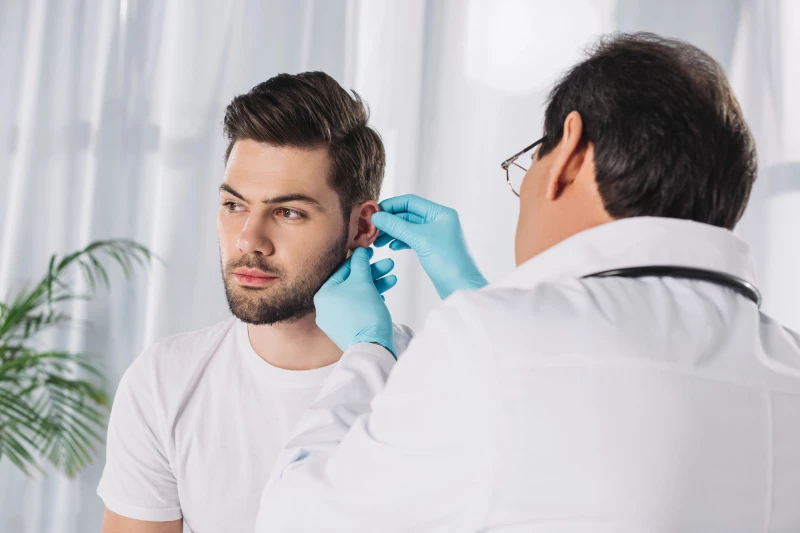
Aware that environmental exposure constantly alters the skin’s chemical makeup but still seeing sebum as a promising Parkinson’s indicator, a team of researchers from several Chinese universities and institutes focused on a more protected source of sebum: ear wax. Ear wax, unlike skin secretions, stays protected from external influences and more accurately reflects sebum composition.
AI and Ear Wax Analysis Achieve 94% Accuracy in Detecting Parkinson’s
In their study, the team collected ear wax samples from 209 adults—108 of whom had Parkinson’s. Using gas chromatography and mass spectrometry, they identified four volatile organic compounds (VOCs) that were significantly reduced in individuals with the disease. They then trained an AI system equipped with scent-detection capabilities on this data. After training, the system was able to distinguish between Parkinson’s and non-Parkinson’s patients with 94% accuracy.
According to the researchers, this highly successful test could offer doctors a low-cost, non-invasive method for early detection of Parkinson’s Disease. However, they emphasize that further studies are necessary.
“This approach was tested in a small-scale, single-center study in China,” explains study co-author Hao Dong. “The next phase involves conducting additional research across various stages of the disease, in multiple research centers, and among diverse ethnic groups to assess whether the method holds broader practical value.”
Read the original article on: New Atlas
Read more: Your Heart Health Declines After Only Three Nights of Poor Sleep