Tag: Plant

  • Italy is Developing Technology that Uses Plant Cells to 3D-Print Food

    Italy is Developing Technology that Uses Plant Cells to 3D-Print Food

    Italy is emerging as a leader in technological innovation through the development of 3D-printed food. At ENEA’s research laboratory in Oricola, scientists are converting plant cells and food waste into so-called “edible inks,” which are then used to produce nutrient-rich cereal bars, confectionery, and small honey spheres.
    Image Credits: Unsplash

    Italy is emerging as a leader in technological innovation through the development of 3D-printed food. At ENEA’s research laboratory in Oricola, scientists are converting plant cells and food waste into so-called “edible inks,” which are then used to produce nutrient-rich cereal bars, confectionery, and small honey spheres.

    Main features of the technology:

    • Sustainability: The method removes the need for farmland and significantly cuts down on resource waste.
    • Preservation: The printing process retains the key nutrients found in the original ingredients.
    • Applications: The technology is designed for use in extreme environments, including disaster relief areas, war zones, and space exploration.
    • Customization: It enables the production of tailored diets for individuals with specific nutritional needs or restrictions.

    Cell-Based Cultivation in Controlled Environments

    The approach centers on cultivating cells in carefully controlled conditions. Silvia Massa, head of ENEA’s Agriculture 4.0 laboratory, explains that the aim is not to grow an entire plant, but to extract and multiply its cells within a gel that mimics soil. “The focus is not on cultivating the plant itself, but its cells,” she notes.

    Beyond improving production efficiency, the technology also opens the door to precision nutrition. By modifying the composition of the “ink,” specific amounts of proteins and vitamins can be tailored to meet individual dietary requirements.

    Acceptance of this innovation is also on the rise. Research carried out by the Italian laboratory found that about 60% of participants would be open to eating food created through 3D printing technology.


    Read the original article on: Revistaplaneta

    Read more:Scientists Develop the Inaugural Model of Artificial Brain Tissue
  • This Plant Thrives Despite the Harsh Environment of Space

    This Plant Thrives Despite the Harsh Environment of Space

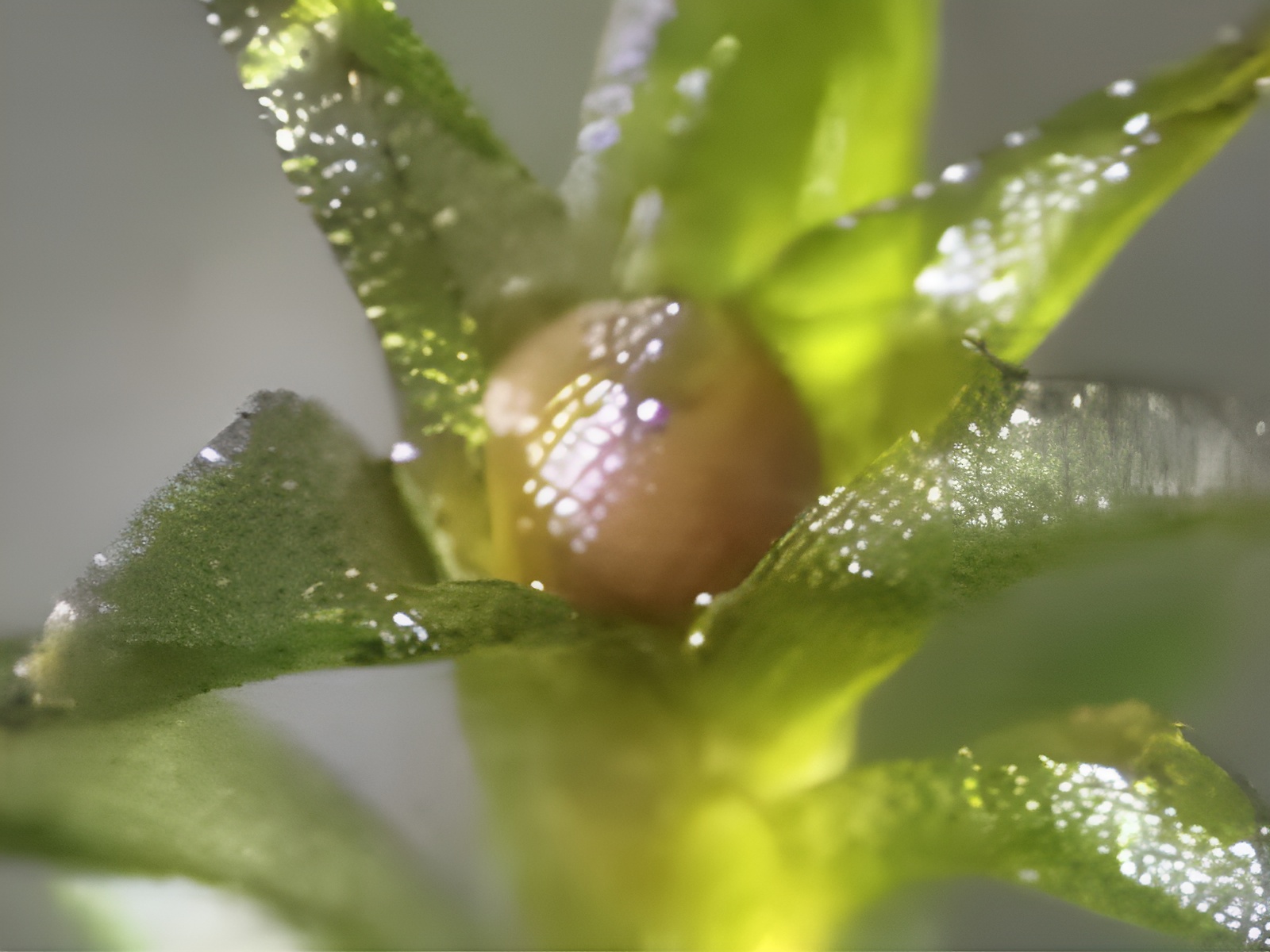
    Tardigrades are among the toughest animals, surviving dehydration, freezing, and space radiation. Recent findings offer more promising news: their favorite habitat might also endure space travel unharmed. Experiments by Chang-hyun Maeng at Hokkaido University show mosses can endure harsh conditions outside a spacecraft.
    Image Credits: spektrum

    Tardigrades are among the toughest animals, surviving dehydration, freezing, and space radiation. Recent findings offer more promising news: their favorite habitat might also endure space travel unharmed. Experiments by Chang-hyun Maeng at Hokkaido University show mosses can endure harsh conditions outside a spacecraft.

    The biologist and his team studied which parts of Physcomitrium patens—protonemata, germ cells, or spore capsules—best survived extreme conditions. Previous observations had shown that spore capsules, especially in larger numbers, were more resistant to heat, cold, freezing, and vacuum. The capsules were sent to the ISS, where they orbited unprotected for nine months, enduring extreme cold, dryness, and radiation, before being returned to Earth for cultivation.

    Moss Spore Capsules Endure Extreme Space Conditions

    Remarkably, 80% of the spore capsules successfully germinated and grew into living mosses. Maeng and his team had expected almost all of them to perish under such harsh conditions. This outcome demonstrates that, at least at the cellular level, some plants can survive extreme environments and possess protective mechanisms against severe cold and high radiation.

    Considering their 500-million-year evolutionary history as early land colonizers, mosses’ resilience is unsurprising; in space, only chlorophyll a, essential for photosynthesis, showed a notable decrease. Mosses grown in captivity after the space mission had 20% less chlorophyll a than their counterparts that stayed on Earth. Other types of chlorophyll remained unchanged, meaning the plants’ overall ability to carry out photosynthesis was largely unaffected.


    Read the original article on: Spektrum

    Read more: Chinese Firm Unveils Highly Agile Life-sized Robotic Hand

  • Researchers Discover a New Way to Boost Plant Growth

    Researchers Discover a New Way to Boost Plant Growth

    A team of Taiwan-based scientists has reported a biochemical breakthrough that may transform multiple industries and aid in mitigating climate change. Their study, published in Science, reveals a method to enhance the carbon-fixing pathway and promote plant growth.
    Image Credits: Foto de Daniel Öberg na Unsplash

    A team of Taiwan-based scientists has reported a biochemical breakthrough that may transform multiple industries and aid in mitigating climate change. Their study, published in Science, reveals a method to enhance the carbon-fixing pathway and promote plant growth.

    This breakthrough, which redesigns a core process essential to life, greatly accelerated plant growth. The modified plants grew two to three times larger and sturdier in less time and, unexpectedly, produced more viable seeds than their unmodified counterparts.

    A Complement to the Calvin Cycle in Carbon Processing

    The pathways altered in these plants govern the fundamental processing of atmospheric CO₂, rather than the more advanced carbon-use steps involved in building plant structures. The new pathway, called the McG Cycle, generates molecules that integrate into the same routes as those from the Calvin Cycle. In fact, the McG Cycle complements the Calvin Cycle, with each able to make use of the other’s surplus compounds.

    In short, the Calvin Cycle remains fully functional, but plants now gain access to additional resources through the McG pathway, which is far more efficient than the natural process.

    The experiment was carried out on a weed-like species, but the underlying biochemistry could likely be transferred to other plants without major issues. The potential benefits for forestry are significant: companies might harvest smaller areas of forest while still yielding the same volume of timber. For example, a fast-growing cedar could potentially retain most, if not all, of the qualities of slower-growing conventional trees.

    Ecological Risks of Releasing Genetically Enhanced Plants

    However, releasing such a heavily engineered organism into the environment raises serious concerns. A genetically modified oak designed to outcompete natural varieties might, over time, dominate entire regions, displacing native oaks. If these “super-oaks” spread into ecosystems traditionally sustained by other species, they could continue proliferating and dramatically alter the balance of the biosphere.

    When scientists evaluate genetic modifications of this scale, the risks are considerable—especially for plants that mature more quickly than trees. If applied to food crops, the modification could redefine the issue of food scarcity. Yet the most widely discussed impact concerns the atmosphere. Since plants are nature’s most effective carbon sinks, this advance could enable far greater carbon capture each year and even improve the feasibility of biofuels.

    Still, many uncertainties remain—for instance, whether these plants might release the stored carbon back into the atmosphere during decomposition. Regardless, the achievement of altering one of evolution’s most conserved processes is remarkable on its own.


    Read the original article on: Pcguia

    Read more:Autonomous Diving Robot Clears Seabed Trash

  • Smart Facade Controls Heat like a Plant and Insect

    Smart Facade Controls Heat like a Plant and Insect

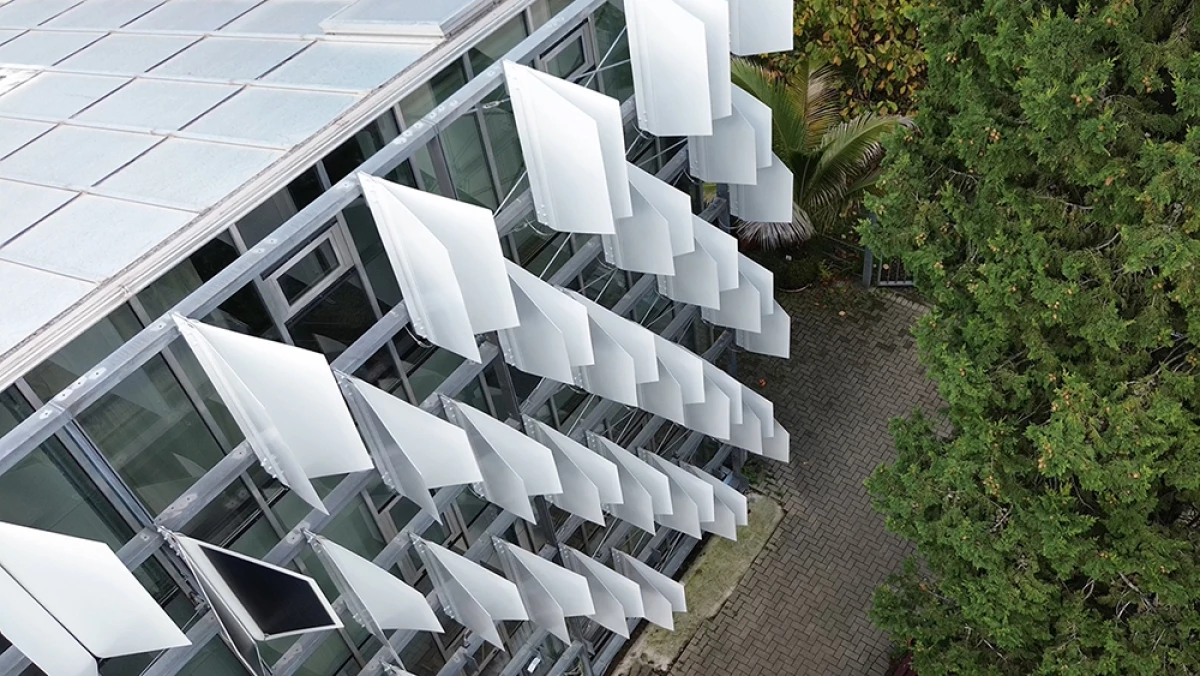
    No one enjoys buildings that are too hot in summer or too cold in winter. That’s why the FlectoLine facade is designed with two bio-inspired mechanisms to automatically control the amount of solar heat entering through the windows.
    Image Credits: New Atlas

    No one enjoys buildings that are too hot in summer or too cold in winter. That’s why the FlectoLine facade is designed with two bio-inspired mechanisms to automatically control the amount of solar heat entering through the windows.

    Collaborative Development of FlectoLine System by German Universities

    This system is being developed through a collaboration between Germany’s universities of Stuttgart and Freiburg, as part of the global Flectuation research project.

    A prototype facade has been on a Freiburg greenhouse for two years, recently earning researchers a special prize at the first Bio-Inspired Innovations Baden-Württemberg Award.

    Image Credits:The modules require a pressure of just 0.4 bar (5.8 psi) to fully actuate to a 90-degree angle
    University of Stuttgart / itke / ITFT

    Prototype Facade with Adjustable Fiber-Reinforced Shading Elements

    The prototype covers 83.5 square meters of the greenhouse’s exterior with multiple shading elements. Each element features two fiber-reinforced thermoplastic flaps that can either spread apart or fold together.

    While the design resembles Venus flytrap traps, the aquatic waterwheel plant (Aldrovanda vesiculosa) actually inspired it with its prey-catching structures.

    Veins in the striped bug’s wings inspired the pneumatic “hinge zone” at each flap’s base. Pumping air into this flexible hinge expands it, causing the stiffer flap to fold outward to one side.

    Image Credits:The FlectoLine demonstrator all shut up for hot weather, with its photovoltaic cells clearly visible 
    University of Stuttgart / itke / ITFT

    Flaps Fold Out to Block Sunlight and Cool the Building

    When the flaps fold outward, they block sunlight, cooling the building and cutting air conditioning needs.

    In colder conditions, the flaps fold inward to meet in the center by stopping airflow to their hinge zones. This allows more sunlight to pass through, warming the interior and lessening the building’s heating requirements.

    Image Credits:In cooler weather, the flaps fold together to open up the facade
    University of Stuttgart / itke / ITFT

    The facade automatically adjusts to conditions but lets users control it manually when needed. Photovoltaic cells on its exterior power the prototype.

    Given the challenges of climate change, architecture must evolve,” says Edith A. Gonzalez, a research associate at the University of Stuttgart. “With FlectoLine, we’ve shown the significant potential of adaptive facades in addressing these issues.


    Read the original article: New Atlas

    Read more: Palmetto Enables Developers to Advance U.S. Electrification with AI-Driven Building Models