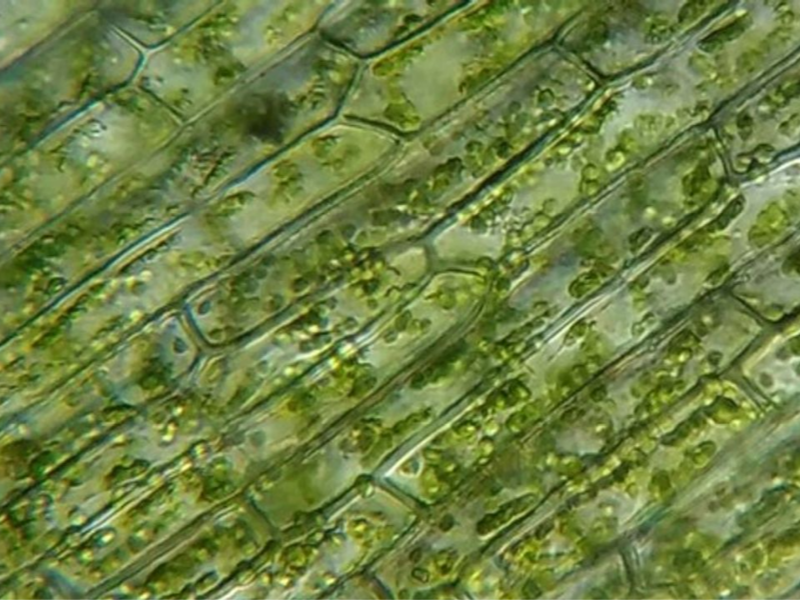
In a pioneering study on cellulose synthesis, a key component of plant cell walls, researchers at Rutgers University-New Brunswick have recorded continuous images of living plant cells constructing cell walls over 24 hours. Their findings offer valuable insights that could help develop stronger plants for enhanced food production and more affordable biofuels.
Published in Science Advances, the discovery unveils a previously unseen dynamic process with potential applications in plant-based products such as improved textiles, biofuels, biodegradable plastics, and innovative medical materials.
According to the researchers, the study not only advances fundamental knowledge but also offers fresh insights into cell wall formation.
A Collaborative Effort Across Disciplines
This breakthrough is the result of over six years of collaboration among three Rutgers University laboratories from distinct yet complementary fields: the School of Arts and Sciences, the School of Engineering, and the School of Environmental and Biological Sciences.
“This study provides the first direct visualization of cellulose synthesis and its self-assembly into a fibril network on a plant cell surface since Robert Hooke’s 1667 observation of cell walls,” said Sang-Hyuk Lee, an associate professor at Rutgers University and a co-author.
The research reveals how basic physical processes like diffusion and self-organization drive cellulose network formation. Video footage shows Arabidopsis protoplasts—cells without walls—spontaneously generating cellulose fibers, which self-organize into a structured network.
“I was surprised to see ordered structures emerge from the chaotic motion of molecules,” said Lee, also with the Institute for Quantitative Biomedicine. “I expected a more structured process, as shown in textbooks.”
Cellulose, Earth’s most abundant biopolymer, is vital for plant cell walls and widely used in paper, textiles, filtration, and food thickening.
“This discovery opens doors for studying genes involved in cellulose biosynthesis,” said Eric Lam, a Distinguished Professor of Plant Biology. “Future research may help develop stronger, stress-resistant plants and improve biofuel production.”
For Shishir Chundawat, a Rutgers engineering professor and study co-author, this research fulfills a lifelong dream.
“I’ve always been fascinated by how plants convert sunlight into cellulose for cell walls,” said Chundawat, who seeks to develop sustainable biofuels and biochemicals from plants and algae.
A Childhood Curiosity Turned Scientific Pursuit
His curiosity began with a middle school project collecting diverse leaves. “That experience inspired me to study biomass production and its sustainable applications.”
Each research team contributed unique expertise. When standard microscopes proved inadequate, the team turned to total internal reflection fluorescence microscopy for clearer imaging.
The technique, capturing images from the underside of cells, enabled 24-hour video recording without damage or bleaching.
Lee, a biophysicist, designed a custom microscope and led imaging efforts. Chundawat’s team developed a fluorescent tagging method using a bacterial enzyme probe to highlight cellulose fibers.
Lam’s team removed Arabidopsis cell walls, creating a “blank slate” for new cellulose formation. “This eliminated background interference, allowing clear tracking of newly synthesized cellulose,” Lam said.
Other Rutgers researchers included postdoctoral scientists Hyun Huh and Mohammad Irfan, doctoral student Dharanidaran Jayachandran, and lab technician Junhong Sun.
Read the original article on: Phys Org
Read more: Revealing the Biology of Insulin Production