Tag: Prevent

  • Machines Mimic Human Motions to Prevent Slipping

    Machines Mimic Human Motions to Prevent Slipping

    To handle diverse real-world tasks, robots must securely grasp objects of various shapes, textures, and sizes without unintentionally dropping them. Traditional methods improve this by increasing the robotic hand’s grip strength to avoid slippage.
    Image Credits:techxplore

    To handle diverse real-world tasks, robots must securely grasp objects of various shapes, textures, and sizes without unintentionally dropping them. Traditional methods improve this by increasing the robotic hand’s grip strength to avoid slippage.

    Researchers Develop Bio-Inspired Motion Control to Prevent Slippage in Robotic Hands

    Researchers from several universities and labs have proposed new methods to stop objects from slipping from robotic hands. Their technique adjusts the movement paths the hand follows during manipulation, rather than relying solely on grip force. The system, combining a robotic controller with bio-inspired trajectory modulation, was detailed in Nature Machine Intelligence.

    The idea for this work was inspired by a familiar human experience,” said Amir Ghalamzan, senior author of the study, in an interview with Tech Xplore.

    Teaching Robots to Adjust Movements Like Humans to Protect Fragile Objects

    When sensing a delicate object might slip, people adjust movements—slowing, tilting, or shifting—rather than just tightening their grip. In contrast, robots have traditionally relied on increasing grip strength, which can be ineffective and may even harm fragile items. Our goal was to explore ways to make robots respond more like humans in such situations,” explained Ghalamzan.

    The study aimed to create a controller that predicts slip and adjusts movements, using bio-inspired trajectory modulation with grip-force control for more dexterous manipulation.

    Image Credits:Figure illustrating the predictive control architecture in humans based on t

    Our method replicates the way humans rely on internal models to interact with their surroundings,” Ghalamzan said. Like the brain anticipating actions, the robot’s data-driven ‘world model’ predicts tactile feedback to detect and prevent slips in advance.

    The controller lets robots adjust speed, direction, and hand position in real time instead of just increasing grip strength.. By securing objects through movement adjustments, this method can lower the risk of damaging delicate items. It also works when grip force can’t be changed, enabling more fluid, intelligent interactions.

    Novel Motion-Based Slip Controller Enhances Grip-Force Control

    Our research delivers two major innovations,” Ghalamzan explained. First, we present a unique motion-based slip controller that complements grip-force control, useful when increasing grip isn’t possible.

    Second, we developed a predictive controller driven by a learned tactile forward model, or ‘world model,’ that enables robots to anticipate slip based on their intended actions.

    The team applied the new controller to plan a robotic gripper’s movements and tested it in dynamic, unstructured settings. In several cases, it notably enhanced grasp stability, surpassing conventional controllers that rely solely on adjusting grip force.

    Ghalamzan noted that researchers have traditionally found embedding such a model within a predictive control loop too computationally intensive. “Our findings demonstrate that it is not only possible but also highly effective.

    World Model Could Broaden Robots’ Real-World Capabilities

    This work could advance robotics by enabling safe physical and social interactions via a world model. Such capabilities could allow robots to handle diverse objects in real-world environments, from homes and manufacturing floors to healthcare facilities.

    We are working to make our predictive controller faster and more efficient for use in more demanding real-time scenarios,” Ghalamzan added. “This involves exploring new architectures and algorithms to minimize computational load.

    Future research will extend the system to handle more complex manipulation tasks, such as working with deformable items or objects requiring two-handed coordination. The team also plans to integrate computer vision, enabling trajectory planning that combines tactile and visual feedback.

    Another key goal is to improve the transparency and verifiability of these learned models,” Ghalamzan said. “As robots become more intelligent and autonomous, it’s essential that humans can understand and trust their decision-making. Our goal is to develop predictive controllers that are powerful, safe, and explainable for real-world use.


    Read the original article on: Techxplore

    Read more: Moonquakes Could Pose Serious Risks to Future Lunar Bases
  • Crystal-Based Cooling Could Prevent Future Devices From Overheating

    Crystal-Based Cooling Could Prevent Future Devices From Overheating

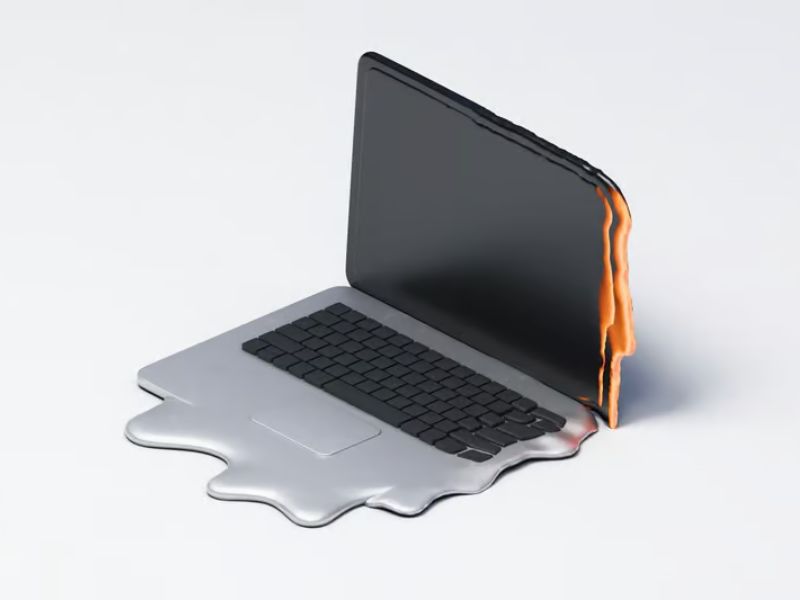
    Heat buildup can cause slower performance in electronics due to throttling, and reduce their life span
    luthfi alfarizi on Unsplash

    As I write this on a laptop that keeps freezing and refuses to switch between tabs due to the early Indian summer heat, it becomes clear how common overheating issues are. I’m not even running heavy programs or multiple browsers — this old machine just isn’t able to dissipate the heat from its internal components fast enough.

    Performance Throttling as Thermal Protection

    This heat buildup causes the system to slow down the processor automatically (known as throttling) to prevent damage from high temperatures. But a recent discovery from the University of Virginia’s School of Engineering and Applied Science could change this — all thanks to crystals.

    When electronic components like processors run at full speed, they generate significant heat. This is also true for chips in various devices and even the batteries of electric cars. When these components are packed into tight spaces, the heat tends to accumulate and takes a long time to disperse.

    In laptops, for example, heat is usually managed with fans, liquid cooling systems, or metal heat sinks with fins. While effective, these solutions take up precious internal space and consume energy.

    Computers use heatsinks, fans, and liquid cooling systems to keep the temperatures of processors and other components from soaring
    Erik G from Pixabay

    Now, researchers have come up with a more efficient alternative: instead of letting heat spread slowly like ripples in a pond, their approach channels it into fast, concentrated waves.

    The Role of Hexagonal Boron Nitride (hBN) Crystal

    To achieve this, they used a special type of crystal called hexagonal boron nitride (hBN), which has unique properties that allow it to conduct heat much more efficiently.

    Normally, heat travels through materials via atomic vibrations — known as phonons — which transfer energy in a slow and random way. That’s why heat tends to build up in devices.

    However, in hBN, a different mechanism is at play: hyperbolic phonon polariton (HPhP) modes — vibrations coupled with light-like electromagnetic waves. These modes create fast, direct pathways for heat transfer, far more efficient than conventional methods.

    It’s like comparing a disorganized crowd (phonons) to a high-speed current (HPhPs). The current can transport a large amount of “energy” much more efficiently from one place to another.

    To demonstrate the effect, the researchers applied a gold pad to an hBN substrate and heated the gold. This triggered HPhP modes in the hBN, which quickly directed the heat away from the interface between the gold and the crystal. According to the study, heat transfer was 10 to 100 times more efficient at this interface when HPhPs were involved.

    Will Hutchins, lead author of the study published in Nature Materials, said this method works incredibly fast.We’re seeing heat move in ways previously thought impossible in solid materials. It’s a completely new way of controlling temperature at the nanoscale.”

    This breakthrough could work with other material combinations too, potentially enabling new cooling systems for a wide range of electronic components. That means faster AI-driven computers and data centers, longer-lasting medical devices, and hopefully, future laptops that won’t need to throttle performance just to stay cool.


    Read the original article on: New Atlas

    Read more: E-waste Recycling Yields Significant Profits