Tag: Recycling

  • Battery Charging Fuels Lithium Recycling Breakthrough

    Battery Charging Fuels Lithium Recycling Breakthrough

    Lithium may not be the fictional “Spice” from Dune, but this shiny, highly reactive metal is just as crucial in the real world. Its exceptional ability to store electricity makes it indispensable for moving away from fossil fuels and toward a cleaner, low-carbon economy powered by renewable energy.
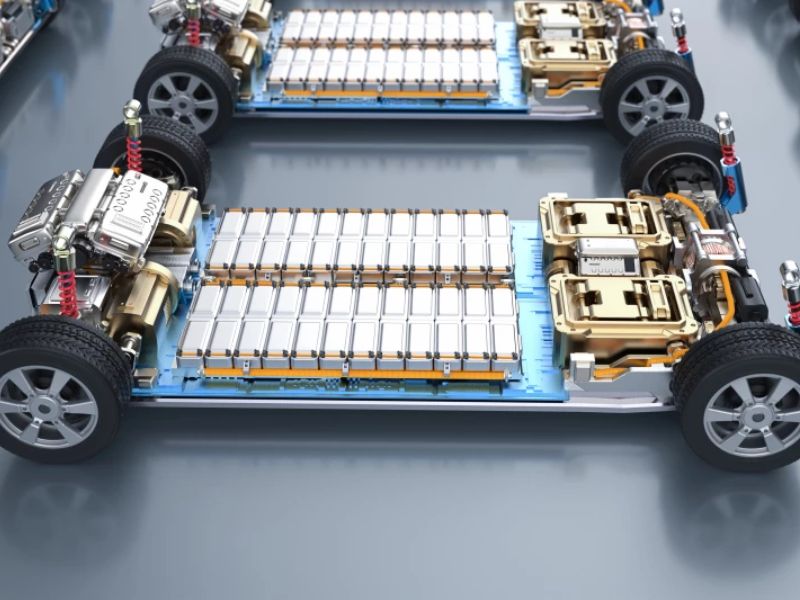
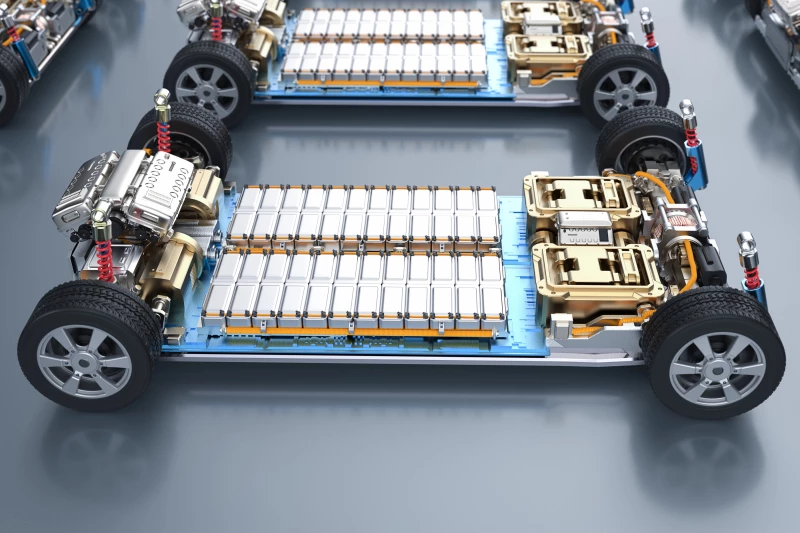
    Image Credits:The recharge-to-recycle process harvests usable lithium from discarded EV batteries, so it can find use in new ones
    Depositphotos

    Lithium may not be the fictional “Spice” from Dune, but this shiny, highly reactive metal is just as crucial in the real world. Its exceptional ability to store electricity makes it indispensable for moving away from fossil fuels and toward a cleaner, low-carbon economy powered by renewable energy.

    Today, about 87% of global lithium is used for rechargeable batteries in power grids, EVs, and electronics. Beyond batteries, lithium also plays an important role in other industries. Natural Resources Canada says it strengthens glass, boosts heat and corrosion resistance, and cuts energy use in production.

    Given lithium’s importance, why does attention need to be paid to something called “black mass”?

    Despite the name, black mass is the fine powder left after recycling lithium-ion batteries, and recovering lithium from it is vital because mining new lithium is costly and environmentally harmful. Recycling spent batteries is therefore critical to meeting demand while limiting ecological harm.

    Until now, lithium recovery relied on corrosive acids or energy-intensive smelting. A new method from Rice University, detailed by Yuge Feng in Joule, offers a cleaner, more efficient electrochemical approach.

    Rather than burning or chemically dissolving the black mass, the researchers essentially “recharge” the cathode materials within it, causing them to release lithium. Combined with simple processes like water splitting, the method produces high-purity lithium hydroxide suitable for making new batteries. The approach requires only electricity, water, and battery waste—eliminating the need for harsh chemicals and significantly reducing environmental impact.
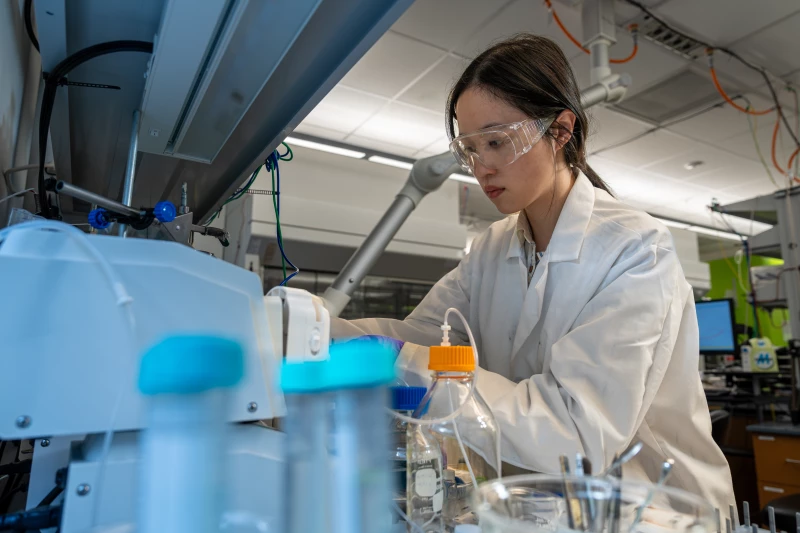
    Image Credits:Yuge Feng, first author of a paper on the study, and a graduate student at Rice University
    Jorge Vidal/Rice University

    The Rice University team’s process proved remarkably effective, producing lithium hydroxide with purity exceeding 99%. It also demonstrated exceptional energy efficiency, operating steadily for more than 1,000 continuous hours while recycling over 50 grams of black mass.

    So how did this novel lithium recovery method come about?

    We started with a simple idea,” explains Sibani Lisa Biswal, co-corresponding author of the study. “If charging a battery removes lithium from a cathode, why not harness that same reaction for recycling?

    In a conventional battery, lithium ions leave the cathode—the electrode that gains electrons—during charging. In the Rice system, lithium ions pass through a thin cation-exchange membrane into flowing water. At a secondary electrode, a straightforward water-splitting reaction generates hydroxide ions, which then bond with lithium to form lithium hydroxide.

    By combining this chemistry with a compact electrochemical reactor, we can selectively extract lithium and produce the precise compound battery manufacturers need,” says Biswal, chair of Rice’s Department of Chemical and Biomolecular Engineering and the William M. McCardell Professor of Chemical Engineering.
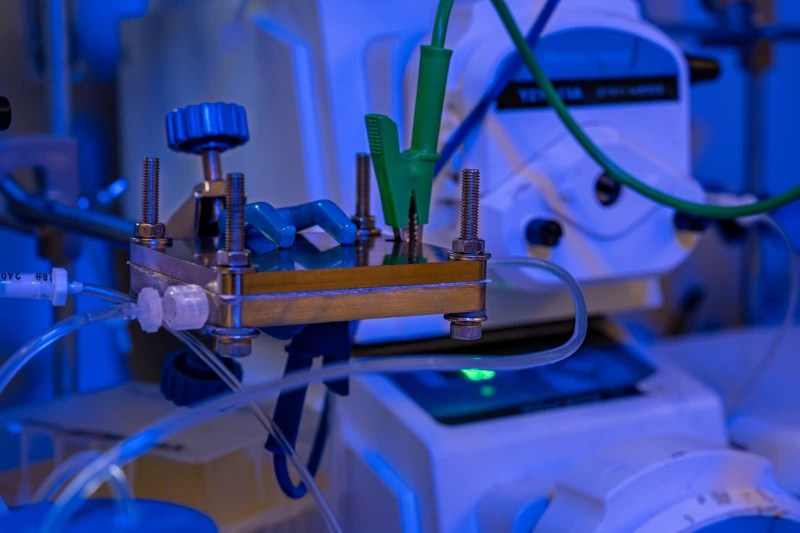
    Image Credits:The electrochemical cell set-up in the Rice University lab
    Jorge Vidal/Rice University

    New Atlas has reported on fast, low-cost lithium extraction and robotic EV battery recycling. The Rice University method advances this further, working with various battery chemistries like LFP, LMO, and NMC.

    Co-author Haotian Wang says producing high-purity lithium hydroxide directly shortens the path to battery production, cutting steps, waste, and strengthening the supply chain. Wang is an associate professor of chemical and biomolecular engineering.

    We’ve simplified and cleaned up lithium extraction to cut both energy use and emissions,” adds Biswal. “The next challenge is clear—improving concentration. Solving that will further enhance sustainability.


    Read the original article on: Newatlas

    Read more:Scientists Develop the Inaugural Model of Artificial Brain Tissue
  • E-waste Recycling Yields Significant Profits

    E-waste Recycling Yields Significant Profits

    Researchers have discovered a novel technique for reclaiming high-purity gold from discarded electronics, generating a return of US$50 for every dollar invested. Surprisingly, they found the crucial gold-filtering material in an unexpected source: cheese production.
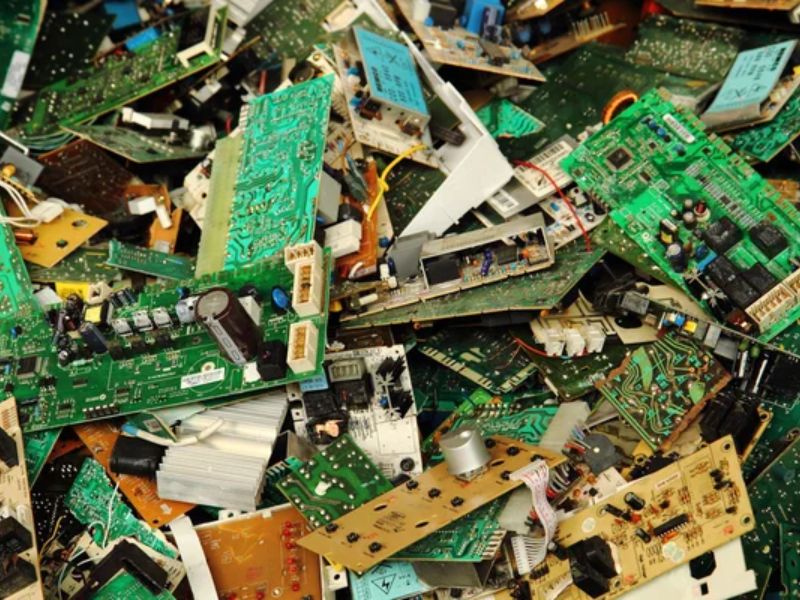
    Using a food industry byproduct, researchers have extracted 22-karat gold from old motherboards
    Depositphotos

    Researchers have discovered a novel technique for reclaiming high-purity gold from discarded electronics, generating a return of US$50 for every dollar invested. Surprisingly, they found the crucial gold-filtering material in an unexpected source: cheese production.

    Gold has been revered by societies for thousands of years. In modern times, its technical uses span various fields such as electronics, aerospace, medicine, biotechnology, and nanotechnology. However, being a non-renewable resource, gold’s value continues to rise steadily.

    Revolutionizing Gold Extraction from E-Waste

    In a recent investigation, scientists from ETH Zurich in Switzerland have outlined an eco-friendly and cost-efficient technique for specifically isolating gold from electronic waste, or e-waste.

    The aspect I find most fascinating is that we’re utilizing a byproduct from the food industry to extract gold from electronic waste,” remarked Raffaele Mezzenga, the lead author of the study. “It doesn’t get much more sustainable than that!”

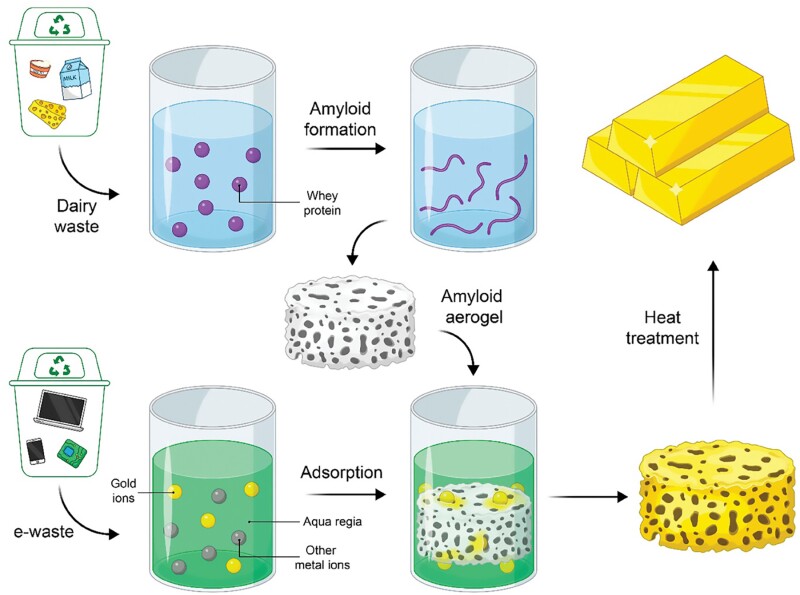
    The byproduct from the food industry that Mezzenga mentions is whey, the liquid component of milk that separates from the curds during cheese production. The researchers transformed this waste from dairy production into a network of protein amyloid fibrils, which they employed as an adsorbent to target gold extraction from e-waste.

    Under acidic conditions and elevated temperatures, the whey proteins underwent denaturation, causing their structure to break down into a more disordered state and aggregate into nanofibrils within a gel. This gel was subsequently dehydrated and molded into a sponge-like structure.

    Schematic of the process of recovering gold from electronic waste using a food industry byproduct
    Peydayesh et al.

    Scientists extracted metal components from 20 old computer motherboards and dissolved them in an acid solution to produce metal ions. When these ions interacted with the protein fibril sponge, gold adhered more effectively compared to other metals like copper and iron.

    After absorbing the gold ions, the sponge was heated, transforming them into flakes that fused into a 500 mg gold nugget. Analysis revealed the nugget was primarily gold (90.8 wt%), with copper and nickel comprising 10.9 wt% and 0.018 wt%, respectively, indicating high purity around 21 or 22 karats.

    Cost-Effective Gold Extraction

    Their method proved economically feasible, with the total cost of extracting 1 g of gold from e-waste being 50 times lower than its value, covering material procurement and energy expenses.

    Moreover, from an environmental perspective, the protein fibril sponge surpassed conventional activated carbon. While using activated carbon emitted roughly 116 g of carbon dioxide per 1 g of gold extracted, the protein sponge emitted about 87 g due to lower energy consumption during production.

    Past gold extraction methods faced scalability issues. Despite potential ecological impact from its animal-based origin, researchers plan to investigate alternatives using plant-based proteins from sources like peas and potatoes.

    The researchers intend to prepare the technology for commercialization. Although e-waste presents a promising initial source for gold extraction, they are exploring other potential sources, such as industrial waste from microchip production or processes involving gold plating.


    Read the original article on: New Atlas

    Read more: Direct Synthesis of Fluorinated Carbon Materials through Mechanochemical Reaction

  • UV Radiation Could be the Key to Recycling Disposable Diapers Efficiently

    UV Radiation Could be the Key to Recycling Disposable Diapers Efficiently

    Disposable diapers contribute significantly to the world's waste problem, primarily due to their challenging recyclability. Nevertheless, there is a fresh method that can recover the "superabsorber" polymer used in the diaper liners, even when they are soiled.
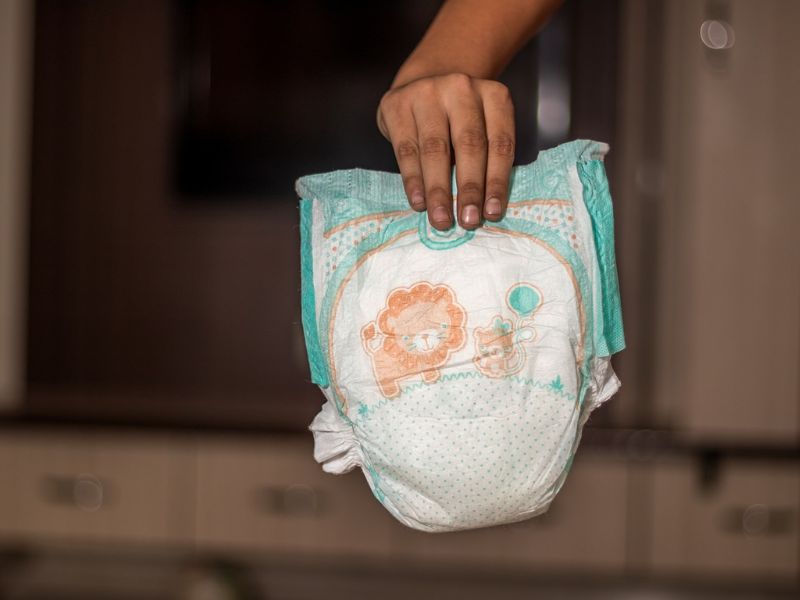
    According to the United Nations Environment Programme, over 300,000 disposable diapers are incinerated, dumped in landfills or otherwise enter the environment once every minute worldwide
    Credit: pixaobay

    Disposable diapers contribute significantly to the world’s waste problem, primarily due to their challenging recyclability. Nevertheless, there is a fresh method that can recover the “superabsorber” polymer used in the diaper liners, even when they are soiled.

    Ultraviolet light presents a promising avenue for revolutionizing the recycling of disposable diapers, addressing the pressing environmental concerns associated with diaper waste. This innovative approach can significantly reduce the environmental impact of disposable diapers and contribute to a more sustainable future.

    The majority of disposable diaper liners consist of a polymer called sodium polyacrylate, which undergoes a transformation from a dry state to a hydrogel as it soaks up liquid.

    Challenges of Conventional Recycling Methods

    In previous attempts to recycle this material, it involved immersing it in a strong acid, heated to 80 ºC (176 ºF) for approximately 16 hours. This method aimed to disassemble the interconnected polymer chains that form the gel, making them available for recycling. However, due to the significant time and energy requirements of this process, it has seen limited use.

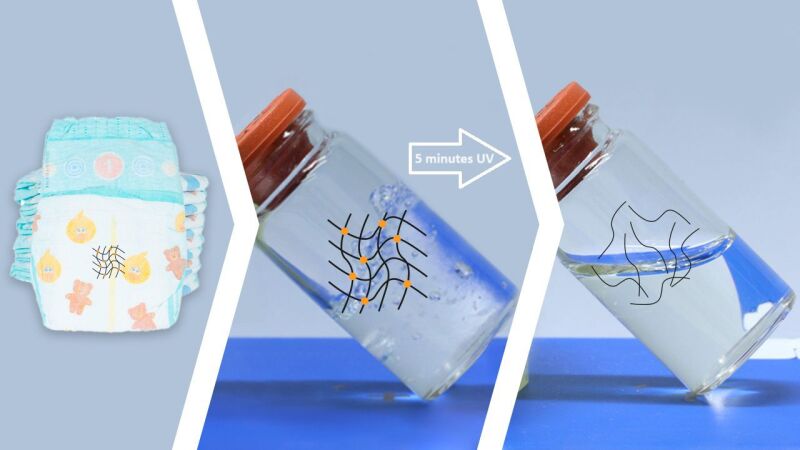
    In the quest for a more efficient solution, researchers at Germany’s Karlsruhe Institute of Technology experimented by wetting sodium polyacrylate diaper liners with water and exposing them to ultraviolet light from a 1,000-watt lamp at room temperature. Within just five minutes, the polymer gel transformed into a liquid and was collected. Using established procedures, the scientists then converted this liquid sodium polyacrylate into an adhesive and a thickening agent for dyes.

    A diagram of the conversion process
    Ken Pekarsky, KIT

    The light breaks the bonds connecting the polymers,” clarified Professor Pavel Levkin from Karlsruhe. “Subsequently, these bonds become so relaxed that they disperse in water and transform into liquid strands. This UV light method is approximately 200 times faster than the acid-based approach.”

    Promising Prospects for Recycling Used Diaper Liners

    Moreover, although the experiments used clean diaper liners, the researchers are confident that the method should function equally effectively with used liners.

    Levkin expressed, “We’ve identified a hopeful approach for recycling superabsorbers. This has the potential to substantially diminish environmental pollution and promote a more sustainable application of polymers.”

    A paper detailing this research was recently published in the journal Applied Materials and Surfaces.


    Read the original article on: New atlas

    Read more: A Green Living Environment Does Not Protect Children Against Eczema