Tag: Red

  • First-ever Gene-edited Spider Creates red Fluorescent Silk

    First-ever Gene-edited Spider Creates red Fluorescent Silk

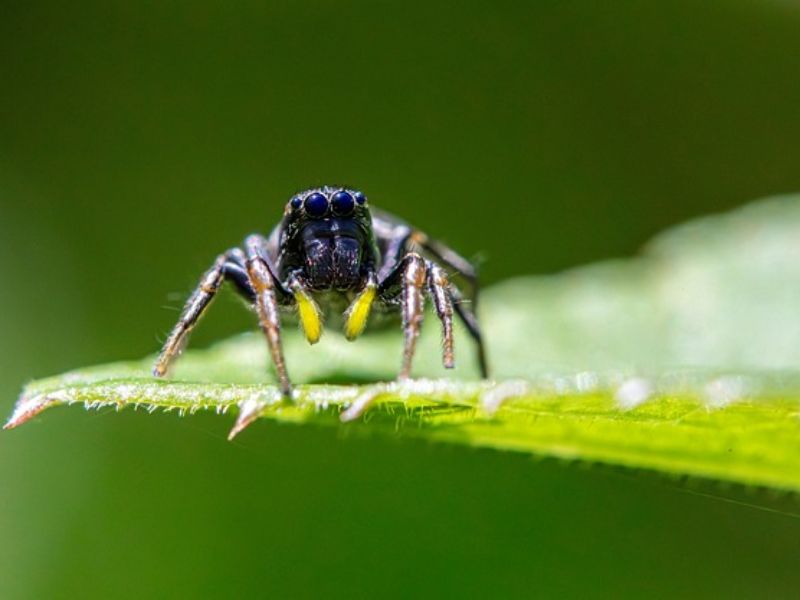
    Scientists at the University of Bayreuth have successfully engineered the world’s first spider modified with CRISPR-Cas9 to produce red fluorescent silk. They achieved this using the common house spider species Parasteatoda tepidariorum.
    Credit: Pixabay

    Scientists at the University of Bayreuth have successfully engineered the world’s first spider modified with CRISPR-Cas9 to produce red fluorescent silk. They achieved this using the common house spider species Parasteatoda tepidariorum.

    Spiders’ cannibalistic behavior and complex genomes make them hard to modify and breed in labs, limiting their use in research. To overcome this, scientists developed a CRISPR method to inject a red fluorescent silk gene into unfertilized eggs.

    Precision Microinjection and Successful Silk Gene Integration

    The microinjection process was complex and delicate. Researchers had to anesthetize the spiders with CO₂ to keep them still during the procedure. Once the spiders recovered, they were bred with males of the same species. The offspring produced red fluorescent silk, confirming successful gene editing without affecting normal silk production.

    Using CRISPR to edit spider silk genes holds great potential for materials research. For example, it could further enhance the silk’s already impressive tensile strength,” Scheibel added.

    Unlocking the Potential of Spider Silk for Advanced Materials and Biotechnology

    Spider silk is an extraordinary natural material, renowned for its remarkable tear resistance, flexibility, lightness, and biodegradability. This breakthrough opens new possibilities for enhancing the properties of spider silk, with promising applications in materials science and biotechnology.

    The ability to use CRISPR to edit spider silk genes holds great potential for materials research—for instance, it could be used to further boost the silk’s already impressive tensile strength,” Scheibel added.

    Beyond creating colored silk, the study also explored a technique called CRISPR-KO, where researchers “knock out” or deactivate specific genes to observe their effects. In this case, they targeted a gene known as so, believed to play a crucial role in spider eye development.

    Using the CRISPR-KO method, the team confirmed their hypothesis—disabling the so gene resulted in spiders without eyes. This discovery advanced spider genetics, confirming the gene’s key role in eye development.


    Read the original article on: New Atlas
    Read more: Mouse Created Using Gene Older Than Animal Life

  • Our Moon Is About to Glow Blood Red—Here’s the Reason.

    Our Moon Is About to Glow Blood Red—Here’s the Reason.

    Credit: Pixabay

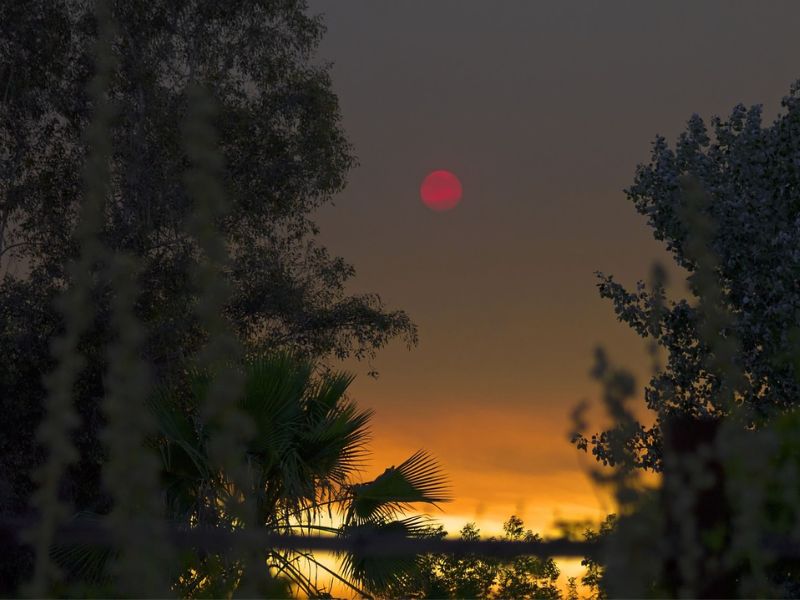
    This Thursday night, for the first time in nearly two-and-a-half years, the Moon will put on a stunning celestial display, glowing in a deep red hue.

    What was once seen as a harbinger of doom is now a perfect reason to step outside and witness the wonders of nature. So grab a blanket and a warm drink, settle in, and enjoy the show as the Moon transforms for a few hours.

    The term “blood moon” is an informal way to describe the Moon’s reddish appearance during a total lunar eclipse.

    Less commonly, it can also refer to a sequence of four total lunar eclipses observed from the same location within two years. Since total eclipses occur only four to five times per decade in any given spot, witnessing four consecutive ones is a rare event.

    Why Does the Moon Turn Red?

    Diagram of a lunar eclipse (not to scale).

    Like any solid object in the path of light, Earth blocks sunlight, casting a shadow into space. However, unlike Earth’s rocky surface, its atmosphere is thin enough to let some light pass through. As sunlight filters through the atmosphere, shorter blue wavelengths scatter, while longer red wavelengths bend around the planet, giving the Moon its eerie crimson glow.

    This same scattering effect makes the sky appear blue during the day and causes sunrises and sunsets to glow in shades of orange and red.

    Because of this refraction and scattering, Earth casts a cone-shaped shadow with a glowing, rust-colored fringe. The Moon only crosses this shadow a few times a year due to its small size, its proximity to Earth, and its slightly tilted orbit.

    On rare occasions, a total lunar eclipse coincides with a supermoon and a blue moon, creating what NASA calls a Super Blue Blood Moon—a seemingly paradoxical but spectacular event.

    During a total lunar eclipse, direct sunlight is completely blocked, leaving only the refracted red light to illuminate the Moon. The result is an eerie, blood-like glow across its surface—a stunning sight that serves as a reminder of the cosmic ballet constantly unfolding above us.


    Read Original Article: Science Alert

    Read More: Sunken Continents Could Unbalance Earth’s Magnetic Field