A study from the University of British Columbia, published in the Journal of Personality and Social Psychology, found that the scent of a partner’s worn clothes lowers cortisol levels—a stress hormone—and helps ease loneliness. The research involved 96 heterosexual couples.
Testing Partner vs. Stranger Scents Under Stress
In the study, men wore T-shirts for 24 hours without using any products that might change their natural scent. The researchers froze the shirts and gave them to women to smell: some received their partner’s, while others received a stranger’s. Participants also completed stressful tasks and provided saliva samples to measure cortisol levels.
The findings revealed that women who smelled their partner’s clothing experienced reduced stress and less loneliness, particularly when they recognized the scent. In contrast, those who smelled a stranger’s clothing showed higher cortisol levels. The study suggests that keeping a partner’s clothing nearby may be a simple yet effective way to ease stress and reinforce emotional connection, even when apart.
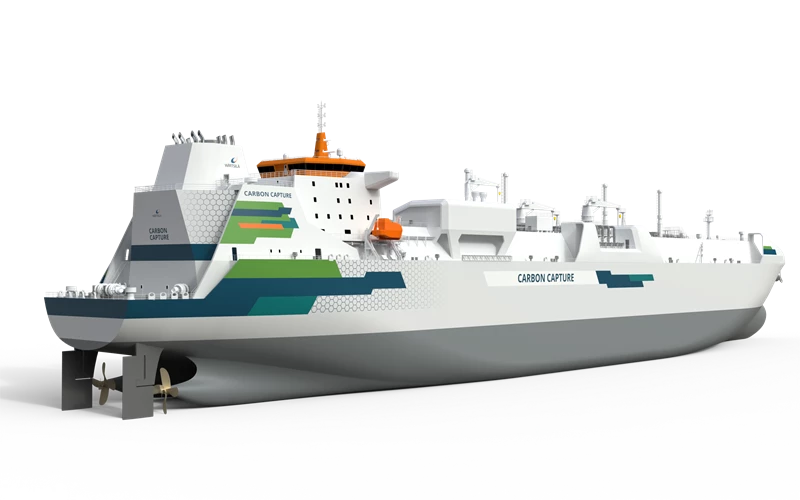
The oceans may be getting a little cleaner with the commercial launch of the Carbon Capture Solution (CCS) system, developed by technology company Wärtsilä. This modular system claims to capture up to 70% of the carbon dioxide emitted from cargo ship exhausts.
Growing Pressure to Cut Emissions
Driven by environmental concerns or the need to remain economically viable, shipping companies have shown increasing interest in reducing their carbon footprint. In 2022, cargo ships emitted around 858 million tonnes of CO₂, with larger vessels accounting for 79% of that figure. Currently, the maritime industry is estimated to contribute up to 3% of human-caused CO₂ emissions. To address this, the International Maritime Organization (IMO) has set a net-zero emissions goal for 2050. After that date, companies may face fines of up to US$380 per tonne of non-offset carbon, making technologies like CCS more relevant than ever.
Since 2019, Wärtsilä has been working on developing its CCS system to capture CO₂ directly from the exhaust gases of ships powered by various fuels. While the technology itself is not new — its components have long been used in the gas, oil, and chemical industries — transforming it into a scalable, modular format suitable for both new and existing vessels marks a significant innovation. A major advantage of the design is its modularity, allowing easy integration with ships that already use exhaust scrubbing systems.
Schematic of the CSS system Wärtsilä
The CCS process involves five main stages. First, engine exhaust gases pass through filters that remove solid particles like soot and pollutants such as nitrogen and sulfur oxides.The system cools the exhaust and then directs it into an absorption chamber, where a liquid amine-based solvent captures the CO₂.Although the exact formula of the solvent remains proprietary, it likely includes compounds such as monoethanolamine (MEA), diethanolamine (DEA), or piperazine-based blends.
From Capture to Storage
The system then heats the CO₂-rich solvent in a stripping chamber, which releases pure CO₂ gas. It then compresses, dries, cools, and liquefies the gas before storing it in onboard tanks for later unloading at port.
According to Wärtsilä, the system can capture up to 70% of a ship’s CO₂ emissions.Experts estimate the cost to range from €50 to €70 (US$54 to $76) per tonne — significantly cheaper than the penalties expected in the future. If broadly adopted, this technology could help cut emissions by as much as 700 million tonnes annually.
The CSS is designed to be retrofitted on existing ships Wärtsilä
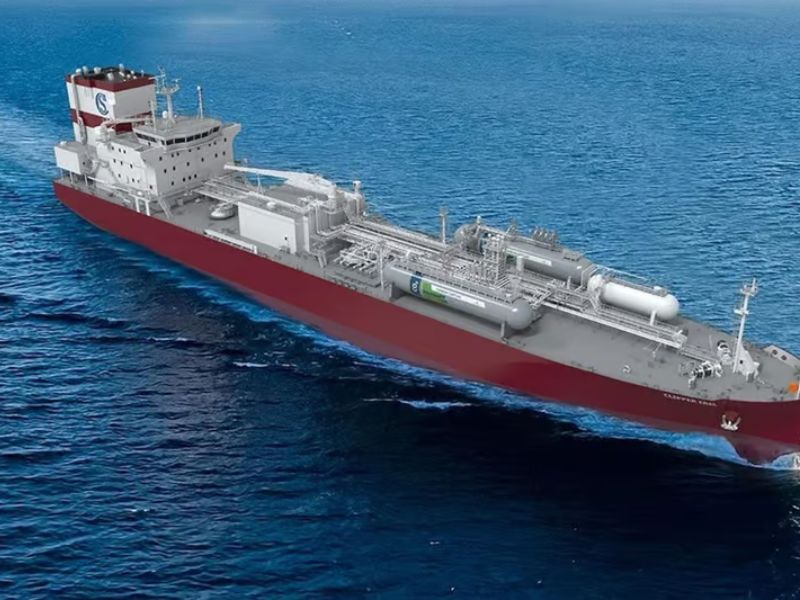
Solvang ASA has installed the CCS system on the Clipper Eris, a 21,000 m³ ethylene carrier. Since February 2025, when the ship departed from Singapore, it has been running with the complete CCS system. During tests, the system successfully captured 50 tonnes of CO₂ per day from engines using heavy fuel oil — a cost-effective but highly polluting fossil fuel.
Market Reception and Industry Collaboration
“This technology is a game-changer for the maritime industry, and we’re already seeing strong market interest,” said Håkan Agnevall, President and CEO of Wärtsilä. “With net-zero targets fast approaching, CCS supports the industry’s efforts to drastically reduce emissions and avoid stranded assets.”
Agnevall also emphasized the role of partnerships: “Achieving this breakthrough required close collaboration with like-minded partners such as Solvang ASA. We commend their forward-thinking approach and support in bringing CCS to their fleet.
We use cookies on our website to give you the most relevant experience by remembering your preferences and repeat visits. By clicking “Accept All”, you consent to the use of ALL the cookies. However, you may visit "Cookie Settings" to provide a controlled consent.
This website uses cookies to improve your experience while you navigate through the website. Out of these, the cookies that are categorized as necessary are stored on your browser as they are essential for the working of basic functionalities of the website. We also use third-party cookies that help us analyze and understand how you use this website. These cookies will be stored in your browser only with your consent. You also have the option to opt-out of these cookies. But opting out of some of these cookies may affect your browsing experience.
Necessary cookies are absolutely essential for the website to function properly. These cookies ensure basic functionalities and security features of the website, anonymously.
Cookie
Duration
Description
cookielawinfo-checkbox-analytics
11 months
This cookie is set by GDPR Cookie Consent plugin. The cookie is used to store the user consent for the cookies in the category "Analytics".
cookielawinfo-checkbox-functional
11 months
The cookie is set by GDPR cookie consent to record the user consent for the cookies in the category "Functional".
cookielawinfo-checkbox-necessary
11 months
This cookie is set by GDPR Cookie Consent plugin. The cookies is used to store the user consent for the cookies in the category "Necessary".
cookielawinfo-checkbox-others
11 months
This cookie is set by GDPR Cookie Consent plugin. The cookie is used to store the user consent for the cookies in the category "Other.
cookielawinfo-checkbox-performance
11 months
This cookie is set by GDPR Cookie Consent plugin. The cookie is used to store the user consent for the cookies in the category "Performance".
viewed_cookie_policy
11 months
The cookie is set by the GDPR Cookie Consent plugin and is used to store whether or not user has consented to the use of cookies. It does not store any personal data.
Functional cookies help to perform certain functionalities like sharing the content of the website on social media platforms, collect feedbacks, and other third-party features.
Performance cookies are used to understand and analyze the key performance indexes of the website which helps in delivering a better user experience for the visitors.
Analytical cookies are used to understand how visitors interact with the website. These cookies help provide information on metrics the number of visitors, bounce rate, traffic source, etc.
Advertisement cookies are used to provide visitors with relevant ads and marketing campaigns. These cookies track visitors across websites and collect information to provide customized ads.