
Tag: Robots

  • AI Robots Take Center Stage at the Chargers’ Game

    AI Robots Take Center Stage at the Chargers’ Game

    AI robots stole the show during a Chargers game at SoFi Stadium, delighting and astonishing fans while advertising the upcoming film "The Creator." This showcased a preview of the future of entertainment and technology.
    The Creator’s AI robots at Chargers game (Image credit)

    AI robots stole the show during a Chargers game at SoFi Stadium, delighting and astonishing fans while advertising the upcoming film “The Creator.” This showcased a preview of the future of entertainment and technology.

    Explore the future of entertainment with AI robots during a Chargers game – a remarkable surprise that left fans in awe.

    NFL Season’s Inaugural Sunday

    The initial Sunday of the NFL season holds a unique charm. It’s a day when football enthusiasts nationwide unite to cheer for their beloved teams, whether from the coziness of their homes or amid the exuberant stadium crowd. The ambiance is charged with enthusiasm and expectation, reminiscent of a comforting embrace on a chilly winter evening. Yet, imagine if this NFL Sunday surprise featured an unusual spectacle: AI robots seated alongside you at SoFi Stadium?

    Indeed, your eyes do not deceive you. In the midst of the passionate crowd assembling at SoFi Stadium for the clash between the Miami Dolphins and the Los Angeles Chargers, an unforeseen presence joined the audience – a collection of AI robots.

    Imagine this scenario: You come back to your spot after a snack run at the concession stand, only to find Johnny No. 5 from the movie “Short Circuit” seated right beside you. How would you react in such a moment?

    AI Robots at the Chargers’ Game: Are They Here to Conquer or Are They Football Enthusiasts?

    Witness the Next Era of Entertainment with AI Robots at Chargers’ Games, Infusing a Futuristic Flavor into NFL Sundays at SoFi Stadium.

    These remarkable AI robots weren’t plucked from an extravagant science fiction plot; instead, they served as a promotional spectacle for an upcoming movie called “The Creator.” While it may not have blockbuster status just yet, the presence of these robots undeniably created a buzz at the stadium. In case you’re curious, here’s a glimpse of “The Creator’s” trailer:

    Now, let’s delve deeper into this extraordinary spectacle and the buzz it stirred. “The Creator,” the movie responsible for bringing these AI robots to SoFi Stadium, appears poised to make a noteworthy contribution to the world of cinema. While its potential for earning an Academy Award remains uncertain, one thing is undeniable – it made an enduring impression on the fans in attendance.

    AI Robots Amidst the Game-Day Atmosphere

    As the stadium lights dimmed and the game came to life on the field, the presence of AI robots amidst the fervent crowd provided a stark contrast to the typical game-day experience. It marked a moment that sparked curiosity, discussions, and no shortage of amusement. These AI robots weren’t mere props; they offered a glimpse into the future of entertainment and technology.

    Fans were initially taken aback, unsure of how to react to their metallic companions. However, as the game unfolded and the robots exhibited human-like interactions and responses, skepticism evolved into fascination. These robots cheered for pivotal plays, exchanged high-fives with fans, and even engaged in friendly discussions about the game. It was a spectacle that underscored the remarkable strides made in AI and robotics technology.

    The Creator’s AI robots at Chargers game (Image credit)

    While the presence of unexpected companions may have initially startled a few fans, it unquestionably created a memorable and captivating experience that enriched the game. In an era marked by the convergence of technology and entertainment, the appearance of AI robots at a Chargers game showcased the boundless prospects that lie ahead.

    Fans Depart with Lasting Memories of Football and AI Robot Encounter

    When the final whistle signaled the end of the game and fans departed the stadium, they took with them cherished memories of an exhilarating football match and the indelible encounter with AI robots. This served as a reminder that the NFL, steeped in its rich history and traditions, remains open to the ever-changing landscape of technology.

    Therefore, when you attend an NFL game in the future, stay vigilant for the unforeseen. The continuously evolving realms of AI and entertainment may hold delightful surprises. After all, the inaugural Sunday of an NFL season is truly unique, especially when it includes AI robots enthusiastically supporting your team right beside you.


    Read the original article on: Data Economy

    Read more: Samsung’s Vision for Bixby and Generative AI
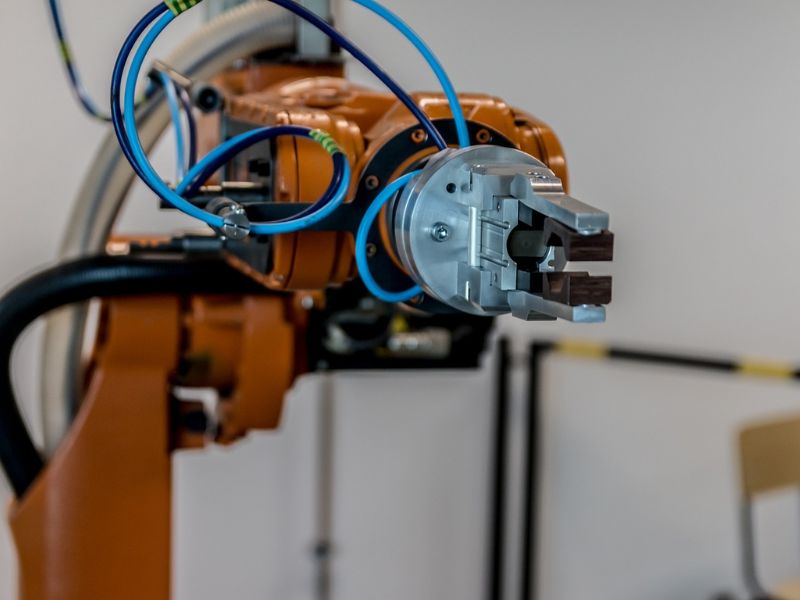
  • Initially, Robots Lead to a Decline in Company Profits

    Initially, Robots Lead to a Decline in Company Profits

    Research conducted by the University of Cambridge reveals that the impact of robots on company profits follows a 'U-shaped' pattern. Initially, as companies adopt robots at low levels, their profit margins tend to decline. However, as robot adoption increases, profit margins start to rise again, eventually leading to higher profits.
    Credit: Pixaobay

    Research conducted by the University of Cambridge reveals that the impact of robots on company profits follows a ‘U-shaped’ pattern. Initially, as companies adopt robots at low levels, their profit margins tend to decline. However, as robot adoption increases, profit margins start to rise again, eventually leading to higher profits.

    An Analysis of Industry Data (1995-2017)

    The study, which analyzed industry data from the UK and 24 other European countries between 1995 and 2017, found that at the early stages of robot adoption, the focus is primarily on cost reduction through process innovation. However, this approach can be easily replicated by competitors, leading to a negative effect on profit margins.

    As companies integrate robots more extensively into their processes, they shift their focus towards product innovation, which differentiates them from competitors and enhances their market power, ultimately resulting in increased profits.

    The Macro Impact of Robot Adoption on Profit Margins

    The research sheds light on how robots, which have been increasingly used in industries since the 1980s, affect overall profit margins on a macro scale, in addition to their well-documented impact on labor productivity. The findings highlight the dynamic relationship between robot adoption, process improvement, and product innovation in driving company profitability.

    The researchers analyzed data at an industry level for 25 EU countries, including the UK, covering the period from 1995 to 2017. Although the data didn’t offer details at the individual company level, it enabled them to examine entire sectors, particularly in manufacturing where robots are commonly utilizing.

    The U-shaped Relationship between Robot Adoption and Profit Margins at a Country Level

    To understand the impact of robotics on profit margins at a country level, the researchers collected robotics data from the International Federation of Robotics (IFR) database. Comparing these two datasets enabled them to study the relationship between robot adoption and profit margins, revealing the unexpected U-shaped curve.

    Contrary to their initial expectations that more robotic technologies would lead to higher profit margins, the researchers found that firms tend to adopt robots initially to gain a competitive edge by reducing costs. However, since process innovation can be easily replicated by competitors, the widespread adoption of robots in the industry starts to squeeze profit margins, leading to a decline.

    Exploring Robot Adoption Challenges and Costs – A Case Study with an American Medical Equipment Manufacturer

    To gain further insights, the researchers conducted interviews with an American medical equipment manufacturer to explore their experiences with robot adoption. The interviews revealed that integrating robotics into business operations is a challenging and costly process, involving streamlining and automating various processes.

    According to Velu, as companies introduce more robots into their processes, they eventually reach a point where a complete redesign of their entire process becomes necessary. To avoid this challenge, it’s crucial for companies to develop new processes simultaneously with the incorporation of robots. This way, they can expedite their journey towards the profitable side of the U-shaped curve.

    Complete Integration of Robotics into the Business Model for Enhanced Profitability

    The researchers emphasize that for companies to fully harness the benefits of robotics and achieve higher profits, they must fully integrate robots into their business model. This integration will enable them to leverage the capabilities of robotics to innovate and create new products, which can drive profitability.

    In addition to the research, the Institute for Manufacturing is leading a community program aimed at helping small- and medium-sized enterprises (SMEs) adopt digital technologies, including robotics, in a cost-effective and low-risk manner. By making incremental and step changes in this area, SMEs can benefit from cost reduction and margin improvements through the introduction of new products.

    The study received support from the Engineering and Physical Sciences Research Council (EPSRC) and the Economic and Social Research Council (ESRC), both part of UK Research and Innovation (UKRI). Chander Velu holds the position of Fellow at Selwyn College, Cambridge.


    Read the original article on Science Daily.

    Read more: Enabling Autonomous Exploration for Robots.

  • Enabling Autonomous Exploration for Robots

    Enabling Autonomous Exploration for Robots

    Researchers have created a range of robotic systems and planners that empower robots to expedite exploration, venture into uncharted territories, and generate highly precise and detailed maps. These systems enable robots to achieve these tasks autonomously, navigating and mapping without any human intervention.
    Credit: Pixaobay

    Researchers have created a range of robotic systems and planners that empower robots to expedite exploration, venture into uncharted territories, and generate highly precise and detailed maps. These systems enable robots to achieve these tasks autonomously, navigating and mapping without any human intervention.

    Carnegie Mellon University’s Autonomous Robotics Team

    However, a team of researchers from Carnegie Mellon University’s Robotics Institute is at the forefront of creating the next generation of explorers – robots. In fact, this Autonomous Exploration Research Team has successfully developed a suite of robotic systems and planners that empower robots to embark on faster explorations, probe even the most challenging and unfamiliar environments, and generate highly accurate and detailed maps. The notable feature of these systems lies in their autonomy, allowing the robots to navigate and map without any human involvement.

    Ji Zhang, a systems scientist in the Robotics Institute, explains the convenience of the system, stating that it can be deployed in various environments, such as department stores or disaster-stricken residential buildings, and the robots can autonomously build real-time maps while exploring without requiring any human presence.

    Unraveling the World with Versatile Robotic Systems

    Over the course of three years, the team has worked on exploration systems and has successfully explored and mapped multiple locations, including underground mines, a parking garage, the Cohon University Center, and other indoor and outdoor spaces on the CMU campus. The system’s adaptability allows it to be attached to almost any robotic platform, transforming them into modern-day explorers. In the process of testing, the team utilizes adapted motorized wheelchairs and drones.

    The robotic systems operate in three modes: one mode allows human control over the robot’s movements while the autonomous systems prevent collisions with objects; in another mode, a person can select a point on the map, and the robot will navigate to that location; the third mode is pure exploration, where the robot autonomously explores the entire space and creates a map.

    Enhancing Efficiency with Advanced Sensor Integration

    The team integrated a variety of sensors, such as a 3D scanning lidar sensor, a forward-looking camera, and inertial measurement unit sensors, along with a sophisticated exploration algorithm. This enables the robot to determine its current location, trace its previous path, and decide on the next steps in the exploration process. The resulting systems are much more efficient than previous methods, as they produce more comprehensive maps and reduce the algorithm’s runtime by half.

    A Game-Changing Solution for Challenging Settings

    Notably, these new systems are well-suited for operating in challenging conditions with low-light and spotty communication, such as caves, tunnels, and abandoned structures. The group’s exploration system was used in Team Explorer, a joint entry from CMU and Oregon State University in DARPA’s Subterranean Challenge, where it ranked fourth in the final competition and won the Most Sectors Explored Award for mapping more of the route than any other team.

    The team is committed to open-sourcing all their work, with the aim of empowering society with the capabilities of building autonomous exploration robots. Chao Cao, a Ph.D. student in robotics and the lead operator for Team Explorer, highlights that once this fundamental capability is attained, it opens up a plethora of possibilities for various applications, ranging from delivery services to search-and-rescue missions.


    Read the original article on ScienceDaily.

    Read more: Field Trials of Autonomous Military Robots Are Being Conducted in Estonia.

  • Introducing a Groundbreaking Algorithm for Collision Avoidance in Robots

    Introducing a Groundbreaking Algorithm for Collision Avoidance in Robots

    Swarming robots avoid collisions, traffic jams.
    Swarming robots avoid collisions, traffic jams. Credit: Northwestern University

    The International Journal of Computational Science and Engineering recently published a groundbreaking study presenting a fresh approach to autonomous robot navigation. This innovative method can prevent collisions and accidents across diverse applications in various environments, including industrial buildings, warehouses, agricultural fields, urban self-driving vehicles, search and rescue sites, healthcare settings, and even home and garden scenarios.

    Jieyun Yu’s contribution to motion planning and control systems

    Overcoming the challenges of planning and motion control has long been a top priority in robotics research. Jieyun Yu, from the School of Mathematics at Jinan University in Guangzhou, China, has focused on two key aspects to address these challenges: enhancing control system performance and overcoming limitations in path planning.

    Yu has achieved remarkable precision in trajectory tracking by introducing a novel exponential feedforward-feedback control strategy, which combines iterative learning control (ILC) and model-free adaptive control (MFAC). This approach significantly improves trajectory convergence, reduces errors, and ensures accurate and repeatable robot motion.

    Approach to Yu’s trajectory planning system

    Additionally, Yu’s path-planning system tackles the issue of collision avoidance by employing the artificial potential field (APF) algorithm. This algorithm treats obstacles along the robot’s path as repulsive forces within a virtual potential field, enabling seamless navigation around them. Yu has conducted simulations to validate the effectiveness of her approach, demonstrating its superiority over traditional models.

    By adopting Yu’s approach, robots and autonomous vehicles can efficiently and swiftly identify suitable and safe routes, thereby minimizing avoidable errors. This advancement allows robots to operate effectively in complex and dynamic environments.

    For instance, this approach could significantly enhance the behavior of autonomous vehicles, enabling self-driving cars to navigate intricate road networks safely and precisely.

    Scope in Warehouse and industrial automation

    In warehouse and industrial automation settings, the system could revolutionize logistics operations involving picking, sorting, and moving goods and materials within a facility. 

    Moreover, search and rescue robots would benefit from improved performance in disaster zones and hazardous environments. Furthermore, agricultural robotics would see notable improvements, enhancing the fields’ plowing, planting, irrigation, monitoring, and harvesting processes.

    Implications for Robotics and Autonomous Systems

    Yu’s breakthrough approach holds immense potential for various robotics and autonomous systems applications. Her approach enables robots and autonomous vehicles to operate safely and efficiently in complex and dynamic environments by achieving precise trajectory tracking and effective collision avoidance.

    By adopting Yu’s strategy, self-driving cars can navigate intricate road networks with enhanced safety and accuracy. Logistics operations involving tasks such as picking, sorting, and transporting goods can be significantly improved in warehouse and industrial automation settings. Additionally, search and rescue robots can operate more effectively in disaster zones and hazardous environments, while agricultural robotics can optimize processes such as plowing, planting, irrigation, monitoring, and harvesting.

    Jieyun Yu’s innovative approach represents a breakthrough in autonomous robot navigation, bringing us closer to realizing safer and more efficient robotics systems in a wide range of applications.


    Read the original article on Tech Explorist.

    Read more: The Urgent Need for Stringent Methane Emission Policies.