In a nation where earthquakes are an everyday reality, Japan has consistently led the way in seismic engineering. Now, a Japanese firm is introducing a groundbreaking — and quite literally uplifting — method of earthquake protection. Founded by inventor Shoichi Sakamoto, Air Danshin Systems Inc. created a seismic system that lifts homes off the ground during earthquakes, letting them briefly float above the shaking.
How the Floating Foundation Technology Works
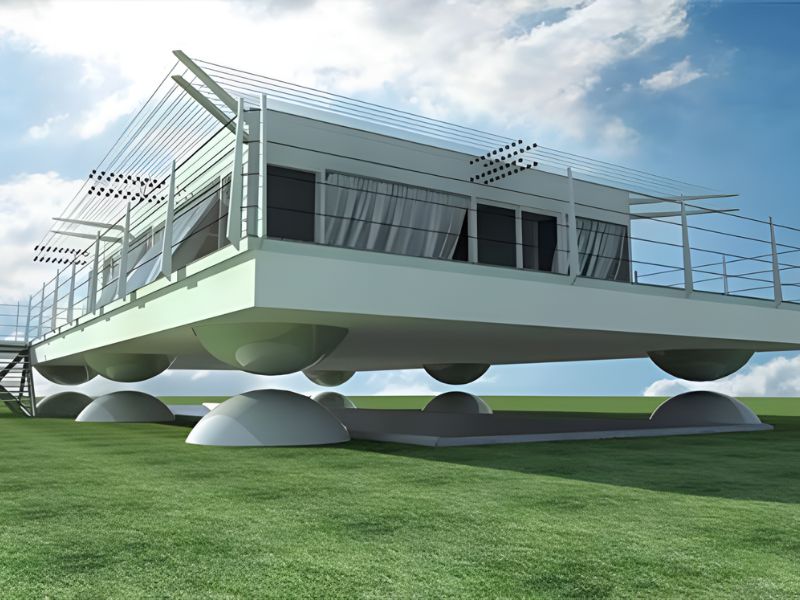
At first, the idea sounds like science fiction: a home that lifts into the air to avoid the trembling earth. Yet the technology behind it is surprisingly straightforward. The house sits on a specially designed air chamber that stays inactive under normal conditions. When seismic sensors detect movement, compressed air lifts the house up to three centimeters, preventing violent shaking. After the tremors pass, the system gradually lowers the home back into position.
Image Credits:Air Danshin Systems Inc.
Sakamoto’s innovation is far from just a concept. To date, nearly 90 houses and buildings throughout Japan have already been fitted with the system.It responds within 0.5–1 second to protect buildings and occupants, with battery backups ensuring operation during power outages.
Image Credits:Air Danshin Systems Inc.
What sets the Air Danshin Systems Inc. system apart is its affordability. Costing roughly a third of traditional systems, it offers an affordable option for homes and businesses, with larger models available for factories and labs.
Live Demonstration Proves the System’s Stability
To showcase its performance, the company conducted a live demonstration. Engineers and safety experts watched a fully furnished house undergo a simulated earthquake. When the artificial shaking began, the house smoothly rose and hovered above the ground. It remained completely steady, and not a single glass fell over.
Although the technology has delivered impressive results and is gaining traction, some specialists remain cautiously hopeful. Deke Smith, Executive Director of the Building Seismic Safety Council and buildingSMART alliance, praised the concept but warned it may struggle with large, multi-directional quakes or if damage occurs before activation.
Redefining Earthquake Resilience Through Active Response
Even so, in a country that has endured catastrophic seismic disasters — from the Great Kanto Earthquake to the 2011 Tohoku disaster — the development represents a striking move toward enhanced safety. It shifts the concept of earthquake resilience from merely withstanding impact to actively responding to it.
For the time being, Sakamoto and Air Danshin Systems Inc. are concentrating on fine-tuning the design, with just ten units currently being assembled by hand along Japan’s Coffs Coast. The company has also launched a campaign on Indiegogo to help scale up production and expand the technology to international markets.
Robots are increasingly present in daily life, from medical settings to helping at home. However, for people to fully trust and work with them, robots must do more than perform tasks—they must understand humans.
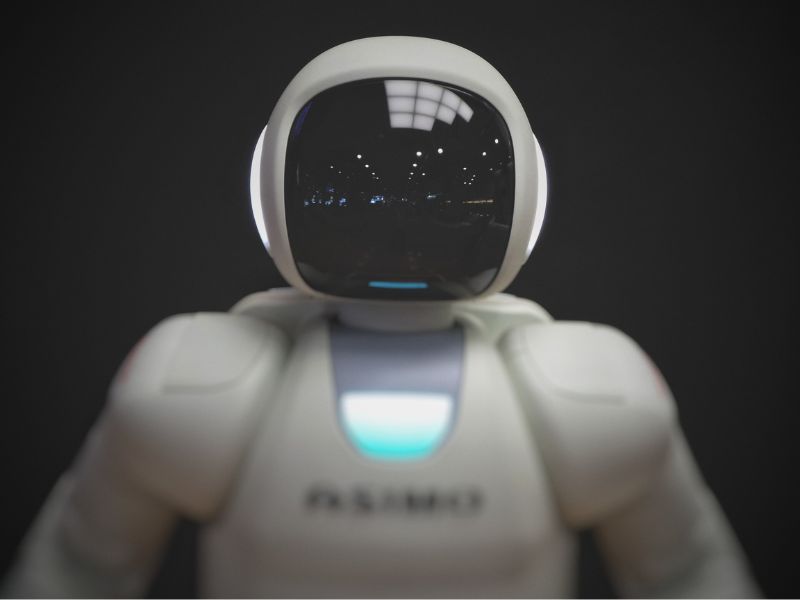
This challenge is central to new research led by Dr. Mehdi Hellou through PRIMI, a project focused on helping robots develop a “theory of mind”—the ability to infer people’s beliefs, preferences, and intentions. The goal is to develop autonomous systems that anticipate when help is needed, adapt their behavior over time, and interact more socially intelligently.
To make this possible, the team draws on psychology, neuroscience, and artificial intelligence, designing robots that integrate motor intelligence (how they move) with cognitive intelligence (how they think and reason).
Adaptive Robots for Everyday and High-Risk Use
As Dr. Hellou explains, developing autonomous systems that support people in everyday life—and in high-risk contexts like health care or nuclear waste management—requires machines that can adapt to different users and environments.
The team’s most recent study appears in the journal ACM Transactions on Human-Robot Interaction.
The project will test its approach in clinical pilot trials for stroke rehabilitation, where humanoid robots will support patients during recovery.
If the results are positive, PRIMI could pave the way for a new wave of socially intelligent robots that learn in real time and feel more approachable and dependable.
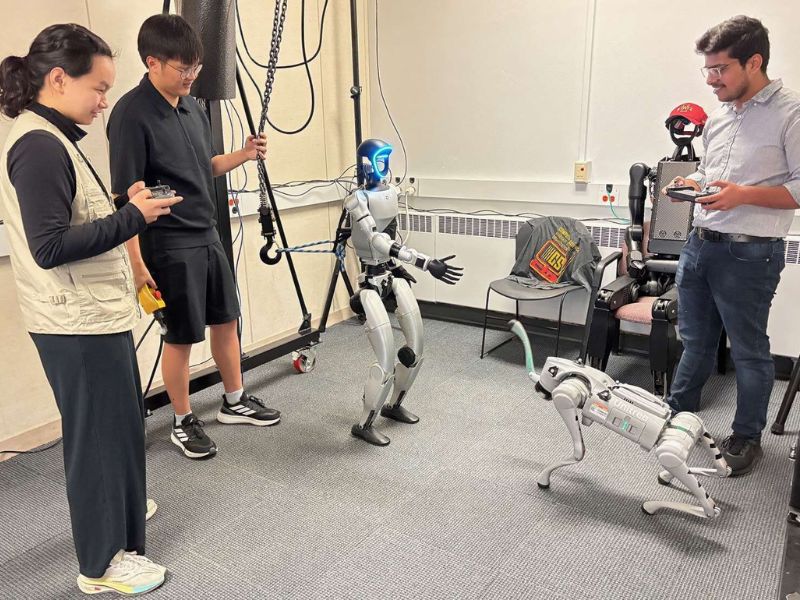
Iowa State computer science graduate students (left to right) Yuija Chen, Dylan Khor and Zaid Mahboob use hand-held controllers to work through various commands with a humanoid legged robot and a quadruped, dog-like robot. Image Credits: Lisa Schmitz/ISU News Service.
You might not recall it, but you probably had a few spills as a toddler. You weren’t the only one—falling is a normal part of learning to crawl, walk, climb, and jump. During early childhood, our balance, coordination, and motor skills are still developing.
These abilities—often called physical intelligence—quickly become second nature for most people, even for surprisingly complex actions like walking, picking up objects, or moving around a room without conscious thought.
“As humans, we tend to overlook our physical intelligence because it becomes so automatic early in life,” said Bowen Weng, roboticist and assistant professor of computer science at Iowa State University.
“In reality, it’s extraordinary. The fact that you’ve managed not to fall much since age three is amazing. Once we master a skill, the physical intelligence required to execute it operates in the background, allowing our minds to focus on other things.”
Humanoid Robot Physical Intelligence Challenges
For humanoid robots, developing physical intelligence is far from automatic or straightforward.
“Despite major strides in AI, the design and adaptability of robotic bodies remain major obstacles to effective performance in real-world settings,” Weng explained.
“Robots face challenges in physical intelligence because it involves adjusting to unpredictable environments, processing sensory feedback in real time, and mastering intricate motor skills—tasks that come naturally to humans but are extremely difficult for machines to replicate.”
To address this, Weng and a team of computer science graduate students are exploring and testing new approaches to enhance the physical intelligence and capabilities of humanoid robots, while also emphasizing safety standards to ensure secure interactions between robots and humans.
The Difficulty of Adjusting
Humanoid robots are engineered to mimic the human body and interact seamlessly with human environments and tools. They serve a range of purposes, such as assisting people with tasks, supporting research, or taking on dangerous or repetitive jobs.
“To advance society and humanity, we need to accomplish more, work faster, and do it more efficiently,” Weng explained. “Automation can help us achieve that, but it’s also crucial to recognize people’s concerns and clarify that humanoid robots cannot—and will not—replace humans.”
According to Weng, the real challenge lies not in replacement, but in adaptation.
“Humanoid robots depend on humans for their design, training, oversight, ethical direction, and emotional understanding,” he said. “They cannot perform these functions independently. Therefore, our ability to adapt and strategically use AI to enhance our own capabilities is essential.”
Weng also highlighted that as humans and AI work together, new career opportunities will arise in fields such as AI supervision, ethics, design, and maintenance.
“These roles will offer fresh ways to expand both our workforce and our economy,” he added.
Cooperation Over Rivalry
At the end of a winding hallway on the first floor of Atanasoff Hall at Iowa State University, a modest door secured by a sturdy keypad hides a world of innovation: the ISU computer science robotics lab.
Inside, the lab houses two advanced legged humanoid robots—one standing about 6 feet tall, the other roughly the height of a 10-year-old—as well as a dog-like quadruped robot built to resemble a beagle.
Weng and his student team spend much of their time here, using computer software and video game–style controllers to enhance the robots’ abilities. They guide humanoid robots through actions like standing, sitting, walking, turning, and waving, while directing quadrupeds to stand, sit, leap, shake hands, and move in all directions.
“Tasks that come naturally to humans are often difficult for humanoid robots,” explained Zaid Mahboob, a computer science doctoral student. “My goal is to enable these robots to perform more of these tasks with higher efficiency.”
Mahboob emphasized that the team’s aim isn’t to pit humans against humanoid robots, but rather to enhance the robots’ precision, accuracy, and speed so they can work safely and effectively alongside humans.
Prioritizing Safety in Leadership
Weng co-authored “Repeatable and Reliable Efforts of Accelerated Risk Assessment in Robot Testing” (arXiv) and presented it at ICRA 2025. The research improved accelerated testing for robots by introducing a reliable, repeatable algorithm and assessing instability from frontal impacts.
“Watching robots operate is thrilling,” Weng remarked. “But far too little attention is being given to achieving these advances safely and responsibly.”
His study showed the algorithm performs reliably and holds promise for testing other robot types. Nevertheless, Weng emphasized that additional safety precautions are still necessary.
“This research has an ‘indirect’ effect on improving robot safety,” Weng explained. “We didn’t directly enhance the robots’ specific abilities. Instead, we improved the test algorithms’ capabilities, which could potentially be applied to robots in the future.”
Quadruped Robot Stability in Dynamic Environments
In a related study, Weng and colleagues found that commercial quadruped robots, though capable, struggle with precise body positioning on rough terrain. The study was published in the International Journal of Intelligent Robotics and Applications.
Weng noted that legged mobile robots are increasingly important for their versatility and adaptability. He noted these systems have strong potential in search-and-rescue, healthcare, manufacturing, disaster response, and mobility solutions.
Weng stated that the new research initiative aims to enhance the reliability and performance of legged robotic systems by improving evaluation standards and providing clearer insight into both their strengths and limitations.
“Transparency is essential for building public trust, ensuring safety, and enabling informed conversations about the responsible deployment and use of robots,” Weng added.
Staying Authentic
Graduate students often cite the chance to work with real robots as a key reason for joining Weng at Iowa State.
“Most robotics labs focus primarily on simulations, but in Iowa State’s lab, we carry out real experiments with real robots to collect real data,” said Yuija Chen, a doctoral student in computer science.
Dylan Khor, a second-year master’s student in computer science, also cited the chance to collaborate closely with Weng as a key motivator.
“I first took Dr. Weng’s introduction to machine learning class and really enjoyed his teaching style,” Khor said. “He brought immense energy and expertise to the course, and it was very interactive. So when I decided I wanted to pursue robotics research, I reached out to him immediately. It’s been an incredible experience.”
While Weng focuses on standardizing robot safety, he also finds great fulfillment and inspiration in mentoring students. Beyond collaborating with graduate students, he oversees several undergraduate computer science teams working on programming legged robots and robotic arms.
Weng said research opportunities will grow once the new robotics lab in Durham Hall opens. Set to finish this academic year, the lab already has eight robotic arms for teaching and research.
Prospects for Adoption
Weng noted that humanoid robots face hurdles like high costs, lack of standards, limited infrastructure, and few practical applications. Additionally, social and ethical issues must be addressed.
Nevertheless, Weng emphasized that these challenges make continued research into improving robot safety and effectiveness even more critical.
“Ultimately, trust is essential,” Weng said. “The way to establish the trustworthiness of humanoid robots is through research guided by humans.”
Image Credits:Gary Coronado / Los Angeles Times / Getty Images
Tesla is redesigning its door handles to reduce the risk of trapping occupants inside, chief designer Franz von Holzhausen told Bloomberg Newson Wednesday.
The announcement follows a new U.S. The National Highway Traffic Safety Administration (NHTSA) launched a probe into the issue just a day earlier, following a Bloomberg investigation a week ago that detailed cases of Tesla owners and passengers getting stuck in vehicles after crashes.
China Pressures Carmakers to Rethink Flush Door Handles Amid Safety Concerns
Von Holzhausen did not specify when Tesla decided to redesign the handles. Meanwhile, Chinese regulators are urging carmakers to rethink fully flush door handles over safety concerns, though they have not issued official rules.
Two main problems emerge: Tesla’s electronic locks can fail if the battery loses power, and the cars’ manual releases are often hard to find and use. Tesla is exploring a new system that combines electronic and manual releases into a single button.
NHTSA said it opened its investigation after receiving nine complaints about faulty handles, including four cases where drivers had to smash windows to exit their vehicles.
While Tesla’s manuals include instructions for using external power sources to unlock doors, NHTSA noted that affected drivers did not receive battery warnings, leaving them unaware of the cause.
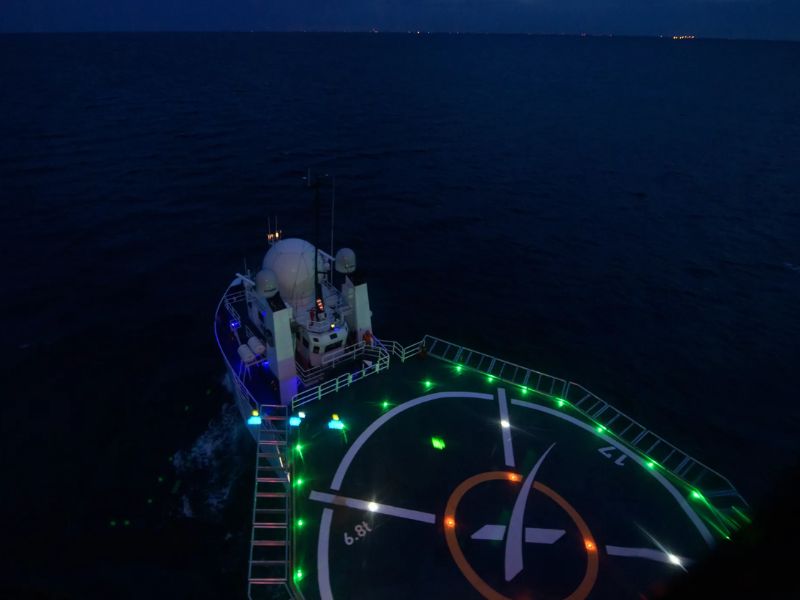
Veteran supervisor Robert Markert claims he warned SpaceX leadership that part of the rocket fairing recovery process posed a serious risk of “serious injury or death.” According to a recently filed lawsuit, he claims the company dismissed his concerns in favor of a more cost-effective method. Just a few months later, he lost his job.
Markert is one of two former SpaceX employees who have filed separate wrongful termination lawsuits, recently moved to federal court. Both lawsuits allege that the company prioritized speed and cost savings over safety and other critical factors.
Lawsuits Emerge as SpaceX Ramps Up Starship and Falcon 9 Launch Operations
These legal actions come as SpaceX works urgently to prepare its Starship heavy-lift rocket for upcoming missions with NASA, commercial partners, and its Starlink internet service. In addition to Starship, SpaceX continues operating its Falcon 9 rocket—the most frequently launched rocket in history—which has already completed 87 launches this year.
Markert, who spent 13 years at SpaceX, says the company fired him in April after he raised concerns about harsh work conditions. His lawsuit states that managers regularly scheduled technicians to work 15 to 20 days in a row. When he raised the issue, supervisors allegedly responded, “the schedule comes first.” Markert says the high-pressure environment and relentless schedule led to injuries that technicians were too afraid to report.
He also alleges that when he pushed for more training and certification for workers, he was told the company had no time or budget for it.
Former Plumber Alleges Retaliation After Reporting Multiple Work-Related Injuries
In a separate lawsuit, David Lavalle, a former SpaceX plumber, claims the company terminated him after failing to accommodate several work-related injuries, including a fractured foot, neck and back pain, shoulder injuries, and wrist issues. While he filed for workers’ compensation for some of the injuries, Lavalle says he avoided doing so for all of them out of fear of retaliation.
Lavalle, 60, says SpaceX fired him just nine days after he requested medical leave for gout-related knee pain. Hired in 2014, he claims the company targeted older employees in a broader round of dismissals led by 28-year-old senior manager Scott Hiler, who had recently joined the team.
Markert’s attorney declined to comment, and Lavalle’s legal representative did not respond to TechCrunch’s request. SpaceX also did not provide a statement.
SpaceX Injury Rates Surpass Industry Average, OSHA Data Shows
According to recent TechCrunch reporting, SpaceX has reported higher worker injury rates than others in the aerospace industry in 2024. Occupational Safety and Health Administration (OSHA) data shows the company’s Starbase facility in Texas had an injury rate of 4.27 per 100 workers last year—nearly three times the industry average of 1.6.
While Markert, who lives in Los Angeles County, doesn’t specify his exact work location in the lawsuit, he does mention working with ship technicians. OSHA logs reveal that SpaceX’s west coast rocket fairing recovery operations had the company’s highest reported injury rate—7.6 injuries per 100 workers.
Both lawsuits were initially filed in Los Angeles County Superior Court before SpaceX moved them to the U.S. District Court for the Central District of California.
Cryptocurrency executives and wealthy investors are placing greater emphasis on personal security, according to recent reports from the Wall Street Journal and Bloomberg.
Rising Bitcoin Value and Data Breach Fuel Kidnapping Fears in Crypto World
For instance, three masked assailants recently attempted to kidnap the daughter and granddaughter of the CEO of French crypto firm Paymium, but nearby residents intervened and drove them off.
Security Firms See Surge in Demand from Cautious Crypto Investors
Jethro Pijlman of Amsterdam-based security firm Infinite Risks International told Bloomberg that his team is receiving “more inquiries, more long-term clients, and more proactive requests” from crypto investors looking to avoid unexpected threats.
In addition, Coinbase disclosed in a regulatory filing that it spent $6.2 million on personal security for CEO Brian Armstrong last year—more than the total security spending for the CEOs of JP Morgan, Goldman Sachs, and Nvidia combined.
We use cookies on our website to give you the most relevant experience by remembering your preferences and repeat visits. By clicking “Accept All”, you consent to the use of ALL the cookies. However, you may visit "Cookie Settings" to provide a controlled consent.
This website uses cookies to improve your experience while you navigate through the website. Out of these, the cookies that are categorized as necessary are stored on your browser as they are essential for the working of basic functionalities of the website. We also use third-party cookies that help us analyze and understand how you use this website. These cookies will be stored in your browser only with your consent. You also have the option to opt-out of these cookies. But opting out of some of these cookies may affect your browsing experience.
Necessary cookies are absolutely essential for the website to function properly. These cookies ensure basic functionalities and security features of the website, anonymously.
Cookie
Duration
Description
cookielawinfo-checkbox-analytics
11 months
This cookie is set by GDPR Cookie Consent plugin. The cookie is used to store the user consent for the cookies in the category "Analytics".
cookielawinfo-checkbox-functional
11 months
The cookie is set by GDPR cookie consent to record the user consent for the cookies in the category "Functional".
cookielawinfo-checkbox-necessary
11 months
This cookie is set by GDPR Cookie Consent plugin. The cookies is used to store the user consent for the cookies in the category "Necessary".
cookielawinfo-checkbox-others
11 months
This cookie is set by GDPR Cookie Consent plugin. The cookie is used to store the user consent for the cookies in the category "Other.
cookielawinfo-checkbox-performance
11 months
This cookie is set by GDPR Cookie Consent plugin. The cookie is used to store the user consent for the cookies in the category "Performance".
viewed_cookie_policy
11 months
The cookie is set by the GDPR Cookie Consent plugin and is used to store whether or not user has consented to the use of cookies. It does not store any personal data.
Functional cookies help to perform certain functionalities like sharing the content of the website on social media platforms, collect feedbacks, and other third-party features.
Performance cookies are used to understand and analyze the key performance indexes of the website which helps in delivering a better user experience for the visitors.
Analytical cookies are used to understand how visitors interact with the website. These cookies help provide information on metrics the number of visitors, bounce rate, traffic source, etc.
Advertisement cookies are used to provide visitors with relevant ads and marketing campaigns. These cookies track visitors across websites and collect information to provide customized ads.