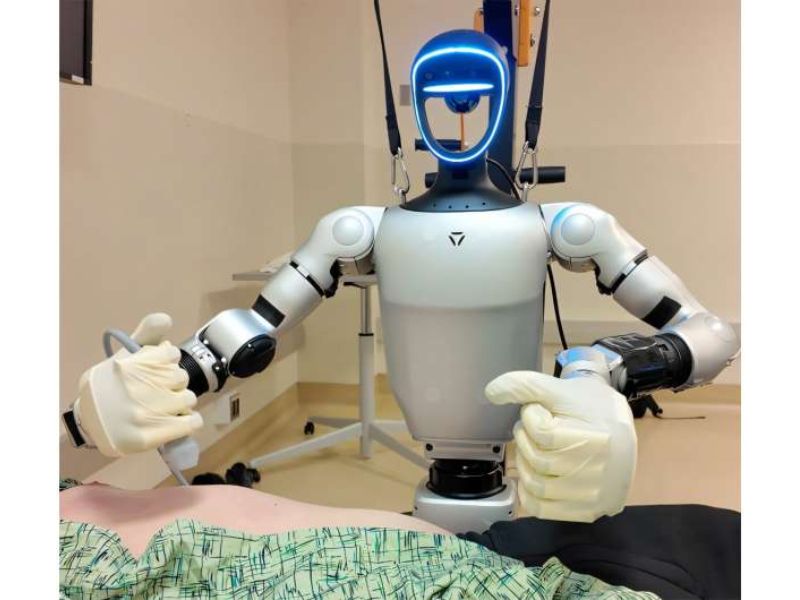

With crowded waiting rooms, rising doctor burnout, and growing surgical delays and cancellations, humanoid surgical robots present a potential solution—according to UC San Diego robotics expert Michael Yip in a Science Robotics perspective piece.
Modern surgical robots are expensive, task-specific machines that require highly trained doctors to operate—making them difficult to scale.
While AI and robotics have advanced rapidly in industrial and humanoid applications, these gains haven’t extended to surgical robotics.
The Data and Privacy Hurdles of Training AI for Surgical Robotics
Training AI to perform surgery with current robots would demand vast amounts of data, making the process too costly and labor-intensive. Existing systems and medical personnel add to the challenge, and collecting procedure-based data also brings up significant privacy concerns.
But what if the training data used for industrial humanoid robots could also be applied to teaching robots medical procedures? That could be transformative, writes UC San Diego engineering professor Michael Yip.
A straightforward approach would be equipping surgical robots with arms and multi-fingered hands, following trends in industrial robotics. This would not only introduce a new generation of surgical robots but also enable them to leverage powerful AI foundation models—enhancing their ability to learn and assist with a wide range of medical tasks.
Practical Roles Humanoid Robots Could Play in the Operating Room
For instance, a humanoid robot could assist by holding an ultrasound probe or endoscopic camera during surgery, or by acting as a scrub nurse, handing instruments while preserving a sterile environment.
These tasks are essential and usually performed by surgeons or nurses, diverting them from other patients and adding physical strain.
Robots handling such routine, low-risk, and labor-intensive duties would offer significant benefits. However, it’s impractical to invest in single-purpose robots for each task. A general-purpose humanoid design is a more practical long-term solution, notes Yip.
Advancements in Industrial AI Could Accelerate Surgical Humanoid Robotics
As industrial humanoid robots continue to develop stronger AI foundation models and improve at performing diverse tasks, surgical humanoid robots are expected to advance as well.
While this reality may still be years away, the long-term vision is that such robots could become essential in tackling the global shortage of skilled healthcare workers, benefiting patients, doctors, and nurses alike, writes Yip.
He explores this vision further in his forthcoming preprint paper, “Humanoids in Hospitals: A Technical Study of Humanoid Surrogates for Dexterous Medical Interventions.”
Read the original article on: Techxplore
Read more:Whether We Like It Or Not, Radar Reveals Our Presence To Extraterrestrials