Tag: Skin

  • A New Artificial Skin Aims to Give Humanoid Robots the Sensation of Pain

    A New Artificial Skin Aims to Give Humanoid Robots the Sensation of Pain

    For years, humanoid robots have been built to be strong, precise, and durable. They rely on cameras for vision, sensors to gauge force, and highly accurate systems to carry out tasks. What they’ve long lacked is the ability to sense and respond to their own bodies. That gap is now starting to close thanks to a breakthrough by researchers from universities in Shanghai and Hong Kong.
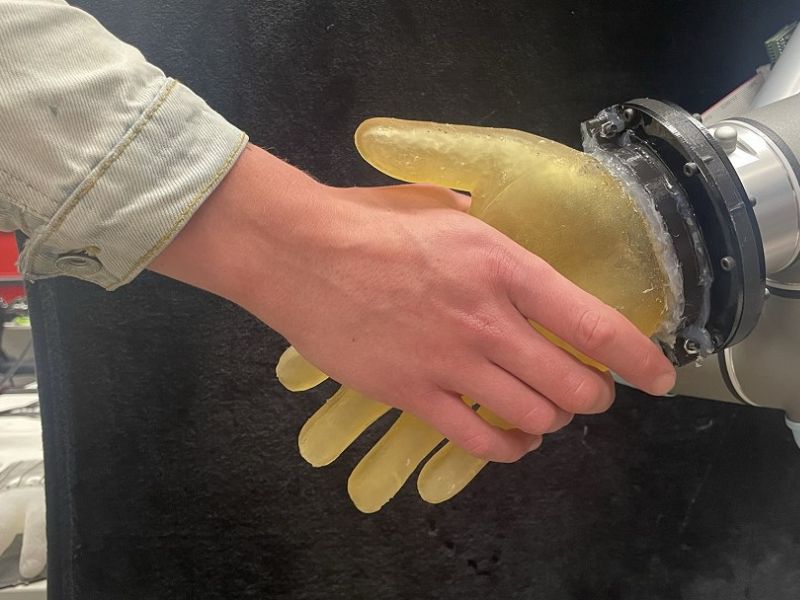
    Image Credits:© Astrid Eckert/TUM

    For years, humanoid robots have been built to be strong, precise, and durable. They rely on cameras for vision, sensors to gauge force, and highly accurate systems to carry out tasks. What they’ve long lacked is the ability to sense and respond to their own bodies. That gap is now starting to close thanks to a breakthrough by researchers from universities in Shanghai and Hong Kong.

    The team has created a flexible robotic skin that can detect touch, impact, and physical damage, effectively acting as an artificial nervous system. This development enables robots to identify potentially harmful situations, serving a role similar to how humans experience pain or discomfort.

    Image Credits:tmeier1964

    Unlike conventional sensors that focus on specific spots, this new skin envelops the robot’s entire body, making the arms, legs, and torso act as a single continuous sensor.

    The system relies on flexible, pressure-responsive materials that can detect small changes caused by impacts, deformation, or wear. Rather than depending only on cameras or motor force readings, the robot gains a direct awareness of what is happening to its own body.

    This heightened sensitivity enables quicker and smarter reactions to unexpected events, which is especially important for robots working close to humans.

    Practical Benefits in Everyday Scenarios

    The advantages are easy to imagine in everyday situations. For example, if a robot is carrying heavy furniture and an object drops on its foot, a traditional robot might keep moving, unaware of the damage, increasing the risk of falling or further harm.

    With the new skin, the impact would be sensed instantly. The robot could stop, adjust its position, or activate safety measures to reduce danger to itself and to nearby people.

    Such responsiveness is essential in settings like homes, hospitals, factories, and logistics hubs, where mechanical failures can result in serious accidents.

    Another key advantage is the ability to detect minor, nearly invisible damage. Tiny cracks or deformations in the outer layer can let dust or moisture seep in, gradually harming internal components.

    Early Detection and Modular Design for Easy Maintenance

    The new robotic skin can spot these issues early, before they escalate. It also features a modular design, letting users replace damaged sections with simple “patches” instead of swapping the entire skin.

    This approach lowers maintenance costs, extends the robot’s operational life, and makes humanoid robots more practical for long-term, real-world use.

    Image Credits: koshinuke_mcfly

    While the research is currently centered on humanoid robots, the team notes that the technology has much broader potential. Advanced prosthetics, for instance, could gain from responsive surfaces that deliver tactile feedback to users.

    Other possible applications include protective gear, rescue tools, and medical devices. In high-risk situations, the ability to sense excessive pressure, heat, or impact can be critical for preventing injuries or system failures.

    The researchers stress that the aim is not to give robots human-like emotions. The concept of “pain” in this context is purely functional, not a conscious or subjective sensation.

    Enhancing Safety and Reliability Around Humans

    The ultimate goal is to develop safer, more dependable machines that can operate alongside people in a predictable manner. By detecting risks and damage early, robots can respond proactively, reducing accidents and building trust in these technologies.

    As humanoid robots move beyond the lab and into everyday environments, innovations like artificial skin may play a crucial role—not in humanizing machines, but in making them more physically aware and better adapted to the human world.


    Read the original article on: Gizmodo

    Read more:A Supercomputer Builds one of the Most Lifelike Virtual Brains ever Created
  • Scientists Create a Skin-Like Bandage that Heals Wounds in 24 Hours

    Scientists Create a Skin-Like Bandage that Heals Wounds in 24 Hours

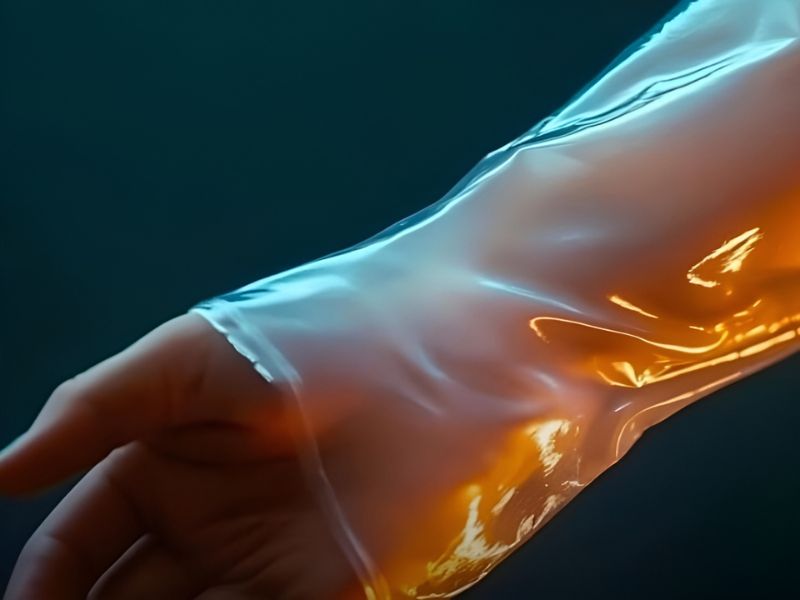
    In a major scientific breakthrough, researchers from Aalto University and the University of Bayreuth have created a groundbreaking self-healing hydrogel that replicates the properties of human skin. This advanced material can restore itself by 90% in just four hours and completely within 24 hours, paving the way for innovations in wound care, regenerative medicine, and artificial skin development.
    Image Credits: ipecagora

    In a major scientific breakthrough, researchers from Aalto University and the University of Bayreuth have created a groundbreaking self-healing hydrogel that replicates the properties of human skin. This advanced material can restore itself by 90% in just four hours and completely within 24 hours, paving the way for innovations in wound care, regenerative medicine, and artificial skin development.

    Mimicking the Complexity of Human Skin

    Gels are common in daily products, but replicating human skin’s complexity has long been a challenge. Human skin is not only flexible and strong but also remarkable in its ability to heal. Until recently, scientists had been unable to design a material that matched both its elasticity and regenerative capabilities. This new hydrogel, created through the integration of nanosheet-reinforced polymers, finally achieves that balance.

    This remarkable breakthrough was reported today (March 7) in the renowned journal Nature Materials. In the study, researchers improved a hydrogel by incorporating large, ultra-thin clay nanosheets. While hydrogels are usually soft and pliable, this new version forms a tightly organized network where polymers are densely interlaced between the nanosheets. This structure not only enhances the hydrogel’s strength but also enables it to repair itself after sustaining damage.

    Balancing Strength and Self-Healing in Synthetic Materials

    Many biological tissues possess both strength and rigidity while maintaining the ability to recover from damage. However, synthetic hydrogels struggle to balance strength and self-healing, as stiffening methods limit molecular movement, the researchers explained.

    The self-healing gel marks a significant step forward in fields such as wound care, drug delivery, soft robotics, and prosthetics. Its rapid and efficient healing capabilities make it a strong candidate for medical innovations, potentially enabling faster recovery for burn victims, surgical patients, and individuals with chronic wounds.


    Read the original article on: Espalhe Boas Noticias

    Read more: Medically, What Does Sleep Talking Signify?

  • Single-Material Electronic Skin gives Robots Near-Human Feel

    Single-Material Electronic Skin gives Robots Near-Human Feel

    Image Credits: Inovacaotecnologica

    Replicating the touch and sensitivity of human skin—known as robotic touch—might not require advances in flexible electronics or the integration of thousands of miniature sensors.

    Researchers have developed a new type of robotic skin that is low-cost, durable, and highly sensitive. This innovative skin delivers exceptional precision and fits onto robotic hands like a glove.

    Moldable Conductive Polymer Offers Versatile Foundation for Robotic Skin

    David Hardman and his team at the University of Cambridge and University College London created a conductive polymer they can melt and mold into complex shapes.

    Although it doesn’t match the sensitivity of human skin, the material can process signals from over 860,000 microscopic channels, enabling it to detect various types of touch and pressure—such as a finger’s contact, temperature differences, cuts or punctures, and multiple simultaneous touches.

    Remarkably, all of this is achieved using a single material, greatly simplifying the design. By reading physical inputs, this tech helps robots interact more like humans.

    Most current robotic touch technologies rely on small, localized sensors and require separate components to detect different kinds of touch. In contrast, the newly developed electronic skin functions as a single, unified sensor—closer in function to human skin.
    Image Credits: University of Cambridge

    Most current robotic touch technologies rely on small, localized sensors and require separate components to detect different kinds of touch. In contrast, the newly developed electronic skin functions as a single, unified sensor—closer in function to human skin.

    One Material, Many Sensations

    Using different sensors for each type of touch makes the manufacturing process more complex,” explained David Hardman. “Our goal was to create a single material that could detect multiple types of touch at once.

    The researchers achieved this using a sensor material capable of multimodal sensing—responding differently to various forms of touch. Though pinpointing each signal is tricky, the materials are easier to make and more durable.overall.

    To interpret the signals, the team experimented with different electrode layouts to identify which configuration yielded the most detailed data. With only 32 wrist electrodes, they collected over 1.7 million data points from the hand via the material’s fine conductive network.

    From Gentle Contact to Physical Damage

    They tested the prototype with a variety of stimuli, including light touch, multiple simultaneous touches, heat exposure from a heat gun, and physical damage from a scalpel. Data collected from these tests was then used to train a machine learning model that can accurately interpret future touch inputs.

    Robotic skin hasn’t yet matched human capabilities, said Professor Thomas Thuruthel, but this is the most advanced and easiest to produce so far—and it works well across real-world tasks.


    Read the original article on: Inovacaotecnologica

    Read more:Your Dog Seems To Sense What’s On Your Mind

  • Skin Fungi May Create Powerful Antibiotics to Help Combat Infections

    Skin Fungi May Create Powerful Antibiotics to Help Combat Infections

    A dangerous superbug responsible for  more than a million people worldwide each year might have a natural foe living just beneath your nose. Literally so—it plays a major role in your skin microbiome and appears to help fend off staph infections.
    Credit: Pixabay

    A dangerous superbug responsible for  more than a million people worldwide each year might have a natural foe living just beneath your nose. Literally so—it plays a major role in your skin microbiome and appears to help fend off staph infections.

    Malassezia sympodialis: A Common Skin Yeast with Hidden Power Against Staph Infections

    Malassezia sympodialis, a common skin microbe, produces a fatty acid that prevents staph infections and breaks down oils and fats.

    Researchers at the University of Oregon led laboratory experiments that showed M. sympodialis suppresses Staphylococcus aureus by releasing acidic byproducts.

    Scientists believe the yeast-generated acid, commonly found on healthy skin, helps prevent S. aureus from taking over the microbiome. S. aureus is usually on the skin but can cause serious infections if it spreads or enters the bloodstream.

    In the U.S., skin and soft tissue infections caused by S. aureus account for roughly 500,000 hospitalizations each year. Alarmingly, the bacterium can develop resistance to every class of antibiotics currently available.

    This makes the search for new treatment options urgent—and underscores the importance of studying our own skin’s natural defenses. Lead author Caitlin Kowalski says their study is exciting because it highlights a familiar but previously overlooked molecule.

    Credit: Diagram of the production of 10-HP from M. sympodialis. (Kowalski et al., Curr. Biol., 2025)

    10-HP: A Skin-Activated Antimicrobial Compound Hidden in Plain Sight

    10-HP was likely overlooked because it only works in acidic environments like skin, not in typical lab conditions. As a result, researchers overlooked its potential in previous studies.

    By examining skin biopsies from healthy donors, Kowalski and her team discovered that the acid is produced by the naturally occurring Malassezia yeast living on the skin.

    “It was like searching for a needle in a haystack—but with invisible molecules,” says Matthew Barber, a biologist and adviser to lead researcher Caitlin Kowalski.

    In the lab, Barber, Kowalski, and their team tested how M. sympodialis yeast affected different strains of Staphylococcus aureus. After just two hours of exposure, most strains showed over a 100-fold drop in viability.

    However, over time, S. aureus began developing resistance to the yeast’s 10-HP compound—using mechanisms similar to how it adapts to clinical antibiotics.

    Researchers found that less harmful Staphylococcus species had adapted to coexist with M. sympodialis, hinting at a long-standing microbial balance. Given how common Malassezia is, researchers believe we’re just beginning to understand its role in microbial balance and defense.

    Kowalski now plans to explore the genetic pathways behind antibiotic-resistant staph infections to better grasp how these bacteria rapidly evolve to evade various treatments.

    “We still have a great deal to learn about these microorganisms,” Barber adds, “and about how we might develop new strategies to treat or prevent the infections they cause.”


    Read the original article on: Sciencealert

    Read more: Innovative Drug Delivery System Stores Doses as Crystals Beneath the Skin

  • Why Our Skin Feels ‘Tight’ After Using Facial Cleanser

    Why Our Skin Feels ‘Tight’ After Using Facial Cleanser

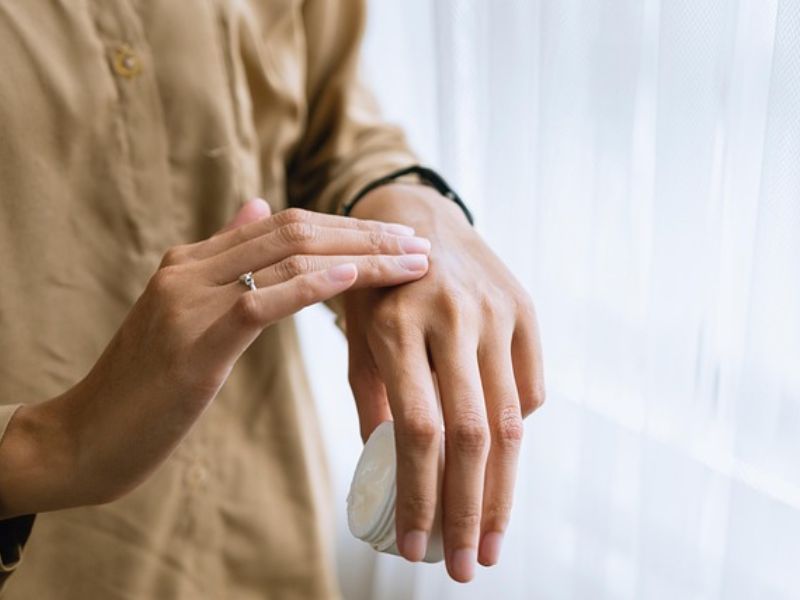
    Stanford’s study reveals the mechanics behind skin sensations post-cleansing and moisturizing, offering insights for improved skincare product development and potential applications in wearable tech communication. Credit: iStock

    Researchers from Stanford University have revealed the process responsible for the sensation of skin tightness that occurs after cleansing and the subsequent relief provided by moisturizing. Their findings, presented in PNAS Nexus, illustrate how alterations in the skin’s outermost layer contribute to these sensations.

    Leveraging their discoveries, they created a predictive model that closely aligned with feedback from human trials. This study not only opens up fresh opportunities for the development of skincare products but also suggests potential applications in wearable technology capable of detecting and communicating mechanical skin changes.

    Exploring Skin Sensations

    As we cleanse our facial skin, it can sometimes take on a tight sensation, which is often alleviated when we apply our preferred moisturizer. While this perception of our skin may appear to be a matter of personal interpretation, Stanford researchers have recently unveiled the underlying mechanism behind these sensations.

    Their research, which has been published today, September 26, in PNAS Nexus, elucidates how alterations in the external layer of our skin lead to sensory experiences and offers a quantitative method for gauging how individuals will perceive the condition of their skin following the use of moisturizers or cleansers.

    Reinhold Dauskardt, the Ruth G. and William K. Bowes Professor in Stanford’s Department of Materials Science and Engineering, stated, “This study furnishes a fresh comprehension of how products impact the physical attributes of our skin, encompassing not only skin health but also our sensory perception of it. This marks a significant advancement, providing an entirely new perspective on formulating these products.”

    Mechanism and Testing


    Our skin, being the body’s largest organ, serves as a vital barrier against external elements. The outermost layer, the stratum corneum, guards against unwanted substances and maintains moisture within. Harsh cleansers can strip away the lipids that retain moisture, causing the stratum corneum to contract. Conversely, effective moisturizers enhance the stratum corneum’s water content, prompting it to expand.

    Dauskardt and his team hypothesized that the mechanical effects of this contraction and expansion travel through the skin to reach mechanoreceptors, which are sensory receptors converting mechanical forces into neurological signals beneath the epidermis. These signals then relay to the brain, resulting in the perception of skin tightness.

    To validate their theory, the researchers examined the impact of nine diverse moisturizer formulas and six different cleansers on donor skin samples from three body locations: the cheek, forehead, and abdomen. They assessed stratum corneum changes in the laboratory and employed an advanced model of human skin to predict the signals transmitted to the mechanoreceptors.

    Regarding the sensory perception of the skin, Dauskardt clarified that they effectively ranked the different formulations.

    Their predictive analysis closely paralleled the results from human trials, where 2,000 women in France assessed the nine moisturizers, and 700 women in China evaluated the six cleansers, sharing their experiences of skin tightness after product application.

    Dauskardt stressed, “Our predictions closely matched what participants reported, demonstrating a remarkable correlation with significant statistical validity.”

    Fostering Innovation

    This ability to foresee how individuals will feel following skincare treatments could assist cosmetics companies in enhancing their products before conducting human trials. Furthermore, Dauskardt emphasized that their comprehensive model of how mechanical stress travels through skin layers has the potential to be applied beyond just evaluating tightness.

    He explained, “This provides a framework for the development of innovative products. If you’re altering the outer skin layer in ways that impact its strain and stress, we can predict how that information will be transmitted and perceived by consumers.”

    Dauskardt is also exploring the potential use of this newfound knowledge in developing wearable devices. By understanding how our brains interpret subtle changes in skin tension, we could potentially use this mechanism to convey intentional signals. Just as people reading braille translate tactile sensations on their fingertips into words, a device capable of creating small mechanical shifts on our skin might transmit information.

    Dauskardt

    Dauskardt explained, “What we’ve achieved is uncovering how mechanical information travels from the outermost stratum corneum layer to the deeper skin layers containing neurons. So, the question arises: can we establish communication through human skin? Can we create a device that conveys information to someone without relying on words or visuals, leveraging our understanding of these mechanisms? This is an area of great interest for us.”

    Reference: “Sensory neuron activation from topical treatments modulates the sensorial perception of human skin” by Ross Bennett-Kennett, Joseph Pace, Barbara Lynch, Yegor Domanov, Gustavo S Luengo, Anne Potter, and Reinhold H Dauskardt, published on September 26, 2023, in PNAS Nexus.
    DOI: 10.1093/pnasnexus/pgad292

    Dauskardt holds affiliations with Stanford Bio-X, the Cardiovascular Institute, the Wu Tsai Human Performance Alliance, and the Wu Tsai Neurosciences Institute, and is associated with the Precourt Institute for Energy and the Stanford Woods Institute for the Environment.


    Read the original article on: Scietech Daily

    Read more: Indigenous People May Have a Higher Stroke Risk