At CES 2026, Jackery unveiled a groundbreaking sustainable energy device, the Solar Mars Bot. This solar-powered robot finds sunlight on its own and serves as a portable power station.
The Solar Mars Bot is built to move independently, requiring minimal human guidance, and continuously seeks out the optimal sunlight locations during the day.
Autonomous Sun-Seeking and High-Powered Solar Charging
Using AI-powered navigation, the robot finds sunny spots and recharges its battery with expandable solar panels producing up to 600 W.
A standout feature of the Solar Mars Bot is its ability to supply power to devices and electronics through multiple output ports, effectively turning it into a mobile charging station.
The robot not only harvests energy but also powers devices wherever needed, following the user outdoors.
Image Credits:Divulgação/Jackery
The robot lets owners monitor battery levels and track its location in real time via a mobile app. When its battery runs low, it can automatically return to its charging station to recharge before resuming its tasks.
A Versatile Mobile Solar Robot for Home and Off-Grid Use
The Solar Mars Bot brings energy independence and smart mobility to both home and off-grid settings.
Although pricing and availability are not yet announced, the CES 2026 debut highlights the potential of autonomous, sustainable portable energy solutions.
A Nanjing University team developed a transparent solar concentrator that coats ordinary window glass. The device employs cholesteric liquid crystal (CLC) multilayers with submicron-scale periodic structures to function as a diffractive solar concentrator (CUSC). It channels sunlight toward the window’s edges, where photovoltaic cells capture the energy. The findings were published in PhotoniX.
Next-Gen Solar Coating Balances Clarity, Color, and Clean Energy
Unlike conventional concentrators prone to distortion and low efficiency, the new CUSC uses polarization-selective diffraction and waveguiding to maintain clear windows. With 64.2% visible transmittance and a 91.3 color rendering index, it generates clean energy without altering appearance.
Dr. Dewei Zhang, co-first author, said the tailored liquid crystal films selectively diffract circularly polarized light, directing it into the glass waveguide at steep angles. “This setup harvests up to 38.1% of incoming green light energy at the window’s edge.”
Prototype to Potential
A 1-inch prototype powered a 10-mW fan, while simulations suggest a 2-meter CUSC window could boost sunlight 50-fold and cut photovoltaic cell use by 75%. The system can also pair with high-efficiency PV materials such as gallium arsenide to boost power conversion.
Researchers fabricate the multilayered CLC films through photoalignment and polymerization and can scale them up with roll-to-roll manufacturing. The design withstands long-term exposure and retrofits onto existing windows, providing a sustainable path for urban upgrades.
“The CUSC design marks progress in embedding solar technology into architecture without compromising aesthetics,” said Professor Wei Hu. “It provides a practical and scalable approach to reducing carbon emissions and achieving energy independence.”
Looking ahead, the researchers aim to improve broadband efficiency and polarization control, while expanding applications to agricultural greenhouses and transparent solar displays. Their long-term goal is to transform ordinary glass into active, energy-producing surfaces worldwide.
From now until 2050, the International Energy Agency estimates that over $100 trillion will be invested in developing net-zero energy infrastructure worldwide. However, each of these projects carries the potential for unexpected cost overruns or construction delays. Emerging technologies like hydrogen and geothermal, introduced in the past decade, present even greater challenges in assessment, as governments, energy developers, utilities, investors, and other stakeholders work to determine the most viable sustainable energy solutions for the future.
Study Reveals Soaring Costs and Delays in Energy Projects, With Nuclear Plants Facing the Worst Overruns
A cutting-edge study published in the journal Energy Research & Social Science by researchers at Boston University’s Institute for Global Sustainability (IGS) reveals that soaring construction costs and extended timelines hinder many energy projects. On average, projects run 40% over budget and are delayed by nearly two years, according to the findings.
Nuclear power plants are the most problematic, with construction costs averaging more than double initial estimates and experiencing the longest delays. Specifically, the typical nuclear project exceeds its budget by 102.5%, resulting in an additional $1.56 billion in costs.
Examining newer net-zero technologies also highlights considerable risks. Hydrogen infrastructure and carbon capture and storage projects, along with natural gas-based thermal power plants, show substantial average cost and schedule overruns. These challenges raise concerns about their ability to scale rapidly enough to meet climate mitigation and emissions reduction targets.
“These results raise serious concerns about the viability of rapidly advancing a hydrogen economy,” says Benjamin Sovacool, the study’s lead author, director of IGS, and professor of Earth and Environment.
In contrast, solar energy and electricity grid transmission projects demonstrate the most reliable construction performance, frequently finishing ahead of schedule or under budget. Wind farms also showed strong results in terms of financial risk.
Wind and Solar Offer Underrated Financial and Social Benefits, Study Finds
For Sovacool, the evidence is undeniable: “Low-carbon energy sources like wind and solar offer not only substantial climate and energy security benefits but also financial advantages due to lower construction risks and fewer delays,” he states. “This further highlights the often overlooked social and economic value of these technologies.”
The study, based on an original dataset much larger and more thorough than previous ones, offers the most detailed comparative analysis of construction cost overruns and time delays in global energy infrastructure projects.
The researchers gathered data from 662 energy infrastructure projects, spanning a wide range of technologies and capacities, completed between 1936 and 2024 across 83 countries, amounting to $1.358 trillion in investment. This includes emerging technologies like geothermal and bioenergy, providing new insights into the cost factors of these recently commercialized innovations.
Comprehensive Study Evaluates Construction Risks Across Ten Major Energy Technologies
The study analyzed a total of ten types of projects: thermoelectric power plants fueled by coal, oil, or natural gas; nuclear reactors; hydroelectric dams; large-scale wind farms; large-scale solar photovoltaic and concentrated solar power plants; high-voltage transmission lines; bioenergy power plants; geothermal plants; hydrogen production facilities; and carbon capture and storage projects.
A key insight of this global analysis is understanding the factors that cause energy projects to exceed budgets and experience delays, as well as when these issues tend to arise. The study explored diseconomies of scale, construction setbacks, and governance issues to pinpoint critical points where costs spike, providing valuable information for improving risk management strategies.
“I’m particularly struck by our findings on diseconomies of scale, where projects exceeding 1,561 megawatts in capacity show a much higher risk of cost overruns,” says Hanee Ryu, the study’s second author and a visiting researcher at IGS. “This indicates that we may need to rethink our approach to large-scale energy infrastructure planning, especially as we invest trillions in global decarbonization efforts.”
Ryu further explains that this could mean smaller, modular renewable projects not only offer environmental advantages but may also lower financial risks and improve budget predictability.
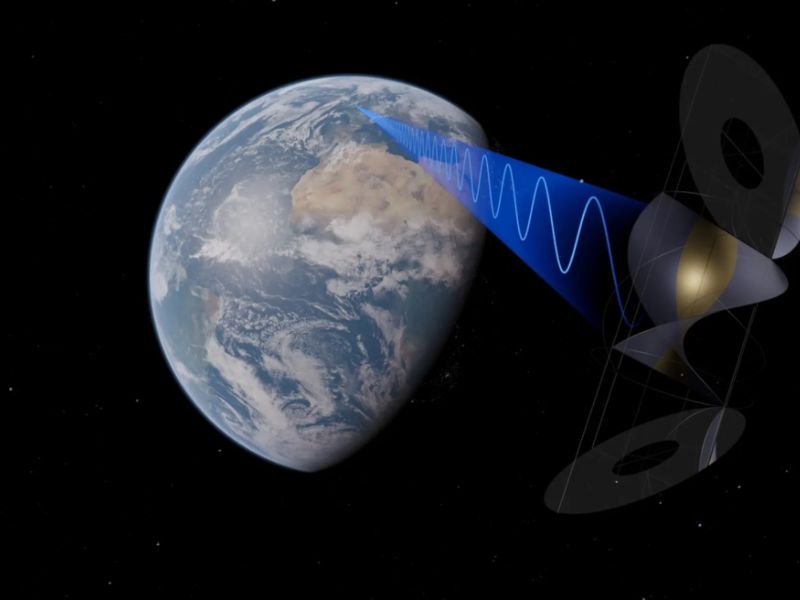
Artist’s concept of an orbital solar power plant Space Solar
UK startup Space Solar has signed a deal with Reykjavik Energy that could make Iceland the first country to receive solar power beamed from space, with a 30-MW demonstration set for launch by 2030.
While solar power is a clean energy source, it faces limitations like cloud cover and nighttime, which reduce its availability. Since the 1970s, one solution proposed has been to place solar collectors in geosynchronous orbit, about 22,236 miles above Earth, where they would receive continuous sunlight without atmospheric interference.
Harnessing Space-Based Solar Power
In this system, solar panels convert sunlight into electricity, which then converts into microwaves. These microwaves would be beamed to ground-based receivers, converting the power back to electricity for the grid. Theoretically, just three of these stations could meet Earth’s entire energy demand.
However, this idea comes with engineering challenges. Orbiting collectors would need to be massive, with ground antennas covering vast areas. Even with minimal construction and launch costs, expenses remain high. The technology would also need to operate almost autonomously for decades, adding to its complexity. NASA estimates space-based solar could be 12 to 80 times more costly than Earth-based renewables.
Despite these challenges, Space Solar, along with Icelandic private climate group Transition Labs, is moving forward. The company aims to scale its 30-MW project to gigawatt capacity by 2036 and is exploring additional receiver sites in Iceland, Canada, and northern Japan.
“Space-based solar power offers unique benefits, including competitive costs and 24/7 availability,” said Martin Soltau, co-CEO of Space Solar. “We’re excited to work with Reykjavik Energy on this project for a sustainable future.”
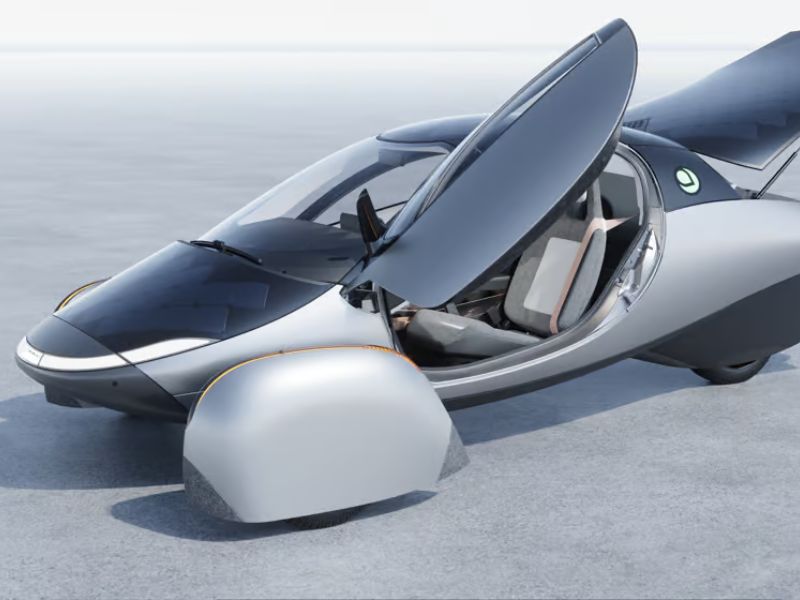
Early adopters have eaten up 2,000 production slots for Aptera’s Launch Edition solar EV, raising more than $33 million in the process Aptera
After a year-long crowdfunding campaign, the production slots for the first 2,000 Aptera Launch Edition solar electric vehicles have been claimed. This futuristic electric vehicle, introduced by a California startup in 2007, is now making its way toward production.
With a design reminiscent of a sci-fi film, this two-passenger vehicle goes beyond being just a sleek, teardrop-shaped attention-grabber; it was crafted for minimal aerodynamic drag and optimal fuel efficiency.
Initial Plans and Challenges of the Original Typ-1 Electric Vehicle
The original Typ-1 was initially planned in two versions: a hybrid and an all-electric model. The hybrid boasted an impressive fuel economy of 300 miles per gallon, while the all-electric variant offered a per-charge range of 120 miles (190+ km) and a top speed around 90 mph (145 km/h). Equipped with solar cells on the roof, it had sufficient power to maintain an always-on climate control system. The front-wheel-drive three-wheeler electric vehicle progressed to a pre-production prototype by early 2009, but delays set in, leading to financial challenges. Unfortunately, by 2011, the company had exhausted its development funds, leading to its closure.
The Aptera Launch Edition solar EV is reported to have a drag coefficient of 0.13 Aptera
Several years later, there was another attempt to bring the Aptera electric and hybrid models to production after China’s Zhejiang Jonway Group acquired the company’s intellectual property. However, progress was limited. In 2019, the original co-founders regained control, reigniting efforts to reach production.
In this renewed push for funding, the team introduced an innovative “never charge” concept for the Aptera – a solar-electric vehicle with an estimated range of up to 1,000 miles (~1,600 km) on a full battery charge. The vehicle incorporates 180 body-integrated photovoltaic cells, anticipated to harvest enough solar energy for approximately 45 miles (72.4 km) of daily travel without the need for external charging.
2022 Partnerships and the Unveiling of the Aptera Launch Edition
In 2022, Aptera secured partnerships with Elaphe in Slovenia for in-wheel electric motors, Eve Energy for batteries, and Maxeon Solar Technologies for photovoltaic cells. Subsequently, in January 2023, Aptera unveiled its Launch Edition, featuring an “ultra-light” composite body with 700 watts of solar cells, an impressive drag coefficient of 0.13, individual motors in each wheel for a swift acceleration to 100 mph (160 km/h) in four seconds, a top speed of 101 mph (162.5 km/h), and an extended per-charge range of 400 miles (643 km) from battery packs provided by CTNS.
The Accelerator Program began in January 2023, and asked the Aptera community to stump up at least $10,000 each to secure one of 2,000 production slots for the Launch Edition solar EV Aptera
Conclusion of Accelerator Program and Future Reservations for Aptera SEV
Following the unveiling of the Launch Edition, Aptera initiated an Accelerator Program, allowing early adopters to secure the first 2,000 reservation slots by investing a minimum of US$10,000. This funding endeavor has concluded, accumulating over US$33 million and contributing to the company’s overall funding of over $100 million in recent years. The funds will be utilized for procuring low-volume tooling and developing the company’s initial production-intent vehicles for testing and validation. Additional fundraising is planned to transition into high-volume production. While the Accelerator window for the preconfigured Launch Edition is closed, individuals can still reserve a future production Aptera SEV with a $100 deposit, offering customization options like interior/outer colors, battery range, PV panel configuration, and drive setup, with the current price listed as $33,200.
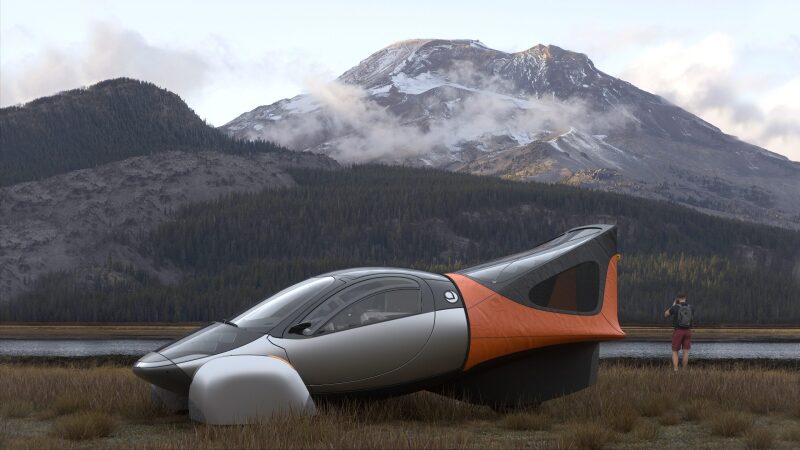
An Aptera Launch Edition solar EV with rear camping tent? Could be Aptera
Co-founder and co-CEO of the company, Chris Anthony, expressed gratitude for the support received through the solar mobility movement, emphasizing its transformative impact on bringing world-shaping ideas to fruition. The company, initially launched as a solar mobility enterprise, witnessed substantial support from thousands of potential Aptera owners. With more than 46,000 reservation holders, the company is committed to securing the additional funds needed for scalable, high-volume production of their solar electric vehicle.
We use cookies on our website to give you the most relevant experience by remembering your preferences and repeat visits. By clicking “Accept All”, you consent to the use of ALL the cookies. However, you may visit "Cookie Settings" to provide a controlled consent.
This website uses cookies to improve your experience while you navigate through the website. Out of these, the cookies that are categorized as necessary are stored on your browser as they are essential for the working of basic functionalities of the website. We also use third-party cookies that help us analyze and understand how you use this website. These cookies will be stored in your browser only with your consent. You also have the option to opt-out of these cookies. But opting out of some of these cookies may affect your browsing experience.
Necessary cookies are absolutely essential for the website to function properly. These cookies ensure basic functionalities and security features of the website, anonymously.
Cookie
Duration
Description
cookielawinfo-checkbox-analytics
11 months
This cookie is set by GDPR Cookie Consent plugin. The cookie is used to store the user consent for the cookies in the category "Analytics".
cookielawinfo-checkbox-functional
11 months
The cookie is set by GDPR cookie consent to record the user consent for the cookies in the category "Functional".
cookielawinfo-checkbox-necessary
11 months
This cookie is set by GDPR Cookie Consent plugin. The cookies is used to store the user consent for the cookies in the category "Necessary".
cookielawinfo-checkbox-others
11 months
This cookie is set by GDPR Cookie Consent plugin. The cookie is used to store the user consent for the cookies in the category "Other.
cookielawinfo-checkbox-performance
11 months
This cookie is set by GDPR Cookie Consent plugin. The cookie is used to store the user consent for the cookies in the category "Performance".
viewed_cookie_policy
11 months
The cookie is set by the GDPR Cookie Consent plugin and is used to store whether or not user has consented to the use of cookies. It does not store any personal data.
Functional cookies help to perform certain functionalities like sharing the content of the website on social media platforms, collect feedbacks, and other third-party features.
Performance cookies are used to understand and analyze the key performance indexes of the website which helps in delivering a better user experience for the visitors.
Analytical cookies are used to understand how visitors interact with the website. These cookies help provide information on metrics the number of visitors, bounce rate, traffic source, etc.
Advertisement cookies are used to provide visitors with relevant ads and marketing campaigns. These cookies track visitors across websites and collect information to provide customized ads.