Tag: SpaceX

  • SpaceX is now Facing Two new Lawsuits Claiming Retaliation over Safety Concerns

    SpaceX is now Facing Two new Lawsuits Claiming Retaliation over Safety Concerns

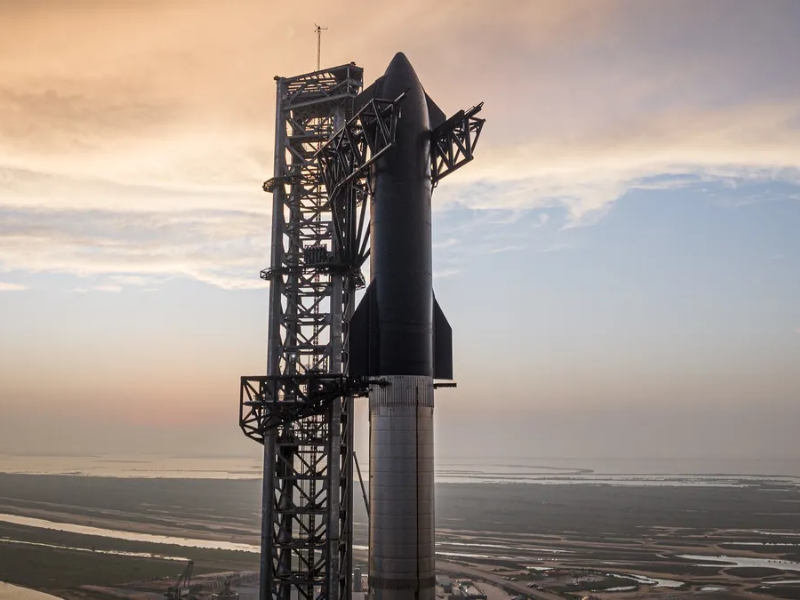
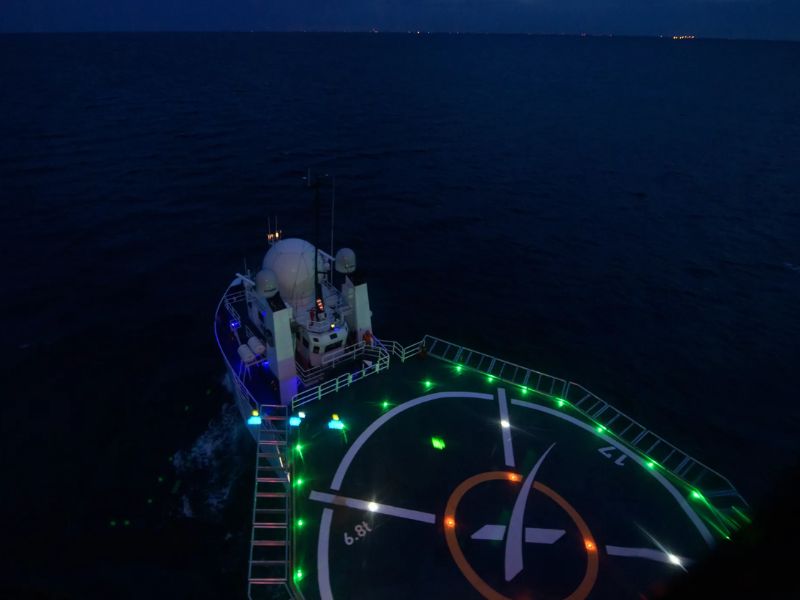
    Veteran supervisor Robert Markert claims he warned SpaceX leadership that part of the rocket fairing recovery process posed a serious risk of “serious injury or death.” According to a recently filed lawsuit, he claims the company dismissed his concerns in favor of a more cost-effective method. Just a few months later, he lost his job.
    Image Credits: Techcrunch

    Veteran supervisor Robert Markert claims he warned SpaceX leadership that part of the rocket fairing recovery process posed a serious risk of “serious injury or death.” According to a recently filed lawsuit, he claims the company dismissed his concerns in favor of a more cost-effective method. Just a few months later, he lost his job.

    Markert is one of two former SpaceX employees who have filed separate wrongful termination lawsuits, recently moved to federal court. Both lawsuits allege that the company prioritized speed and cost savings over safety and other critical factors.

    Lawsuits Emerge as SpaceX Ramps Up Starship and Falcon 9 Launch Operations

    These legal actions come as SpaceX works urgently to prepare its Starship heavy-lift rocket for upcoming missions with NASA, commercial partners, and its Starlink internet service. In addition to Starship, SpaceX continues operating its Falcon 9 rocket—the most frequently launched rocket in history—which has already completed 87 launches this year.

    Markert, who spent 13 years at SpaceX, says the company fired him in April after he raised concerns about harsh work conditions. His lawsuit states that managers regularly scheduled technicians to work 15 to 20 days in a row. When he raised the issue, supervisors allegedly responded, “the schedule comes first.” Markert says the high-pressure environment and relentless schedule led to injuries that technicians were too afraid to report.

    He also alleges that when he pushed for more training and certification for workers, he was told the company had no time or budget for it.

    Former Plumber Alleges Retaliation After Reporting Multiple Work-Related Injuries

    In a separate lawsuit, David Lavalle, a former SpaceX plumber, claims the company terminated him after failing to accommodate several work-related injuries, including a fractured foot, neck and back pain, shoulder injuries, and wrist issues. While he filed for workers’ compensation for some of the injuries, Lavalle says he avoided doing so for all of them out of fear of retaliation.

    Lavalle, 60, says SpaceX fired him just nine days after he requested medical leave for gout-related knee pain. Hired in 2014, he claims the company targeted older employees in a broader round of dismissals led by 28-year-old senior manager Scott Hiler, who had recently joined the team.

    Markert’s attorney declined to comment, and Lavalle’s legal representative did not respond to TechCrunch’s request. SpaceX also did not provide a statement.

    SpaceX Injury Rates Surpass Industry Average, OSHA Data Shows

    According to recent TechCrunch reporting, SpaceX has reported higher worker injury rates than others in the aerospace industry in 2024. Occupational Safety and Health Administration (OSHA) data shows the company’s Starbase facility in Texas had an injury rate of 4.27 per 100 workers last year—nearly three times the industry average of 1.6.

    While Markert, who lives in Los Angeles County, doesn’t specify his exact work location in the lawsuit, he does mention working with ship technicians. OSHA logs reveal that SpaceX’s west coast rocket fairing recovery operations had the company’s highest reported injury rate—7.6 injuries per 100 workers.

    Both lawsuits were initially filed in Los Angeles County Superior Court before SpaceX moved them to the U.S. District Court for the Central District of California.


    Read the original article on: Techcrunch

    Read more:Scientists Superheat Gold, Defying Conventional Physical Laws
  • SpaceX to Launch Amazon’s Kuiper Satellites Despite Rivalry

    SpaceX to Launch Amazon’s Kuiper Satellites Despite Rivalry

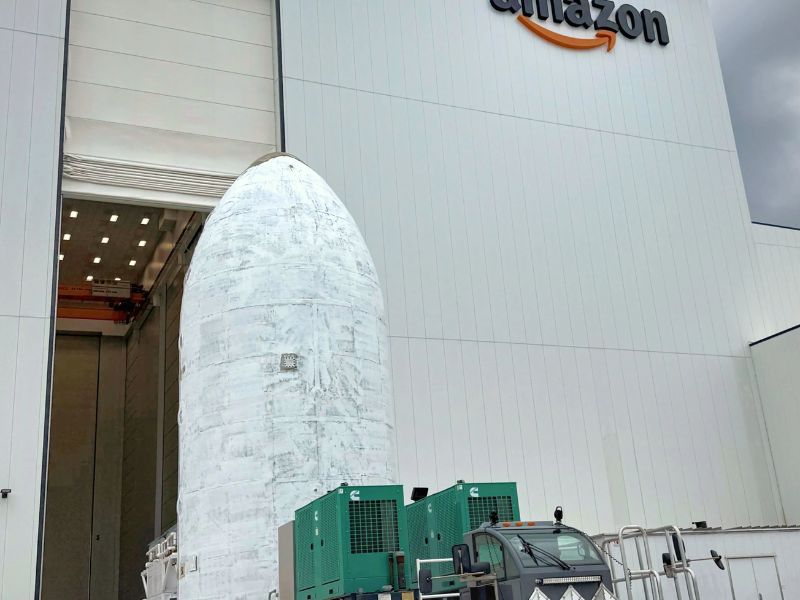
    In its push to rival SpaceX in orbit, Amazon is getting a boost from an unexpected partner—SpaceX, which will launch the next batch of Project Kuiper internet satellites on Wednesday.
    Image Credits:Techcrunch

    In its push to rival SpaceX in orbit, Amazon is getting a boost from an unexpected partner—SpaceX, which will launch the next batch of Project Kuiper internet satellites on Wednesday.

    Amazon’s Next Kuiper Launch Set for Early Morning Liftoff on SpaceX Rocket

    Before dawn, 24 Kuiper internet satellites will launch aboard a SpaceX Falcon 9 rocket as part of mission KF-01. The 27-minute launch window opens at 2:18 a.m. ET from Cape Canaveral Space Force Station. Once deployed, the total number of Kuiper satellites in orbit will reach 78. Amazon plans to eventually launch over 3,200 satellites in its first-generation constellation to compete in the satellite internet market, currently led by SpaceX’s Starlink, which has around 8,000 satellites in orbit.

    Though Kuiper and SpaceX are direct rivals, Jeff Bezos’ Amazon signed a three-launch agreement with SpaceX in December 2023. The deal came just two months after Amazon faced a shareholder lawsuit for initially excluding SpaceX from its first round of major launch contracts, despite the Falcon 9 being the most reliable rocket currently in operation.

    Amazon Races Against 2026 Deadline with Limited Launch Options

    The challenge: Amazon must launch at least half of its initial Kuiper satellite constellation by the end of July 2026 to meet its license terms with the U.S. Federal Communications Commission. Federal Communications Commission. Time is running short, and among its chosen launch partners — United Launch Alliance (ULA), Arianespace, and Blue Origin — only ULA currently has a rocket capable of flying. ULA handled the first two Kuiper launches, with the initial batch sent up in April.

    Bezos’ other company, Blue Origin, plans to eventually launch Kuiper satellites aboard its massive New Glenn rocket. So far, New Glenn has flown only once and failed to recover its booster. Blue Origin aims to conduct its second launch on August 15.


    Read the original article on: Techcrunch

    Read more:YouTube Aims To Limit Low-Quality, Repetitive Content Created By AI

  • Ex-SpaceX Manager sues Over Harassment, Retaliation, and Security Breaches

    Ex-SpaceX Manager sues Over Harassment, Retaliation, and Security Breaches

    Image Credits:Pixabay

    A former SpaceX security manager with access to classified U.S. government programs is suing the company and a senior employee, alleging discrimination, sexual harassment, and retaliation.

    Jenna Shumway, promoted to senior contractor program security officer after joining SpaceX in 2022, also claims that Daniel Collins—a former Defense Department official brought on to oversee security compliance for the company’s government projects—broke top secret protocols and hid the violations from federal authorities.

    Attorneys representing Shumway, Collins, and SpaceX did not immediately respond to TechCrunch’s request for comment.

    Collins Linked to Federal Probes Over SpaceX Security Lapses

    Collins previously made headlines in December 2024 when The New York Times reported that SpaceX was under federal investigation for lax security practices. According to the report, Collins discouraged reporting security clearance breaches and permitted executives without proper authorization to attend classified meetings. These and other concerns reportedly led to at least three federal investigations into the company’s security protocols.

    Shumway’s lawsuit claims she was denied the opportunity to apply for the director role that was ultimately given to Collins. After he became her supervisor in spring 2024, her work environment allegedly deteriorated significantly. The complaint accuses Collins of initiating a pattern of harassment, gradually removing her responsibilities over several months, and culminating in her termination in October 2024.

    Allegations of Widespread Misconduct Toward Female Employees

    According to the complaint, Collins’ alleged harassment also targeted other female employees. The misconduct included blocking women from performing essential security duties—potentially setting them up for noncompliance—staring at one employee’s chest during a meeting, and making inappropriate remarks, such as asking a subordinate if she wanted to “get s–tty together” over drinks.

    The lawsuit claims that Shumway and other women repeatedly reported Collins to SpaceX’s human resources department. However, the company allegedly failed to act on the complaints, offering only the advice to avoid being alone with him. Shumway is seeking unspecified damages.

    This isn’t the first time SpaceX has faced legal action over allegations of fostering sexual discrimination. Earlier lawsuits have described comparable patterns of bias against women and a workplace culture that tolerated gender-based harassment. The company is also under investigation by both the California Civil Rights Department and the National Labor Relations Board for related issues.

    Shumway’s lawsuit was initially filed in late May in Los Angeles County Superior Court and was transferred to federal court on June 30 at SpaceX’s request. It is now being handled in the U.S. District Court for the Central District of California under case number 2:22-cv-05959.


    Read the original article on:Techcrunch

    Read more:Netflix Partners with NASA to Enhance its live Television Content

  • SpaceX Launches Astronauts for a Long-Awaited ISS Crew Swap

    SpaceX Launches Astronauts for a Long-Awaited ISS Crew Swap

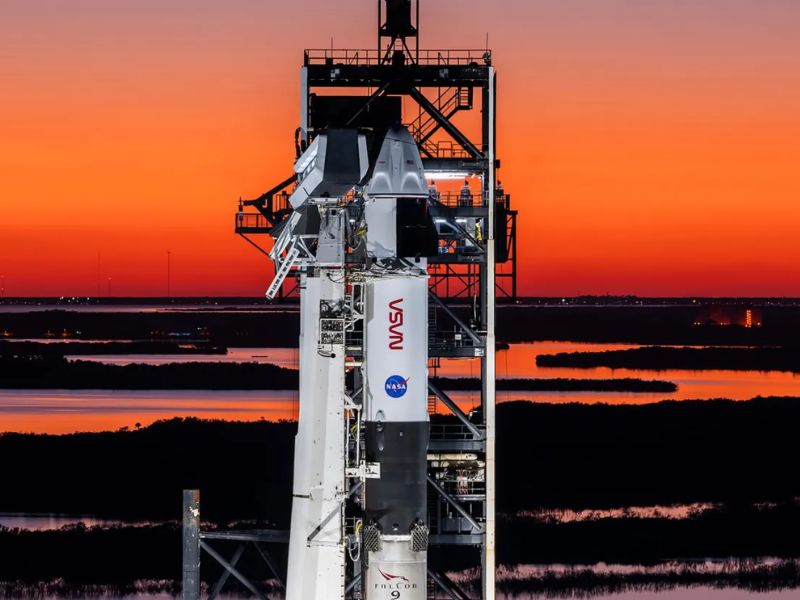
    SpaceX successfully launched four astronauts on Friday, kicking off the Crew-10 mission to the International Space Station (ISS). Their arrival will provide enough personnel to allow Suni Williams and Butch Wilmore to return to Earth after a nine-month stay.
    Image Credits: SpaceX

    SpaceX successfully launched four astronauts on Friday, kicking off the Crew-10 mission to the International Space Station (ISS). Their arrival will provide enough personnel to allow Suni Williams and Butch Wilmore to return to Earth after a nine-month stay.

    The Dragon spacecraft is set to dock with the ISS late Saturday, with the new crew overlapping briefly before Williams, Wilmore, and two others depart, possibly as soon as March 19, weather permitting.

    Unusual Circumstances Surrounding Williams and Wilmore’s Stay

    While SpaceX’s ISS missions have become routine, this launch has drawn attention due to how Williams and Wilmore arrived at the station. They were part of Boeing’s first crewed Starliner mission last June, a critical test flight meant to position Boeing as a competitor to SpaceX in crewed spaceflight. Their extended stay has also sparked controversy, with SpaceX CEO Elon Musk blaming the delay on former President Joe Biden.

    Starliner was originally scheduled to dock with the ISS for 10 days before bringing Williams and Wilmore back to Earth. However, leaks and thruster issues delayed its docking.

    Eventually, Starliner connected with the station, allowing the astronauts to board. But after weeks of testing and analysis, Boeing and NASA decided in August to return the spacecraft empty.

    Crew-9 Adjustments to Bring Williams and Wilmore Home

    NASA and SpaceX agreed to bring Williams and Wilmore home on the next ISS crewed mission, Crew-9. To accommodate them, two astronauts were removed from that flight. A return was planned for February 2025, as an earlier departure would have left the ISS understaffed, according to NASA.

    During Williams and Wilmore’s time on the ISS, Musk supported Donald Trump’s re-election and launched his Department of Government Efficiency. He later claimed—both on X and in interviews—that he had offered to bring the astronauts back sooner, but Biden declined for political reasons.

    However, Musk has not provided evidence to back up this claim. NASA’s former administrator and deputy administrator under Biden stated that no such offer ever reached the agency’s headquarters.


    Read the original article on: TechCrunch

    Read more: SpaceX Says Starship Self-Destructed Due to Propellant Leaks, Fires, and a Comms Blackout

  • SpaceX Says Starship Self-Destructed Due to Propellant Leaks, Fires, and a Comms Blackout

    SpaceX Says Starship Self-Destructed Due to Propellant Leaks, Fires, and a Comms Blackout

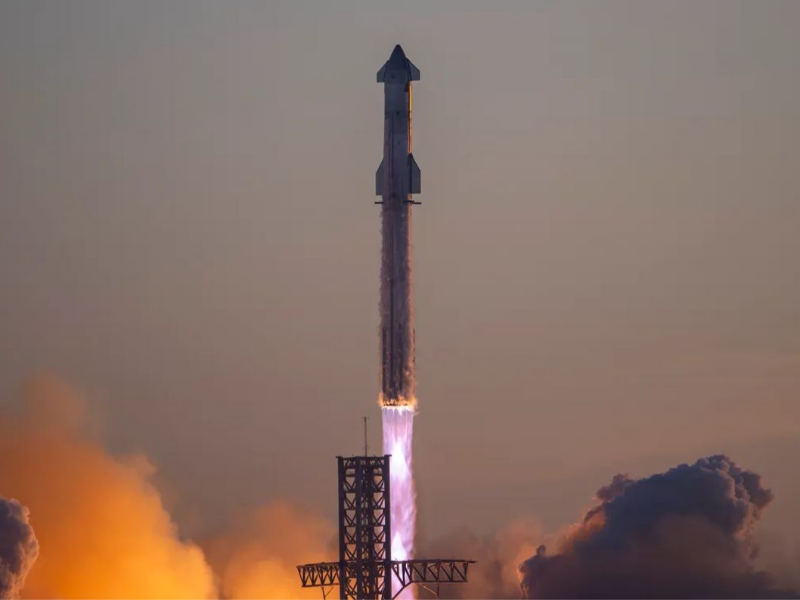
    SpaceX revealed Monday that last month’s Starship explosion resulted from a chain reaction triggered by propellant leaks—a problem the company claims to have resolved ahead of a potential eighth test flight as early as Friday.
    Image Credits:SpaceX

    SpaceX revealed Monday that last month’s Starship explosion resulted from a chain reaction triggered by propellant leaks—a problem the company claims to have resolved ahead of a potential eighth test flight as early as Friday.

    The company is still awaiting FAA approval, either through the official closure of the “mishap investigation” or special authorization to proceed while the review continues.

    This marks the first time SpaceX has faced a mishap investigation while CEO Elon Musk is involved in U.S. government operations, with his Department of Government Efficiency reportedly making changes at the FAA. The agency has yet to comment.

    Successful Launch and Booster Recovery

    Starship’s January test initially went as planned. SpaceX aimed to evaluate upgrades to the Super Heavy booster, launch-and-catch tower, and Starship itself. The rocket launched successfully, with the booster separating and returning to Texas, where it was caught by the tower.

    Issues emerged about two minutes after Starship ignited its own engines. SpaceX reported in a blog post that a flash was observed near one of the Raptor vacuum engines, followed by rising pressure readings—signs of a propellant leak.

    Two minutes later, another flash appeared, and sustained fires broke out, causing all but one of Starship’s engines to shut down in a controlled sequence. The fires eventually led to a communications blackout.

    Cause of Failure and Self-Destruction

    SpaceX believes the leaks stemmed from unexpected vibrations that placed excessive stress on the propulsion system’s hardware. The automatic in-flight abort system ultimately triggered Starship’s self-destruction after the fires and loss of communication.

    The explosion created a dramatic spectacle over the Turks and Caicos Islands and prompted the FAA to reroute several flights as a safety precaution. SpaceX maintains that all Starship debris landed within the designated Debris Response Area, a safety zone pre-approved with government agencies before launch. However, residents have shared photos of debris washing up on beaches, and at least one vehicle sustained minor damage after being struck.

    In response, SpaceX has modified the fuel lines supplying Starship’s engines, adjusted the propellant’s temperature, and introduced additional vents along with a new purge system to strengthen the aft section against potential leaks.


    Read the original article on: TechCrunch

    Read more: SpaceX Starlink Satellites Make 25,000 Quick Moves in 6 Months, and More Challenges Are Coming!

  • Watch: SpaceX Achieves Historic Booster Retrieval

    Watch: SpaceX Achieves Historic Booster Retrieval

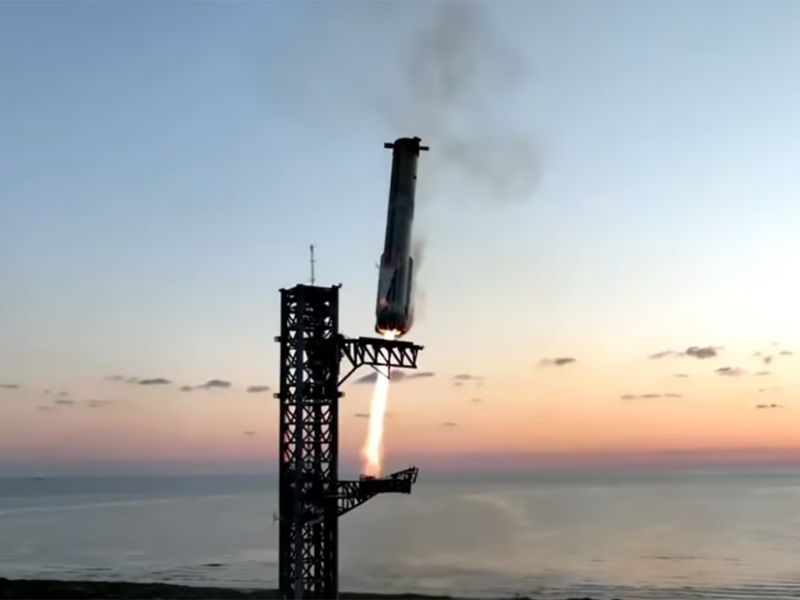
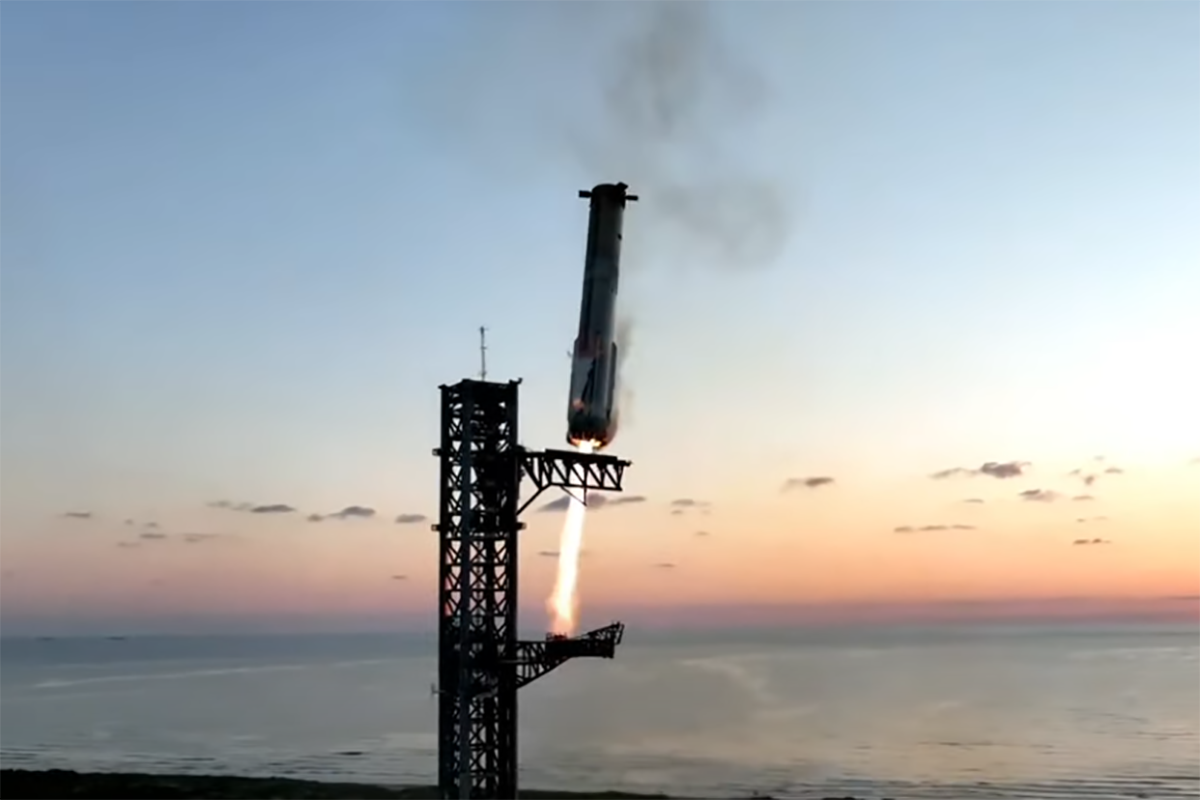
    In an impressive display of space engineering, SpaceX achieved a groundbreaking milestone. At around 7:31 am CT, they successfully captured a Super Heavy booster using their launch tower after it deployed a Starship second stage into orbit and performed a controlled reentry.
    Super Heavy just before capture
    SpaceX

    In an impressive display of space engineering, SpaceX achieved a groundbreaking milestone. At around 7:31 am CT, they successfully captured a Super Heavy booster using their launch tower after it deployed a Starship second stage into orbit and performed a controlled reentry.

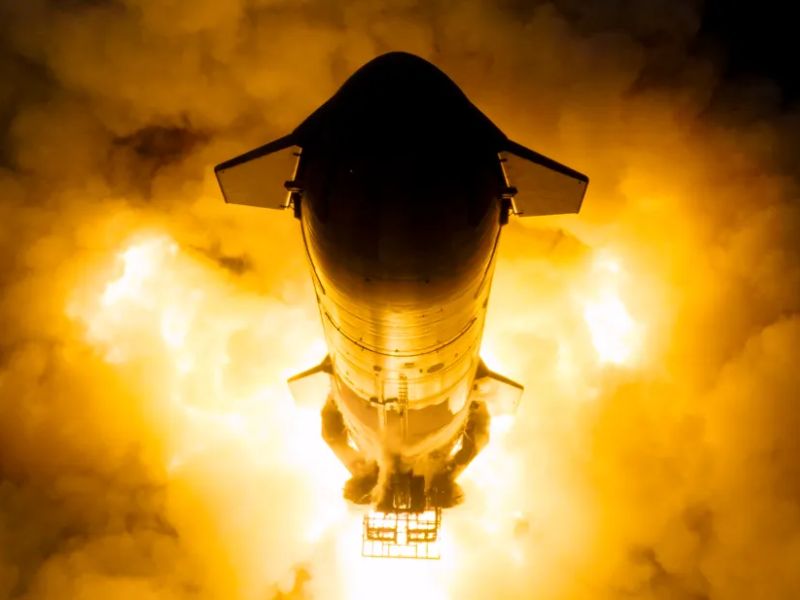
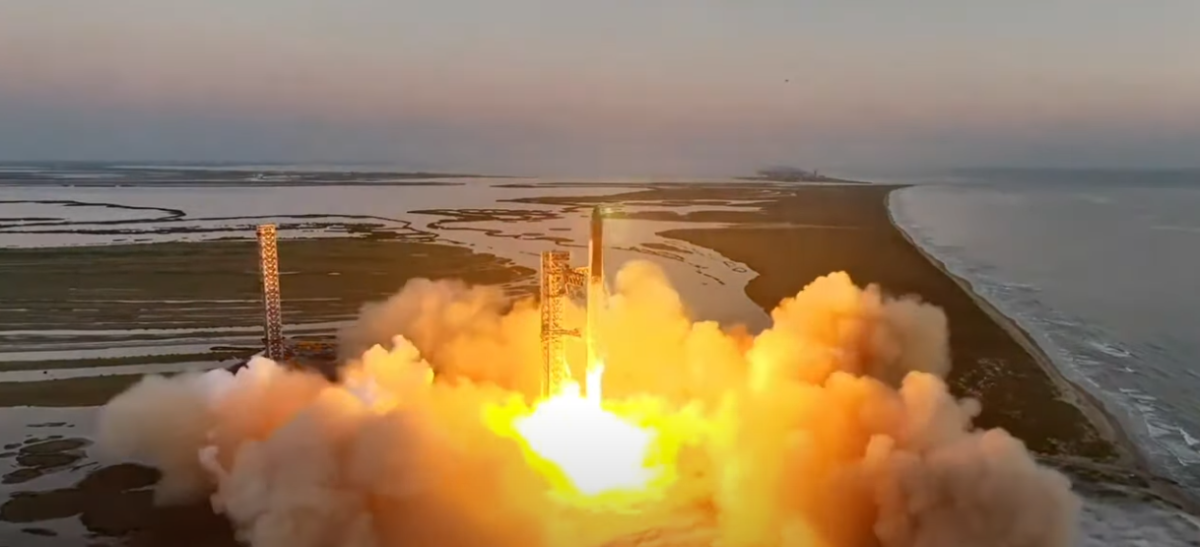
    After following space launches since the Mercury missions, I can honestly say I’ve never witnessed an orbital flight where the success felt secondary to the launch—until now. At 7:25 am CT, from SpaceX’s Starbase in Boca Chica, Texas, the massive Starship rocket embarked on its fifth test flight. The fact that it lifted off without exploding, crashing, or experiencing any other mishap was promising, but that’s when it made history.

    Hot Staging Separation Milestone

    Around two minutes and 41 seconds into the flight, Starship performed a hot staging separation, igniting its second stage’s six engines while still connected to the Super Heavy first stage. Instead of shutting down all 33 Raptor engines, the Super Heavy reduced power to just three engines before the separation.

    As the Starship second stage ascended into orbit, the Super Heavy performed a routine reentry maneuver, executing a controlled return to the Mechazilla tower, now serving as its landing site. Using three engines, which swiveled on gimbal mounts to position the booster correctly, the Super Heavy glided into the waiting “chopsticks,” which gently closed around it to secure the rocket before final shutdown.

    Surprise Success for Super Heavy Landing

    A SpaceX spokesperson expressed surprise at the success, noting that they expected the Super Heavy to either crash or be forced to abort and ditch into the Gulf of Mexico at the last moment. The scene had an almost surreal quality, resembling something out of an old Thunderbirds episode rather than a real-world engineering feat—especially considering the Super Heavy is even larger than a Saturn V first stage.

    Meanwhile, the Starship second stage continued its orbital path, concluding with a gentle powered water landing in the Indian Ocean, one hour and five minutes after launch. Although it might seem like a minor detail, the landing was crucial for SpaceX engineers, who were particularly concerned about testing the upgrades made to the reentry heat shield.

    Starship lifting off
    SpaceX

    Today’s launch was unexpected, especially given the ongoing conflict between SpaceX and the FAA. The agency had previously stated it wouldn’t approve another Starship launch before November and fined SpaceX $633,000 for allegedly failing to secure the necessary licenses and permits. Meanwhile, Elon Musk threatened to sue the FAA for reportedly making false claims about Starship’s environmental impacts.

    Regardless, SpaceX’s next big objective is to capture both the Super Heavy and the Starship second stage using the tower. Successfully doing so would pave the way for a launch system with an unprecedentedly fast turnaround time between launches.


    Read the orignal article on: New Atlas

    Read more: The Spacesuit that Chinese Astronauts Will use on the Moon

  • SpaceX Unveils New Streamlined Spacesuits

    SpaceX Unveils New Streamlined Spacesuits

    SpaceX has unveiled its latest Extravehicular Activity (EVA) suits, which could debut in low-Earth orbit by the end of summer. These new suits represent an evolution from the current Dragon mission spacesuits, limited to pressurized environments. Unlike their predecessors, the EVA suits enable astronauts to operate both inside and outside the capsule, boasting advancements in materials, joint design, redundancy measures, and the incorporation of a helmet visor heads-up display (HUD).
    3D printing creates the EVA suit helmet using polycarbonate materials. Credit: SpaceX

    SpaceX has unveiled its latest Extravehicular Activity (EVA) suits, which could debut in low-Earth orbit by the end of summer. These new suits represent an evolution from the current Dragon mission spacesuits, limited to pressurized environments. Unlike their predecessors, the EVA suits enable astronauts to operate both inside and outside the capsule, boasting advancements in materials, joint design, redundancy measures, and the incorporation of a helmet visor heads-up display (HUD).

    Pioneering the Polaris Program: Unveiling the Future of Human Spaceflight

    Over the weekend, SpaceX announced that the EVA suits will outfit the four crewmembers assigned to the Polaris Program’s inaugural mission, Polaris Dawn. Launched initially in 2022, the Polaris Program, a collaborative effort with SpaceX, aims to advance human spaceflight capabilities rapidly. Scheduled for no earlier than summer 2024, Polaris Dawn will mark several milestones, including the first commercial spacewalk and the first spacewalk involving four astronauts simultaneously. While venturing beyond their Dragon capsule, the crew will also pioneer testing Starlink’s laser-based communications systems, a technology SpaceX deems crucial for future missions to the moon and Mars.

    The Polaris Dawn mission, involving four astronauts, is slated to commence no earlier than summer 2024. Credit: SpaceX

    Innovations in Space Apparel: Materials, Mobility, and Accessibility

    SpaceX’s teaser video, shared on X on May 4, underscores mobility as its central theme, featuring an EVA suit wearer demonstrating fluid movements of fingers, shoulders, and elbows. As outlined by PCMag.com on Monday, these suits are crafted using a range of textile-based thermal materials and incorporate semi-rigid rotator joints, facilitating tasks in both pressurized and unpressurized settings. Additionally, the boots utilize the same temperature-resistant material employed in the Falcon 9 rocket’s interstage and the Dragon capsule’s trunk.

    Astronauts aboard Polaris Dawn will don 3D-printed polycarbonate helmets featuring visors coated in copper and indium tin oxide, treated for anti-glare and anti-fog properties. As they conduct the spacewalk approximately 435 miles above Earth, each crewmember’s helmet will integrate a built-in heads-up display (HUD), offering real-time pressure readings, temperature, and relative humidity.

    SpaceX’s EVA suit, like Prada’s Artemis III design, aims for a future with inclusive space fashion. Their adaptable design allows customization for various body types, a step towards wider space access. Millions of suits for Mars may seem far off, but every journey starts with a few.


    Read the original article on: Popular Science

    Also read: Spacex Third Flight Test of Starship

  • Spacex Third Flight Test of Starship

    Spacex Third Flight Test of Starship

    With the objective of testing different aspects of the rocket, SpaceX has launched for the 3rd time a flight test of Starship. This time, the stainless-steel rocket and its Super Heavy booster, which together stand 400 feet tall (122 meters) filled with more than 10 million pounds of liquid methane and liquid oxygen propellant reached space. The test was performed at SpaceX's Starbase facility near Boca Chica Beach in southern Texas this Thursday.
    Credit: Pixaobay

    With the objective of testing different aspects of the rocket, SpaceX has launched for the 3rd time a flight test of Starship. This time, the stainless-steel rocket and its Super Heavy booster, which together stand 400 feet tall (122 meters) filled with more than 10 million pounds of liquid methane and liquid oxygen propellant reached space. The test took place on Thursday at SpaceX’s Starbase facility located near Boca Chica Beach in southern Texas.

    The Rocket went to space with the intent to splash down in the Indian Ocean. The test comprised of observing the detachment of the booster and the main starship reaching space.

    So far, it has met all expectations without issues. The test served its purpose well, succeeding in both aspects, even executing reentry before experiencing Rapid Unscheduled Disassembly (RUD) after a few seconds.

    Starship Third Test Flight

    Elon Musk on SpaceX Third Flight Test of Starship

    Founder and CEO of SpaceX Elon Musk reacted to the latest Starship launch on Thursday, saying the world’s most powerful rocket will “make life multiplanetary.” He made the short comment with an accompanying photo of the rocket in a post on X.

    Gwynne Shotwell, Chief Operating Officer of SpaceX, extends heartfelt congratulations to the entire team for their exceptional achievements on this remarkable day: flawlessly executing the count (with relief that the shrimpers could evacuate in time!), achieving successful liftoff, conducting precise hot staging, overseeing the Super Heavy boost back and coast (with likely a couple of engines engaged during landing burn!), smoothly inserting and coasting the ship, demonstrating payload door cycling and prop transfer (pending confirmation!), and completing the ship entry!

    It has been awhile since the time of static fire tests. news such as ” SpaceX’s massive Starship rocket remains to pass key tests on its road to sending the Mars-bound launch system up to orbit for the 1st time.” are now things of the past. Resilience and a lot of effort have proven time and again that a private company such as SpaceX can deliver humans to Mars if believed and worked on a strategic plan.

    Evolution of Starship
    Evolution of Starship part 1: Christopher Stanley
    Various stages of development of starship from static fire to reentry
    Evolution of Starship part 2. Credit: Christopher Stanley

    Starship Third Flight Test is Carefully Monitored

    SpaceX and NASA may be celebrating the successes of Thursday’s mission, but from the perspective of the Federal Aviation Administration (FAA), responsible for licensing commercial rocket launches, the loss of the Super Heavy booster and Starship spacecraft remains a setback requiring thorough review. The FAA regularly oversees investigations into incidents involving spacecraft loss during flight. Despite SpaceX’s prior awareness that Starship and Super Heavy were unlikely to survive the flight, regulators still need to analyze the incident.

    SpaceX and the FAA have had occasional tensions in their relationship, with SpaceX expressing frustration over what it perceives as prolonged reviews by the agency, leading to delays in testing.

    Starship Third Flight Test in a Nutshell

    Here a few aspects according to CNN that can help you catch up on the event:

    • The Starship spacecraft made it to orbital speeds.
    • Both the Starship spacecraft and Super Heavy rocket booster made it much further into flight than during two previous tests in 2023.
    • SpaceX completed a propellant transfer demonstration, and Starship’s payload doors were tested. It’s too early to say if they’re wholly successful, as engineers said they need to review some data.
    • SpaceX did not re-light Starship’s engines as expected, but the webcast offered stunning views of the spacecraft plunging back into the atmosphere.
    • It’s not clear if the Super Heavy booster landed in one piece.
    • The Starship spacecraft experienced premature destruction, leading to an earlier-than-anticipated loss of communication by SpaceX. However, SpaceX had no intention of recovering the vehicle; it was designed for crash landing.

    Read the original article on: CNN

    Read more: Is Kennedy Space Center Ready for Starship’s Force?

  • SpaceX’s Starship Launch: A Mix of Success and Setback

    SpaceX’s Starship Launch: A Mix of Success and Setback

    The intended duration of Starship’s second test flight was approximately 90 minutes, with the plan for it to conclude by splashing down in the Pacific Ocean near Hawai’i. Credit: SpaceX via X

    On Saturday morning, SpaceX’s Starship rocket embarked on its second test flight, soaring into the sky from Starbase in Texas. However, the triumph of the launch was short-lived, as a dramatic turn of events unfolded just 8 minutes later.

    Launch Highlights and Abrupt End

    Cheers and excitement echoed through SpaceX’s mission control center during the event’s live stream. The Starship took off successfully, with the Super Heavy first-stage booster separating as planned. Unfortunately, the joy turned to disappointment as the booster exploded less than a minute later, marking an abrupt end to the mission.

    Commentator Kate Tice informed viewers about the unexpected events, stating, “As you could see, the Super Heavy Booster has just experienced a rapid unscheduled disassembly; however, our ship is still underway.” However, contact with the ship was lost around 9 minutes into the flight. Subsequently, it was revealed that onboard computers had terminated the mission, triggering the ship’s explosion for reasons yet to be disclosed.

    Progress Despite Challenges

    Despite the setback, this test flight represented a notable improvement from the initial launch in April, when the rocket had to be intentionally destroyed after just 4 minutes due to engine failures and a failure to separate.

    SpaceX implemented numerous modifications, including “hot staging,” a technique where the ship’s engines fire while still attached, providing additional power. Elon Musk had previously identified this as the “riskiest part of the flight.”

    Partial Success and Learning Opportunities

    Despite its risks, the successful implementation of the booster separation approach led many to consider this launch a partial success. Acknowledging the value of learning from such tests, SpaceX labeled it “an exciting second integrated flight test of Starship.” The company emphasized that understanding and improving Starship’s reliability are crucial as they strive to make life multiplanetary.

    Implications for Moon Landing in 2025

    While the test brought advancements, the outcome disappointed those anticipating a Moon landing in 2025. NASA’s Artemis III mission, aiming for a lunar return in 2025, relies on the success of Starship.

    Delays in Starship’s development may consequently impact the mission timeline. The focus on resolving challenges, particularly in achieving reusable rocket stages, will be vital for the continued progress of SpaceX’s ambitious space travel endeavors.


    Read the original article on IFL Science.

    Read more: Critical Moment: Starship’s Second Test Launch Expected This Week.

  • Critical Moment: Starship’s Second Test Launch Expected This Week

    Critical Moment: Starship’s Second Test Launch Expected This Week

    Starship poised on the launchpad, prepared for its second test. Credit: SpaceX.

    The success of NASA’s Artemis program is paramount, with the current contract involving SpaceX‘s Starship to transport astronauts for the Artemis III and Artemis IV lunar missions. There is no alternative means for astronauts to reach the Moon, although NASA recently opened the Moon lander contract to Jeff Bezos’ Blue Origin.

    SpaceX’s Starship April Test and Unforeseen Challenges

    The initial test of SpaceX’s Starship in April was partially successful. Despite being the tallest and most powerful rocket ever launched, complications during the flight prompted the team to detonate it for safety reasons. The ensuing explosion necessitated a thorough examination of the launch and its aftermath.

    Infrastructure Failures and Environmental Impact

    The destruction of the launchpad was revealed, lacking essential features such as a flame trench, diverter, and water-deluge system. Video footage captured the rocket’s impact on the launchpad, causing significant damage.

    The U.S. Fish and Wildlife Service reported approximately 385 acres (156 hectares) of land affected by debris from the launch. Elon Musk, SpaceX’s CEO, acknowledged that the pad reinforcement was not completed on time.

    Speculation and Controversy Surrounding Launch Timing

    Speculation arose about Elon Musk’s motivations, with some attributing the April 20 launch date to his “childish obsession” with the number 420, associated with cannabis.

    Elon Musk had initially announced a second test by June, but addressing the consequences of the first test proved more time-consuming than anticipated.

    While Starship remains a pivotal component in the human return to the Moon, its success is uncertain. The upcoming test carries significant weight, as failure could lead to substantial delays for Artemis III.


    Read the original article on IFL Science.

    Read more: Starship Mankind’s Interplanetary Vehicle.