Tag: Starlink

  • Musk’s Starlink Set to Debut in India Via Airtel

    Musk’s Starlink Set to Debut in India Via Airtel

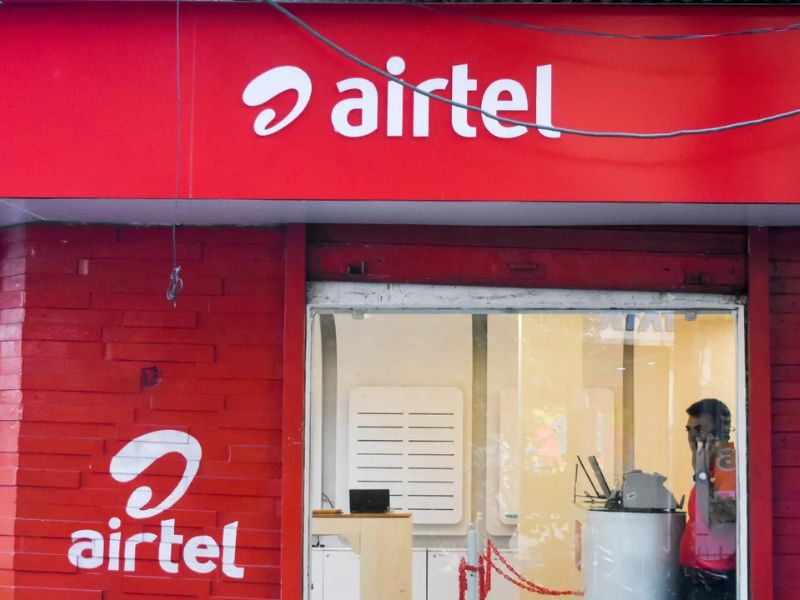
    Airtel announced on Tuesday a partnership with SpaceX to bring Starlink’s high-speed satellite internet to India, years after Elon Musk’s company first attempted to enter the world’s second-largest internet market.
    Image Credits: Debarchan Chatterjee / NurPhoto / Getty Images

    Airtel announced on Tuesday a partnership with SpaceX to bring Starlink’s high-speed satellite internet to India, years after Elon Musk’s company first attempted to enter the world’s second-largest internet market.

    However, this is not a confirmed rollout. The launch depends on regulatory approval from IN-SPACe and the Department of Telecommunications, Airtel clarified in its statement.

    This requirement is significant, as SpaceX previously faced regulatory pushback for accepting preorders in 2022 before obtaining the necessary licenses, ultimately leading to refunds. The company is still awaiting approvals due to concerns over security, privacy, pricing, and resistance from local competitors.

    Airtel-SpaceX Deal Challenges Reliance Jio’s Satellite Ambitions

    Airtel’s partnership with SpaceX deals a setback to billionaire Mukesh Ambani and Reliance Jio, India’s largest telecom provider, which has been working to block Starlink’s entry while preparing to launch its own satellite internet services.

    SpaceX now appears to be taking a more strategic approach. This move follows a recent agreement between India and the U.S., in which Prime Minister Narendra Modi and former President Donald Trump pledged closer cooperation. Given Musk’s strong ties to the current U.S. administration, it remains to be seen whether this will help accelerate regulatory approvals.

    While financial details of the deal were not disclosed, Airtel plans to sell Starlink equipment through its retail stores and offer its services to business clients. SpaceX will also collaborate with Airtel to expand and strengthen its network, leveraging Airtel’s nationwide ground infrastructure.

    India’s Growing Market and Evolving Regulations Favor Starlink’s Entry

    With over 1.4 billion people but only about 950 million internet users, India presents a significant opportunity for alternative connectivity solutions. Regulatory developments may further pave the way for Starlink’s launch. In late 2023, India passed a telecom bill allowing spectrum allocation for satellite services, and in 2024, the Modi government backed Starlink in a satellite spectrum auction.

    Notably, Airtel is also partnering with Eutelsat OneWeb, whose subsidiary OneWeb India secured approval for satellite broadband services in late 2023.

    Starlink will complement and enhance Airtel’s suite of products to ensure reliable and affordable broadband for our Indian customers—wherever they live and work,” said Gopal Vittal, managing director and vice chairman of Bharti Airtel.

    We are excited to work with Airtel and unlock the transformative impact Starlink can bring to the people of India. We are constantly amazed by the incredible and inspiring things that people, businesses, and organizations do when they are connected via Starlink,” added Gwynne Shotwell, SpaceX’s president and COO.


    Read the original article on: TechCrunch

    Read more: FAA Evaluates Starlink Terminals as Musk Criticizes Verizon’s Technology

  • Starlink Launches its First Constellation of Satellites for Direct-to-Phone Connectivity

    Starlink Launches its First Constellation of Satellites for Direct-to-Phone Connectivity

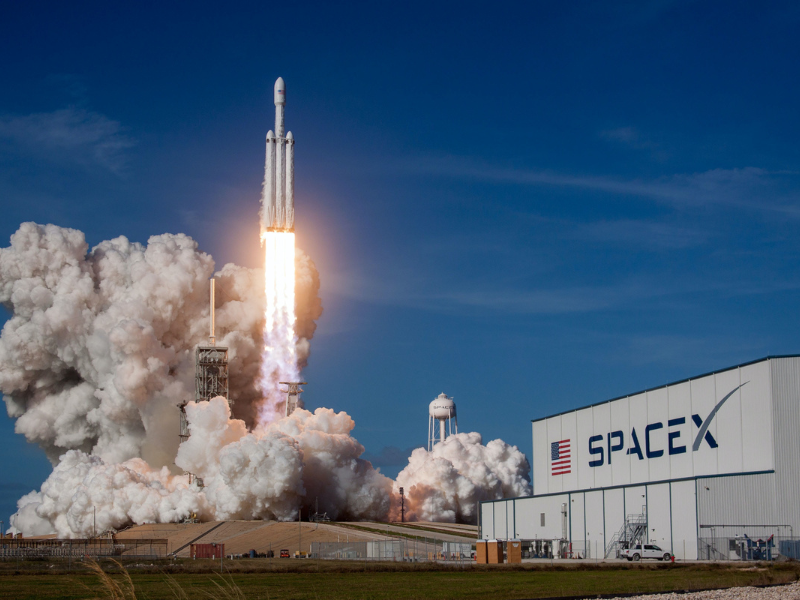
    SpaceX has successfully launched 20 Starlink satellites into orbit, completing the first phase of its direct-to-cellphone connectivity constellation.
    Starlink’s first orbital shell of direct-to-cell satellites will enable texting in 2024, and voice and data next year
    SpaceX

    SpaceX has successfully launched 20 Starlink satellites into orbit, completing the first phase of its direct-to-cellphone connectivity constellation.

    The satellites, deployed via a Falcon 9 rocket from California’s Vandenberg Space Force Base on December 5, aim to provide internet access to standard cellphones in remote areas. Elon Musk stated on X that while current bandwidth is limited to about 10 Mbps per beam, future constellations will offer significantly improved capabilities.

    Text Messaging Launches First, Broader Services Coming in 2025

    Text messaging will be the only service available through 2024, with voice, data, and IoT support expected next year. Pricing details remain undisclosed, but Starlink’s roaming broadband service costs $50 per month in the U.S. as a reference.

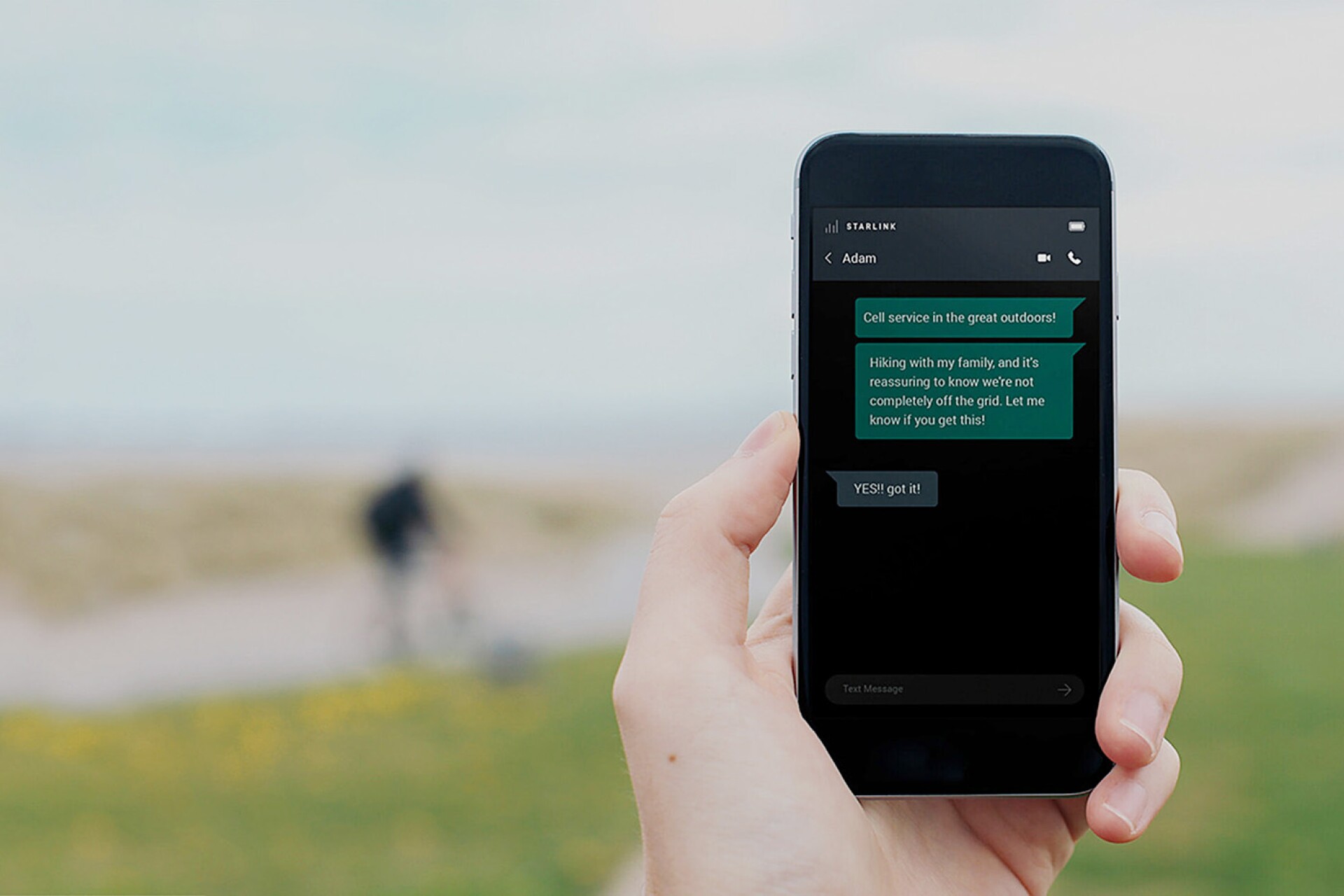
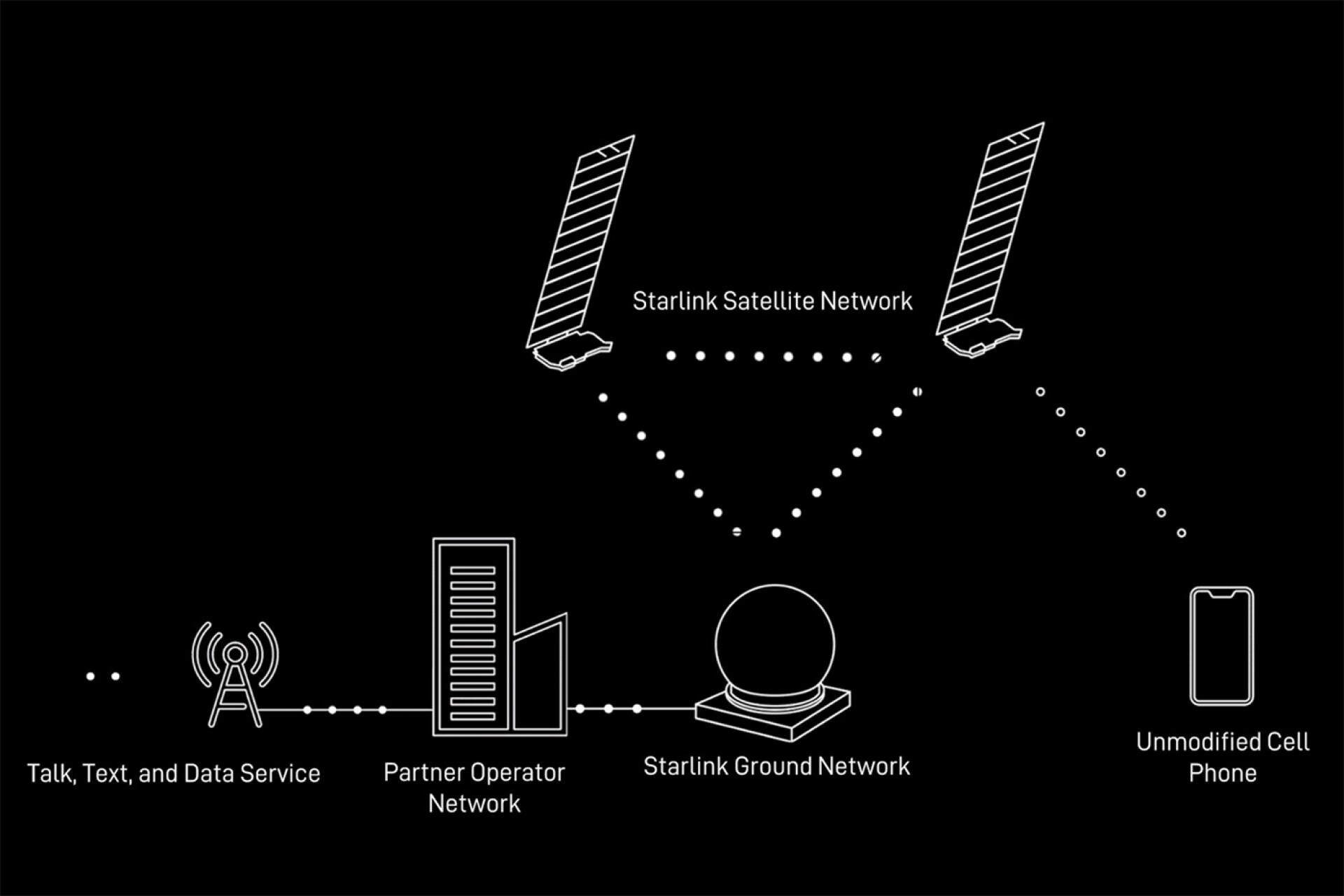
    Unlike earlier satellite-to-phone efforts, Starlink uses standard LTE/4G protocols, eliminating the need for specialized devices or apps. By partnering with carriers like T-Mobile and Rogers, the service ensures compatibility with most phones. The system integrates with Starlink’s existing constellation of over 6,700 satellites via laser backhaul, enabling high-speed, secure communication.

    SpaceX Expands Leadership in Satellite Communications

    This launch solidifies SpaceX’s lead in satellite communications, though competitors like Lynk and AST SpaceMobile are also advancing in the field. The direct-to-cell program, approved by U.S. regulators just last month, marks another milestone for Musk’s growing tech empire.

    Unlike previous satellite phone services, you won’t need a special handset or app to use Starlink’s direct-to-cell tech
    SpaceX

    Read Original Article: New Atlas

    Read More: Scitke

  • SpaceX’s First X Post via Regular Phone and Starlink

    SpaceX’s First X Post via Regular Phone and Starlink

    SpaceX has used an unmodified smartphone to post to the X platform via Direct to Cell satellite technology
    Depositphotos

    SpaceX and T-Mobile launched Direct to Cell Starlink satellites in January, aiming for universal coverage. This collaboration began with the Coverage Above and Beyond initiative in August 2022, aiming to provide phone connectivity everywhere by enabling LTE/5G communication through satellites in low-Earth orbit.

    Successful Deployment and Testing of Starlink Satellites

    At the start of January, the initial six Starlink satellites from the partnership were deployed via a Falcon 9 rocket. Just six days later, the SpaceX team successfully transmitted and received the first text messages using unaltered phones on the ground, validating the functionality of the system.

    The SpaceX team successfully sent text messages via the new Direct to Cell satellites on January 8
    SpaceX

    The Direct to Cell satellites boast custom silicon and large phased arrays with highly sensitive radio receivers and powerful transmitters. These components are engineered specifically to communicate with standard handsets, which do not have the required transmit power to establish direct connections with satellites. According to SpaceX, these satellites integrate into the existing Starlink constellation via laser backhaul, enabling them to offer services anywhere with regulatory approvals without needing dedicated ground infrastructure.

    SpaceX plans to launch hundreds more Direct to Cell satellites in 2024 to expand coverage and activate its text constellation, followed by voice, data, and Internet of Things services. Yet, the team took the lead by posting on Elon Musk’s social media platform X, confirming, “We sent this post through a SpaceX Direct to Cell satellite in Space.”

    Ben Longmier’s Insights and Updates on Direct to Cell Progress

    Ben Longmier, from the project, subsequently shared a photo of “foliage covering a small valley in the Santa Cruz Mountains from earlier in the day when we were exchanging some DMs on X.” He also responded to Musk, affirming the progress made by the Direct to Cell team and noting that the satellites “have the strongest cell signal at my house, just 15 miles outside the heart of Silicon Valley.

    The company has not yet disclosed pricing details for these services, which will be crucial for many potential users. However, envision not having to aimlessly roam with your arm raised in the wilderness to find a strong signal to call for help or update your social media. Remote communities would no longer suffer from poor connectivity, and this technology also holds promise for maintaining essential communication in disaster-stricken areas.

    The project plans to regularly launch more Direct to Cell satellites aboard Falcon 9 rockets as it advances toward the official launch of the text service later this year. Voice, data, and IoT services are set to follow from 2025. The company has also outlined plans to transition satellite deployment to its Starship once ready, aiming to enhance the service further and increase launch frequency.


    Read the original article on: New Atlas

    Read more: COVID-19 Provokes Liquid Oxygen Shortages Delaying Space X Launch Plans

  • Starlink’s Satellite to Phone Service Set for Next Year

    Starlink’s Satellite to Phone Service Set for Next Year

     Credit: CNBC

    Starlink, the satellite internet venture owned by SpaceX, has silently introduced its Direct Cell service on its official website, heralding a breakthrough in connectivity for LTE phones under open skies. This innovative service requires no modifications to existing phone hardware, firmware, or special applications.

    Future Expansion of Services

    According to the website, Starlink has a comprehensive roadmap for Direct to Cell. In 2024, they plan to introduce text services, with voice, data, and IoT connectivity to follow in 2025. This expansion promises to bring a range of communication options for users.

    The standout feature of Direct to Cell is its potential to provide connectivity virtually anywhere, making it particularly appealing for those in remote areas without terrestrial coverage. This satellite service extends LTE phones’ reach beyond traditional cell towers’ constraints.

    Starlink’s satellites with Direct Cell capability boast eNodeB modems, functioning like space-based cell towers. This technology enables seamless network integration, akin to a standard roaming partner.

    SpaceX’s Expertise and Deployment Strategy

    Leveraging SpaceX’s experience in rocket manufacturing and launching, Starlink aims to deploy direct-to-cell satellites on a large scale.

    Initially launched on SpaceX’s Falcon 9 rockets and later on Starship, these satellites will establish immediate connections through laser backhaul to the Starlink constellation, ensuring global coverage.

    Project Evolution and Operator Partners

    Previously referred to as “Coverage Above and Beyond,” Starlink’s project for universal cell phone connectivity has transformed. The website lists additional operator partners, including Optus in Australia, Rogers in Canada, One NZ in New Zealand, KDDI in Japan, and Salt in Switzerland.

    Challenges and Uncertainties

    Despite the ambitious goals set by Starlink, the specifics of what this service can deliver remain unclear. The absence of an official announcement or press release leaves many questions unanswered.

    Peter Kibutu, Advanced Technology Lead at TTP, points out that providing connectivity through unmodified 4G handsets may result in low-bandwidth data and voice services, falling short of contemporary demands. 

    Achieving high-performance connectivity will likely require compliance with 3GPP-compliant 5G NR NTN waveform, which Starlink currently avoids by using its proprietary technology.

    Network X: Shaping the Telco Industry’s Future

    Crucial details such as pricing and service features are yet to be revealed, leaving room for further insights into what Starlink’s offering will entail and how it will compare to other satellite connectivity ventures.

    In an environment where the wireless and wireline industries converge, Network X is the world’s most comprehensive telco event. Taking place from October 24 to 26, 2023, in Paris, the event promises valuable insights from tier 1 telcos, strategies for monetization and deployment, networking opportunities, product innovation, and more. 

    Network X aims to guide your strategic decisions, foster meaningful connections, and facilitate sound investments for your business.


    Read the original article on TeleComs.

    Read More: Roy Allela and the Sign Language Gloves´ Speech.

  • SpaceX Starlink Satellites Make 25,000 Quick Moves in 6 Months, and  More Challenges Are Coming!

    SpaceX Starlink Satellites Make 25,000 Quick Moves in 6 Months, and More Challenges Are Coming!

    Starlink Satellites Do Cool Moves Over 50,000 Times to Stay Safe in Space!
    “Starlink Satellites Do Cool Moves Over 50,000 Times to Stay Safe in Space!” credit: Arda Kucukkaya/Anadolu Agency via Getty Images)

    Starlink (SpaceX) Satellites Do Fancy Dance Moves to Stay Safe, But There’s a Worrying Problem!

    SpaceX’s Starlink satellites have been doing impressive maneuvers to avoid bumping into other spacecraft and space junk. In just six months, from December 2022 to May 2023, they had to swerve over 25,000 times! That’s twice as many moves compared to the previous six months. Since the first Spacex Starlink satellite launched in 2019, they have made over 50,000 moves to prevent collisions.

    But here’s the concern: the number of maneuvers is increasing fast, like on a roller coaster going higher and higher. This worries experts because it could become difficult to manage and keep everyone safe in space. Hugh Lewis, a professor who knows a lot about satellites, says the number of moves is growing quickly. It’s doubling every six months, and that’s a problem because big numbers can be hard to handle.

    So, while it’s cool that Starlink satellites can avoid crashes with their cool dance moves, we need to figure out how to keep everything safe up there in space!

    1.000.000 Moves till 2028

    “Starlink Satellites Are Doing More and More Avoidance Moves!”Did you know that Starlink satellites have to do special maneuvers to avoid crashing into other satellites? In the first part of 2021, they did 2,219 of these moves. Then, in the next six months, they did 3,333. After that, it doubled to 6,873 moves! In the second half of 2022, they had to change their paths 13,612 times to stay safe. In the latest report, they did 25,299 moves in just six months, which means each satellite had to move about 6 times on average.

    This is a big problem because the number of moves keeps getting bigger and bigger. Every six months, it doubles! In just two years, it went up by 10 times. If it keeps going like this, in the next six months, they might have to do 50,000 moves, then 100,000, and even more!

    By 2028, they might have to move nearly a million times in just six months! That’s a lot! And this seems to only increase. SpaceX has already put about one-third of its planned satellites in space, and they’re launching more than 800 satellites each year. Other companies like Amazon and China are also trying to send their satellites into space.

    It’s a big challenge to make sure all these satellites can move around without crashing into each other. But people are working on it to keep space safe and make sure everything goes smoothly up there!

    The Projected  Future of Starlink: Avoiding Collisions in Space!
    “The Projected Future of Starlink: Avoiding Collisions in Space!” (Image credit: Hugh Lewis)

    Satellite Traffic and Safety Concerns in Space

    There are a lot of satellites in space—over 1.7 million of them! They are registered with an organization that oversees satellite radio frequencies. But not all of those satellites will actually be launched. Still, the numbers are so high that experts are worried about keeping order in space.

    If there are around 100,000 active satellites by the end of this decade, there will be a huge number of maneuvers needed to avoid collisions. It’s like driving on a highway and constantly swerving to avoid hitting something. That’s not very safe!

    The need to swerve isn’t just because of new satellites. There’s also a lot of space debris, like old satellites and rocket parts, floating around. This makes it even harder for satellite operators to keep their spacecraft safe.

    Elon Musk’s ambitious plan to launch 42,000 Starlink satellites in the coming years aims to bring high-speed internet to every corner of the globe. However, this grand vision raises concerns among experts. The sheer number of satellites could potentially obstruct astronomers’ observations, hindering their understanding of the universe. Moreover, the dense satellite presence may impede future space exploration missions, creating obstacles for spacecraft and posing long-term challenges. While the prospect of global internet access is enticing, it is crucial to carefully consider the potential consequences for scientific research and the exploration of space.

    Experts question if SpaceX, a big satellite company, can keep up with all the alerts for potential collisions. They think the risk of collisions will keep going up, even if SpaceX tries hard to prevent them.

    There’s concern about situations where no maneuvers are made. Even though the chance of a collision is low in each case, there are so many of them that it becomes a big risk. It’s like buying a lot of lottery tickets—you’re more likely to win if you have a million tickets instead of just one.

    Unless regulators limit the number of satellites in space, experts believe collisions will become common. This would create more space debris and lead to even more collisions. It could eventually result in the Kessler Syndrome, where collisions happen so often that parts of space become unusable, like in the movie “Gravity.” So, it’s important to figure out how to manage all these satellites and keep space safe for everyone.


    Read the original article on Space.

    Read more: NASA And SpaceX Explore the Idea of Shifting Hubble to a More Stable Orbit.