
Tag: Station

  • Astronauts Splash down on Earth after a Space Station Medical Evacuation

    Astronauts Splash down on Earth after a Space Station Medical Evacuation

    Image Credits:NASA

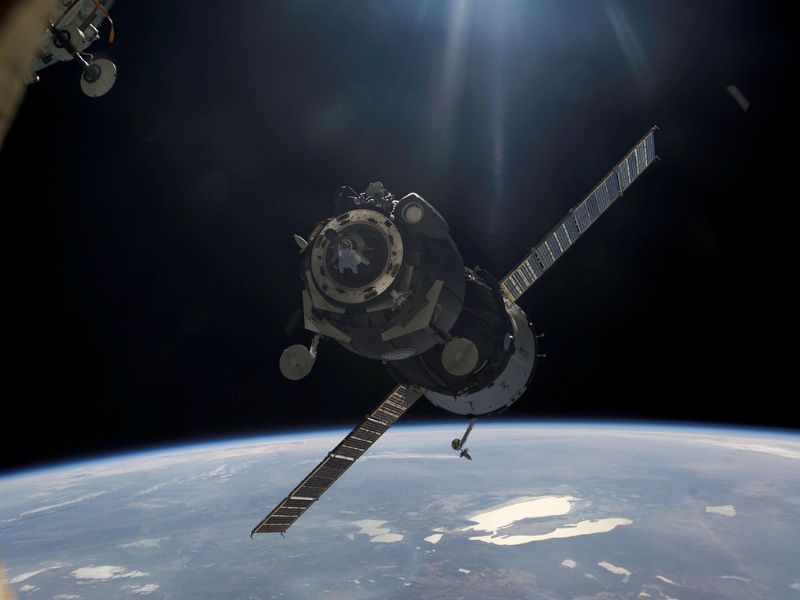
    Four astronauts evacuated from the International Space Station (ISS) safely returned to Earth after a “serious” medical issue cut their mission short by a month.

    The crew’s captain, NASA astronaut Mike Fincke, was the first to leave the spacecraft, smiling and wobbling slightly before lying on a gurney as part of standard procedures.

    NASA’s Zena Cardman, Japan’s Kimiya Yui, and cosmonaut Oleg Platonov followed him, waving and smiling at cameras. “It’s so good to be home!” Cardman said.

    This marks the first time astronauts have been evacuated for health reasons since the ISS began orbiting Earth in 1998.

    Crew-11 to Undergo Medical Checks After California Splashdown

    The Crew-11 team will complete medical evaluations before officials fly them back to land after their splashdown off the California coast.

    At a post-splashdown news conference, NASA administrator Jared Isaacman said the ill astronaut is “fine right now” and in “good spirits.”

    Based on NASA’s usual approach to crew health, officials are unlikely to disclose the astronaut’s identity or details of the illness.

    Russian cosmonaut Sergey Kud-Sverchkov and two other crew members have taken control of the ISS.

    Mission Cut Short After Astronaut Falls Ill, Spacewalk Canceled

    The astronauts had arrived at the ISS on 1 August, expecting a standard six-and-a-half-month mission, with a planned return in mid-February. However, NASA canceled a spacewalk for Fincke and Cardman last week and announced hours later that a crew member had fallen ill.

    It’s bittersweet,” said Fincke as he handed over command of the ISS to Kud-Sverchkov on Monday. In a social media post, he added that all onboard were “stable, safe, and well cared for.”

    Orbiting Earth at 250 miles above the surface, the ISS completes 16 orbits per day at a speed of 17,500 mph. Managed by five space agencies, it conducts a wide range of scientific research on space and the effects of microgravity on humans, animals, and plants.

    ISS Lacks Onboard Doctor Despite Basic Medical Supplies

    Astronauts rely on training and supplies as ISS lacks doctor

    The evacuation served as a serious test of NASA’s procedures for managing medical emergencies. By most accounts, the mission went smoothly, though questions remain about how the agency might have responded if the astronaut’s condition had been more severe.

    The early return leaves the ISS with a reduced crew of just three: NASA’s Chris Williams and cosmonauts Sergey Kud-Sverchkov and Sergei Mikaev, until a new four-person team arrives in February.

    Despite all the changes and challenges, we will continue our work on the ISS, carrying out all scientific and maintenance tasks, no matter what,” Kud-Sverchkov said on Monday, marking his first command with a group hug.

    Image Credits:Oleg Platonov, Mike Fincke, Zena Cardman and Kimiya Yui will end their ISS stay one month early

    The incident is unprecedented in the 26-year history of the permanently crewed ISS.

    Health issues have forced astronauts to cut short space missions only twice before. In 1985, Soviet cosmonaut Vladimir Vasyutin and his team returned from a Salyut 7 mission four months early due to a urological problem. In 1987, Soviet cosmonaut Aleksandr Laveykin left the Mir space station early because of a heart arrhythmia.

    With increasing human space travel—ranging from tourism to potential missions on the Moon or Mars—experts say future missions will likely need to include doctors on board.


    Read the original article on:bbc

    Read more:New Research Reveals a Way to Reactivate T Cells That Destroy Cancer
  • NASA Budget Cuts Scrap Missions, SLS, And A Space Station

    NASA Budget Cuts Scrap Missions, SLS, And A Space Station

    Credit: Pixabay

    NASA’s newly released budget reveals a significant reduction in funding for the Orion spacecraft and the Lunar Gateway space station. The agency’s total budget has dropped to $18.8 billion, marking a 24% cut of $6 billion. NASA’s budget shift reflects a realignment of resources, prioritizing crewed missions to the Moon and Mars over the Orion spacecraft and the Lunar Gateway space station.

    The new budget proposal not only reflects the Trump administration’s goal to reduce federal spending, but it also signals a shift in NASA’s priorities that goes beyond just financial management. For many years, NASA has been at the heart of a complex debate, not just over funding, but also regarding the direction of the American space program in the 21st century.

    If the budget is approved, NASA plans to terminate both the Orion spacecraft and the Space Launch System (SLS) following the Artemis III mission, which is set to launch around 2027. With both projects already facing major delays and cost overruns, there have been calls to cancel them in favor of more advanced and cost-efficient commercial alternatives.

    Credit: Orion is one of the projects marked for cancellation ESA

    Escalating Costs and Delays: The Struggles of Orion and SLS Programs

    Orion is already $20 billion over budget and has faced continuous setbacks, including issues with its life support system and heat shield. Meanwhile, the SLS is decades behind schedule and has consumed $24 billion. Even more troubling, the expendable SLS will cost $4 billion per launch and will occur only once every two years. It has also faced criticism as a simplified version of the Apollo program, relying on 1970s-era Space Shuttle technology. Some view it more as a job creation scheme for congressional districts and aerospace contractors than a progressive space initiative.

    In addition to these changes, NASA is also canceling the Gateway project. Originally envisioned as an outpost in cislunar orbit to serve as a staging point for lunar and Mars missions, critics now argue that it is unnecessary. Due to ongoing delays, it now won’t be operational until the mid-2030s at the earliest. The new budget will terminate the Gateway project and reassign its completed components to other missions.

    Artemis Program Boosted: Increased Funding for Lunar and Mars Missions Amid Global Competition

    Despite these cuts, they do not signal a general reduction of the Artemis program. On the contrary, the budget includes a $7 billion increase for crewed lunar exploration, along with an extra billion dollars for a planned crewed mission to Mars. This funding boost aims to counter China’s growing ambitions to send astronauts to the Moon and Mars.

    Another component of the budget involves cutting missions deemed not cost-effective in terms of scientific returns relative to the investment. The leading candidate for cancellation is the Mars Sample Return mission, which is budgeted at up to $11 billion and wouldn't launch until the middle of the next decade. Other potential cuts include the aging Chandra X-ray Observatory, with an annual operating cost of $70 million, the Nancy Grace Roman Space Telescope, which costs $3 billion and has been criticized as redundant compared to other missions, and $1.161 billion allocated for Earth science missions.
    Credit: The Space Launch System rocket NASA

    Another component of the budget involves cutting missions deemed not cost-effective in terms of scientific returns relative to the investment. The leading candidate for cancellation is the Mars Sample Return mission, which is budgeted at up to $11 billion and wouldn’t launch until the middle of the next decade. Other potential cuts include the aging Chandra X-ray Observatory, with an annual operating cost of $70 million, the Nancy Grace Roman Space Telescope, which costs $3 billion and has been criticized as redundant compared to other missions, and $1.161 billion allocated for Earth science missions.

    The last point is notable because it highlights the rise of advocates who have long argued for NASA to shift its focus away from space launch vehicles, low Earth orbit stations, and Earth monitoring missions. Instead, they have pushed for a greater emphasis on deep space exploration, human spaceflight, and advanced technology, while leaving many traditional space functions to commercial companies.

    In addition, the budget abandons green aviation projects and places greater emphasis on supporting the FAA in carrying out the administration’s mandate to modernize America’s outdated air traffic control system.

    Credit: A Mars Sample Return mission spacecraft NASA

    Shifting Focus: Reducing U.S. Role in the ISS and Accelerating Private Sector Involvement

    One less obvious aspect of the budget is the shift towards reducing U.S. involvement in the International Space Station (ISS) before its planned decommissioning and deorbiting in 2030. While budget concerns may play a role,  recent reports suggest that the ISS may be in worse condition than initially thought, with cracks and air leaks potentially forcing an earlier evacuation and disposal of the orbital lab. As a result, NASA appears to be pushing more strongly for private companies to develop their own space stations and to expedite the development of the propulsion system needed to safely deorbit the ISS for a controlled burn-up in Earth’s atmosphere.

    This proposal allocates resources to simultaneously explore the Moon and Mars while continuing to prioritize essential science and technology research,” said acting NASA Administrator Janet Petro. “I am grateful for the President’s ongoing support of NASA’s mission and look forward to collaborating with the administration and Congress to ensure we keep advancing toward achieving the impossible.”


    Read the original article on: New Atlas

    Read more: NASA Shares Striking Close-Up Of Unusual Asteroid Donaldjohanson