Tag: Survives

  • Man Survives 100 Days with Artificial Titanium Heart in Successful Trial

    Man Survives 100 Days with Artificial Titanium Heart in Successful Trial

    An Australian man survived 100 days with an artificial titanium heart—the longest anyone has lived with the device—while waiting for a donor transplant.
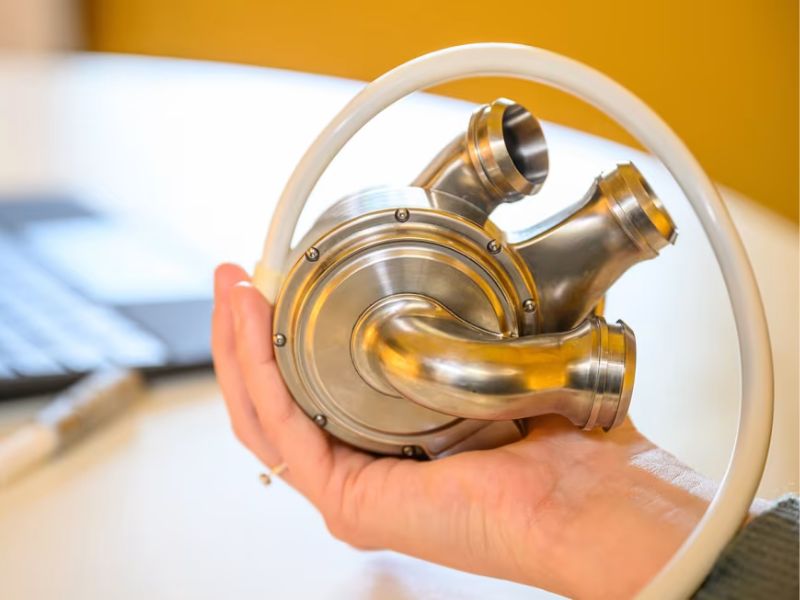
    Image Credits:The BiVACOR Total Artificial Heart has a single moving part – a levitated rotor that’s held in place by magnets. 
    BiVACOR

    An Australian man survived 100 days with an artificial titanium heart—the longest anyone has lived with the device—while waiting for a donor transplant.

    The patient, a man in his 40s who chose to remain anonymous, received the implant at St. Vincent’s Hospital in Sydney last November.

    First Patient to Leave Hospital with Artificial Heart Survives Until Transplant

    In February, he made history as the first person worldwide to leave the hospital with the device, which sustained him until a donor heart became available earlier this month.

    St Vincent’s Hospital, Monash University, and BiVACOR—the US-Australian company that developed the device—said Wednesday that the man, who had severe heart failure, was “recovering well.”

    Doctors hail his prolonged survival with the device as a promising sign that artificial hearts could eventually provide a long-term solution for people with heart failure. However, the device is still in trials and has not received approval for widespread use.

    Image Credits:(L-R) Prof Chris Hayward and Dr Paul Jansz worked with Dr Daniel Timms to get his artificial heart invention ready for clinical trials. 
    St Vincent’s Hospital Sydney

    Daniel Timms, Australian bioengineer and founder of BiVACOR, who created the device after losing his father to heart disease, described seeing it succeed as “exhilarating” and the result of decades of work.

    The BiVACOR team is profoundly thankful to the patient and his family for trusting our Total Artificial Heart,” he stated. “Their courage will help open the door for many more patients to benefit from this life-saving technology.”

    Single Moving Part, Titanium Design

    The BiVACOR Total Artificial Heart (TAH) uses a single moving component—a magnetically levitated rotor—and consists entirely of titanium, eliminating valves or mechanical bearings that could wear out.

    It functions as a replacement for both ventricles, pumping blood to the body and lungs.

    Cardiovascular diseases are the world’s leading cause of death, claiming approximately 18 million lives each year, according to the World Health Organization.

    The long-term goal is to use the device to help more patients who are stuck on donor waiting lists. According to the US Health Department, around 3,500 people received heart transplants in 2024, while roughly 4,400 joined the waiting list that year.

    Professor Chris Hayward of the Victor Chang Cardiac Research Institute said the BiVACOR heart represents “a whole new ball game for heart transplants.

    A Lifeline for Patients Awaiting Donors

    Artificial hearts could become an option for patients unable to wait for a donor over the next decade,” Hayward said. He is overseeing the Australian patient’s recovery and played a key role in preparing the device for clinical trials.

    The FDA’s Early Feasibility Study in the US has already tested the BiVACOR heart, successfully implanting it in five patients.

    The first implant in July kept a 58-year-old alive for eight days; four more patients have since received the device in a trial that may expand to 15.

    The Australian implant marks the first in Monash University’s $31 million Artificial Heart Frontiers Program, aiming to develop and commercialize three heart-failure devices.


    Read the original article on: Cnn

    Read more: AI Glasses Help the Visually Impaired Navigate Safely
  • Human Survives with Engineered Pig Liver

    Human Survives with Engineered Pig Liver

    Image Credits:Shutterstock

    A recent Journal of Hepatology study reports the first successful pig-to-human auxiliary liver transplant. The patient survived for 171 days, demonstrating that modified pig livers can perform key metabolic and synthetic functions in humans. The case also highlights the ongoing technical and medical challenges that limit long-term survival in such procedures.

    According to the World Health Organization, thousands die each year waiting for donor organs due to shortages. In China alone, hundreds of thousands of people develop liver failure each year, but surgeons performed only about 6,000 liver transplants in 2022. This experimental success points to a potential future solution for the critical gap between organ demand and availability.

    Genetically Modified Pig Liver Transplanted into High-Risk Human Patient

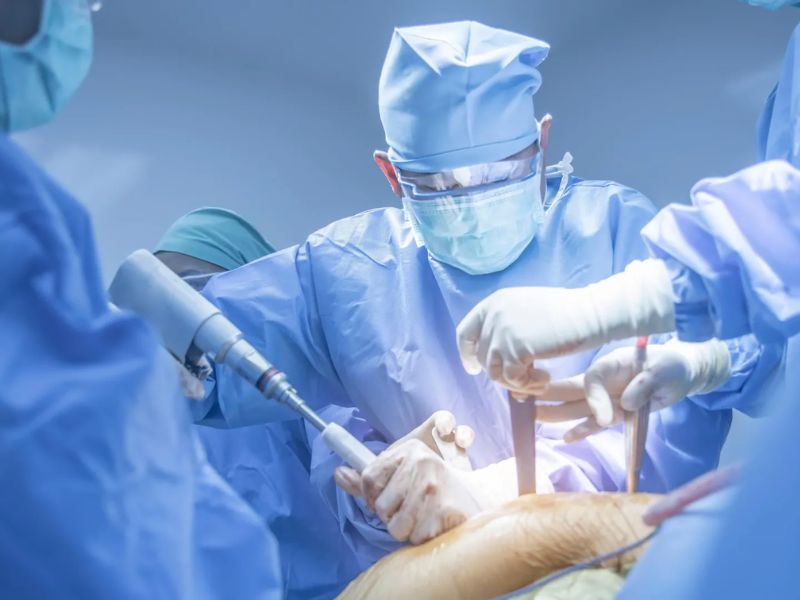
    The 71-year-old patient with hepatitis B–related cirrhosis and liver cancer was ineligible for surgery or a human liver transplant. Surgeons implanted an auxiliary liver from a genetically modified Diannan miniature pig, which had 10 specific gene edits. These modifications removed xenoantigens and added human genes to improve compatibility with the patient’s immune and coagulation systems.

    During the first month, the pig liver functioned well, producing bile and coagulation factors, but surgeons removed it on day 38 due to xenotransplantation-associated thrombotic microangiopathy (xTMA). Treatment with the complement inhibitor eculizumab and plasma exchange successfully addressed the xTMA. The patient later suffered multiple episodes of upper gastrointestinal bleeding and passed away on day 171.

    Pioneering Pig-to-Human Liver Transplant Shows Promise and Highlights Remaining Challenges

    This case shows a genetically engineered pig liver can function in a human long-term,” said Beicheng Sun, MD, PhD, noting ongoing coagulation and immune challenges.

    Heiner Wedemeyer, MD, called the report a milestone, showing a genetically modified pig liver can function in a human while highlighting ongoing challenges. Xenotransplantation could offer new treatment options for patients with acute liver failure, acute-on-chronic liver failure, and liver cancer. A new era in transplant hepatology has begun.

    The release of this case further cements the Journal of Hepatology as the premier liver journal worldwide. “We are committed to publishing cutting-edge hepatology research,” said Vlad Ratziu, MD, PhD, Editor-in-Chief of the Journal of Hepatology, Sorbonne Université, Paris.


    Read the original article on: Sciencedaily

    Read more: Scientists Watch Flu Viruses Enter Human Cells Live