
Berkeley Lab
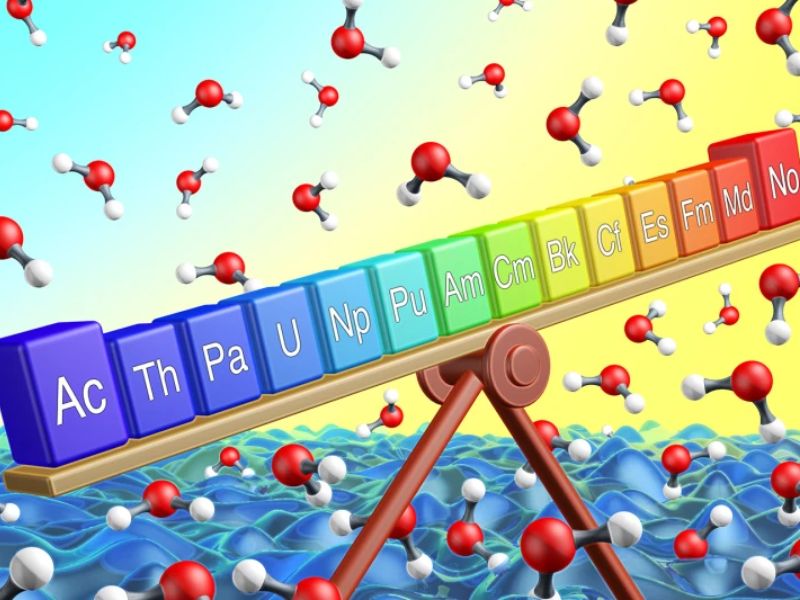
Researchers at the Department of Energy’s Lawrence Berkeley National Laboratory are relying on the 88-Inch Cyclotron to stabilize the periodic table, atom by atom, where things get unpredictable at the heavy-element end.
The Periodic Table’s Classroom Legacy
For many people, the periodic table brings back memories of dull science classes, its oversized classroom poster offering a distraction from lectures and an alternative to dozing off. But beyond its role as wall décor, this oddly arranged chart stands as one of the most profound breakthroughs in scientific history.
First introduced in 1869 by Russian chemist Dmitri Mendeleev, and later refined, the table successfully organized the elements according to atomic weight and properties. Its true genius, however, lay in its predictive power—allowing scientists to forecast the properties of elements that had not yet been discovered.
Berkeley Lab
This foresight gave chemists a major advantage. For instance, astrobiologists speculated that alien life might use silicon instead of carbon or breathe chlorine instead of oxygen, all thanks to patterns revealed by the table.
When Heavy Elements Break the Rules
Still, the system begins to falter with very heavy elements—particularly those beyond atomic number 99. At this scale, electrons orbit the nucleus at speeds close to light, triggering relativistic effects described by Einstein. Their increased mass pulls their orbits inward, reshuffling other electrons and distorting the elements’ expected chemical behavior.
Berkeley Lab
In short, once elements grow extremely heavy, their chemistry becomes less predictable, leaving scientists to rely on direct experiments rather than theoretical guesses. But there’s a challenge: these transuranic elements don’t occur naturally, decay almost instantly, and are intensely radioactive. For example, Nobelium (element 102) survives at most 58 minutes before disappearing. That means experiments must be carried out in mere milliseconds.
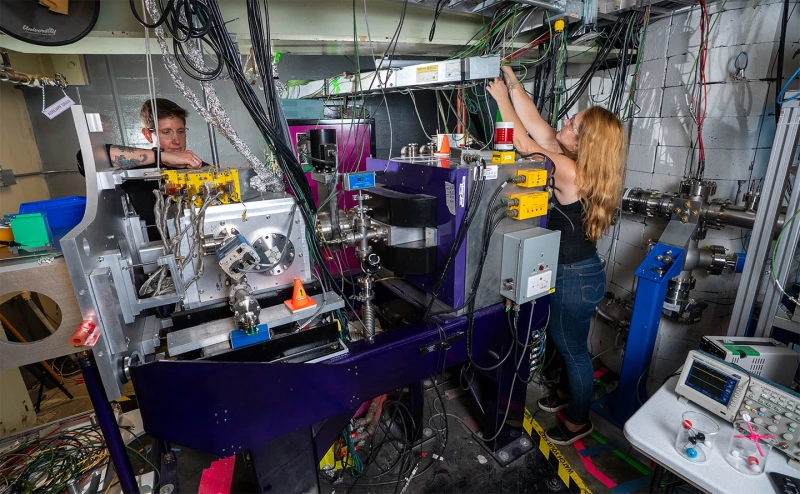
To address this, Berkeley Lab scientists revived a cyclotron built in 1958. Paired with a mass spectrometer known as FIONA, the setup bombards thulium and lead targets with calcium isotopes to generate atoms like nobelium and actinium (element 89).
Molecules Born at Supersonic Speeds
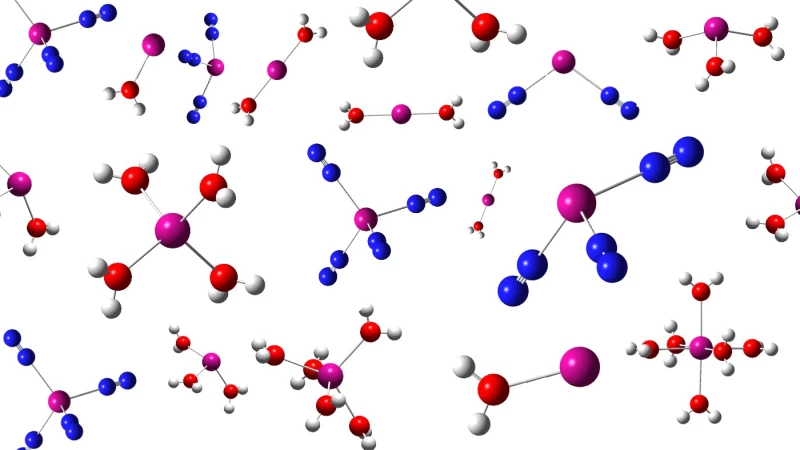
Unexpectedly, these fleeting atoms formed molecules with traces of water and nitrogen as they raced out of the cyclotron at supersonic speeds. FIONA then analyzed them one atom at a time, measuring molecular masses in real time.
The scale is astonishing: after 10 days, researchers had created only about 2,000 molecules—a stark contrast to a single drop of water, which contains 10²¹ molecules.
This opens the door to the next generation of atom-by-atom chemistry with superheavy elements,” explained Berkeley Lab scientist Jennifer Pore. “It could completely reshape how we study these exotic elements—and even challenge their current placement on the periodic table.
Read the original article on: New Atlas