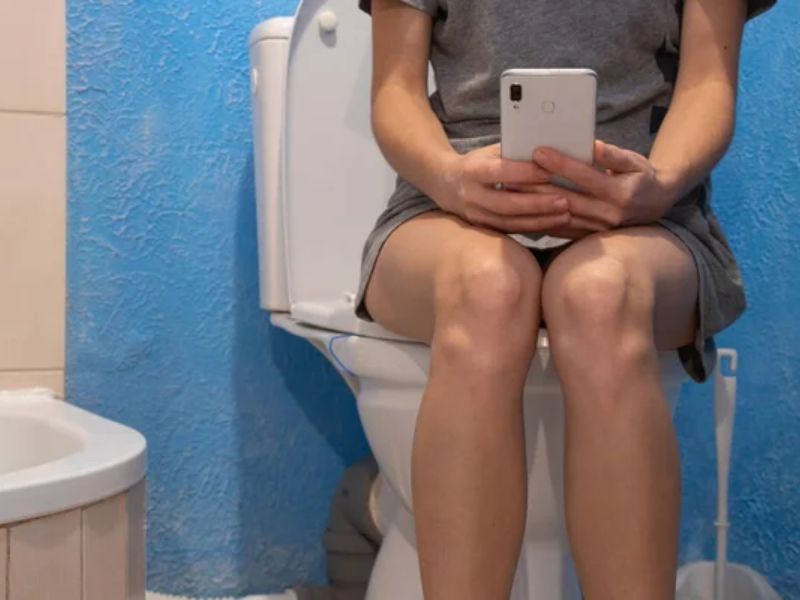

Many people read while on the toilet, but smartphones may keep us sitting there longer than is healthy. A recent survey found that toilet phone users have a 46% higher risk of developing hemorrhoids, swollen veins in the rectum often caused by prolonged pressure.
The study showed that age, sex, BMI, exercise habits, and fiber intake had no significant effect on the findings.
Survey Links Frequent Toilet Phone Use to Hemorrhoids in Study Presented at Digestive Diseases Week
Presented at the Digestive Diseases Week (DDW) conference in San Diego, the survey involved 125 patients undergoing colonoscopies. Over 40% had hemorrhoids, and 93% admitted to using their phones on the toilet at least once a week.
Of those, around half read news, 44% browsed social media, and 30% sent texts or emails, according to presenter Dr. Trisha Satya Pasricha from Beth Israel Deaconess Medical Center in Boston.
Some participants reported spending over six minutes on the toilet per visit, with many admitting their smartphone use likely extended their time there.
Small Survey Suggests Possible Link Between Toilet Reading and Hemorrhoids, But More Research Needed
A small survey like this can only highlight correlations and potential risk factors—it doesn’t confirm whether reading on the toilet directly leads to hemorrhoids. More research is needed to determine a clear connection.
In the U.S., hemorrhoids account for nearly 4 million doctor and ER visits each year, yet the condition remains poorly understood and under-researched. Currently, we rely on hypotheses to explain how it develops.
Remarkably, the last national survey on hemorrhoids in the U.S. was conducted in 1989, and no updated data at that scale has been collected since.
Hemorrhoids are made up of blood vessels, smooth muscle, and connective tissue located in and around the lower rectum. While everyone has these structures—which help make bowel movements smoother—when they become swollen or bleed, they’re commonly referred to as hemorrhoids.
Experts Point to Straining and Extended Toilet Time as Key Contributors to Hemorrhoids
Although several factors likely contribute to their development, most experts believe hemorrhoids are linked to excessive straining, prolonged time on the toilet, or frequent bowel movements.
Some research suggests that sitting for too long, particularly on the toilet, may worsen the issue by weakening and expanding the blood vessels around the anus and rectum.
Because of this, some doctors recommend limiting toilet time to 10 minutes or less, while others go further, advising no more than 3 minutes. That stricter limit stems from a study of 100 hemorrhoid patients, who were found to spend more time reading on the toilet compared to a control group matched by age and sex.
The habit of reading on the toilet isn’t new—during colonial times, people reportedly used newspapers for both reading and wiping.
However, smartphones are far more distracting, and their use in the bathroom may draw attention away from the task at hand.
Given this, some health professionals have raised concerns that excessive “toilet scrolling” could be harming our bathroom habits and hygiene.
Read the original article on: Science Alert
Read more: Apple’s New Feature May Soon Let You Control Your IPhone With Your Mind