John Xu/I Build Stuff
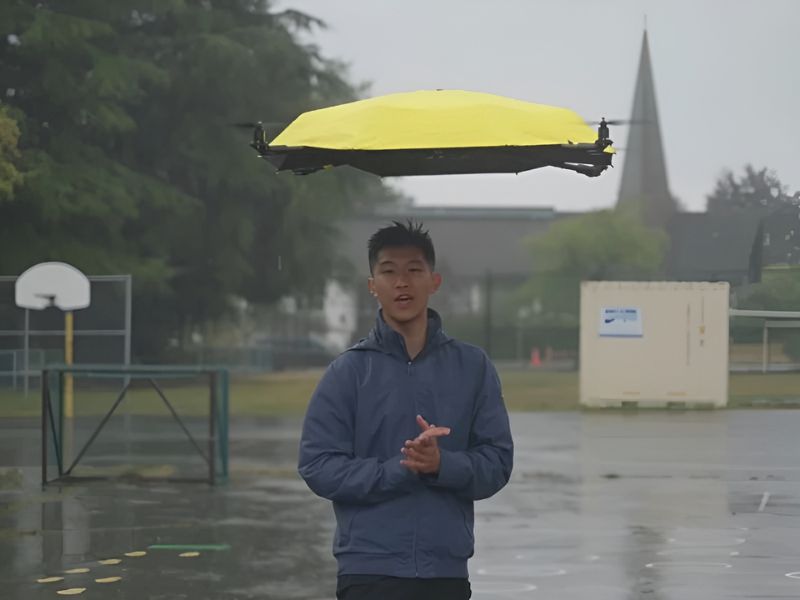
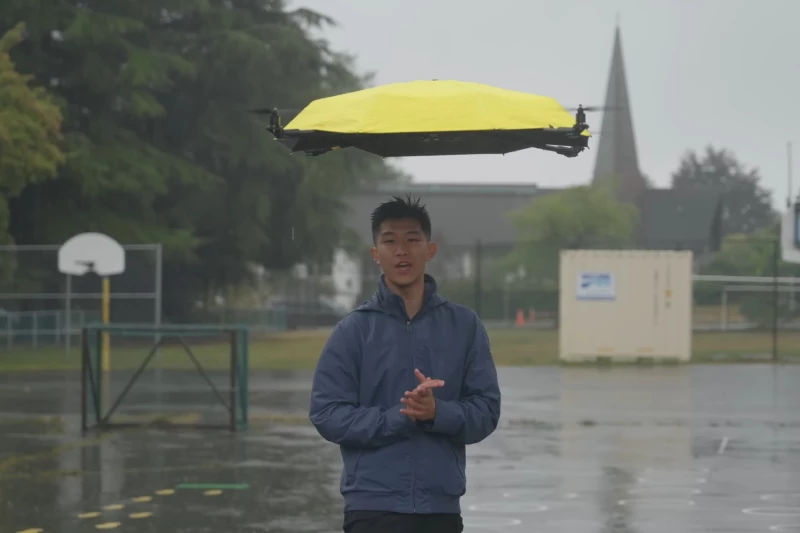
Walking in the rain with an umbrella is rarely hands-free. One hand holds the umbrella, the other juggles a bag or phone—and a gust of wind can spoil it all. That’s why a floating, hands-free umbrella is so appealing.
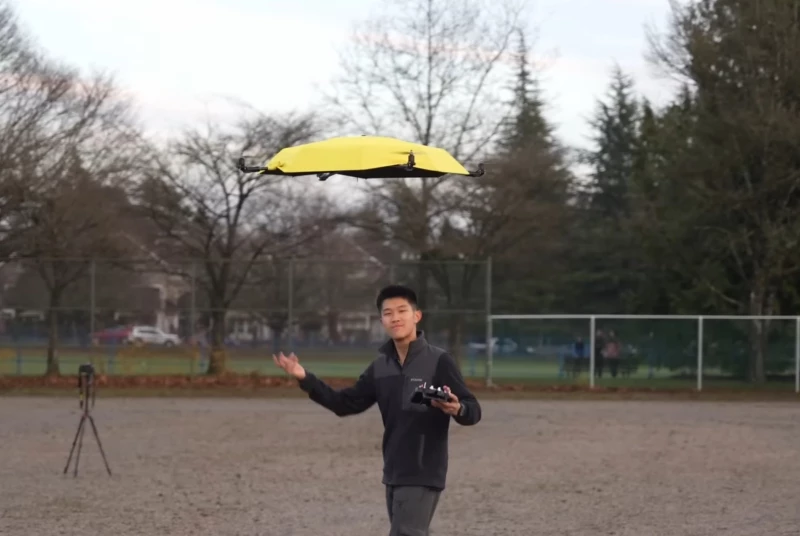
That’s the premise behind a flying umbrella created by YouTuber and maker John Xu from the I Build Stuff channel. He debuted a drone-powered umbrella in 2024, and it was undeniably impressive. Still, viewers quickly noticed a major drawback: it had to be controlled with a handheld remote. The feedback was straightforward—technically impressive, but not very practical.
John Xu/I Build Stuff
Xu took that feedback seriously and spent the next two years developing a flying umbrella that could actually track and follow him. The end result is genuinely striking.
A Sci-Fi Proof of Concept Takes Flight
His original version was boldly experimental. It used a custom-built, X-shaped quadcopter to lift and maneuver the umbrella, creating a distinctly sci-fi vision of rain protection from above. The design was both ingenious and a little ridiculous—but it proved its point. As a proof of concept, it demonstrated that overhead, hands-free rain coverage was possible.
The flaw, however, was hard to ignore: the umbrella required manual control. Instead of freeing the user’s hands, it demanded both of them and introduced yet another gadget to operate. YouTube viewers quickly called this out, repeatedly sharing the same request: “Now make it follow you.”
That feedback became the foundation for Xu’s redesign, which he began later in 2024. His goal was to make the umbrella fully autonomous, though reaching that point involved several missteps. GPS tracking turned out to be too imprecise, with position errors of several meters. On top of that, his decision to make both the umbrella and its drone core foldable introduced significant mechanical challenges.
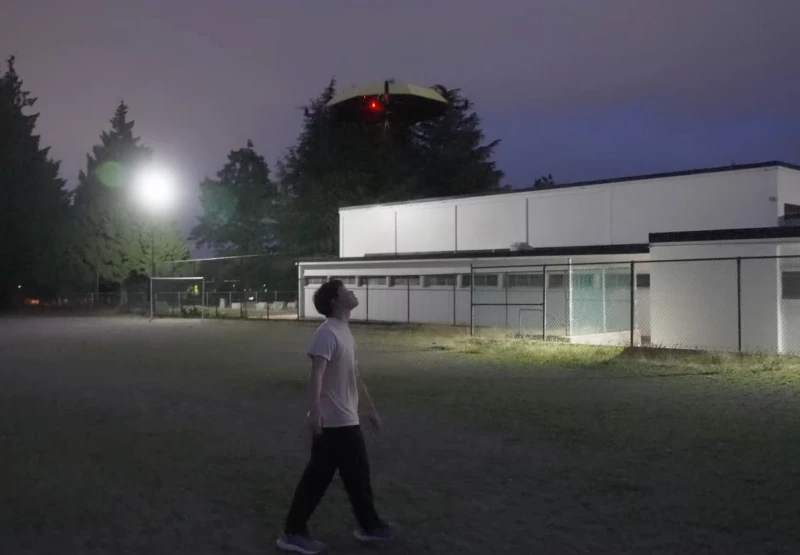
The turning point came with the use of a time-of-flight camera, enabling the umbrella to lock onto and follow a user directly—even in low-light conditions. The system wasn’t flawless; it didn’t remain perfectly centered overhead at all times. Still, it functioned well enough to fundamentally change the project. What began as a quirky experiment evolved into something genuinely practical, and viewers on YouTube noticed the difference.
Big Questions Hover Over a Bold Idea
Naturally, a flying umbrella also brings its own set of concerns. Strong winds, heavy rain, short battery life, and noisy spinning rotors all raise serious questions about practicality and safety.
John Xu/I Build Stuff
Commenters were quick to raise these issues as well, questioning whether a device like this could ever be safe or socially acceptable. Xu didn’t dispute those concerns. His goal wasn’t to replace traditional umbrellas anytime soon, but to explore the idea as a personal, experimental drone. When it finally worked, the result was striking: hands-free rain protection with steady overhead coverage.
A Glimpse at a More Adaptive, Autonomous Future
The importance of this fully autonomous, hands-free rain protection project isn’t that flying umbrellas are headed for mass production. Rather, it points to a larger shift toward autonomous technologies designed to adapt to people, instead of forcing people to adapt to them.
In that sense, the umbrella is a lighthearted, experimental glimpse of what’s possible as sensing and autonomy continue to advance. It may never replace a classic umbrella, but it shows how a bit of imagination can turn even the most ordinary objects into something unexpected.
Read the original article on: Newatlas
Read more:Chinese Humanoid Robot First to Connect with an Orbiting Satellite