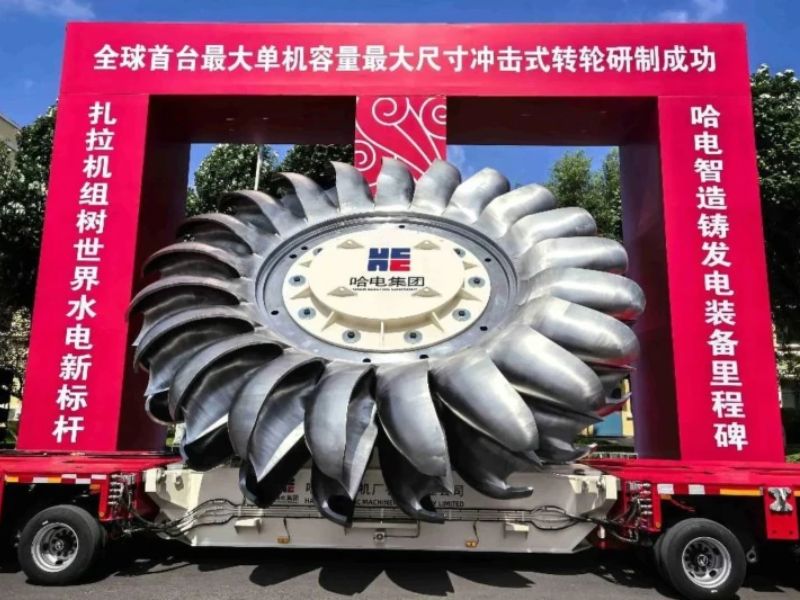
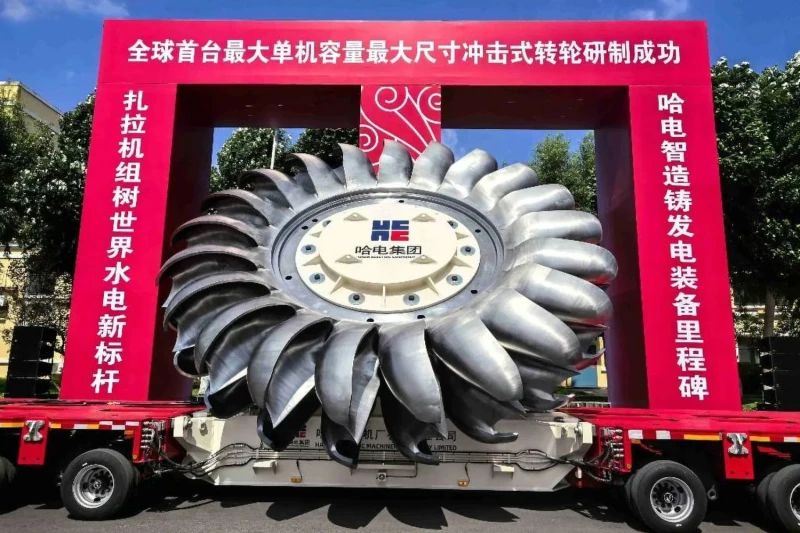
Although they won’t be operational for a few more years, China has revealed two colossal turbines. Each one measures 6.2 meters (20 ft, 5 in) in diameter, weighs 80 tons, is made of high-strength martensitic steel, and contains 21 water ladles.
Each turbine has a capacity of 500 MW—a global first—though they have not yet been tested in real-world conditions. They are set to be installed at the Datang Zala Hydropower Station on the Yuqu River, a smaller branch of the Nu River in eastern Tibet.
High-Head Design and Enhanced Efficiency Boost Power Output
With a 671-meter (2,201 ft) drop, the project is a “high head” hydropower system, using gravity-driven water flow for high efficiency. Improved ladle designs could boost output from 91% to 92.6%, adding 190,000 kWh of power daily.
The Datang Zala Hydropower Station will generate nearly 4 billion kWh of electricity each year, replace 1.3 million tons of coal, and cut 3.4 million tons of CO₂ emissions. The plant will have a total capacity of 1,000 MW, supporting China’s aim to reach carbon neutrality by 2060.
China Datang Leads Ambitious Hydropower Project, Eyes 2028 Launch
China Datang Corporation is developing the project, which began main construction in 2023.. Datang expects the facility to be operational by 2028. Harbin Electric spent four years manufacturing the groundbreaking turbines using its proprietary technology.
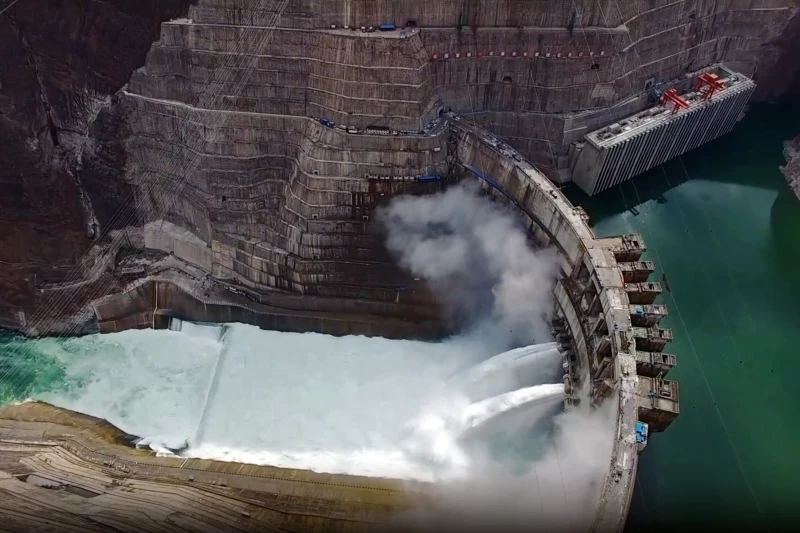
Harbin Electric
The Datang Zala plant uses impulse turbines—specifically a Pelton wheel design—where high-pressure water jets strike the turbine’s buckets to generate rotation. Unlike submerged turbines, these operate in open air and are particularly effective in high-head systems. Because the turbines endure constant, intense force, engineers built them from martensitic steel, which offers superior strength and corrosion resistance over other steel types.
The most widely used turbine type is the reaction turbine—like the Francis turbine, which powers China’s Three Gorges Dam.These turbines sit fully submerged and generate torque as water pressure and flow act directly on their components.
China Dominates Global Hydropower Growth, Surging Ahead in Capacity
As of 2024, China led global hydropower growth, adding 14.4 of the 24.6 GW in new capacity—over half from pumped storage. Its total capacity neared 436 GW, far surpassing the U.S.’s 103.1 GW.
Earlier this year, I covered China’s planned Yarlung Tsangpo dam, set to outsize the Three Gorges Dam threefold. But since the river flows into India and Bangladesh as the Brahmaputra, it raises concerns over water shortages, environmental impact, and regional tensions.
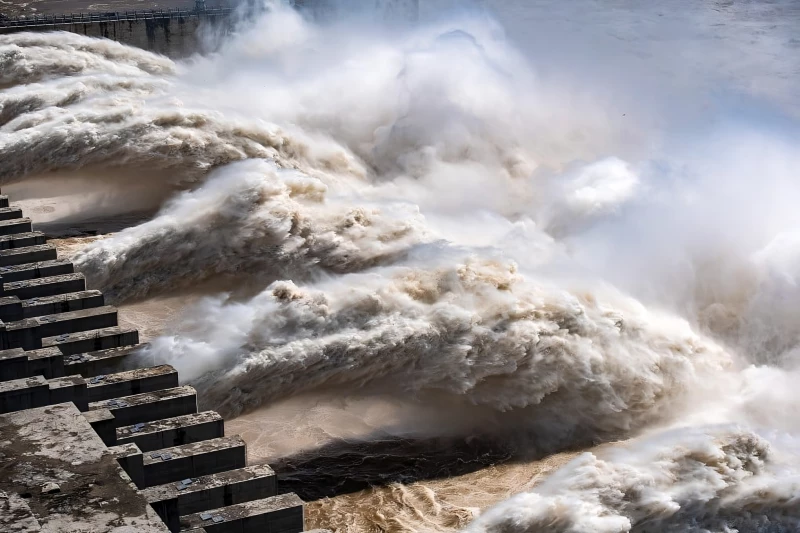
Xinhua
Datang is constructing the Zala Hydropower Station on the Yuqu River, a tributary of the Nu River—known as the Salween downstream. This river originates in Tibet and flows through Myanmar before emptying into the Andaman Sea.
Transboundary Tensions Loom Over Southeast Asia’s Last Major Free-Flowing River
Though it crosses fewer borders than the Brahmaputra, the Nu/Salween is still an international river and a point of tension, especially amid Myanmar’s instability. It’s also one of Southeast Asia’s last major free-flowing rivers. In 2011, Myanmar halted China’s proposed 6,000-MW Irrawaddy dam, signaling possible future clashes over shared water projects.
The Datang Zala project may be less high-profile than the Yarlung dam, but it raises a key question: Who decides the fate of a river vital to millions for water, farming, and energy?
Read the original article on: New Atlas
Read more:Using Emojis More Frequently Can Actually Strengthen Your Relationships