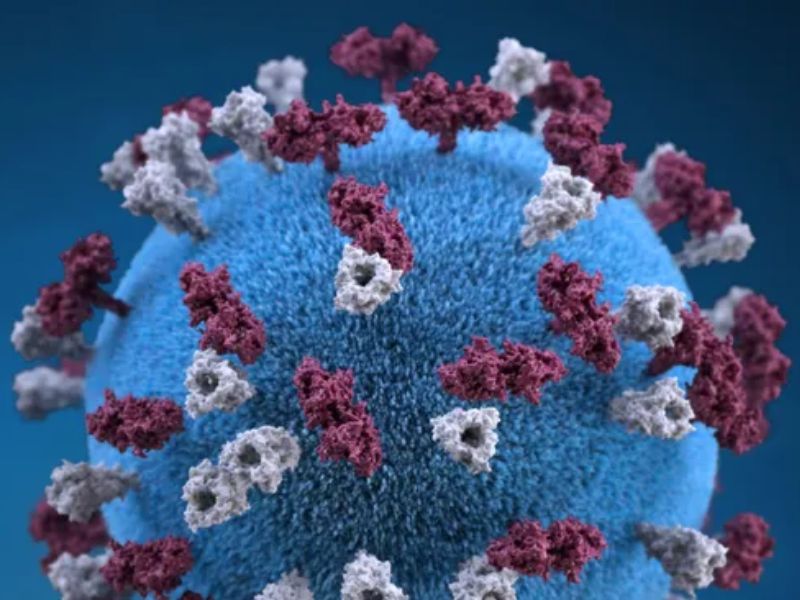

Measles is fatal in 1 to 3 out of every 1,000 infected children. However, even those who recover from the initial illness may face serious long-term effects. The virus weakens the immune system well after recovery, and in rare instances, it can remain hidden in the nervous system and resurface years later as a deadly condition.
In the short term, measles—a highly contagious viral illness—typically leads to fever, respiratory issues such as coughing, and a recognizable rash that spreads from the hairline down the body. Patsy Stinchfield, an infectious disease nurse practitioner and former president of the National Foundation for Infectious Diseases (NFID), describes the rash as looking like a “bucket of rash” poured over the head.
MMR Vaccine Once Eliminated Measles in the U.S, But Cases Are Rising Again
Thanks to the two-dose measles, mumps, and rubella (MMR) vaccine, which is 97% effective at preventing measles, many healthcare providers in the U.S. have never encountered the illness. Experts told Live Science that measles cases became so rare that health officials declared the disease eliminated in the U.S. in 2000—but now, it’s making a comeback, especially in Texas and neighboring states.

Ross Kedl, an immunology professor at the University of Colorado Anschutz Medical Campus, explained that the measles virus can replicate within the brain. In some instances, even after the immune system appears to fight off the virus and the individual seems to recover, the virus can remain hidden in the nervous system.
This lingering presence can lead to a devastating condition known as subacute sclerosing panencephalitis (SSPE)—a rare, progressive brain disorder. It may begin with subtle symptoms like mood shifts and muscle tremors, but gradually worsens, leading to the loss of speech, vision, and hearing. Within roughly two years, the affected person typically slips into a coma and dies.
“It’s heartbreaking to watch—someone you know slowly fades before your eyes, and then they’re just gone,” Kedl said in an interview with Live Science.
Risk of Deadly Measles Complication Far Outweighs That of Vaccination, Experts Say
According to Ross Kedl, the likelihood of developing SSPE is highest in children who contract measles before the age of 2, with a risk of about 1 in 1,000. For older individuals, the risk drops to around 1 in 10,000—still significantly higher than the risk of serious side effects from any currently available vaccine. To put it in perspective, 1 in 10,000 equals 20 in a million, whereas serious vaccine-related adverse events occur at a rate of just 1 to 2 per million, based on data from the Department of Health and Human Services.
SSPE most commonly affects children who had measles before their second birthday, typically surfacing around seven years later, which means victims are often about 9 or 10 years old when symptoms begin.
This condition arises because the measles virus can lie dormant in the nervous system—much like the varicella virus, which causes chickenpox and can later reactivate as shingles. Just as the chickenpox vaccine helps prevent future cases of shingles, the MMR vaccine serves as a critical defense against SSPE by preventing measles infection in the first place.
MMR Vaccine’s Success Has Made Measles Seem Less Threatening, But Its Dangers Persist
The MMR vaccine has drastically reduced the number of measles cases in the U.S., which used to range from 3 to 4 million annually before the vaccine became available, according to the CDC. Due to the vaccine’s effectiveness, many people have lost sight of just how severe the disease can be, said Dr. Michelle Barron, senior medical director of infection prevention and control at UCHealth in Colorado.

As vaccination rates decline in certain areas, active measles outbreaks have emerged in Texas, New Mexico, Kansas, and Ohio, with additional cases reported across 16 other states, Dr. Michelle Barron told Live Science. Outbreaks are also occurring in Mexico and Canada. She emphasized the importance of getting vaccinated—not just for your own protection, but also to safeguard those who cannot be vaccinated, such as infants under the age of 1.
No Proven Treatments for Measles Complications, Despite Misleading Claims of “Natural” Remedies
Dr. Michelle Barron explained that there are no treatments available that can lessen the risk of measles-related complications. So-called “natural” remedies promoted by figures like Robert F. Kennedy, Jr.—such as vitamin A—aren’t actual treatments for measles. Instead, she said, vitamin A is used to address malnutrition, particularly in regions where children face extreme poverty and undernourishment, to help support their recovery if they contract measles.
Read the original article on: LiveScience
Read more: Kids Who Read For Pleasure Grow into Better-Adjusted Teens