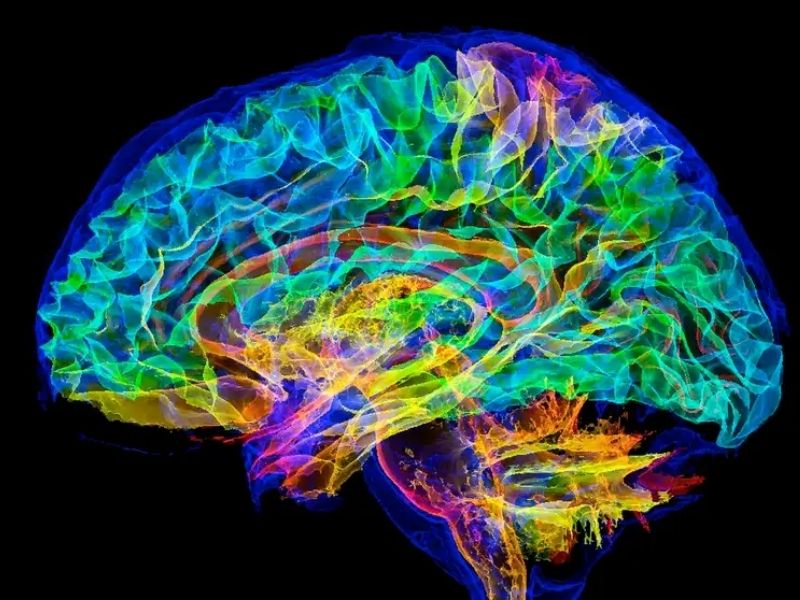

Understanding how the brain functions is challenging, since living brains are difficult to directly examine. To address this, scientists have developed an advanced simulation of a mouse brain, one of the most detailed models ever created.
The project was led by researchers from the Allen Institute in the US and the University of Electro-Communications in Japan, and it could help scientists study neurological disorders like Alzheimer’s in more depth.
A Complete Mouse Cortex Model With Human-Relevant Insights
The model represents an entire mouse cortex. Though smaller and simpler than the human brain, it shares key neural similarities, making it a valuable research tool.
The scale of the simulation is striking. The virtual brain has 9 million neurons, 26 billion synapses, 86 regions, and can perform quadrillions of calculations per second.
By comparison, an actual mouse brain holds around 70 million neurons packed into a structure roughly the size of an almond.
“This demonstrates that the possibilities are now within reach,” says computational neuroscientist Anton Arkhipov of the Allen Institute. “With sufficient computing power, we can successfully run these types of brain simulations.”
He adds that the achievement represents a major technical breakthrough, proving researchers can build far larger models accurately and at scale.

The detailed simulation lets scientists track cognition, consciousness, and disease in the brain. It functions as a dynamic, three-dimensional map, revealing individual neurons as they fire and form connections.
Researchers say the model could be used to explore how seizures propagate or how brain waves influence attention, all without relying on repeated or invasive brain scans.
Fugaku Supercomputer Powers the Brain Simulation
The massive computational demands were met by Japan’s Fugaku supercomputer, which combined existing cellular data and brain maps to construct the model. In addition, the team created new software to optimize the processing of neural activity and reduce unnecessary calculations.
“Fugaku aids research in fields like astronomy, weather, and drug development, tackling major societal challenges,” says computer scientist Tadashi Yamazaki.. “In this project, we applied Fugaku to simulate neural circuits.”
The brain plays a vital role in overall physical and mental well-being, as well as healthy aging.Studying virtual and mini brain models is crucial for understanding brain function and decline.
Early Discoveries From the Virtual Brain Model
The research team is already using the model to uncover insights into brain wave synchronization and the interaction between the mouse brain’s two hemispheres.
While the achievement represents a remarkable advance in both computing and biological modeling, the researchers are aiming even higher. Their ultimate objective is to construct a complete virtual model of the human brain.
“Our goal is to build complete brain models, including human, using our institute’s biological data,” says Arkhipov. “We are now transitioning from simulating individual brain regions to modeling the entire mouse brain.”
The findings were presented at the SC25 supercomputing conference and are available online.
Read the original article on: Sciencealert
Read more:China Unveils a Humanoid Robot with Smooth, Human-like Balance