Nikola Tesla would be pleased: Finnish researchers are bringing his century-old idea to life, developing systems that transmit energy wirelessly through the air or smart, invisible conductors. This would allow devices and vehicles to charge without cables or direct physical contact.
Enhancing Efficiency and Mobility
Their work brings together advanced research in electromagnetic fields, resonance, and conductive surfaces. The team is exploring how to accurately direct energy waves to nearby devices while ensuring stability, safety, and efficiency.This technology could reduce energy losses, improve mobile systems, and replace bulky infrastructure, aiding automation, robotics, and smart devices.
O estudo também desenvolve materiais avançados que se incorporam a pisos, paredes e estruturas urbanas, transformando-os em pontos de distribuição de energia. This would enable sensors, autonomous machines, industrial tools, and household devices to operate without traditional power outlets. By integrating energy into the infrastructure itself, it becomes invisible and untethered from wires, supporting adaptive, connected environments.
Dynamic Charging and Smart Transportation with Electreon
Collaboration with Electreon further expands possibilities, leveraging the company’s expertise in electrified roads that charge vehicles while in motion. Combining this knowledge allows for dynamic charging applications, where cars, buses, and trucks receive energy via coils beneath the pavement. This approach creates smart transportation routes, reduces battery requirements, extends vehicle range, and promotes sustainability.
“These advancements are driving the creation of invisible energy networks that power homes, industries, and cities.”Devices could run autonomously, vehicles charge on the move, and robots operate freely, creating a wireless energy ecosystem that positions Finland as a global innovation leader.
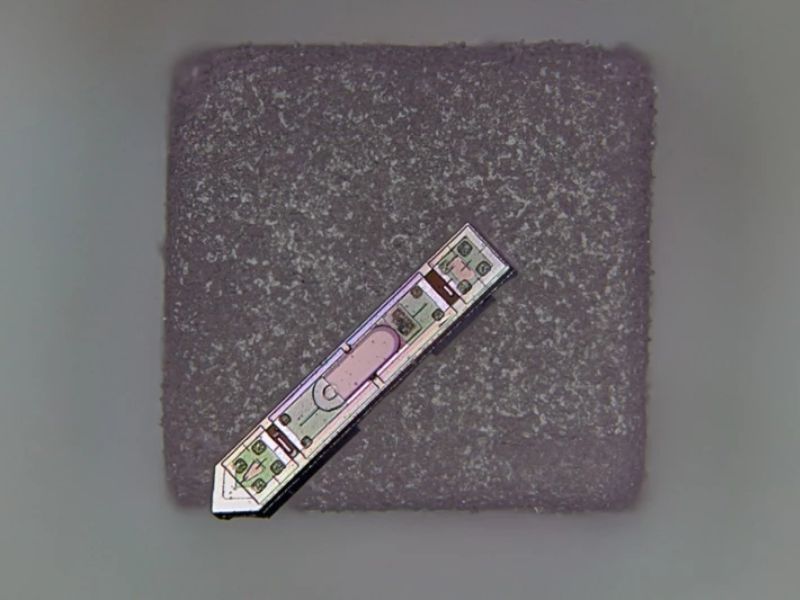
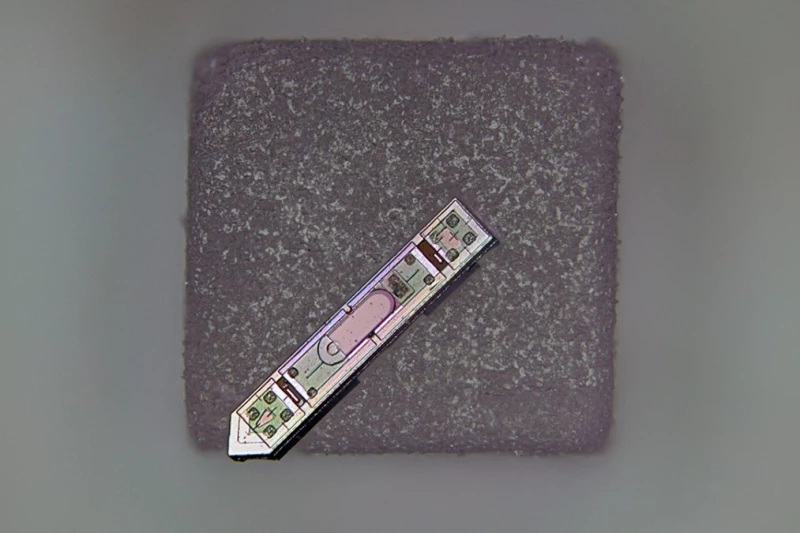
Image Credits:Pictured here on a grain of salt, the MOTE implant measures just 300 x 70 microns – it could be used to develop treatments for a wide variety of neurological disorders Cornell University
If you have a brain—and know others who do—you’re aware of the countless ways our skull-bound electro-meat machines can fail us. From memory loss to migraines, depression to dementia, the brain is remarkably creative at breaking down, often turning lives into mental misery.
“Good news, everyone!” Cornell and partners developed a pinhead-sized micro-neural implant that wirelessly records mouse brain activity for over a year.
Introducing the MOTE Neurotech Breakthrough
In Nature Electronics, Sunwoo Lee and Cornell colleagues introduced the MOTE—a tiny, superhero-like Microscale Optoelectronic Tetherless Electrode.
This breakthrough represents the smallest neurotechnology module ever built, offering major medical potential for neural monitoring and bio-integrated sensing. The MOTE wirelessly transmits brain data, offering insights that could lead to new treatments and potential enhancements of brain function.
“This is the smallest neural implant that can wirelessly transmit brain activity,” said Alyosha Molnar. MOTE’s use of pulse position modulation—like in satellite communications—enables efficient, low-power data transmission.
Challenges of Early Neurotechnology Implants
Earlier generations of neurotechnology implants faced significant hurdles to reliable performance, such as tissue rejection, immune responses that damaged nearby nerve connections, and electrode drift that displaced recording sites within the brain.
The MOTE, however, avoids these pitfalls largely due to its minuscule size. Measuring just 300 by 70 microns—smaller than a nanoliter, or one-millionth of a milliliter—it’s so tiny that over 4.7 million of them could fit into a single teaspoon.
Powered by a photovoltaic diode, the MOTE wirelessly transmits neural data via red and infrared lasers with precise, low-noise circuits.
Safe Brain Monitoring During MRI Scans
Why are MOTEs even necessary? Don’t MRI scans already give us valuable insights into how the brain works? Yes—but not when used alongside most neurotech implants. The Journal of Neural Engineering warns that MR environments can pose serious health risks to implant patients. Picture Magneto attacking Wolverine’s adamantium skeleton—that’s roughly the kind of danger magnetic fields pose to metal implants.
And it’s not just brain implants that face this problem. Over 300,000 cochlear implant patients can’t safely have MRIs, yet about 75,000 U.S. DBS patients undergo scans, often with hospitals exceeding safety limits they call “crucially impractical.”
A key advantage of MOTEs is their MRI compatibility, enabling neural recording during scans. Future versions could work in tissues like the spinal cord or be embedded in artificial skull plates with advanced optoelectronics.
A Potential Alternative to Lifelong Medication
Many depend on Big Pharma’s short-term pills, but neurotech implants could offer lasting relief via minimally invasive procedures—if not subscription-based. (Remember Rashida Jones in the Black Mirror episode “Common People”?)
Regardless of who controls it, the MOTE joins other neurotech breakthroughs: restoring speech to ALS patients, enabling thought-controlled drones and iPhones, and providing instant pain relief.
As neurotechnologists refine these devices—ideally via open-source collaboration—the potential benefits for humanity are immense. The path toward cyborganic evolution may be virtually limitless. Now, if only someone could design an ethics chip for the billionaire “brain bros” of Neuro–Silicon Valley.
MIT researchers and their collaborators have developed an innovative transmitter chip that greatly enhances the energy efficiency of wireless communication. This advancement could extend both the range and battery life of connected devices.
The chip uses a distinctive modulation technique to encode digital data into wireless signals, which helps minimize transmission errors and results in more dependable communication.
Its compact and adaptable design allows it to be integrated into current internet-of-things (IoT) devices for immediate performance improvements, while also aligning with the stricter energy demands anticipated in future 6G networks.
Thanks to its flexibility, the chip is ideal for energy-sensitive communication applications, such as industrial sensors that constantly track factory conditions or smart appliances that send real-time alerts.
“We took an unconventional approach and built a smarter, more efficient circuit for next-gen devices—one that even outperforms legacy systems,” says Muriel Médard, NEC Professor of Software Science and Engineering at MIT. “This demonstrates how a modular, adaptable design strategy can foster innovation across all levels.”
Médard co-authored the study with lead author Timur Zirtiloglu, Arman Tan, Basak Ozaydin, Ken Duffy, and Rabia Tugce Yazicigil. The research was recently showcased at the IEEE Radio Frequency Circuits Symposium.
Enhancing Transmission Efficiency
In wireless devices, transmitters convert digital information into electromagnetic signals that travel through the air to a receiver. This involves a process called modulation, where digital bits are mapped to symbols that define the signal’s amplitude and phase.
Conventional systems use uniformly spaced symbols to create a consistent pattern, which helps reduce interference. However, this regular structure isn’t flexible and can be inefficient because wireless environments are often unpredictable and change quickly.
To address this, more advanced modulation methods use non-uniform patterns that can adjust in real time to shifting channel conditions. This allows for higher data throughput with lower energy consumption.
Despite these benefits, optimal modulation techniques are more prone to errors—particularly in noisy or congested wireless environments. The uneven spacing of symbols makes it harder for receivers to accurately separate useful signals from background noise.
MIT Team Adds Symbol Padding to Ensure Consistent Transmission Lengths
To address this challenge, the MIT team designed their transmitter to insert a small amount of padding—extra bits placed between symbols—so that each transmission maintains a consistent length.
The padding helps the receiver identify message boundaries, reducing signal misinterpretation. At the same time, the system retains the energy-saving advantages of using a non-uniform, optimal modulation scheme.
This method builds on a previously developed technique called GRAND—a universal decoding algorithm that works by guessing the noise that may have distorted the transmission.
In this application, a GRAND-based algorithm is used to estimate the added padding bits, allowing the receiver to reconstruct the original message accurately.
“Thanks to GRAND, we can now use a transmitter that supports these more efficient, non-uniform data constellations—and we’re seeing the performance benefits,” says Médard.
An Adaptable Circuit
The new chip features a compact design that allows researchers to incorporate additional techniques for improving efficiency. It enabled transmissions with roughly one-fourth the signal error compared to systems using standard optimal modulation.
Remarkably, it also outperformed traditional modulation methods, achieving significantly lower error rates.
“It was hard not to revert to the familiar, since we were challenging assumptions taught for generations,” says Médard.
This cutting-edge design could enhance both the energy efficiency and reliability of today’s wireless devices, while offering the flexibility needed for future systems that rely on optimal modulation.
Looking ahead, the team plans to expand their approach by integrating further strategies to improve transmission efficiency and reduce error rates even more.
“This optimally modulated RF circuit marks a major leap over traditional designs and is poised to power 6G and future Wi-Fi,” says Rocco Tam, NXP Fellow for Wireless Connectivity.
The research received partial support from the U.S. Defense Advanced Research Projects Agency (DARPA), the National Science Foundation (NSF), and the Texas Analog Center for Excellence.
Envisioning a future where laser beams take the place of traditional power lines, DARPA’s Persistent Optical Wireless Energy Relay (POWER) program has achieved groundbreaking records in transmitting higher amounts of power over greater distances without wires.
Rising Energy Demands in Military and Humanitarian Operations
Reliable power is vital for military and humanitarian missions, prompting major forces to invest heavily in energy resources, which adds to supply chain complexity.
Yet, regardless of how advanced power technology becomes, the persistent challenge remains: delivering that energy from Point A to Point B. This issue becomes especially daunting in the so-called “last mile,” where it’s impossible to string power lines or bury pipelines. In such situations, soldiers frequently have no choice but to manually carry jerry cans of fuel across difficult terrain, relying solely on physical effort.
Crédito:Aperture view of the PRAD collector DARPA
Laser-Based Energy Transmission
To bridge this gap, DARPA’s POWER program aims to create “light-based transmission lines,” using laser beams to deliver energy as effortlessly as we currently transmit data wirelessly.
This ambitious initiative is showing significant progress, with recent tests in New Mexico setting new performance records. Earlier tests sent 230 watts over 1 mile and a smaller amount up to 2.3 miles. DARPA has now reached 800 watts over 5.3 miles for 30 seconds.
An impressive leap forward in wireless, near-instantaneous power delivery.
Crédito:Chart showing the wattage and distance of the POWER system compared to other efforts DARPA
The Power Receiver Array Demo (PRAD) is a spherical device that channels laser beams to photovoltaic cells, converting light into electricity.
DARPA is prioritizing power and range, making the system’s 20% efficiency acceptable for now. Improvements are planned as the technology matures and scales up.
Airborne Relays for High-Altitude Power Transmission
In the recent test, both the laser emitter and receiver were ground-based. However, the long-term vision involves turning these components into airborne relays mounted on high-altitude drones. Raising the system above dense air reduces power loss and avoids obstacles like buildings, aircraft, and wildlife.
In Phase One of a three-stage plan, the program is improving beam control, wavefront correction, and energy efficiency. By the final phase, it aims to equip aircraft with relays transmitting 10 kW over 125 miles (200 km).
“This demo shattered myths about power beaming and is inspiring industry to rethink what’s possible,” said Program Manager Paul Jaffe.
A new wireless data transmission record has been set, using a combination of technologies with a very wide bandwidth. Credit: Depositphotos
Slow Wi-Fi is a common frustration for many, but we may soon see faster speeds. Researchers at University College London (UCL) have achieved a new world record in wireless data transmission, transmitting an impressive 938 Gigabits per second (Gbps) using a combination of radio and light technology.
Wireless data transmission offers greater convenience than installing cables, but it is generally much slower than optical signals used in fiber optics. At present, 5G can reach a maximum of 20 Gbps, though it typically provides only a few hundred Mbps in practical scenarios. Meanwhile, Wi-Fi 7, the newest iteration of wireless technology, peaks at around 40 Gbps.
UCL Team Sets New Wireless Speed Record Nearing 1 Tbps
In the new study, the UCL team has significantly raised the upper limit for wireless communication speeds, nearing the 1-Tbps milestone. Their record is approximately 30% faster than the previous wireless speed record set by a Japanese team just months earlier.
To put this new record into perspective, at 938 Gbps, you could download a two-hour 4K movie in about a tenth of a second—contrasting sharply with a regular 5G connection, which would take around 19 minutes for the same task.
The key to achieving this speed increase was the integration of multiple wireless technologies, allowing for a much broader bandwidth. The UCL team transmitted data over a frequency range of 5 to 150 GHz, exceeding the previous wireless transmission world record by more than five times.
Innovative Signal Generation Techniques to Minimize Congestion
Signals in the 5 to 75 GHz range were generated using high-speed digital-to-analog converters, while frequencies from 75 to 150 GHz were produced using light-based radio generators. By spreading the signals across a wider bandwidth, the team effectively reduces congestion.
However, fiber optics still hold the speed advantage, with the overall data transmission record sitting at an astonishing 22.9 petabits per second, equivalent to 22.9 million Gbps. This capability is essential for transmitting data across continents and oceans to individual homes and buildings. The main bottleneck typically occurs in the final meters, from your router to your devices, so enhancing wireless speeds will improve everyday usability for various devices.
We use cookies on our website to give you the most relevant experience by remembering your preferences and repeat visits. By clicking “Accept All”, you consent to the use of ALL the cookies. However, you may visit "Cookie Settings" to provide a controlled consent.
This website uses cookies to improve your experience while you navigate through the website. Out of these, the cookies that are categorized as necessary are stored on your browser as they are essential for the working of basic functionalities of the website. We also use third-party cookies that help us analyze and understand how you use this website. These cookies will be stored in your browser only with your consent. You also have the option to opt-out of these cookies. But opting out of some of these cookies may affect your browsing experience.
Necessary cookies are absolutely essential for the website to function properly. These cookies ensure basic functionalities and security features of the website, anonymously.
Cookie
Duration
Description
cookielawinfo-checkbox-analytics
11 months
This cookie is set by GDPR Cookie Consent plugin. The cookie is used to store the user consent for the cookies in the category "Analytics".
cookielawinfo-checkbox-functional
11 months
The cookie is set by GDPR cookie consent to record the user consent for the cookies in the category "Functional".
cookielawinfo-checkbox-necessary
11 months
This cookie is set by GDPR Cookie Consent plugin. The cookies is used to store the user consent for the cookies in the category "Necessary".
cookielawinfo-checkbox-others
11 months
This cookie is set by GDPR Cookie Consent plugin. The cookie is used to store the user consent for the cookies in the category "Other.
cookielawinfo-checkbox-performance
11 months
This cookie is set by GDPR Cookie Consent plugin. The cookie is used to store the user consent for the cookies in the category "Performance".
viewed_cookie_policy
11 months
The cookie is set by the GDPR Cookie Consent plugin and is used to store whether or not user has consented to the use of cookies. It does not store any personal data.
Functional cookies help to perform certain functionalities like sharing the content of the website on social media platforms, collect feedbacks, and other third-party features.
Performance cookies are used to understand and analyze the key performance indexes of the website which helps in delivering a better user experience for the visitors.
Analytical cookies are used to understand how visitors interact with the website. These cookies help provide information on metrics the number of visitors, bounce rate, traffic source, etc.
Advertisement cookies are used to provide visitors with relevant ads and marketing campaigns. These cookies track visitors across websites and collect information to provide customized ads.