Tag: World

  • The First Laptop in the World Without a Screen, Powered by Augmented Reality

    The First Laptop in the World Without a Screen, Powered by Augmented Reality

    One challenge of working on the go is maintaining privacy—whether it’s teachers grading in a café, designers trying to avoid industrial espionage on a late-night flight, or anyone trying to watch non-PG content on public transport without drawing attention. Anyone who’s ever felt uneasy about someone peeking at their screen will be intrigued by a new “screenless” laptop featuring a 100-inch virtual display visible only to the user.
    Image Credits:laptopmag

    One challenge of working on the go is maintaining privacy—whether it’s teachers grading in a café, designers trying to avoid industrial espionage on a late-night flight, or anyone trying to watch non-PG content on public transport without drawing attention. Anyone who’s ever felt uneasy about someone peeking at their screen will be intrigued by a new “screenless” laptop featuring a 100-inch virtual display visible only to the user.

    Pioneering AR Computing with a Playful Tech Culture

    Founded in 2020, Sightful has offices in Tel Aviv, San Francisco, New York, and Taipei. Israeli CEO and co-founder Tamir Berliner, who previously worked on Magic Leap’s augmented reality, leads the company alongside COO and co-founder Tomer Kahan. The duo presents themselves with a playful tech persona, even highlighting on their website that their “team chat is 60% GIFs, 20% GenAI images, 20% actual words.

    Despite their somewhat cheesy “you-don’t-have-to-be-crazy-to-work-here” image, the duo is earning praise from major outlets like PCWorld, Wired, and Future, with reviewers calling their product a “game-changer” and the “future of computing,” even outperforming Meta’s devices and Apple’s Vision Pro.

    A Virtual Screen That Wraps Around You

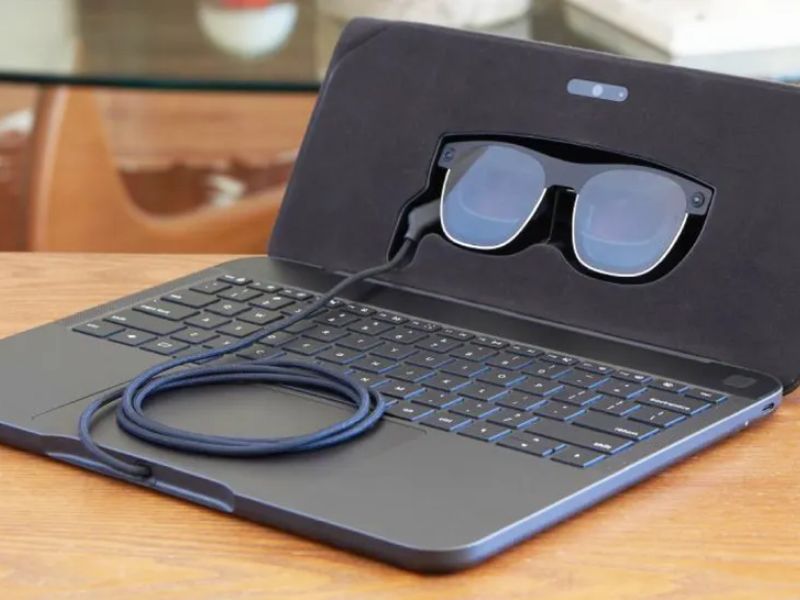
    Known as the Spacetop, the system combines hardware and software to create a massive virtual screen that wraps around the user via custom augmented-reality glasses. In a style reminiscent of Minority Report, users can interact with the air-screen—pinning windows, resizing objects, and running most Windows and web apps, as well as the AOSP (open-source Android) OS. The hardware requires an Intel Core Ultra 7 or 9 processor with Meteor Lake architecture or newer.

    Image Credits: Sightful

    Some reviewers were surprised by the Spacetop’s price: $899 (about €788) plus a $200 yearly software subscription. Prescription lenses are optional, costing $50 for single vision or $150 for progressive, covering a range from +6.00 to -9.00.

    While not cheap, the device’s focus on corporate productivity makes its private, invisible screen a standout feature. Other perks include portability—the 106-gram headset adds virtually no extra weight for travel—and compact dimensions of 146 x 175 x 44 mm when unfolded.

    Image Credits:Sightful

    Reviewers also praise the Spacetop’s top-loaded display, which keeps the bottom third of the “screen” clear, allowing users to stay aware of their surroundings. This design helps reduce the motion sickness often associated with AR headsets and prevents accidents like kicking a pet or tripping over objects.

    The device also includes a travel mode that enhances motion tracking and a cursor that follows and predicts the user’s eye movements, eliminating the need to carry a mouse while on the go.

    Additionally, the ergonomic design can ease neck strain caused by looking down at traditional laptops, while the distraction of watching other people’s screens remains someone else’s problem.


    Read the original article on: Traveltomorrow

    Read more:Japan’s Innovative Floating Home Design for Earthquake Safety
  • Amazon Previews new Human Roles in an AI-driven World

    Amazon Previews new Human Roles in an AI-driven World

    The tech industry appears divided on the role of human workers in the AI-driven world they're shaping. Some believe that bots will take over all jobs, except maybe their own. (For example, VC Marc Andreessen thinks his work as an investor is immune to automation).
    Credit: Pixabay

    The tech industry appears divided on the role of human workers in the AI-driven world they’re shaping. Some believe that bots will take over all jobs, except maybe their own. (For example, VC Marc Andreessen thinks his work as an investor is immune to automation).

    Some believe bots will handle tedious tasks, allowing humans to take on new roles created by the AI revolution. This view is backed by historical evidence. The World Economic Forum forecasts that 92 million jobs may be displaced, but 170 million new jobs will emerge.

    What’s Next for Low-Skilled and Unskilled Workers

    For those unable to afford or pursue a master’s in AI and machine learning, particularly unskilled workers, what does the future hold in a world dominated by bots?

    On Wednesday, Amazon gave a glimpse of one possible direction by unveiling significant progress in replacing warehouse workers with its new Vulcan robot, which has the ability to “feel.”

    Vulcan is improving workplace safety by taking on physically demanding tasks and opening up new opportunities for our team members to develop skills in robotics maintenance,” CEO Andy Jassy shared on X.

    Humans and Bots Team Up

    Amazon’s blog post on Vulcan highlights how the robot will assist humans by retrieving items from the warehouse’s highest and lowest shelves, reducing the need for workers to climb or crouch. Meanwhile, humans will handle items stored at mid-levels or those the new “feeling” robot still struggles to grasp.

    Amazon also mentions that it’s training a select group of warehouse employees to become robot technicians, as the company increasingly relies on bots to handle more of the warehouse picking tasks.

    The blog states that robots now handle 75% of customer orders at Amazon, creating new job categories like robotic floor monitors and maintenance engineers. The company also offers a retraining program to help employees gain skills for robotic maintenance roles.

    Amazon’s Robot-Driven Workforce Evolution

    The blog explains that robots now fulfill 75% of orders at Amazon, creating new jobs like robotic floor monitors and maintenance engineers. The company also offers retraining programs for employees to gain skills for these roles.

    However, Amazon’s decision to include details about its retraining program in the same announcement as Vulcan is significant.

    There’s little evidence of what life would be like for the working class if robots take all the jobs. One AI startup founder even suggested that humans might rely on government welfare in such a scenario.

    Managing Robots as a Key Employment Skill

    However, instead of grocery clerks, there could be “automation monitors,” similar to how a clerk oversees the self-checkout lanes today. Fast-food cooks might be replaced by workers managing cooking robots, and the pattern would continue across other industries. Operating robots could become as essential as computer skills for staying employable.

    On the other hand, this fully automated future may never fully come to pass. Bots may remain limited to large, wealthy companies like Amazon or industries such as automotive manufacturing, while most retail, restaurant, and transportation jobs could still be done by humans for decades.

    Amazon is the company that first aimed to expand its just-walk-out Go technology to retail and grocery sectors. The retail industry, Amazon’s main competitor, wasn’t receptive. It was revealed that the technology relied on humans in India for video labeling, and Amazon scaled back its use. As a result, such technology (from Amazon or others) is scarcely seen in the real world today.


    Read the original article on: Techcrunch

    Read more: Video: Tall Humanoid Robots at Amazon Facility

  • Another Turbine World Record – But This Time, Not By China

    Another Turbine World Record – But This Time, Not By China

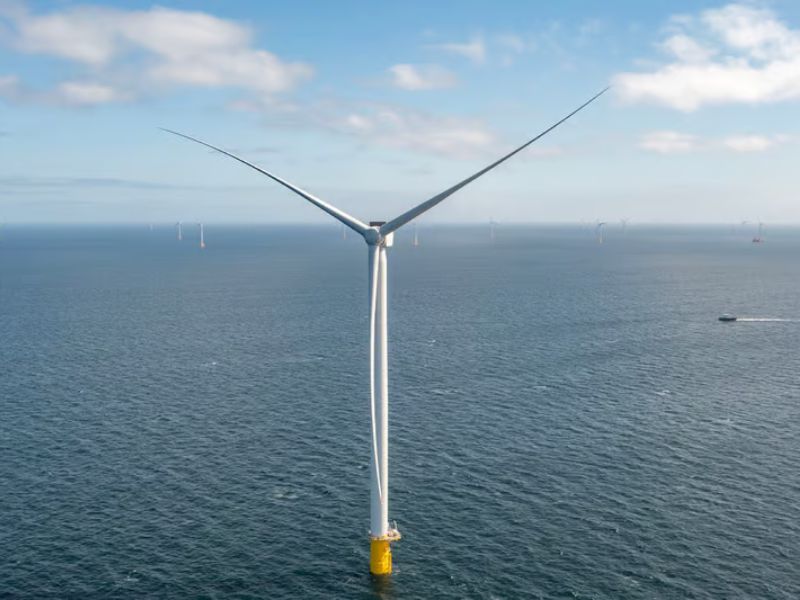
    The SG DD-276 turbine spans over three football fields across with a 21.5 MW capacity
    Siemens Gamesa

    In the ever-competitive game of “who builds it bigger,” China has stepped aside for now as European company Siemens Gamesa sets a new world record with a massive wind turbine installed at the Østerild test field in Denmark.

    A Giant Among Giants

    While the lead wasn’t huge, the achievement is still remarkable. The Siemens SG DD-276 turbine spans an impressive 276 meters (905 feet) from blade tip to blade tip and has a rated capacity of 21.5 megawatts (MW) — enough to power around 70,000 Danish homes annually. Throughout its operational lifetime, the turbine is expected to prevent the emission of approximately 55,454 tons of CO₂ that fossil fuel energy would otherwise produce.

    This technological leap came with a hefty price tag. The European Union contributed €30 million (around US$33 million) through its innovation fund to support Siemens Gamesa’s HIPPOW project (Highly Innovative Prototype of the most Powerful Offshore Wind — yes, that’s the acronym).Although Siemens Gamesa hasn’t disclosed the Levelized Cost of Energy (LCOE) for this turbine yet, Denmark reported offshore wind costs of around €46 per megawatt-hour (MWh) in 2018.

    Siemens Gamesa has been in the wind power game since 1991 and was behind the installation of 11 turbines in the world’s first offshore wind farm at Vindeby, Denmark. The SG DD-276 marks the 5,000th turbine installed by the company, across 14 countries, with a total installed capacity exceeding 27 GW.

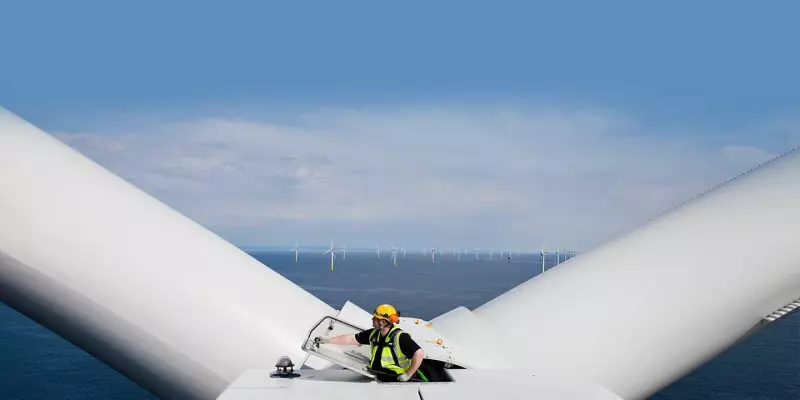
    A worker atop an offshore Siemens Gamesa turbine
    Siemens Gamesa

    Previously, China’s Mingyang Smart Energy held the record with its 20 MW MySE18.X turbine, which had surpassed the 18 MW offshore model from Dongfang Electric Corporation. But in such a fast-paced industry, records don’t last long.

    The Next Generation Is Already on the Horizon

    In fact, Dongfang has already completed a 26 MW turbine that has yet to be deployed, while Mingyang has announced plans for next-generation 22 MW turbines. Once either of those go live, Siemens will likely lose the top spot.

    Adding to the uncertainty, recent tariff escalations between the US, EU, and China may disrupt the supply of critical minerals and rare earth elements — such as those used in circuit boards and neodymium magnets — since China controls much of the global supply chain. That means this latest record may not last for long.


    Read the original article on: New Atlas

    Read more: First U.S. Onshore Wave Energy Project Receives Green Light