Tag: Zuckerberg

  • Zuckerberg Once Considered Separating Instagram To Protect Facebook

    Zuckerberg Once Considered Separating Instagram To Protect Facebook

    In a private email revealed during the antitrust trial, Zuckerberg warned that buying Instagram might cause a “network collapse” of the more profitable Facebook.
    Credit:Alex Wong / Getty Images

    In a private email revealed during the antitrust trial, Zuckerberg warned that buying Instagram might cause a “network collapse” of the more profitable Facebook.

    Zuckerberg proposed integrating Meta’s apps to counter Instagram’s impact on Facebook’s relevance and even considered making Instagram an independent company.

    In its case against Meta, the U.S. Federal Trade Commission (FTC) is trying to demonstrate that the company holds a monopoly in social networking and used acquisitions like Instagram and WhatsApp to preserve its market dominance. To support this claim, prosecutors are presenting emails and other communications showing that Zuckerberg recognized Instagram as a potential threat to Facebook, even after the platform was integrated into Meta’s ecosystem.

    In a May 2018 email, Zuckerberg warned top execs that Facebook’s app strategy might be flawed.

    Instagram negatively impacted Facebook’s growth.

    Credit:Chesnot / Getty Images

    Zuckerberg raised concerns that Instagram’s rapid growth was hurting Facebook, citing internal data showing declining engagement as users shifted platforms. He warned that pushing Instagram to Facebook’s scale could backfire, potentially causing broader harm.

    He noted Instagram’s growth relied on Facebook’s app and network, warning it risked replacing the more profitable Facebook with a less lucrative platform.

    To address this, Facebook reduced Instagram promotions and encouraged features that would drive users back to Facebook. Zuckerberg called for tighter integration between the platforms to function more as a unified network.

    Zuckerberg suggested, for instance, that it should be simpler for video creators with large followings to engage across both apps. Additionally, he proposed merging the voice and video calling networks of WhatsApp, Messenger, and Instagram into a single network. (Meta later introduced cross-platform messaging in 2020, but eventually reversed the change in subsequent years.)

    The approach of a unified family of apps versus separating them into individual entities.

    Credit:Chesnot / Getty Images

    Zuckerberg noted challenges in developing Instagram and WhatsApp due to strong founder influence and regretted that management couldn’t openly voice concerns without risking team morale or losing Instagram’s co-founders.

    He also advocated for the company to reconsider its product branding, ensuring that Facebook’s brand stayed at the forefront.

    Zuckerberg suggested in his email, “When you open those apps, it should say ‘Instagram by Facebook’ and ‘WhatsApp by Facebook.’ We might even need to incorporate Facebook branding into the app interface, where the app names and logos are currently, to reinforce this connection in users’ minds.”

    Zuckerberg urged Meta to reconsider its branding strategy to ensure that Facebook remained the focal point.

    In 2021, Facebook chose to rebrand as Meta, with its logo now featured on all of the company’s apps.

    If the FTC succeeds in its case, Meta may be forced to separate Instagram and WhatsApp into independent businesses. Ironically, this is a strategy that Zuckerberg himself proposed in a 2018 email, suggesting it could be the “only structure” to achieve the company’s objectives. He argued that spinning off Instagram could help maintain Facebook’s growth, streamline Meta’s teams, and potentially allow the company to retain Systrom, Wrote Zuckerberg. (Instagram’s founders left later that same year, in September 2018.)

    Ultimately, Meta kept its acquisitions together, but Zuckerberg warned executives there was a real chance regulators could force a spin-off of Instagram and WhatsApp within 5–10 years, risking the loss of their entire app ecosystem.

    If the FTC prevails in court, Zuckerberg’s prediction will be validated.

    In a statement to TechCrunch, Meta minimized the significance of these emails.

    A Meta spokesperson said, “Documents from years ago, taken out of context and related to acquisitions the FTC reviewed more than a decade ago, won’t alter the competition we’re up against or strengthen the FTC’s weak case.”


    Read the original article on: TechCrunch

    Read more: TikTok is Discontinuing its Instagram Rival, TikTok Notes
  • Zuckerberg and Fridman Showcase a Major VR Communication Breakthrough

    Zuckerberg and Fridman Showcase a Major VR Communication Breakthrough

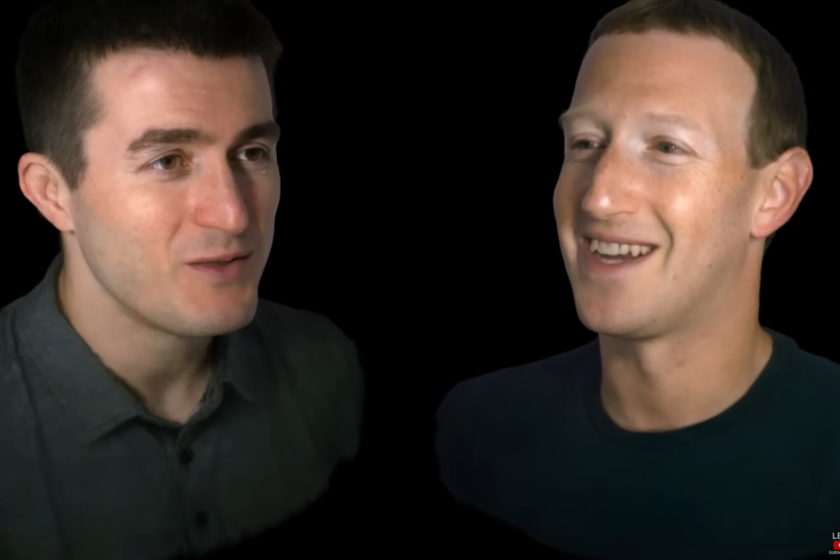
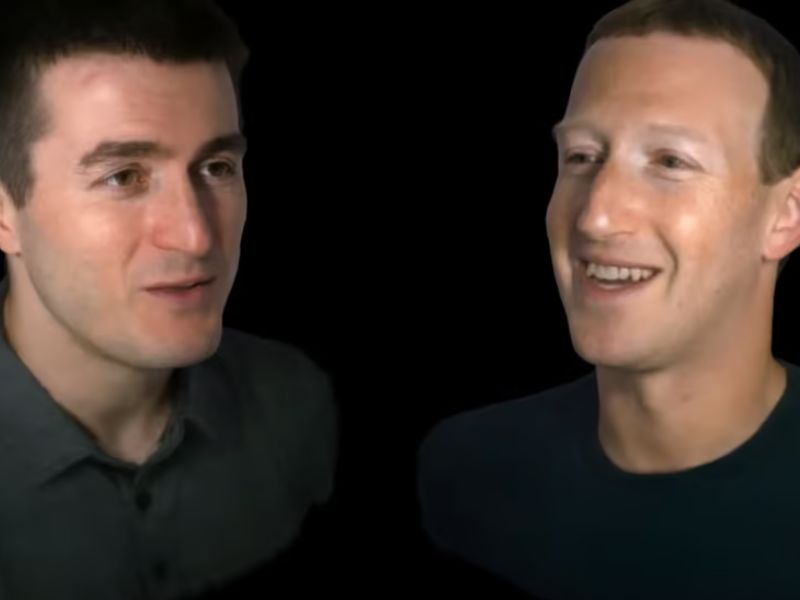
    Podcast host Lex Fridman, interviewing Mark Zuckerberg in VR, expressed his astonishment, stating that it was the most incredible sight he had ever witnessed. They were using Meta's upcoming photorealistic avatars, set to launch on Quest, which are so realistic that they transcend the uncanny valley.
    Lex Fridman and Mark Zuckerberg catch up in the metaverse
    Lex Fridma

    Podcast host Lex Fridman, interviewing Mark Zuckerberg in VR, expressed his astonishment, stating that it was the most incredible sight he had ever witnessed. They were using Meta’s upcoming photorealistic avatars, set to launch on Quest, which are so realistic that they transcend the uncanny valley.

    Meta’s New VR Avatars: Bridging the Gap to Immersive Virtual Interactions

    Mark Zuckerberg has faced considerable online criticism for the less-than-impressive appearance of Meta’s previous VR avatars. However, these latest avatars seem to represent an enormous leap forward, offering a glimpse into a future where VR interactions and meetings will truly provide the sensation of being in the same room as others.

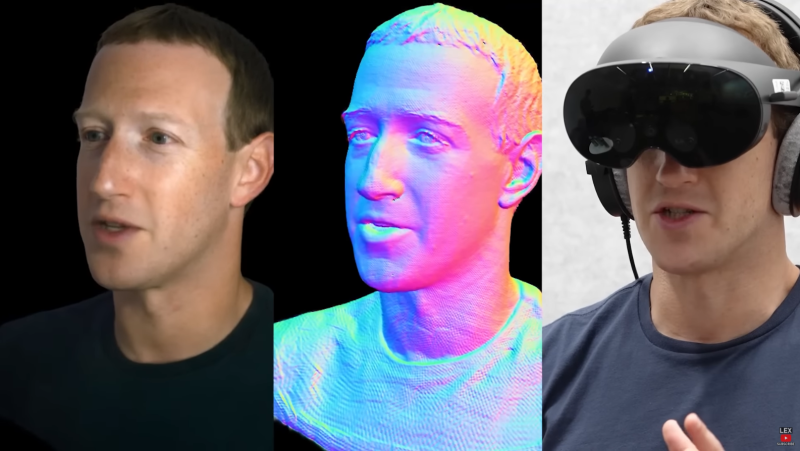
    Here’s the current process: The photorealistic avatars are currently part of a research initiative that involved both Zuck and Fridman spending hours in a studio. During this time, their facial expressions were captured using various cameras, which were then used to create avatar heads that can be controlled based on their motions.

    Left to right: the avatar, the 3D capture, and the Zuck in a Quest Pro headset
    Lex Fridman

    In this instance, they used Meta Quest Pro VR headsets, but the technology will perform equally effectively on the more affordable Meta Quest 3. Several built-in cameras on the headset monitor your facial expressions, with a focus on tracking eye and mouth movements.

    The data from these movements, combined with audio captured by the headset’s microphones, forms a compact data stream that can be transmitted over long distances almost instantly. This data is then used to animate an avatar, which is already stored on the conversation partner’s headset.

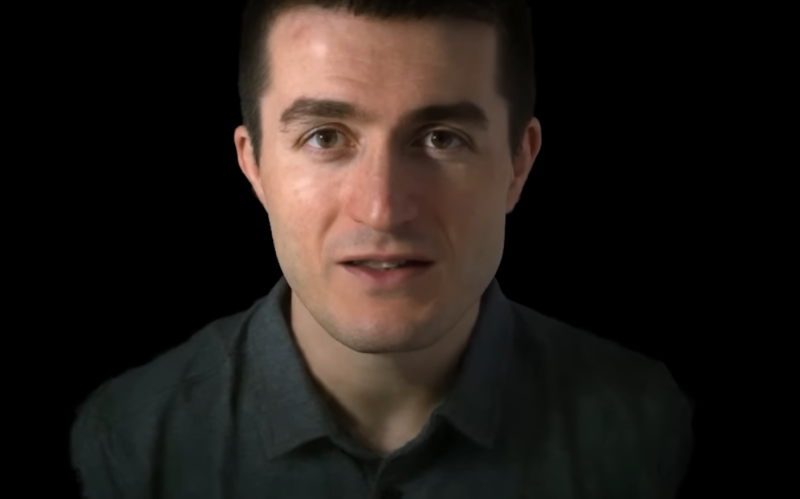
    Fridman was clearly amazed by the effect and remarked, “The realism here is truly astonishing. I believe this represents the future of how people can connect with one another in a profoundly meaningful way on the internet… It’s fascinating how such intimate conversations can be conducted remotely. I typically avoid remote podcasts for this reason, but this technology changes everything.”

    Streamlining Avatar Capture: A Future of Faster and More Efficient Smartphone Scanning

    The present method for capturing avatars will soon undergo significant simplification, requiring only 2-3 minutes on a smartphone. Zuckerberg mentioned, “Currently, we might be collecting more facial expressions than necessary during the scanning process, as we are still fine-tuning how to streamline it and extrapolate from the existing scans.”

    He continued, “Our objective, and we already have a project in progress for this, is to conduct a swift scan where you use your mobile phone to move it in front of your face for a few minutes, utter a few sentences, and make various facial expressions.”

    Fridman’s avatar shows the extraordinary realism of the experience
    Lex Fridman

    Demonstrating some of the most advanced technology for capturing and transmitting facial expressions during an interview involving two individuals known for their reserved demeanor was an intriguing choice, and Fridman acknowledged the irony in this.

    Challenging Monotone Perceptions: Embracing Nuanced Expressions in the Metaverse

    He remarked, “The meme will probably be that the two most monotone people are in the metaverse together. But I actually think that adds to the challenge. What’s truly impressive here are the nuances in expressions and the role of the eyes. People often say I’m monotone and devoid of emotion, but that’s not the case. My expression of emotions tends to be more subtle, often conveyed through my eyes. One thing I’ve observed is how even subtle movements at the corners of the eyes can convey emotions like happiness or boredom.”

    While these photorealistic avatars are well-suited for certain intimate face-to-face interactions, they are versatile in their construction. They can be used for various purposes, such as assuming someone else’s appearance, exaggerating or toning down expressions, or even departing from photorealism altogether to adopt different avatars.

    This conversation is truly captivating and offers a surprising glimpse into the near future, making it well worth an hour of your time. You can explore it below!

    Mark Zuckerberg: First Interview in the Metaverse | Lex Fridman Podcast #398

    Read the original article on: New Atlas

    Read more: 2023 Industrial Design Trends to Watch