
Brookhaven National Laboratory
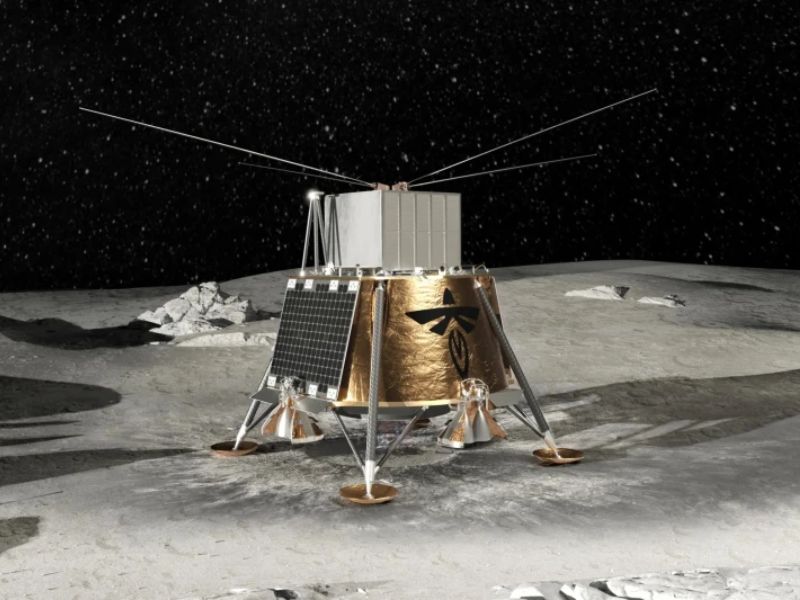
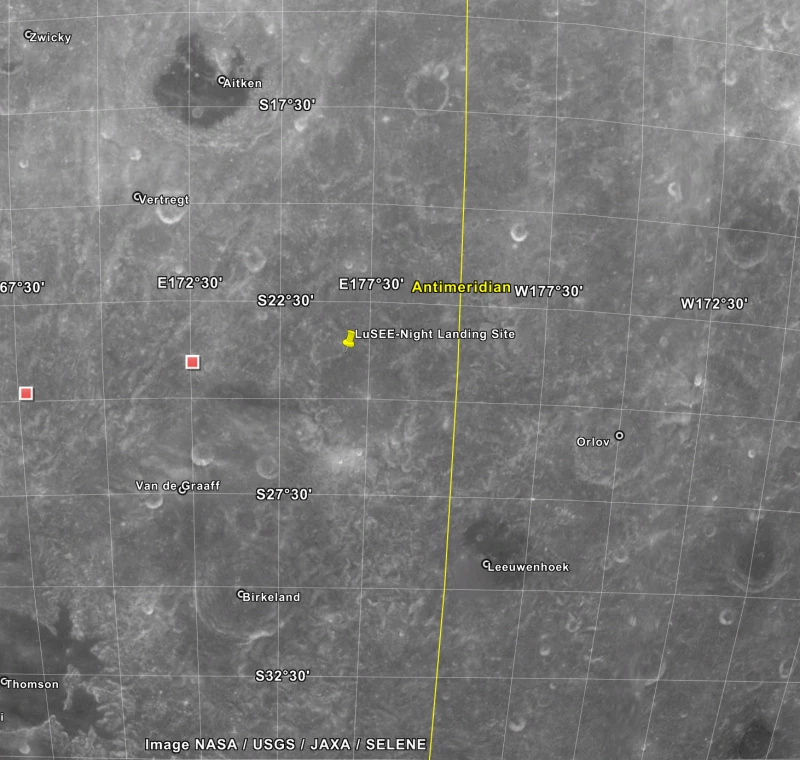
Radio astronomers crave silence, so the inaugural off‑planet radio telescope is headed somewhere truly quiet: the Moon’s hidden hemisphere. The Lunar Surface Electromagnetics Experiment – Night (LuSEE‑Night) will touch down on the far side, using the lunar bulk to muffle the cacophony of Earth‑generated radio chatter.
Revolutionizing Astronomy Through Radio Waves
Radio astronomy has completely reshaped our view of the cosmos, unveiling pulsars, quasars, radio galaxies, interstellar molecules, supermassive black holes and the faint microwave afterglow of the Big Bang. Yet eavesdropping on the universe from Earth is maddeningly difficult. Beyond conventional broadcasts, satellites and ubiquitous mobile networks, there are spark‑spitting engines, microwave ovens, lightning, GPS beacons, ionospheric reflections and even the occasional bird dropping on an antenna—all polluting the airwaves.
Engineers combat this noise with digital filters and by building observatories in remote sanctuaries like Goonhilly (UK) or legally protected “radio‑quiet” zones in the United States, South Africa, Australia and Brazil. Even there, the din is too loud for the cosmos’ faintest whispers.
So researchers at the U.S. Department of Energy’s Brookhaven National Laboratory, partnering with NASA, the University of California–Berkeley and Lawrence Berkeley Lab, decided to relocate to the quietest neighborhood they could find: the lunar farside, where 7.3 × 10¹⁹ tonnes of rock block Earth’s radio noise.
LuSEE-Night: The Pathfinder Mission
The first venture is the LuSEE‑Night pathfinder. Slated to ride Firefly Aerospace’s Blue Ghost 2 lander later this year or early next, LuSEE‑Night will prove that a remote, autonomous radio telescope can survive on the Moon and beam back solid science.
Brookhaven National Laboratory
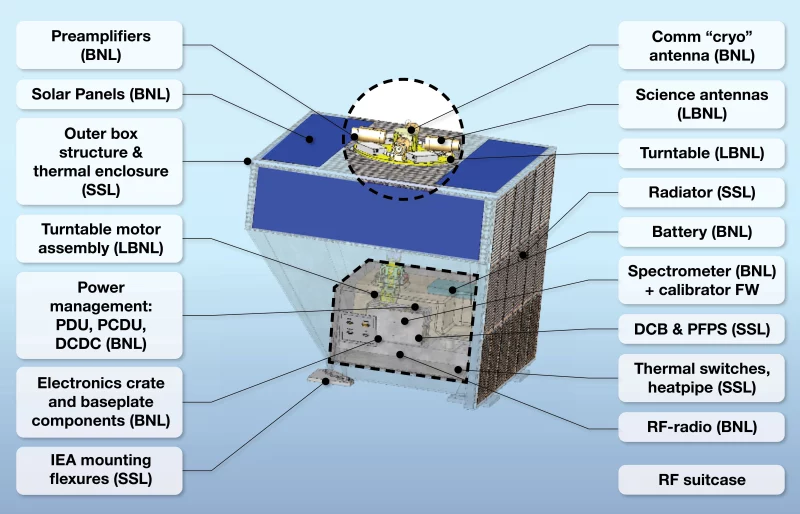
The cube‑shaped instrument (about 1 × 1 × 0.7 m) listens across 0.1–50 MHz with a four‑channel 50 MHz receiver and a radio spectrometer. Four 3‑m beryllium‑copper helical‑spring monopoles unfold into two orthogonal dipoles spanning roughly 6 m tip‑to‑tip. The antenna frame can rotate—both to aim at specific sky patches and to calibrate itself against the local electromagnetic environment. A lunar orbiter will transmit test codes to fine‑tune the system.
Brookhaven National Laboratory
Moonlife is harsh, so LuSEE‑Night carries a sun‑reflecting thermal shield plus a hefty 40 kg lithium‑ion battery (6.5–7.16 kWh). That battery powers heaters during the fortnight‑long lunar night, when temperatures plummet to −173 °C.
Assuming a yet‑to‑be‑named relay satellite keeps the data link open, the experiment could operate for up to 18 months. If it succeeds, astrophysicists may one day sculpt an entire farside crater into a dish so enormous that the late Arecibo Observatory would seem like a toy walkie‑talkie by comparison.
Read the originala article on: New Atlas
Read more: Uranus Is Hotter Than Previously Believed