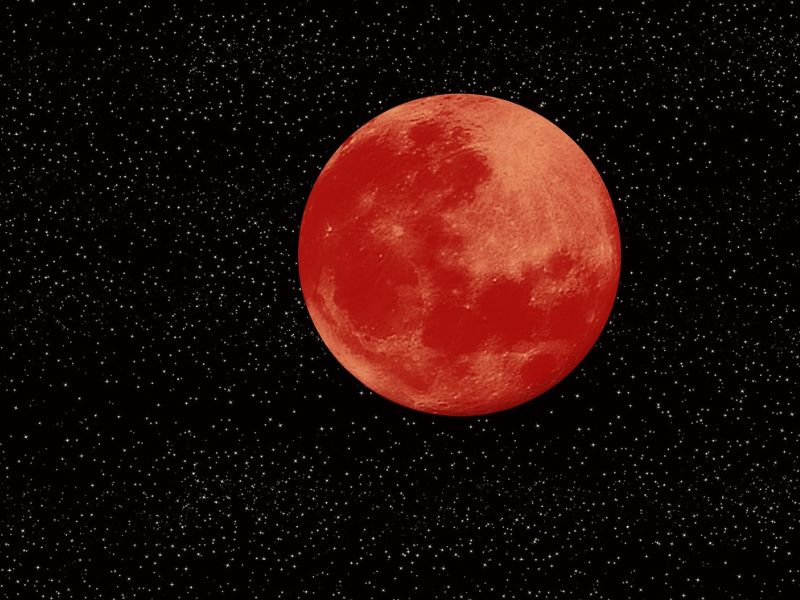

A celestial alignment of the Sun, Earth, and Moon on September 7-8, 2025, will produce a total lunar eclipse, bathing a significant portion of the planet in a characteristic red light.
The period of totality, the longest since 2022, will persist for approximately 1 hour and 22 minutes, wherein the Moon will take on a deep reddish-copper coloration.
A Truly Global Event
The event will be viewable from four continents—Australia, Asia, Africa, and Europe—making it accessible to a potential audience of over 7 billion people, nearly 6.2 billion of whom will see the full eclipse from start to finish.
While the Americas will mostly miss the event due to occurring during their daytime, viewers in Hawaii, parts of Alaska, and eastern Brazil will be able to see at least a partial eclipse.


A total lunar eclipse is the result of a syzygy—the alignment of the Sun, Earth, and Moon. Earth’s umbral shadow is cast upon the lunar surface, obscuring it from direct solar illumination.
The Moon doesn’t vanish but glows red. This happens because Earth’s atmosphere scatters blue light and bends red sunlight onto the Moon, much like a sunset.
An 82-Minute Blood Moon
The whole event, from start to finish, will last roughly five and a half hours. The main event, the total eclipse when the Moon turns red, will begin at 17:30 GMT and last for about an hour and twenty minutes.

Not sure what time that is for you? Use this handy tool to convert GMT to your local time. Or, just head to Timeanddate.com, enter your location, and it’ll tell you exactly when to look up.
Lunar eclipses are always paired with solar eclipses. Because the alignment needed for an eclipse is optimal, a lunar eclipse always happens about two weeks before or after a solar one.
A partial solar eclipse will occur on September 21, 2025, but its visibility will be limited to New Zealand, Antarctica, several Pacific islands, and a narrow section of Australia’s eastern coast.
Read the original article on: Science Alert
Read more: Why Some People Refrain from Engaging in Sex