Cornell University
If you have a brain—and know others who do—you’re aware of the countless ways our skull-bound electro-meat machines can fail us. From memory loss to migraines, depression to dementia, the brain is remarkably creative at breaking down, often turning lives into mental misery.
“Good news, everyone!” Cornell and partners developed a pinhead-sized micro-neural implant that wirelessly records mouse brain activity for over a year.
Introducing the MOTE Neurotech Breakthrough
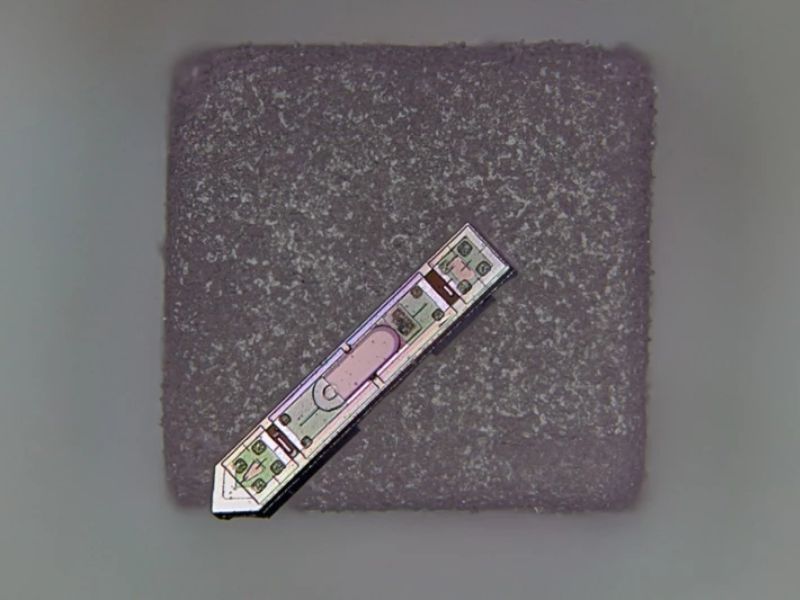
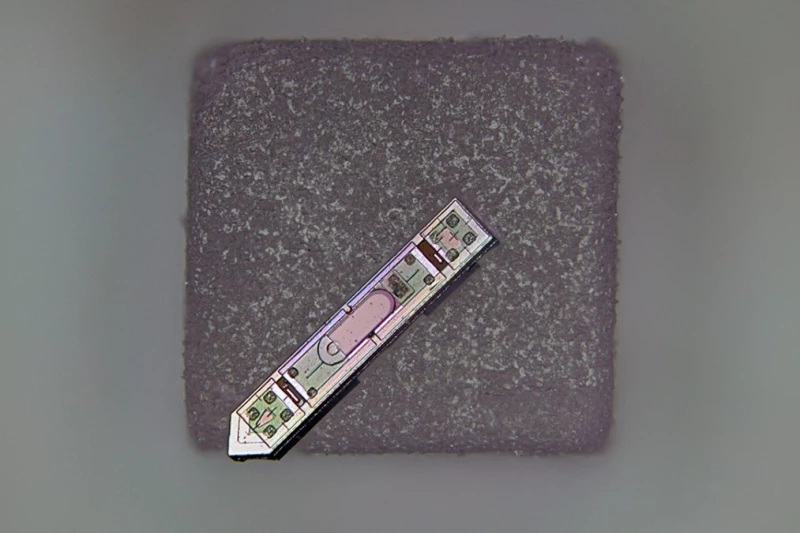
In Nature Electronics, Sunwoo Lee and Cornell colleagues introduced the MOTE—a tiny, superhero-like Microscale Optoelectronic Tetherless Electrode.
This breakthrough represents the smallest neurotechnology module ever built, offering major medical potential for neural monitoring and bio-integrated sensing. The MOTE wirelessly transmits brain data, offering insights that could lead to new treatments and potential enhancements of brain function.
“This is the smallest neural implant that can wirelessly transmit brain activity,” said Alyosha Molnar. MOTE’s use of pulse position modulation—like in satellite communications—enables efficient, low-power data transmission.
Challenges of Early Neurotechnology Implants
Earlier generations of neurotechnology implants faced significant hurdles to reliable performance, such as tissue rejection, immune responses that damaged nearby nerve connections, and electrode drift that displaced recording sites within the brain.
The MOTE, however, avoids these pitfalls largely due to its minuscule size. Measuring just 300 by 70 microns—smaller than a nanoliter, or one-millionth of a milliliter—it’s so tiny that over 4.7 million of them could fit into a single teaspoon.
Powered by a photovoltaic diode, the MOTE wirelessly transmits neural data via red and infrared lasers with precise, low-noise circuits.
Safe Brain Monitoring During MRI Scans
Why are MOTEs even necessary? Don’t MRI scans already give us valuable insights into how the brain works? Yes—but not when used alongside most neurotech implants. The Journal of Neural Engineering warns that MR environments can pose serious health risks to implant patients. Picture Magneto attacking Wolverine’s adamantium skeleton—that’s roughly the kind of danger magnetic fields pose to metal implants.
And it’s not just brain implants that face this problem. Over 300,000 cochlear implant patients can’t safely have MRIs, yet about 75,000 U.S. DBS patients undergo scans, often with hospitals exceeding safety limits they call “crucially impractical.”
A key advantage of MOTEs is their MRI compatibility, enabling neural recording during scans. Future versions could work in tissues like the spinal cord or be embedded in artificial skull plates with advanced optoelectronics.
A Potential Alternative to Lifelong Medication
Many depend on Big Pharma’s short-term pills, but neurotech implants could offer lasting relief via minimally invasive procedures—if not subscription-based. (Remember Rashida Jones in the Black Mirror episode “Common People”?)
Regardless of who controls it, the MOTE joins other neurotech breakthroughs: restoring speech to ALS patients, enabling thought-controlled drones and iPhones, and providing instant pain relief.
As neurotechnologists refine these devices—ideally via open-source collaboration—the potential benefits for humanity are immense. The path toward cyborganic evolution may be virtually limitless. Now, if only someone could design an ethics chip for the billionaire “brain bros” of Neuro–Silicon Valley.
Read the original article on: Newatlas
Read more: ‘Brainless’ Robots That Move Together are Driven Entirely By Air