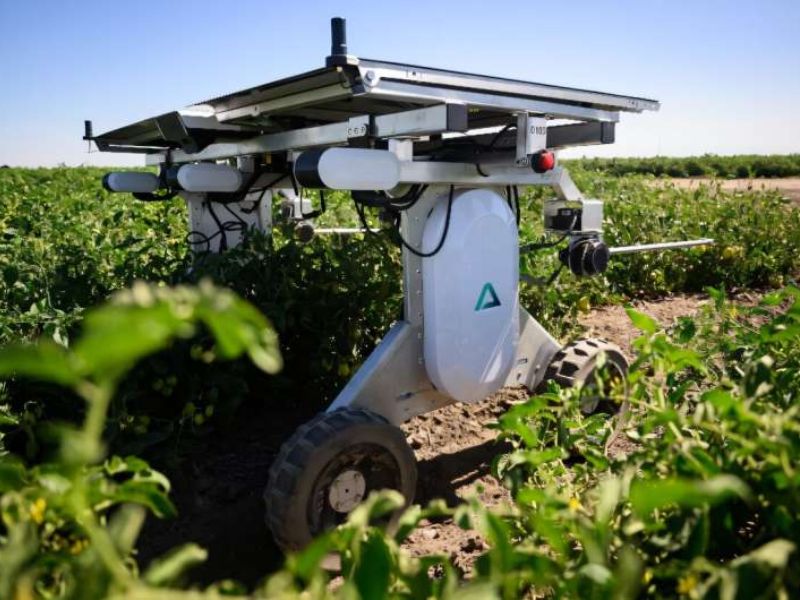

Unaffected by the scorching midday sun, a solar-powered, AI-driven wheeled robot methodically navigates a California cotton field, removing weeds with precision.
Facing U.S. farm labor shortages and herbicide-resistant weeds, startup Aigen’s AI robot Element provides a cost-effective, eco-friendly alternative that cuts harmful chemicals in food.
A Healthier Future Through AI Farming
“This is the best way to improve human health,” said Aigen CTO Richard Wurden at Bowles Farm.
“Everyone is eating food treated with chemicals,” he added.
Wurden, a former Tesla mechanical engineer, was inspired to create the robot after hearing from farming relatives in Minnesota about the high cost of manual weeding.
As herbicide resistance spreads and worker shortages persist, chemicals often become the only option, Wurden explained.
“No farmer we’ve spoken to loves chemicals,” said Kenny Lee, Aigen’s co-founder and CEO, who has a background in software. “They’re just tools—we want to offer a better one.“

Element, the robot, looks like a large, wheeled table topped with solar panels. Beneath it, metal arms fitted with small blades reach down to weed between crop rows.
“It actually works like a human,” said CEO Kenny Lee, as the temperature climbed to 90°F (32°C) under a cloudless sky. “When the sun sets, it powers down to rest, and when the sun rises, it starts up again.”
Smart Navigation: AI and Cameras Guide Precision Weeding
The robot uses AI and onboard cameras to navigate crop rows and detect weeds.
“If you think humans should be doing this job, just spend two hours weeding in the field,” added CTO Richard Wurden.
Aigen aims to shift farm laborers from grueling fieldwork to higher-skilled roles managing and troubleshooting robots. The machines also stay connected via wireless links to local control hubs, reporting issues as they arise.

Aigen currently has its robots operating in tomato, cotton, and sugar beet fields, promoting their precision weeding technology that avoids harming crops.
According to CEO Kenny Lee, about five robots can cover 160 acres (65 hectares) of farmland. Each robot, built by the 25-person startup based in Redmond, Washington, costs $50,000.
The company aims to appeal to traditionally conservative farmers by offering a solar-powered alternative to diesel-fueled machinery—providing both economic and environmental benefits.
“‘Climate’ has become a politicized term, but at the end of the day, farmers care deeply about their land,” Lee said.
AWS Backs Aigen in Climate-Focused Tech Fellowship
Aigen’s innovation drew the attention of Amazon Web Services (AWS), which selected the company for its “Compute for Climate” fellowship. The program provides startups with AI tools, cloud resources, and technical support to address environmental challenges.
“Aigen is set to become a major industry player,” said Lisbeth Kaufman of AWS. “It’s like watching the early days of Ford or Edison—that’s what Kenny and Rich are building with Aigen.”
Read the original article on: Techxplore
Read more:Natural Compound Replicates Exercise’s Anti-Aging effects – Without the Need for a Workout