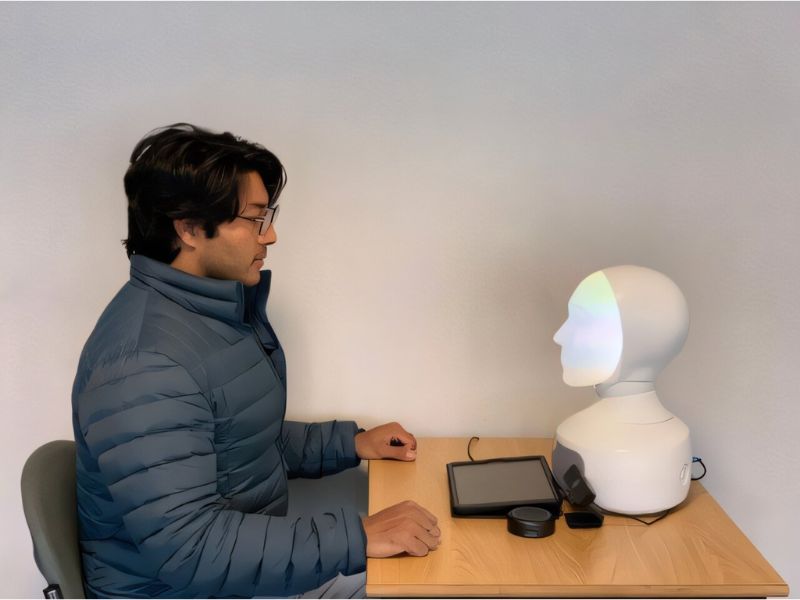

Robots may be becoming more intelligent, but to genuinely assist people in everyday life, they must also develop greater empathy — the ability to detect and respond to human emotions as they happen.
Why Emotional Intelligence Matters in Human-Robot Interaction
Intelligence alone isn’t enough when interacting with humans in real-world settings; understanding context, mood, and emotional cues is essential for building trust and meaningful relationships. Whether it’s a caregiving robot helping the elderly, a virtual assistant supporting someone through stress, or an educational tool guiding a student, emotional awareness allows machines to respond more appropriately and compassionately.
Empathetic AI can adapt its behavior based not only on what a person says, but how they feel — creating interactions that are not just functional, but supportive and human-centered.
Most facial recognition models are trained a single time and assumed to perform well in all situations. However, models trained on a specific dataset often falter when encountering unfamiliar scenarios, and retraining them from the beginning is both time-consuming and inefficient.
Teaching AI to Evolve Emotionally, One Feeling at a Time
To address this, Dr. Rahul Singh Maharjan and his team are exploring a new method: enabling AI to learn emotions gradually. Rather than discarding previous knowledge, their system builds upon existing understanding while incorporating new emotional information. This approach enhances the model’s adaptability and makes it more effective in real-world human interactions.
Dr. Maharjan emphasizes that for technology to become a seamless part of our lives, it needs to grasp human emotions. “My aim,” he says, “is to create AI that goes beyond processing data — one that forms meaningful connections with people.”
Read the original article on: Tech Xplore
Read more: Even with Encryption, Robots are Vulnerable to Privacy Breaches