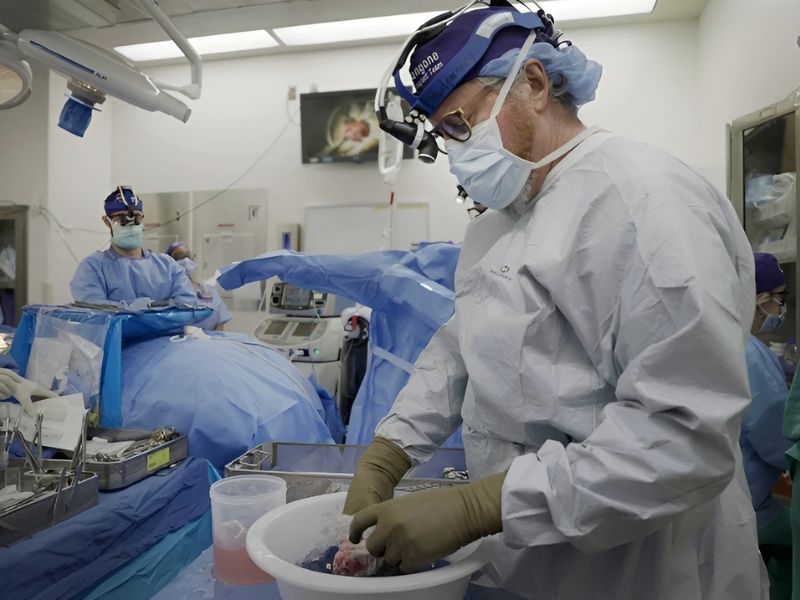

Scientists have managed to prevent the rejection of a pig kidney transplanted into a human donor. The organ continued to function for 61 days in a 57-year-old brain-dead man in the United States — the longest a genetically engineered pig organ has ever lasted in a brain-dead human.
In two studies published today in Nature, researchers outline the key triggers behind immune rejection of transplanted organs. The findings could boost transplant success in humans, from both human and animal donors.
Reversal of Organ Rejection Shown for the First Time
Muhammad Mohiuddin, a clinician–scientist at the University of Maryland School of Medicine in Baltimore, says, “This is the first real evidence that we can reverse rejection.” He performed the first pig-heart transplant in a living patient in 2022.
Over the past three years, surgeons have transplanted organs from genetically modified pigs — including hearts, kidneys, livers, and a thymus — into roughly a dozen living patients, but most organs eventually failed or were removed, and several recipients died shortly after surgery.
The recipient received both a pig kidney and thymus, which helps the immune system accept the organ. Montgomery says the thymus likely improved the kidney’s survival, as seen in earlier primate studies.
A Genetically Modified Pig Offers a New Source for Transplant Organs
The most recent pig-organ transplant took place on 14 July 2023 at NYU Langone in New York City. The kidney and thymus came from a pig bred by Revivicor, a United Therapeutics subsidiary in Virginia. These pigs carried a single genetic alteration — the removal of the GGAT1 gene — which prevents the formation of the sugar alpha-gal on their cells. Alpha-gal is known to trigger organ rejection in transplant procedures involving non-human primates.
Right after the transplant, the kidney functioned normally and produced urine. However, 33 days later, its performance dropped sharply, and a biopsy revealed antibody-driven rejection. The team treated the patient with plasma replacement, steroids, and pegcetacoplan to block immune tagging of pig cells. By day 49, another biopsy showed a different rejection process, this time involving inflammatory cells invading the kidney’s outer layer. Doctors treated it with a T-cell–depleting immunosuppressant, which halted the rejection and fully restored kidney function. The researchers decided to conclude the study on day 61.
Read the original article on: Nature