Fudan University
Imagine a normal-looking shirt that tracks health, environment, temperature, and travel info in real time. That same ultra-thin fiber could also help treat neurological disorders and assist in robotic surgery. These possibilities come from a groundbreaking new “fiber chip.”
Fudan University Unveils Ultra-Thin Fiber Chip
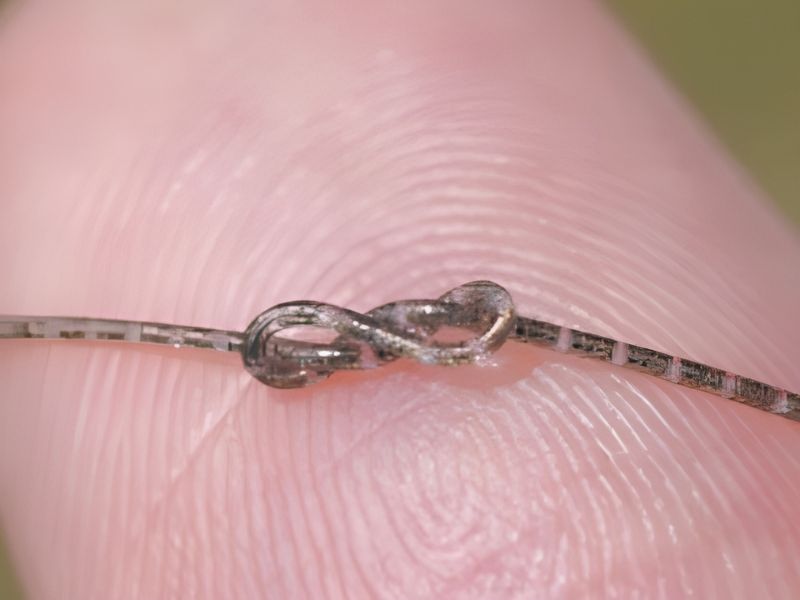
Researchers at Fudan University in Shanghai have developed complex electronic circuits inside a flexible fiber thinner than a human hair—a project over a decade in the making.
Smart fibers themselves aren’t new—researchers have long aimed to integrate electronics into textiles for seamless connectivity. The challenge has been fitting rigid, flat chips into tiny, flexible threads.
The scientists embedded spiral-layered circuitry in ultra-thin fiber, creating a “fiber chip” with 10,000 transistors per mm—scalable to desktop-level power in clothing.
Each Fiber Forms a Complete Hybrid System for Digital and Analog Signals
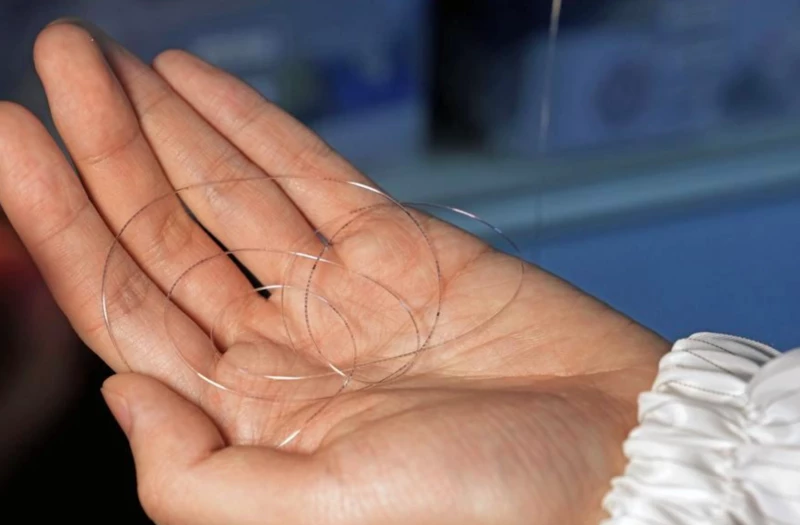
Additionally, each fiber integrates resistors, capacitors, and diodes, creating a full hybrid system capable of handling both digital and analog signals.
Liu Ying/Xinhua
“Our fabrication process works well with existing chip-making tools,” said Chen Peining of Fudan University’s Institute of Fiber Materials and Devices. “We’ve already developed a method to mass-produce these fiber chips.”
At 50 micrometers and brain-tissue flexible, the fibers suit both clothing and medical implants.
Flexible Electronics Crucial for Brain-Computer Interfaces
“Since the human body is soft, future technologies like brain-computer interfaces require flexible, compliant electronics,” explained study leader Peng Huisheng.
After over a decade of development, this fiber technology could help treat conditions like Parkinson’s, epilepsy, and stroke, or be used in precision sensing tools.
Liu Ying/Xinhua
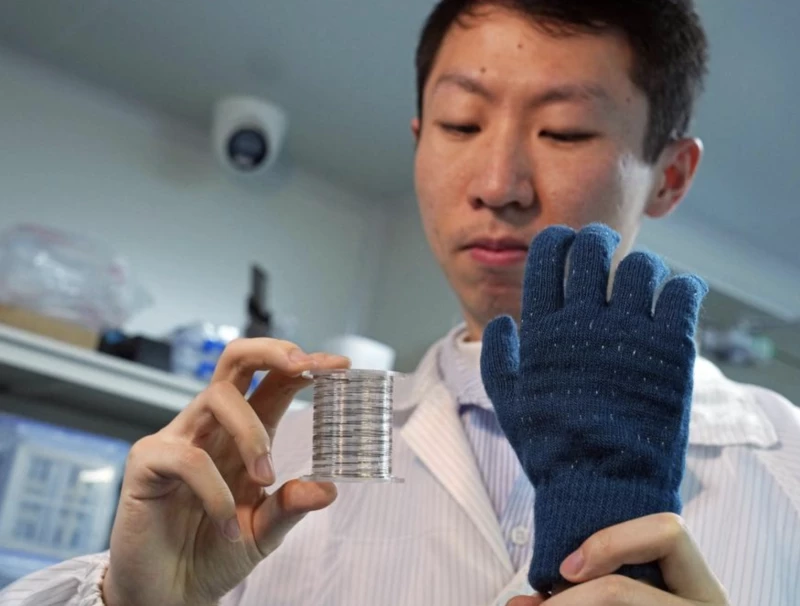
“Smart tactile gloves made with fiber chips feel just like regular fabric,” said Chen. “They can detect and replicate the texture of different objects, allowing surgeons to ‘feel’ tissue hardness during remote robotic procedures.”
Fiber Chips Proven Durable and Scalable in Extreme Tests
Creating a lab prototype is one thing, but scalability and durability are key. The team tested the fibers, which survived 10,000+ bends, 30% stretching, twisting, and 100 washes. They also passed extreme heat (100 °C/212 °F) and compression tests equivalent to a 15.6-ton truck.
The researchers are now collaborating with a hospital to adapt the fiber chips for cardiovascular surgery.
“We hope that one day, fabrics built on fiber chips will transmit information as seamlessly as today’s phones and computers,” Chen told Xinhua.
Read the original article on: Newatlas
Read more:Scientists use a Spinach Leaf to Make an Artificial Heart