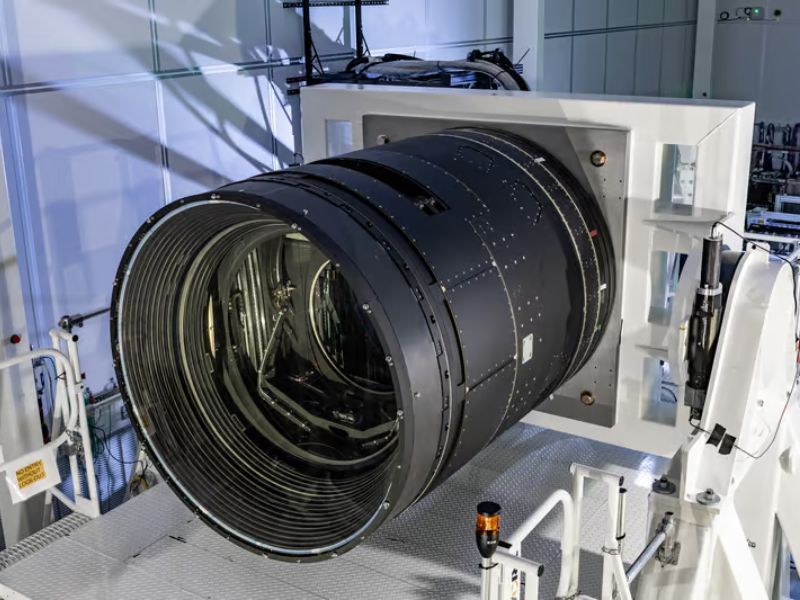
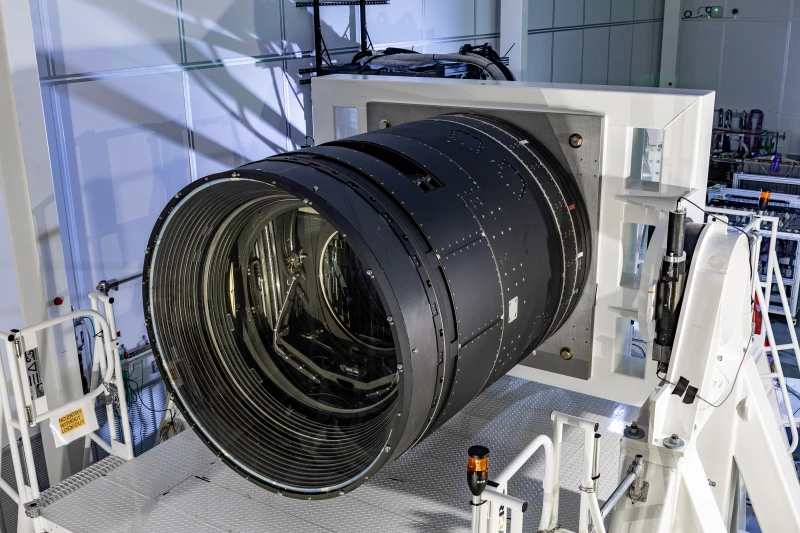
After over 20 years of development, the world’s largest digital camera at Chile’s Vera C. Rubin Observatory has captured its first images during a 10-hour test session atop Cerro Pachón.
SLAC’s Ambitious Plan for a Record-Breaking Astro Camera
In 2012, SLAC announced plans for a 3.2-gigapixel astro camera—set to lead a 10-year survey at the heart of a new Chilean telescope.
SLAC released renderings and additional details in 2015, just before construction began.By 2020, the team assembled 189 sensors and captured initial test images.They completed the full LSST camera by early last year, building a device roughly the size of a small car.

NSF-DOE Vera C. Rubin Observatory
Engineers increased the number of imaging sensors to 201, each with 10-micron-wide pixels. They mounted the sensors on a focal plane inside a vacuum chamber, sealed by a 3-foot lens—the first of three, with the largest reaching 5 feet. The system captures 15-second exposures every 20 seconds, with optics tuned from ultraviolet to near-infrared.
Landmark Installation at the Vera C. Rubin Observatory
The team prepared the 6,600-pound assembly for shipment to the NSF-DOE Vera C. Rubin Observatory and installed it on the Simonyi Survey Telescope this March.Project director Aaron Roodman called it “a pivotal moment,” noting the camera will bring unmatched clarity and depth to imaging the southern sky.
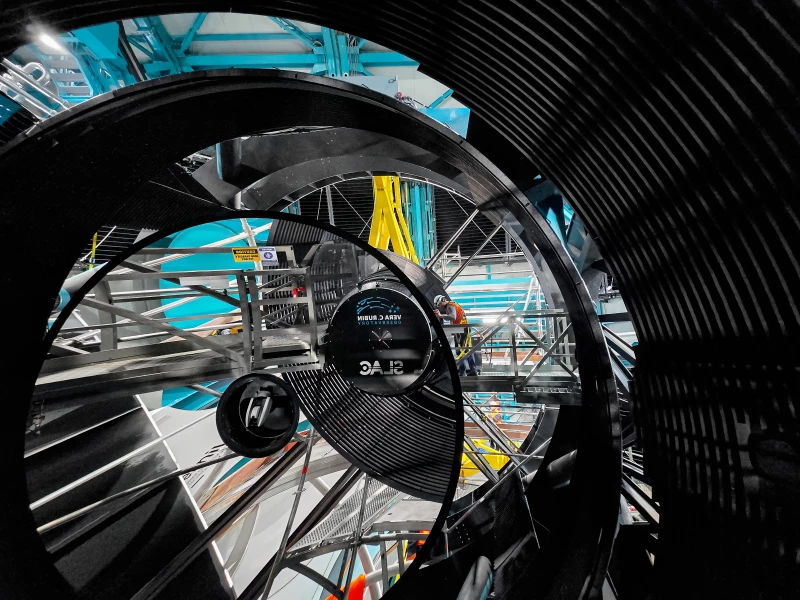
RubinObs/NOIRLab/SLAC/NSF/DOE/AU
The LSST camera has unveiled its first images, starting with a composite of 678 shots captured over seven hours. It reveals faint, previously hidden details of the Trifid and Lagoon Nebulae—shown in the article’s lead image. The Observatory also shared several “first look” videos, available to watch below.
Željko Ivezic, director of Rubin Observatory Construction, called the unveiling of their first scientific images a major milestone for the NSF–DOE Rubin Observatory. “It reflects nearly 20 years of global teamwork, innovation, and commitment.Now that we’ve finished construction, we’re turning our full attention to the sky—actively capturing images and launching a new era of discovery.“
Read the original article on:New Atlas
Read more:GTV Projector Blends Tri-Lasers and LEDs For Vivid 4K Visuals