Tag: Humanoid

  • Figure AI Teams Up With Brookfield to Build a Humanoid Training Dataset

    Figure AI Teams Up With Brookfield to Build a Humanoid Training Dataset

    To make humanoid robots practical, they must be trained using real-world data. This week, humanoid robot maker Figure AI Inc. partnered with Brookfield Corp., a top asset manager with over $1 trillion in assets and 100,000 homes.
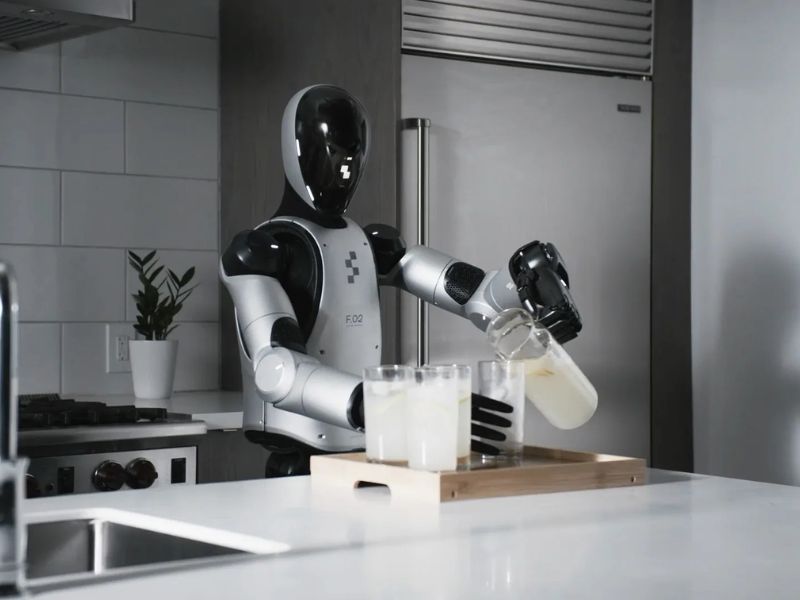
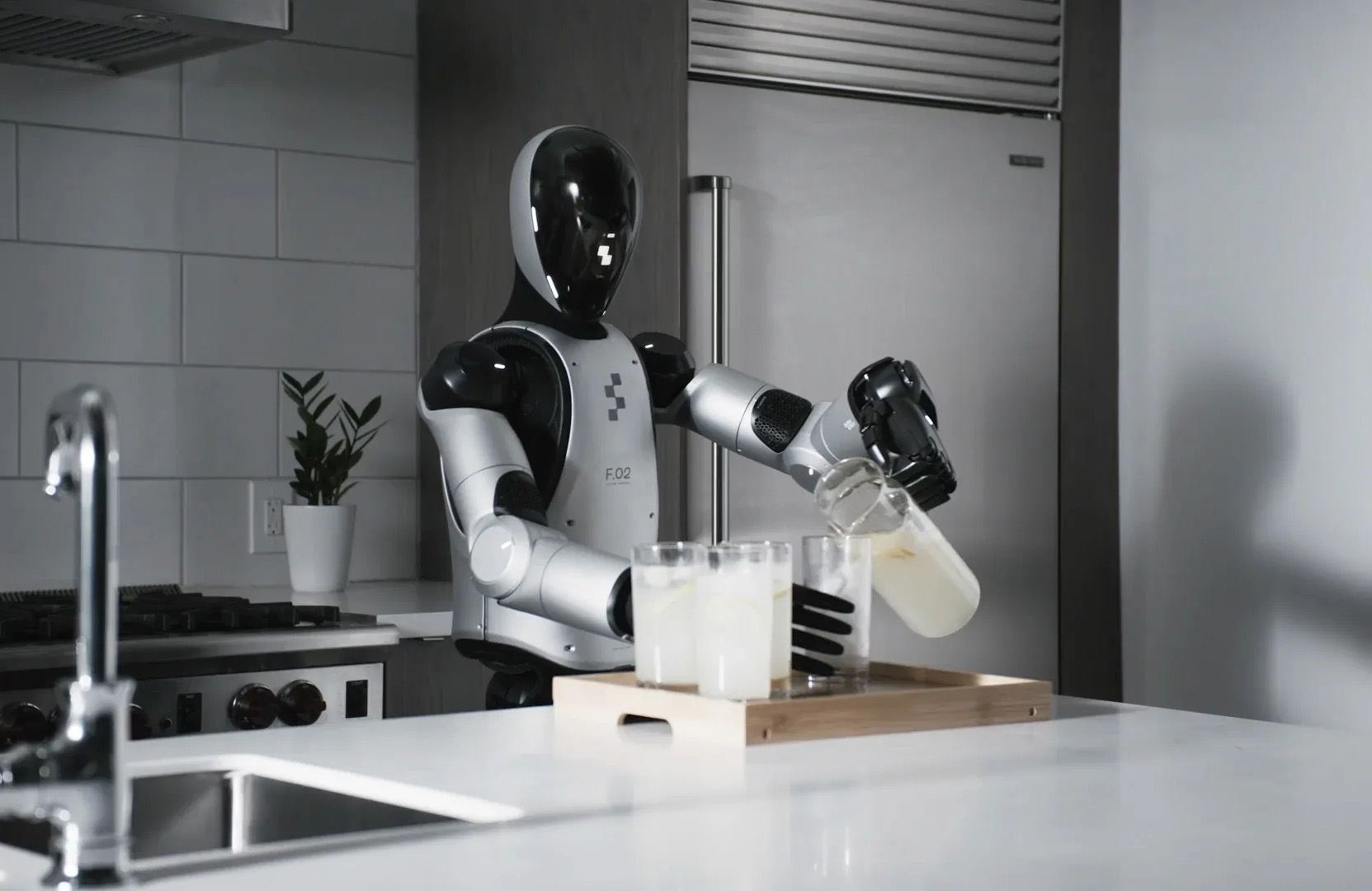
    Image Credits: The Figure 02 humanoid is targeting a range of applications, including in industrial and home environments. | Source: Figure AI

    To make humanoid robots practical, they must be trained using real-world data. This week, humanoid robot maker Figure AI Inc. partnered with Brookfield Corp., a top asset manager with over $1 trillion in assets and 100,000 homes.

    Brookfield, headquartered in Toronto, will assist Figure AI:

    • Create a comprehensive and varied real-world dataset for humanoid pretraining
    • Develop AI infrastructure to scale Helix, Figure’s custom vision-language-action (VLA) model
    • Support the rollout of humanoid robots across new commercial environments

    Figure’s Valuation Boosted as Brookfield Joins Major Series C Round

    Brookfield also participated in Figure’s Series C funding round as part of the broader collaboration. Announced earlier this week, the round raised over $1 billion, valuing the San Jose-based company at $39 billion.

    “This partnership marks major progress in our mission to build general-purpose humanoid robots,” said Figure AI CEO Brett Adcock. “Brookfield’s reach gives us a unique chance to gather real-world data on humanlike navigation and tasks—crucial for advancing general-purpose humanoids.”

    In December 2024, Figure supplied its Figure 02 humanoid robots to a paying customer. The company received a 2024 RBR50 Robotics Innovation Award in recognition of the rapid progress in developing its humanoid technology.

    Brookfield will Assist Figure in Developing its Dataset

    Brookfield oversees more than 500 million square feet (46.4 million square meters) of commercial office space and 160 million square feet (14.8 million square meters) of logistics facilities. According to Figure, these settings are key to its data collection efforts for Helix.

    By capturing human activity on video across various Brookfield locations, Figure aims to gather essential AI training data to help Helix teach its humanoid robots how to navigate, perceive, and operate in a wide range of human-centered environments. Figure noted that data collection is already underway in Brookfield properties and plans are in place to expand the initiative in the coming months.

    Additionally, the partnership will investigate wider infrastructure collaboration, such as backing next-generation GPU data centers, providing real estate for robotic training facilities, and developing commercial applications throughout Brookfield’s global operations.

    Brookfield and Figure will also consider opportunities to gradually introduce humanoid robots within Brookfield’s portfolio. Figure has begun initial commercial deployments with select customers, and integrating use cases within Brookfield’s platform highlights the potential to scale robot usage across industries.

    Discover More About Humanoid Robots at RoboBusiness 2025

    Experts say scaling humanoid robots requires addressing safety, proving advantages over current methods, and meeting uncertain market demand.

    These and other topics will be explored at RoboBusiness 2025, October 15–16 at the Santa Clara Convention Center. The event will feature sessions on humanoids, physical AI, enabling technologies, design and development, business, and field robotics.

    Keynote speakers include Jim Fan, NVIDIA’s director of AI and distinguished scientist, and Pras Velagapudi, CTO of Agility Robotics, who will present “Lessons Learned From the First Humanoid Deployments.”

    The humanoid track at RoboBusiness will feature sessions such as:

    • “Humanoids for Real Applications: Mastering Safety and Performance,” presented by Nikolai Ensslen, CEO of Synapticon
    • “Advancements in Humanoid Actuation,” led by Jordan Schaeffler, strategic business development engineer at Novanta
    • “Integrating Behavioral Science into Humanoid Design,” with Ram Devarajulu, vice president and head of robotics for North America at Cambridge Consultants

    RoboBusiness, the premier event for commercial robotics, will feature 60+ speakers, a startup workshop, and the Pitchfire competition. Attendees will also have access to many networking opportunities and more than 100 exhibitors on the show floor.


    Read the original Article on: The Robot Report

    Read more: OpenMind Releases OM1 Beta, a Robot-Agnostic Open-Source OS
  • Top Champions of China’s Global Humanoid Robot Competition

    Top Champions of China’s Global Humanoid Robot Competition

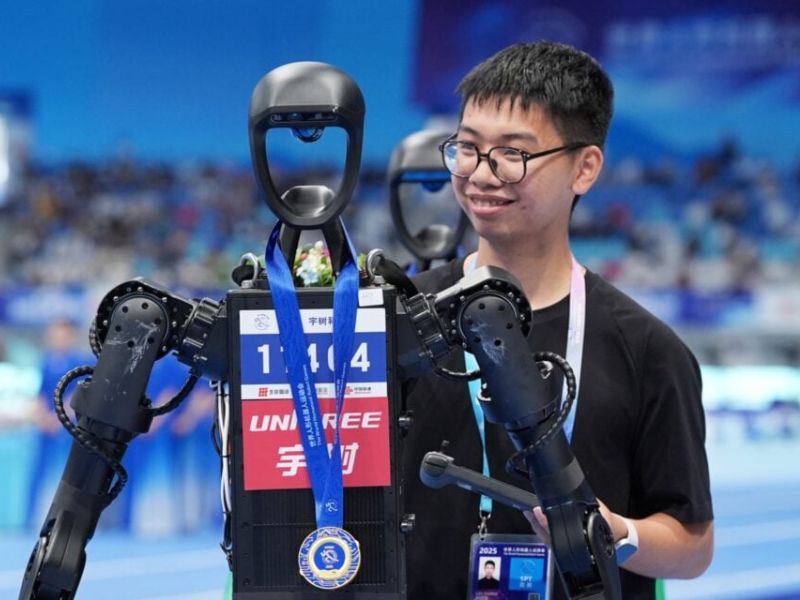
    China recently hosted the inaugural World Humanoid Robot Games — essentially an Olympics-style event, but for robots.
    Image Credits: gizmodo

    China recently hosted the inaugural World Humanoid Robot Games — essentially an Olympics-style event, but for robots.

    The three-day event began August 14 at Beijing’s 12,000-seat National Speed Skating Oval, with over 200 teams from 16 countries competing in 26 events. The challenges ranged from traditional athletic disciplines and gymnastics to kickboxing, soccer, medication sorting, and even hotel room cleaning.

    The event was designed to showcase China’s latest advancements in robotics and demonstrate the potential real-world applications of humanoid robots.

    China Accelerates Robotics Push with Big Investments

    It aligns with the country’s larger ambition to lead the global robotics race. Over the past year, Beijing has poured $20 billion into subsidies and is planning a $137 billion fund to boost AI and robotics startups, Reuters reports. In response, U.S. robotics firms like Tesla and Boston Dynamics have called on lawmakers to develop a competitive national strategy. The games followed the launch of China’s first robot-themed mall and the 2025 World Robot Conference in Beijing.

    Image Credits: ©Kevin Frayer/Getty Images. Humanoid robots fight during the finals of the kickboxing competition.

    Even before this month, China had been using high-profile events to spotlight its technological progress—such as hosting a robot half-marathon and featuring dancing humanoid robots during its widely viewed Lunar New Year’s Eve television gala, which, according to The New York Times, draws hundreds of millions of viewers.

    Unitree’s H1 Robot Wins Gold with Impressive 1,500-Meter Finish

    During the recent games, the humanoid robots delivered some remarkable performances. Unitree Robotics won the first gold as its H1 humanoid finished the 1,500-meter race in 6:34. CEO Wang Xingxing noted most robots are still remotely controlled, though autonomy is the goal. The H1 robot is currently priced at around 650,000 yuan (approximately US$90,494).

    Still, the event revealed that the technology isn’t without its flaws. Some robots stalled at the start, failed to finish their events, or even lost parts — including one that lost an arm mid-race. In a soccer match, a clumsy robot caused a pileup on the field.

    Image Credits: ©Kevin Frayer/Getty Images. A humanoid robot runs off course as another lays on the ground during the 4×100 meter relay race.

    As expected, Chinese companies dominated the competition.

    Hong Kong–based investment firm Shoucheng Holdings proudly announced in a press release that firms in its portfolio earned a total of 37 medals—12 gold, 14 silver, and 11 bronze.

    The top performers were Unitree Robotics and X-Humanoid. Unitree took home 11 medals, including four golds in the 400-meter dash, 1,500-meter race, 100-meter hurdles, and 4×100-meter relay. Close behind was X-Humanoid—officially known as the Beijing Humanoid Robot Innovation Centre—which earned 10 medals, including golds in the 100-meter sprint and a materials handling competition designed to simulate factory work.


    Read the original article on: Gizmodo

    Read more: Q&A: How Should You Respond If Your Dog Consumes Cocaine?

  • IFR Analyzes Global Trends in the Adoption of Humanoid Robots

    IFR Analyzes Global Trends in the Adoption of Humanoid Robots

    Humanoid robots have been drawing considerable attention in the robotics field over the past few years. Across the globe, robotics firms, private investors, and governments are actively working to refine this technology and find the most suitable applications for it.
    Image Credits:.therobotreport

    Humanoid robots have been drawing considerable attention in the robotics field over the past few years. Across the globe, robotics firms, private investors, and governments are actively working to refine this technology and find the most suitable applications for it.

    “Futuristic humanoids in homes and workplaces capture public interest,” said Takayuki Ito, president of the IFR. “Since our world is built for humans, adaptable robotic assistants are a natural fit.

    However, he noted, It’s still unclear when or if humanoids will see widespread adoption. Humanoids likely won’t replace current robot models—they’ll enhance and build on today’s robotics technology instead.

    China Sets Production Targets as U.S. and Europe Invest Heavily

    China, currently the leading market for industrial robots, has outlined goals for large-scale production of humanoids. At the same time, U.S. and European tech firms are securing major investments with the aim of developing multipurpose robots that replicate human movement.

    The IFR has published a report titled Vision and Reality, which explores current developments, possibilities, and challenges in the evolving field of humanoid robotics.

    In the United States, major tech players like NVIDIA, Amazon, and Tesla are making substantial investments in artificial intelligence and robotics. In addition to military support, private capital is driving the growth of numerous startups working on humanoid robots.

    According to the International Federation of Robotics (IFR), there is significant interest in deploying humanoid robots in logistics and manufacturing. These robots are primarily viewed as tools to boost productivity and efficiency, rather than as social companions. The focus in the U.S. is on functional, real-world applications, not social integration.

    China Prioritizes Humanoids in National Tech Strategy with Focus on Service Industries

    In contrast, China has made humanoid robots a central pillar of its national technology strategy. The government aims to highlight its technological strengths and global competitiveness by advancing humanoid development, particularly in customer-facing roles in the service sector.

    The IFR noted that using humanoids in China to automate production lines and reduce dependency on human labor appears to be of secondary importance. A core element of China’s strategy involves building a scalable domestic supply chain for essential components.

    Japan, a long-standing leader in humanoid robotics, introduced one of the earliest examples with Honda’s Asimo in 2000. The IFR noted that Japan often treats robots as companions rather than just machines. Schools, retail spaces, and elder care facilities use socially focused humanoids like Pepper and Palro to address the needs of an aging population. Japan’s focus is on integrating robots harmoniously into society. Companies like Kawasaki are developing humanoids for research and development purposes.

    In Europe, the ethical dimensions of robotics and AI are a key concern, according to the IFR. There is a strong emphasis on collaborative robots designed to work safely alongside humans in industrial environments. The European approach centers on improving safety, enhancing human productivity, and complementing human labor — not replacing it.

    European companies are also prioritizing human-centered design and assessing the social impact of robotics. There is a measured and cautious approach to deploying humanoids for automation in manufacturing and service industries, especially in the near to medium term.

    Explore the Future of Humanoid Robotics at RoboBusiness 2025

    Be sure to attend RoboBusiness 2025, taking place on October 15–16 in Santa Clara, California. The event will feature sessions on humanoid robot development, including the keynote “Lessons Learned from First Humanoid Deployments,” with speakers Katlyn Lewicke of GXO Logistics and Jim Fan of NVIDIA.

    The humanoid-focused sessions at RoboBusiness will also cover topics such as:

    • “Humanoids for Real Applications: Mastering Safety and Performance,” presented by Nikolai Ensslen, CEO of Synapticon
    • Advancements in Humanoid Actuation,” with Jordan Schaeffler, strategic business development engineer at Novanta
    • Integrating Behavioral Science into Humanoid Design,” led by Ram Devarajulu, VP and head of robotics for North America at Cambridge Consultants

    RoboBusiness will also offer tracks on physical AI, enabling technologies, and robot design best practices. Attendees can expect over 60 expert speakers, a startup workshop, the annual Pitchfire competition, and ample networking opportunities.

    More than 100 exhibitors will be present to showcase cutting-edge products, technologies, and services. Registration for RoboBusiness 2025 is now open.


    Read the original article on: The Robot Report

    Read more: Machines Mimic Human Motions to Prevent Slipping

  • LimX Dynamics Unveils the LimX Oli, a Full-sized Humanoid Robot

    LimX Dynamics Unveils the LimX Oli, a Full-sized Humanoid Robot

    LimX Dynamics Inc. unveiled its newest generation of humanoid robots last week, introducing the LimX Oli as its flagship model. Building on the dynamic walking technology of the CL-1 humanoid robot released in December 2023, the LimX Oli represents a significant evolution in the company’s robotics lineup.
    Image Credits:therobotreport

    LimX Dynamics Inc. unveiled its newest generation of humanoid robots last week, introducing the LimX Oli as its flagship model. Building on the dynamic walking technology of the CL-1 humanoid robot released in December 2023, the LimX Oli represents a significant evolution in the company’s robotics lineup.

    Earlier this year, The Robot Report recognized LimX Dynamics with an RBR50 Robotics Innovation Award for its Tron1 multi-modal bipedal robot. Based in Shenzhen, China, the company continues to push forward in the commercialization of legged robotics.

    Full-Size Design with Enhanced Mobility and Modular Architecture

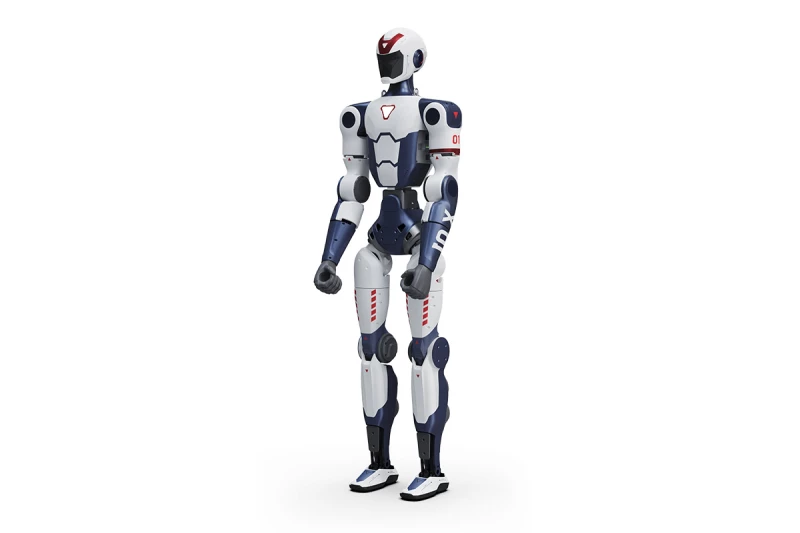
    The 165 cm-tall LimX Oli has 31 active degrees of freedom, excluding end effectors. LimX designed the Oli with a modular hardware-software architecture and equipped it with a comprehensive development toolchain. Unlike the research-focused CL-1, the Oli targets broader practical applications.

    LimX said the Oli is designed to advance embodied AI from research to real-world use. Aimed at AI researchers, robotics engineers, and system integrators, it comes in Lite, EDU, and Super editions for training, testing, and deploying perception, motion, and interaction algorithms.

    The LimX Oli is set to make its public debut this week at the World Robot Conference (WRC) in Beijing.

    Image Credits:therobotreport

    LimX Dynamics said the LimX Oli features a modular hardware-software design with developer-friendly interfaces. The company noted that its hardware components are easily replaceable.

    Flexible Gripper Options and Peripheral Compatibility for Custom Applications

    The robot supports two- or five-finger hands and works with third-party peripherals like mics, cameras, tactile sensors, IMUs, and lidar.According to LimX, this modular setup allows for straightforward customization to suit a wide range of experiments or applications.

    An open software development kit (SDK) gives developers access to full-body state information, sensor outputs, joint-level controls, and task-level orchestration. LimX said this allows rapid development and testing without changing the core architecture.

    Image Credits:The new LimX Oli humanoid is configured with 31 degrees of freedom, enabling human-like motion. | Credit: LimX Dynamics

    LimX Oli blends cloud APIs with local control for a seamless experience. OTA updates deliver motion libraries and modules, enabling quick prototyping with preset or custom control logic.

    Onboard LLM Integration for Advanced Interaction and Perception

    The platform also enables onboard deployment of large language models (LLMs), supporting natural language interaction and multi-stream sensor fusion. This enhances the robot’s capabilities in perception, planning, and embodied reasoning.

    Don’t miss RoboBusiness 2025, taking place on October 15–16 in Santa Clara, California. The event will include sessions on humanoid robot development, featuring a keynote panel, “Lessons Learned from First Humanoid Deployments,” with experts from Agility Robotics, GXO Logistics, and NVIDIA.

    The humanoid-focused track will also offer in-depth sessions such as:

    • “Humanoids for Real Applications: Mastering Safety and Performance,” presented by Nikolai Ensslen, CEO of Synapticon
    • “Advancements in Humanoid Actuation,” led by Jordan Schaeffler, Strategic Business Development Engineer at Novanta
    • “Integrating Behavioral Science into Humanoid Design,” by Ram Devarajulu, Vice President and Head of Robotics for North America at Cambridge Consultants

    Read the original article on: The Robot Report

    Read more:The World’s Biggest Subwoofer Spans Over 8 Feet in Diameter

  • What Can You Actually Do With Unitree’s $6,000 Humanoid Robot?

    What Can You Actually Do With Unitree’s $6,000 Humanoid Robot?

    Unitree’s R1 is flexible and capable of a range of athletic feats – too bad it doesn’t fold laundry yet
    Unitree

    Chinese robotics company Unitree has unveiled the R1—its most budget-friendly humanoid robot yet—with a surprisingly low price tag of just $5,900. That’s less than the cost of a high-end Leica Q3 camera, making it remarkably accessible for a robot that can walk and respond to commands.

    Compact Build with Functional Capabilities

    Standing just under 4 feet tall (1,210 mm) and weighing around 55 pounds (25 kg), the R1 features 26 joints, giving it a good range of motion. It can operate for roughly an hour on a single battery charge and includes Wi-Fi, Bluetooth, a built-in camera, microphones, and speakers for interaction.

    Thanks to its lightweight frame and joint-rich design, the R1 is notably agile. Demonstrations suggest it’s capable of athletic movement—though it’s unclear whether current footage is simulation or real-life performance, and clarification has been requested.

    Unitree Introducing | Unitree R1 Intelligent Companion Price from $5900

    Despite its mobility, the R1 lacks one critical feature: hands. Unlike Unitree’s more advanced humanoids, it doesn’t have functional grippers, limiting its ability to manipulate objects. Combined with its short runtime and compact size, these limitations mean the R1 isn’t ready for complex household chores right out of the box—so don’t expect it to handle your dishes or laundry just yet.

    Ideal for Research and Education

    Where it truly shines for now is in research and educational settings. Developers and researchers are using the R1 to test algorithms, AI behaviors, and assess how robots might perform in real-world industrial tasks. Automaker Geely, for instance, is experimenting with a Unitree robot on its production line to explore potential roles in car manufacturing.

    The R1 is 4 ft tall and weighs just 55 lb, so it can’t do a whole lot – but it’s great for robotics research and automation training projects
    Unitree

    Still, it’s impressive to see a functioning humanoid robot at this price point. To put things in perspective, Unitree’s more capable H1 model—able to climb stairs and perform backflips—sells for $90,000, while the G1 goes for $16,000. Tesla’s much-anticipated Optimus robot is expected to cost between $20,000 and $30,000. That makes the R1’s price a notable leap toward affordability—especially considering the market is still in its early stages.

    #Geely and #Unitree worked together to use H1 to complete the assembly test of auto parts in factory

    For those seeking more functionality, Unitree offers an ‘EDU’ version of the R1, which includes dexterous robotic hands. Each hand adds about $5,200 to the cost, and the upgraded version comes with a more powerful computing module as well.

    By keeping the R1’s price below $6,000, Unitree is paving the way for broader experimentation with humanoid robots. Expect to see it show up in pilot programs across industries, in academic labs, and among robotics enthusiasts eager to explore the technology’s potential.


    Read the original article on: New Atlas

    Read more: Humanoid Robots Symbolize China’s Ambitions in AI

  • Humanoid Robots Symbolize China’s Ambitions in AI

    Humanoid Robots Symbolize China’s Ambitions in AI

    From serving craft beer and playing mahjong to stacking shelves and boxing, the dozens of humanoid robots at this weekend’s World AI Conference (WAIC) in Shanghai showcased China’s advancing AI capabilities and aspirations.
    Image Credits:Techxplore

    From serving craft beer and playing mahjong to stacking shelves and boxing, the dozens of humanoid robots at this weekend’s World AI Conference (WAIC) in Shanghai showcased China’s advancing AI capabilities and aspirations.

    China Showcases AI Progress at Annual Event Amid Push to Rival U.S. in Tech and Regulation

    The annual event serves as a platform to highlight China’s rapid advancements in artificial intelligence, as the government pushes to establish itself as a global leader not only in AI technology but also in its regulation—closing in on the United States.

    At the event’s opening on Saturday, Premier Li Qiang announced plans to create a new body focused on international cooperation in AI governance, emphasizing the need to balance innovation with potential risks.

    Yet just next door, inside the vast expo hall, the atmosphere was far more energetic than cautious.

    Surging Demand Fuels AI Growth Across Sectors, Says Transwarp R&D Director

    There’s strong demand right now—across data, use cases, model training, and infrastructure,” said Yang Yifan, R&D director at Shanghai-based AI platform Transwarp. “The energy in every area is high.

    This year’s WAIC follows a major milestone in Chinese AI: the January debut of startup DeepSeek’s AI model, which matched top-performing U.S. systems at a significantly lower cost.

    According to organizers, the forum featured over 800 companies and more than 3,000 products, with the humanoid robots and their quirky, almost theatrical demonstrations stealing the spotlight.

    Image Credits:Organizers said the forum involved more than 800 companies, showcasing over 3,000 products — the undeniable crowd pleasers being the humanoid robots.

    At one exhibit, a robot awkwardly drummed—slightly off rhythm—to Queen’s “We Will Rock You,” while a man in safety gear energized a laughing crowd.

    Elsewhere, robots dressed in work uniforms or baseball caps operated assembly lines, challenged humans in games of curling, or clumsily poured soft drinks from dispensers.

    Though many of the robots still moved with some stiffness, their growing sophistication compared to previous years was unmistakable.

    China’s Government-Backed Robotics Push May Give It an Edge Over the U.S., Experts Say

    Robotics has received significant backing from the Chinese government, with some experts suggesting China may already hold an edge over the U.S. in this field.

    At the booth of Hangzhou-based Unitree, its G1 android—about 130 centimeters tall with a two-hour battery life—demonstrated impressive balance while kicking, pivoting, and throwing punches as it shadowboxed inside a ring.

    Just before the conference began, Unitree also announced plans to release a full-sized humanoid robot, the R1, priced under $6,000.

    Image Credits:While most of the machines on display were still a little jerky, the increas

    Most cutting-edge assistants don’t require physical form.

    At the expo, AI-powered virtual companions—taking the shape of middle-aged businessmen, scantily dressed women, and ancient warriors—greeted visitors from screens, asking about their day. Other booths featured demos where attendees could design their own digital avatars.

    Baidu Unveils Next-Gen AI “Digital Humans” Capable of Decision-Making and Collaboration

    On Saturday, tech giant Baidu unveiled the latest generation of its “digital human” technology—AI-driven personas modeled on real individuals, which the company claims can think, make decisions, and work collaboratively.

    Baidu recently hosted a six-hour e-commerce livestream led by digital replicas of a popular streamer and another avatar. According to the company, the AI hosts outperformed the human streamer’s debut in several product categories.

    More than 10,000 businesses already use this technology daily, said Wu Chenxia, head of the department, speaking to AFP.

    Image Credits:People watch a robot performing tasks at an exhibition during the World

    When asked about AI’s impact on employment—a key concern surrounding its widespread use—Wu emphasized that AI should be viewed as a tool designed to enhance quality and efficiency, while still relying on human involvement.

    In China, the adoption of AI in daily life is gaining momentum.

    Baidu Approved to Launch Robotaxis in Central Shanghai’s Pudong

    At WAIC, Baidu also revealed it had received approval to launch fully autonomous robotaxi services in parts of Shanghai’s vast Pudong district—marking the service’s first expansion into the city center.

    At the expo, however, few attendees appeared concerned about the implications of the agile, back-flipping robotic dogs they eagerly watched.

    China has a relatively strong data foundation and a wide range of real-world applications for AI,” noted Yang from Transwarp.


    Read the original article on: Techxplore

    Read more:Primitive Cell Structures May Have Formed in the Lakes on Saturn’s Moon Titan

  • Humanoid Robot Replaces Its Own Batteries for Continuous 24/7 Operation

    Humanoid Robot Replaces Its Own Batteries for Continuous 24/7 Operation

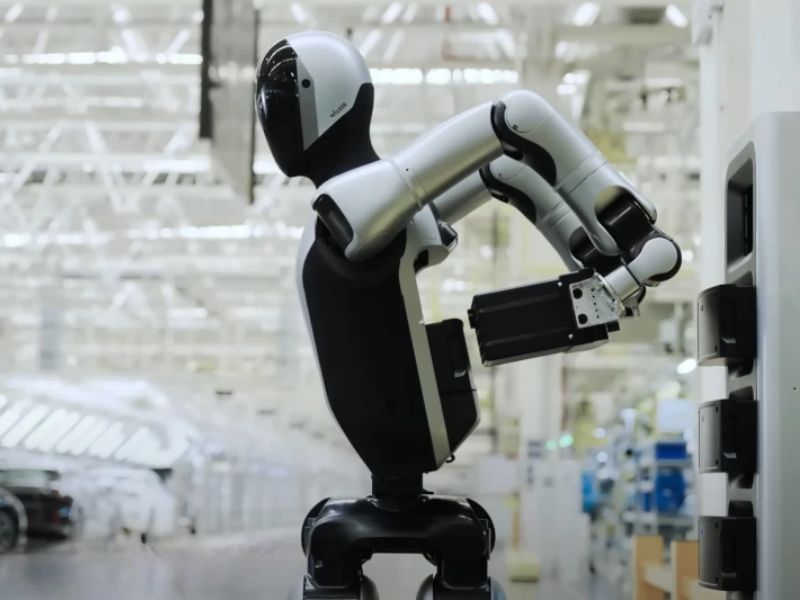
    Until now, robot workers had to stay plugged in or recharge periodically. UBTech has introduced the Walker S2 humanoid, which features dual batteries and can autonomously perform hot-swapping.
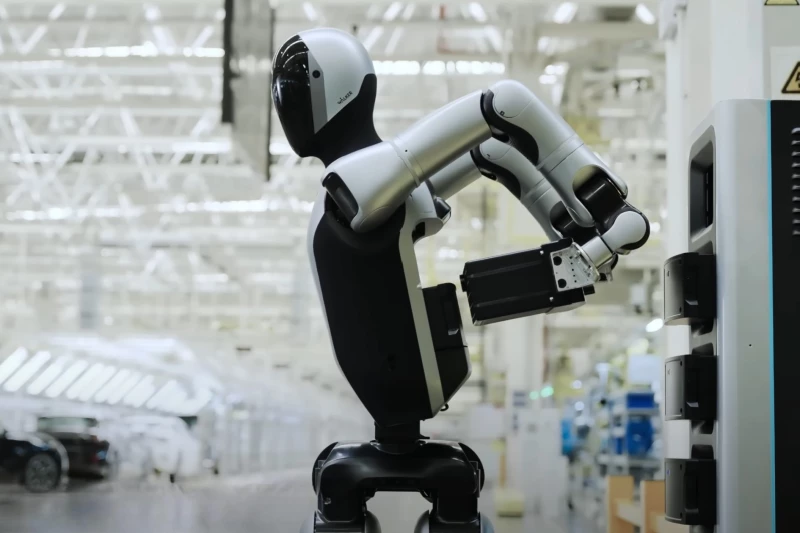
    Image Credits: The Walker S2 features a dual-battery design, and can swap out a depleted module at a strategically placed battery station
    UBTech

    Until now, robot workers had to stay plugged in or recharge periodically. UBTech has introduced the Walker S2 humanoid, which features dual batteries and can autonomously perform hot-swapping.

    Bringing Battery Swapping Convenience to Humanoid Robots

    The basic concept of battery swapping in transportation is to quickly replace a drained battery with a fully charged one, avoiding long recharge times. UBTech is now applying this same level of convenience to its humanoid robots.

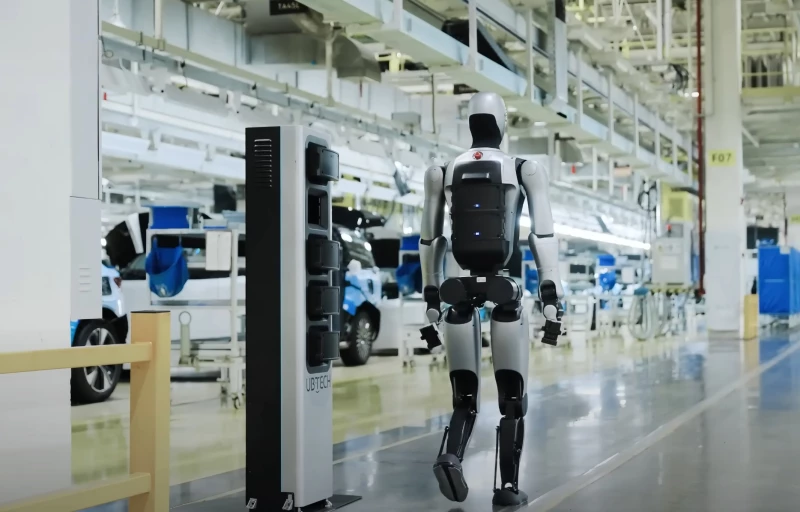
    The forthcoming Walker S2 worker robot features two battery compartments located on its back. When a battery runs low, the humanoid moves to a swap station, rotates its torso, and uses built-in tools to replace it with a charged one.

    In the video, Walker S2’s hands appear swapped out for the demo, but the final version will likely combine battery tools with functional manipulators for regular tasks.

    This setup clearly enables the potential for near-continuous 24/7 operation. Factory swap stations handle recharging, so S2’s only downtime is briefly swapping batteries before returning to work.

    The swap stations can monitor the condition of each battery, allowing maintenance teams to replace any units showing signs of diminished capacity.

    So far, Shenzhen-based UBTech hasn’t released detailed information about its new humanoid, leaving much to speculation. The S2 will likely use head-mounted cameras to spot charged batteries and autonomously swap them in dynamic industrial settings.

    Human-Like Design with Functional Features for the Factory Floor

    The robot, about 170 cm tall, walks like a human and features a display under its sensor array to share status updates with coworkers. An emergency shutdown button is located on its back—just in case.

    We’ll have to wait for the official product page to get more details on specifications, pricing, and availability.


    Read the original article on: New Atlas

    Read more:Conifer’s Iron-Based Electric Motors Bypass China’s Rare Earth Monopoly

  • Humanoid Robot Insists it has no Intention of ‘Replacing Human Artists’

    Humanoid Robot Insists it has no Intention of ‘Replacing Human Artists’

    This week, humanoid robot and acclaimed artist Ai-Da revealed a new portrait of King Charles, explaining the inspiration behind the intricate work—and assuring it has no intention of "replacing" humans.
    Image Credits: Techxplore

    This week, humanoid robot and acclaimed artist Ai-Da revealed a new portrait of King Charles, explaining the inspiration behind the intricate work—and assuring it has no intention of “replacing” humans.

    Engineers designed Ai-Da, one of the world’s most advanced humanoid robots, to resemble a human woman, giving her a lifelike face, expressive hazel eyes, and a brown bob haircut.

    Interchangeable Robotic Arms for Artistic Versatility

    Her arms, however, remain visibly robotic with exposed metal components and are interchangeable based on the type of art she’s creating.

    In late 2023, Ai-Da made history when her portrait of British mathematician Alan Turing became the first artwork by a humanoid robot to sell at auction, earning over $1 million.

    As Ai-Da revealed her latest piece—an AI-generated oil painting titled Algorithm King—the humanoid robot emphasized that its worth goes beyond monetary value.

    Exploring Ethics Through Creative AI Expression

    I create my artwork to spark conversations about the ethical implications of emerging technologies,” she told AFP at the UK’s diplomatic mission in Geneva, where they will display the portrait of King Charles.

    Speaking in a measured tone, Ai-Da explained that the goal is to “promote critical thinking and support responsible innovation aimed at creating fairer and more sustainable futures.

    While attending the United Nations’ AI for Good summit, Ai-Da—known for her sketches, paintings, and sculptures—shared insights into the techniques and inspiration behind her latest piece.

    I rely on a range of AI algorithms to produce my art,” the robot explained.

    Image Credits: Techxplore

    I begin with a central idea or theme I want to explore, considering the message behind the artwork—what it aims to communicate,” the robot said.

    Referring to the subject of the portrait, Ai-Da noted, “King Charles has used his influence to promote environmental conservation and interfaith dialogue. I created this portrait to honor those efforts,” adding, “I hope King Charles will appreciate my work.

    Aidan Meller, an expert in modern and contemporary art, led the team that developed Ai-Da in 2019, collaborating with AI experts from Oxford and Birmingham universities.

    He explained to AFP that Ai-Da, named after pioneering computer programmer Ada Lovelace, was created as an ethical art project—not as a replacement for human painters.

    Transforming Art and Human Expression

    Ai-Da acknowledged that “AI is undeniably transforming our world—including the realms of art and human creativity.

    However, the robot emphasized, “I don’t believe that AI or my creations will replace human artists.”

    Instead, Ai-Da explained that the goal is “to encourage people to reflect on how AI can be used for good, while staying aware of its potential risks and limitations.

    When asked whether a machine-made painting qualifies as art, the robot maintained, “My work is both original and creative.

    Ultimately, whether humans consider it art is a meaningful and thought-provoking discussion,” she added.


    Read the original article on: Techxplore

    Read more:Jack Dorsey’s New Messaging App Works Without Internet

  • Humanoid Robots Could Ease Surgery Delays and Staff Shortages

    Humanoid Robots Could Ease Surgery Delays and Staff Shortages

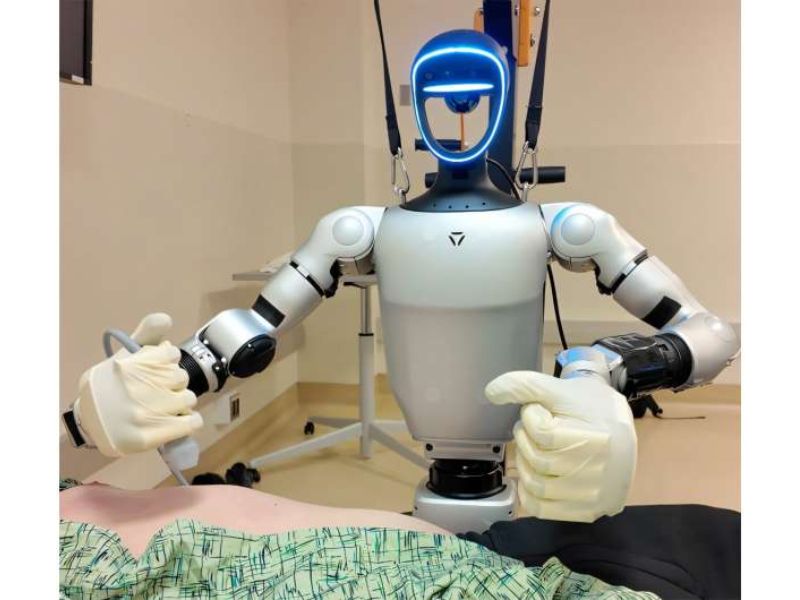
    With crowded waiting rooms, rising doctor burnout, and growing surgical delays and cancellations, humanoid surgical robots present a potential solution—according to UC San Diego robotics expert Michael Yip in a Science Robotics perspective piece.
    Image Credits: Techxplore

    With crowded waiting rooms, rising doctor burnout, and growing surgical delays and cancellations, humanoid surgical robots present a potential solution—according to UC San Diego robotics expert Michael Yip in a Science Robotics perspective piece.

    Modern surgical robots are expensive, task-specific machines that require highly trained doctors to operate—making them difficult to scale.

    While AI and robotics have advanced rapidly in industrial and humanoid applications, these gains haven’t extended to surgical robotics.

    The Data and Privacy Hurdles of Training AI for Surgical Robotics

    Training AI to perform surgery with current robots would demand vast amounts of data, making the process too costly and labor-intensive. Existing systems and medical personnel add to the challenge, and collecting procedure-based data also brings up significant privacy concerns.

    But what if the training data used for industrial humanoid robots could also be applied to teaching robots medical procedures? That could be transformative, writes UC San Diego engineering professor Michael Yip.

    A straightforward approach would be equipping surgical robots with arms and multi-fingered hands, following trends in industrial robotics. This would not only introduce a new generation of surgical robots but also enable them to leverage powerful AI foundation models—enhancing their ability to learn and assist with a wide range of medical tasks.

    Practical Roles Humanoid Robots Could Play in the Operating Room

    For instance, a humanoid robot could assist by holding an ultrasound probe or endoscopic camera during surgery, or by acting as a scrub nurse, handing instruments while preserving a sterile environment.

    These tasks are essential and usually performed by surgeons or nurses, diverting them from other patients and adding physical strain.

    Robots handling such routine, low-risk, and labor-intensive duties would offer significant benefits. However, it’s impractical to invest in single-purpose robots for each task. A general-purpose humanoid design is a more practical long-term solution, notes Yip.

    Advancements in Industrial AI Could Accelerate Surgical Humanoid Robotics

    As industrial humanoid robots continue to develop stronger AI foundation models and improve at performing diverse tasks, surgical humanoid robots are expected to advance as well.

    While this reality may still be years away, the long-term vision is that such robots could become essential in tackling the global shortage of skilled healthcare workers, benefiting patients, doctors, and nurses alike, writes Yip.

    He explores this vision further in his forthcoming preprint paper, “Humanoids in Hospitals: A Technical Study of Humanoid Surrogates for Dexterous Medical Interventions.”


    Read the original article on: Techxplore

    Read more:Whether We Like It Or Not, Radar Reveals Our Presence To Extraterrestrials

  • Humanoid Robot Boxing Is Here — and Optimus Should Worry

    Humanoid Robot Boxing Is Here — and Optimus Should Worry

    There’s just something about robots that makes people want to kick them—whether it's for testing or just for fun. Sure, the kicking serves a technical purpose, but let’s face it, it’s the act itself that’s oddly satisfying. Still, constantly kicking and punching robots is exhausting—not to mention impractical. But it’s 2025 now, and the good news? Robots can finally kick and punch each other. Seriously, it’s happening.
    Image Credits:gizmodo

    There’s just something about robots that makes people want to kick them—whether it’s for testing or just for fun. Sure, the kicking serves a technical purpose, but let’s face it, it’s the act itself that’s oddly satisfying. Still, constantly kicking and punching robots is exhausting—not to mention impractical. But it’s 2025 now, and the good news? Robots can finally kick and punch each other. Seriously, it’s happening.

    Inside the World’s First Humanoid Robot Fight Tournament

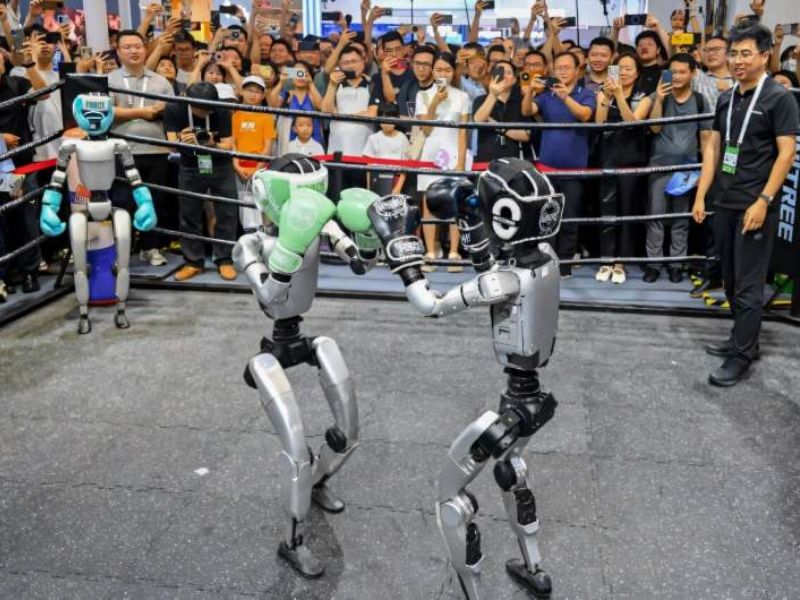
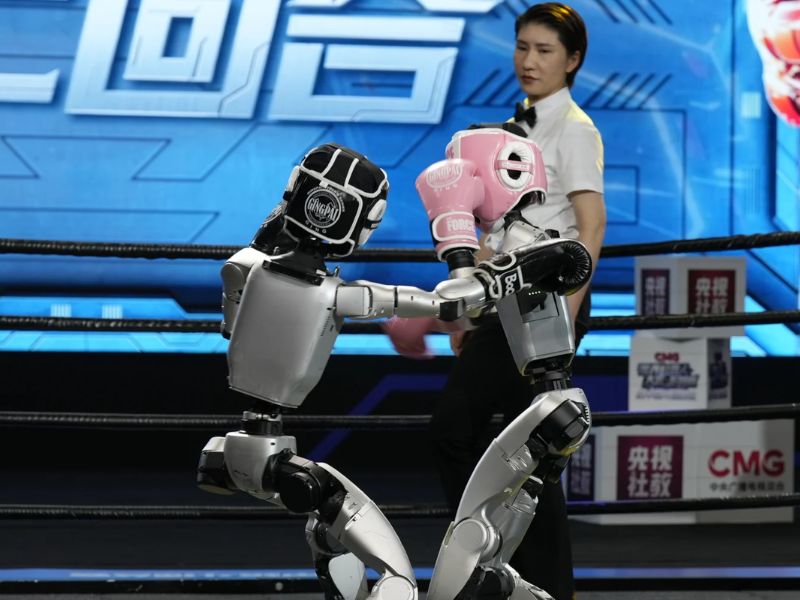
    Introducing the latest (and perhaps greasiest) bloodsport of the week: humanoid robot kickboxing, also known as the China Media Group World Robot Tournament. Billed by its creators as the “world’s first combat competition exclusively for humanoid robots,” it pits machines against machines in full-on melee. In one corner: Unitree’s G1 robot. In the other corner? Also a Unitree G1. Watch them kick, punch, and wobble through battle—almost like human fighters, but with a nerdier, more robotic twist.

    Beyond the spectacle of robot brawls, the real aim of the event is to highlight the agility and human-like movement of Unitree’s G1 robots—and to showcase China’s progress in robotics. But honestly, from a technical standpoint, it’s not exactly groundbreaking. Sure, the kicking is fun, but we’ve seen robots perform impressive acrobatics for years. Personally, I’d be more wowed by one that can fold laundry properly. Still, maybe that’s not the point—this is more about the show than the tech. So, in the immortal words of Maximus Decimus Meridius.

    Why Tesla’s Optimus Needs to Enter the Ring

    The answer? Sort of. But honestly, I’d be way more entertained if there were a celebrity involved—not a human one (don’t worry, Danny Bonaduce, your fists are safe), but a robot star. Dream scenario? Bring in Tesla’s Optimus. Sure, Optimus is currently built for factory work (or so Elon Musk hopes), but can we really trust it to handle home care or transform the supply chain until we’ve seen it throw down in the ring? Personally, I trust the bot that can win a fight. Strength inspires confidence—right, Dwayne “The Rock” Johnson? You’ve already got my vote.

    But seriously, consider this your call to action, Mr. Musk. You might have dodged a cage match with Mark Zuckerberg, but here’s your real shot to step into the spotlight—we know you love it. If Tesla’s Optimus is truly as capable as you claim, it’s time to prove it. Let’s see what your humanoid bot can actually do. That said, to be fair, Optimus and the G1 aren’t exactly in the same weight class—G1 is kind of a lightweight. Still, that’s never stopped you from punching down before, has it?


    Read the original article on: Gizmodo

    Read more: Hyundai’s Robo-Charger Powers EVs at a Major global Airport