Tag: Lung

  • The Lung-on-a-Chip Forms an Immune System of its Own

    The Lung-on-a-Chip Forms an Immune System of its Own

    On a clear, gum-soft polymer chip, a miniature lung springs into action—expanding, flowing with movement, and, for the first time, defending itself like a real living organ.
    Image Credits:pplware

    On a clear, gum-soft polymer chip, a miniature lung springs into action—expanding, flowing with movement, and, for the first time, defending itself like a real living organ.

    For Ankur Singh, who directs the Center for Immunoengineering at Georgia Tech, watching immune cells move through the chip was a stunning sight.

    Singh led the project alongside his longtime collaborator, Krishnendu “Krish” Roy—formerly a professor emeritus at Georgia Tech and now director of the School of Engineering and a Distinguished Professor at Vanderbilt University.

    A Breakthrough Immune-Integrated Lung-on-a-Chip Model

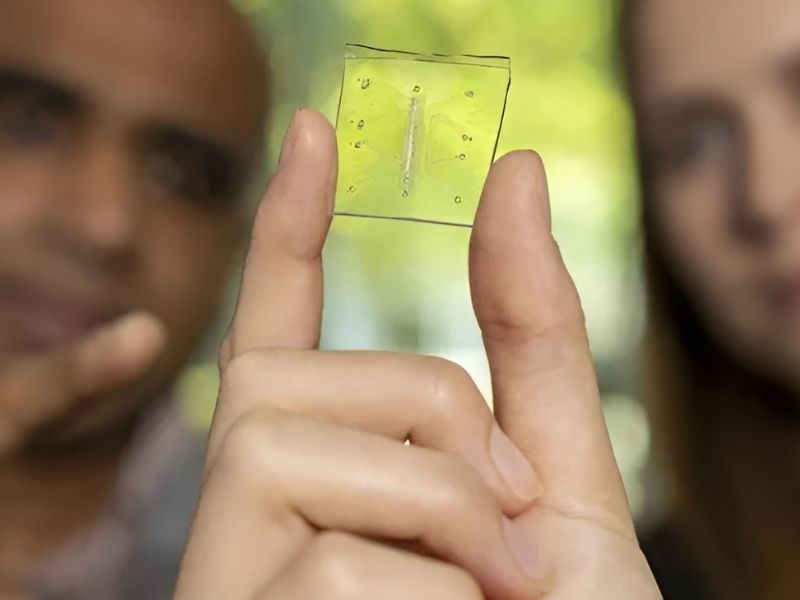
    Lung-on-a-chip devices give scientists a close look at how organs function. Each is about the size of a postage stamp, patterned with microscopic channels and lined with living human cells. Roy and Singh’s breakthrough was adding a functioning immune system, making the chip a realistic model of lung defense.

    With this advance, researchers can watch the lung’s defenses in action, see how inflammation develops, and observe the earliest steps of healing.

    For millions with respiratory conditions, simple tasks like climbing stairs, carrying groceries, or even laughing can be exhausting. For decades, clinicians and researchers have sought to truly understand what happens inside vulnerable lungs.

    Image Credits:Ankur Singh e Rachel Ringquist mostram o pulmão em chip microscópico que possui um sistema imunológico integrado.

    For Singh—a faculty member in the George W. Woodruff School of Mechanical Engineering professor with bioengineering ties—Singh is personally driven, having lost an uncle to an infection worsened by cancer.

    That experience helped drive the team to reimagine what a lung-on-a-chip could do, opening the door to major breakthroughs.

    Witnessing Immune Cells in Action for the First Time

    The pivotal moment arrived when Roy and Singh’s group witnessed something never seen before on a chip: blood and immune cells flowing through vessel-like channels and acting just as they would in a real lung.

    Scientists long struggled to add a working immune system to organ-on-a-chip devices, as immune cells often died or failed to interact with tissues. The team overcame this by engineering a chip environment where the cells could survive and mount a coordinated defense.

    Simulating Realistic Immune Responses to Influenza

    The ultimate validation came when they introduced a severe influenza infection. The chip’s lung triggered an immune response mirroring patient reactions, with cells rushing in, inflammation spreading, and defenses activating.

    What started with influenza could soon apply to many other conditions—asthma, cystic fibrosis, lung cancer, and tuberculosis. Scientists are also exploring ways to incorporate immune organs, revealing how the lung collaborates with the body’s broader defense network.

    Ultimately, the goal is personalized medicine: creating chips from a patient’s own cells to forecast which treatment will work best. While clinical testing and regulatory approval may still be years away, Singh’s commitment to that vision remains unwavering.


    Read the original article on: pplware

    Read more: Using Magnetic Fields, Soft Robots Can now Operate More Intelligently On Their Own
  • First-Ever Pig Lung Transplant Into Human

    First-Ever Pig Lung Transplant Into Human

    A genetically engineered pig lung functioned for 216 hours inside a brain-dead human, marking the first reported attempt at a cross-species lung transplant, according to Nature Medicine.
    Image Credits: singularity Hub

    A genetically engineered pig lung functioned for 216 hours inside a brain-dead human, marking the first reported attempt at a cross-species lung transplant, according to Nature Medicine.

    The technique, known as xenotransplantation, aims to ease the chronic shortage of donor organs. Pig organs are similar in size to human ones, but their proteins often trigger severe immune rejection. Over time, scientists have pinpointed the genes behind these problematic proteins and used gene-editing tools to make pig organs more compatible with the human body.

    China Pushes Boundaries With First Pig Lung Transplant

    Researchers have already transplanted modified pig hearts, livers, and kidneys into people under experimental protocols, showing encouraging progress. Now, a team at the First Affiliated Hospital of Guangzhou Medical University in China has added lungs to that list—though with important limitations.

    The lung transplant lasted more than nine days but eventually caused damaging inflammation, despite an intensive regimen of immune-suppressing drugs.

    Still, the researchers note that their results “pave the way for further innovations in the field.”

    Every day, about 13 people die while waiting for an organ transplant. The problem is stark: there simply aren’t enough donor organs.

    For a transplant to succeed, the donor organ must be closely matched to the recipient’s blood type and immune markers, which makes the wait agonizingly long. As of late September 2024, nearly 90,000 patients were on the kidney transplant list, while more than 3,000 awaited a new heart.

    Pig organs offer a possible alternative—but in their natural state, they’re unsafe for humans.

    Viruses and Rejection

    One issue is that pig DNA carries porcine endogenous retroviruses (PERVs). These viruses don’t harm pigs but can infect humans. Another is immune rejection: every organ is covered in protein markers, like a biological fingerprint. If the body doesn’t recognize that fingerprint, the immune system mounts an aggressive defense. Killer T cells, B cells, and inflammatory molecules known as cytokines can overwhelm and destroy the transplant.

    The solution is to make pig organs more human-like so they evade immune detection.

    Over the years, researchers have identified the pig genes that encode these problematic proteins and used CRISPR-Cas9 to remove them. But that created new challenges: without certain protein signals, the organs looked abnormal to immune cells. To counter this, scientists inserted three human genes that regulate immune responses, essentially camouflaging the organs.

    After years of refinement, Chinese researchers developed a genetically altered Bama Xiang pig—a small breed native to southern China—with six modified genes designed to make its organs more compatible with humans.

    At least in theory

    First Pig Lung Transplant Attempt in Humans

    In a recent trial, scientists transplanted the left lung of a genetically modified Bama Xiang pig into a brain-dead 39-year-old man, with his family’s consent. The organ tested virus-free, and the surgery largely followed standard lung transplant procedures, though some pig structures had to be trimmed for fit.

    Lungs break more easily than other organs, and restoring blood flow can severely damage them. Yet within a day the transplanted lung stabilized and functioned normally. By day two, however, it showed signs of acute rejection, with swelling, immune cell activity, and later spikes in antibodies. By day nine, the lung had partially healed and was exchanging oxygen, but the trial ended at the family’s request.

    Researchers detected no pig viruses during the study, and patients developed no infections despite immune suppression. Lungs face unique hurdles—high blood pressure, pathogen exposure, and rejection-prone proteins. In this trial, the immune response was faster and stronger than in baboons, highlighting the need for better drugs or more genetic edits.

    The team now plans to test existing transplant drugs—and potentially add blood thinners or anti-inflammatories—to better control lung-specific immune reactions in future trials.


    Read the original article on: Singularity Hub

    Read more: Sunlight Alone Keeps These Tiny Aircraft Aloft

  • Experts Caution Vapers About the Risk of Developing the Irreversible Condition Popcorn Lung

    Experts Caution Vapers About the Risk of Developing the Irreversible Condition Popcorn Lung

    A U.S. teen reportedly developed the unusually named condition "popcorn lung" after secretly vaping for three years.

Popcorn lung, medically termed bronchiolitis obliterans, is a rare yet severe and irreversible lung disease that harms the small airways, causing ongoing coughing, wheezing, shortness of breath, and fatigue.
    Credit: (AleksandrYu/Getty Images)

    A U.S. teen reportedly developed the unusually named condition “popcorn lung” after secretly vaping for three years.

    Popcorn lung, medically termed bronchiolitis obliterans, is a rare yet severe and irreversible lung disease that harms the small airways, causing ongoing coughing, wheezing, shortness of breath, and fatigue.

    The term “popcorn lung” originated in the early 2000s after several employees at a microwave popcorn factory developed lung issues from inhaling diacetyl—a chemical used to create popcorn’s buttery flavor.

    Diacetyl, also known as 2,3-butanedione, is a flavoring compound that turns harmful when inhaled in aerosol form. It leads to inflammation and scarring in the bronchioles—the lungs’ smallest airways—making breathing progressively harder.

    The outcome: irreversible, often debilitating lung damage.

    Although diacetyl is the most well-known cause, inhaling other harmful chemicals, such as volatile carbonyls like formaldehyde and acetaldehyde, can also trigger popcorn lung—both of which researchers have found in e-cigarette vapors

    The most concerning aspect? There is no cure for popcorn lung. Once the lungs are damaged, doctors focus on managing symptoms by administering bronchodilators, prescribing steroids, and, in severe cases, performing a lung transplantation.

    Because of this, prevention – rather than treatment – is the most effective and only defense. However, for young vapers, prevention isn’t that simple.

    The vaping dilemma

    Vaping has become particularly popular among  teenagers and young adults, likely because of the wide variety of flavored vape products – ranging from bubblegum and cotton candy to mango ice. However, these sweet, fruity flavors come with a chemical price.

    E-liquids may have nicotine, but they also contain a mix of chemicals meant to attract users. While regulators approve many of these flavoring agents for food use, that doesn’t mean they’re safe to inhale.

    When you consume chemicals, your digestive system processes them, and the liver filters them before they enter the bloodstream, which helps reduce their potential harm.

    However, when people inhale chemicals, they bypass this filtration process altogether. They go directly into the lungs and then into the bloodstream, reaching vital organs like the heart and brain within seconds.

    That’s what made the initial popcorn factory incidents so tragic. Eating butter-flavored popcorn? Completely harmless. Inhaling the buttery chemical? Devastating.

    The chemical intricacy of vaping

    The situation with vaping is even more unclear. Experts estimate that manufacturers currently use more than 180 distinct flavoring agents in e-cigarette products.

    Credit: Os e-líquidos podem conter nicotina, mas também incluem um coquetel químico. (Gilmanshin/Canva)

    When heated, many of these chemicals decompose into new compounds, some of which have never been tested for safety when inhaled. This raises significant concerns.

    Although diacetyl has been removed from certain vape products, it can still be present in others. Additionally, its replacements—acetoin and 2,3-pentanedione—could be equally harmful.

    Even if diacetyl isn’t the only cause, repeated exposure to various chemicals and their byproducts could heighten the risk of popcorn lung and other respiratory issues.

    The American teenager who developed the disease tragically reflected this. Her story is similar to the 2019 Evali crisis (e-cigarette or vaping product use-associated lung injury), which resulted in 68 deaths and more than 2,800 hospitalizations in the US.

    The outbreak was ultimately traced back to vitamin E acetate, a thickening agent used in some cannabis vape products. When heated, it releases a highly toxic gas known as ketene.

    Recent studies are sounding the alarm about the effects of vaping on the respiratory health of young people.

    A global study discovered that adolescents who vape experience notably more respiratory symptoms, even after accounting for their smoking habits. The type of flavors, nicotine salts, and frequency of use were all associated with these symptoms.


    Read the original article on: Sciencealert

    Read more: Scientists Discover Unexpected Link Between Diet and Lung Cancer Risk